


Picking between Pixlr and Canva generally comes down to what you need to create actually. Both platforms have evolved into capable AI design platforms, but they cater to distinct purposes. If you require a fast online photo editor with layer-driven control, Pixlr stands apart. If you require templates for presentations, social media posts, or marketing graphics, Canva emerges as a market-leading option. In this complete guide, let us break down the canva vs pixlr debate across pricing, features, and use cases so you can make a data-driven decision for your workflow in 2026.
Pixlr is a web-driven platform for editing photos that directly runs in your browser. It provides two different interfaces to align with distinct skill levels: provides two different interfaces to align with distinct skill levels:
You can retouch, crop, and apply filters utilizing the tools panel, while the right-side panel manages history and layers. Pixlr also involves AI-driven background removal and generative fill platform, enabling you to choose an area of an image and then replace it via a text prompt. A batch editor enables you apply the similar adjustment, like resizing, across different images at once.
Canva is a web-based design platform which emphasizes graphic design instead of comprehensive editing of photos. You create designs on digital canvas via drag-and-drop elements, pre-set layouts, and templates. Canva involves a standard photo editor with sliders for contrast, brightness, and saturation, along with AI-driven features like Magic Eraser for eliminating unwanted objects and a Background Remover for isolating subjects. It is extensively used for presentations, social media graphics, and marketing materials instead of pixel-level correction of photos.
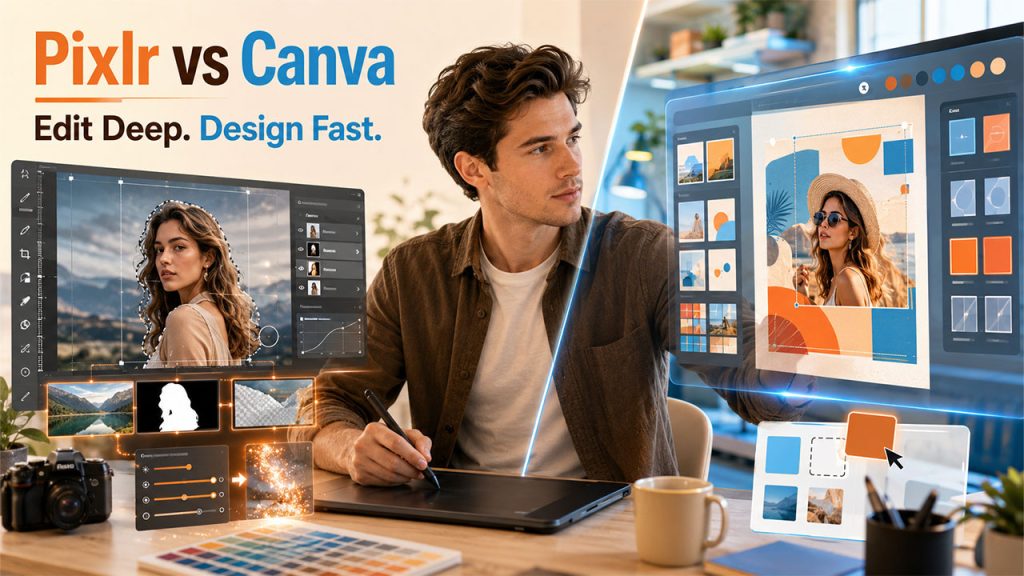
The biggest difference in the canva vs pixlr comparison exists in how every platform approaches editing.
If your main focus is accurate manipulation of images, Pixlr provides greater granular control. If your main priority is developing a finished graphic quickly via templates, Canva becomes a faster route.
Both solutions have utilized AI design tools to automate routine tasks.
Neither platform learns your personal editing style over time. Both require you to apply adjustments manually to each image, though their AI shortcuts reduce the number of manual steps required.
Canva holds a clear advantage here. It provides an extensive library of templates for presentations, social media posts, posters, and marketing collateral, which makes it an effective choice for teams that require consistent branded content quickly and create innovative marketing campaigns with visually engaging designs. By comparison, Pixlr is not template-based. It is developed around editing available images instead of assembling new designs from ready-made layouts, which makes it more suitable as a digital photo editor than a complete design suite.
Read More: WordPress Booking Plugin . Check out how combining the right booking plugin with your design workflow converts promotional graphics into actual scheduled appointments.
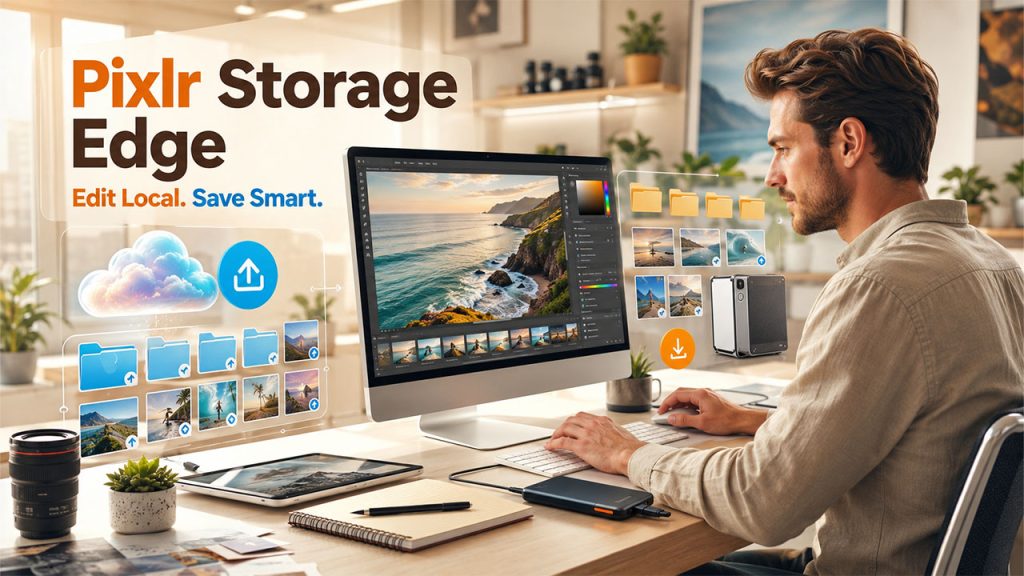
If cloud-driven project storage is important for your workflow, Canva has an edge. If you directly prefer working with local files without uploading them to a permanent cloud library, Pixlr fits better.
Both platforms need only an internet connection and a browser, so there is no heavy installation of software with either of the options.
The best choice relies on the level of you do on a consistent basis-
If Canva does not align with your requirements completely, it is worth exploring other Canva Alternatives that excel in distinct areas, from sophisticated manipulation of photos to enterprise-based design workflows. For service-driven businesses that also depend on client-facing tools, combining it with your design workflow with a dependable WordPress Booking Plugin can assist in converting the graphics you create in precise appointments and bookings on your site.
The decision of canva vs pixlr mainly depends on whether you require detailed editing of photos or quick template-driven design. Pixlr is an effective option for dedicated online photo editor for users who require manual control over layers, cropping, and AI-driven touch-ups. Canva is a better option for teams that have to create branded and polished graphics quickly through ready-made templates. Both platforms qualify as capable AI design tools in 2026, so the better options come down to aligning the tool to your precise workflow instead of choosing a universal or generic tool.
此内容由惯性聚合(RSS阅读器)自动聚合整理,仅供阅读参考。 原文来自 — 版权归原作者所有。