


Super fact 101: We can see what stars are made of and calculate their speed and distance compared to us just by looking at their light.
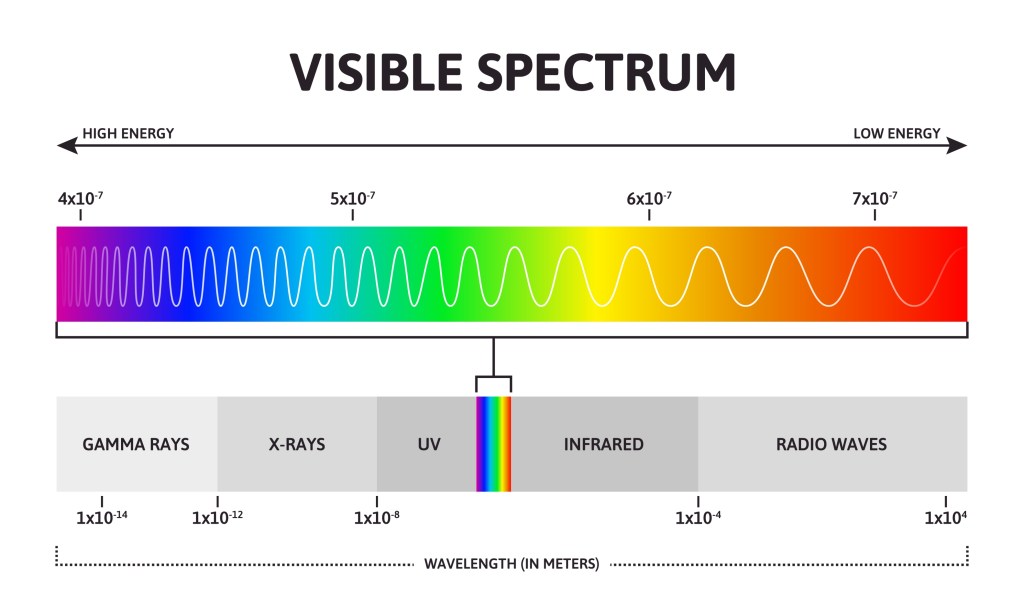
Electromagnetic radiation, including visible light, features a lot of different frequencies, which for light correspond to different colors. Red has a lower frequency, and blue has a higher frequency. For more information about the electromagnetic spectrum and light see Human Vision Only Detects a Sliver of the EM Spectrum.
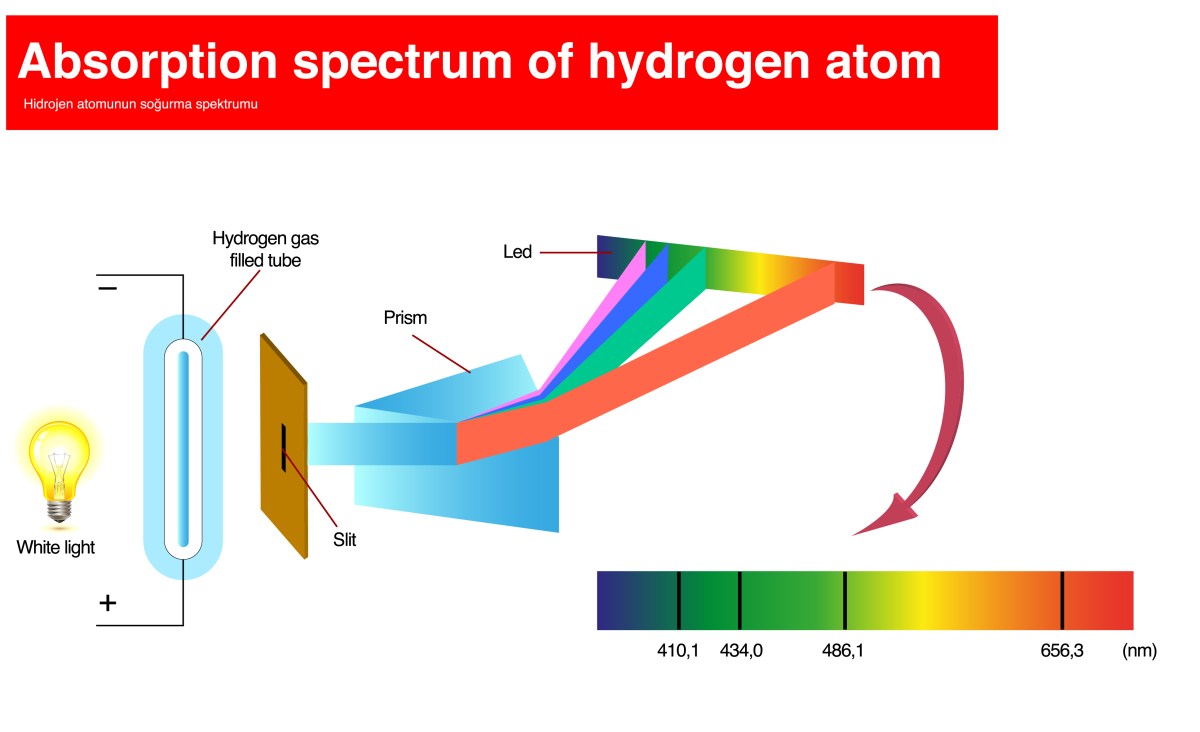
If you place a light bulb (white light includes a spectrum of colors) in front of a container filled with hydrogen and then you let the light pass through a prism, it will split into the different colors (red, yellow, blue, etc.) forming a rainbow, as prisms do. You see this every time you see a rainbow in nature. However, if you measure carefully, as in the experimental setup below, you will notice that some frequencies are missing. That’s because the hydrogen gas will absorb certain frequencies.
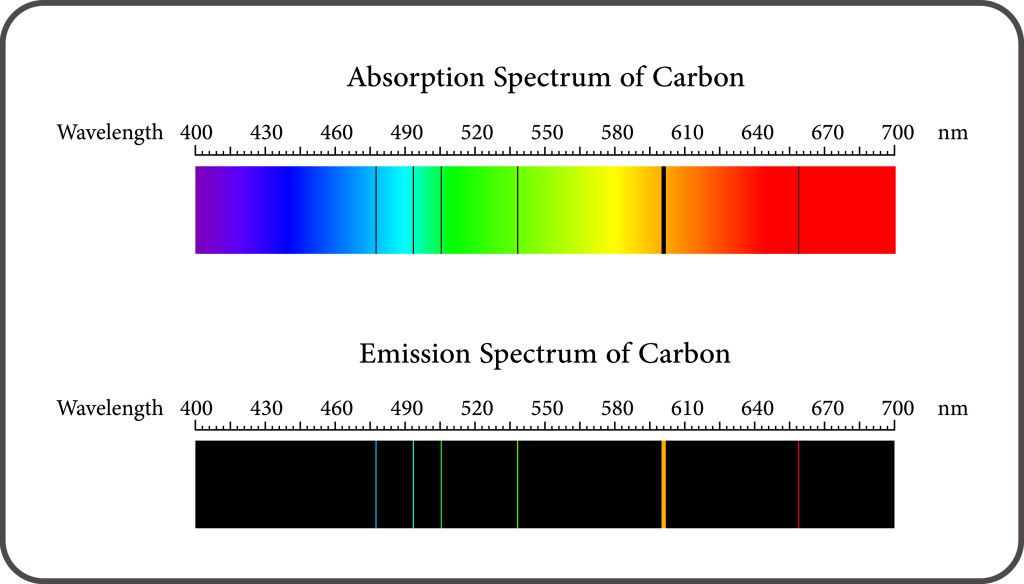
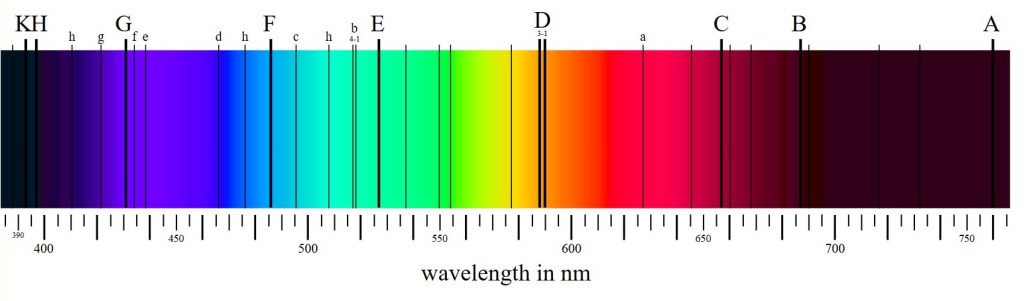
This is true, not just for hydrogen, but for all elements/atoms and molecules. Atoms and molecules have light absorption patterns that are unique to the atom/element in question. The dark lines in the spectra are referred to as Frauenhofer lines. In a sense, all elements have a thumb print resulting from their so called absorption spectra. This makes it possible to identify the elements in a star and their proportions.
Before the discovery of absorption spectra, it was sometimes believed that humanity would never know the chemical elements of stars. Even today many people are surprised to hear that we can indeed know what stars are composed of just by looking at their light. In addition to identifying elements in the upper layers / atmosphere of stars you can use the same absorption spectra to determine the relative velocity of stars compared to us and sometimes the distance to the stars. This is an old discovery that is surprising and important to our understanding of the world and therefore a super fact in my opinion.
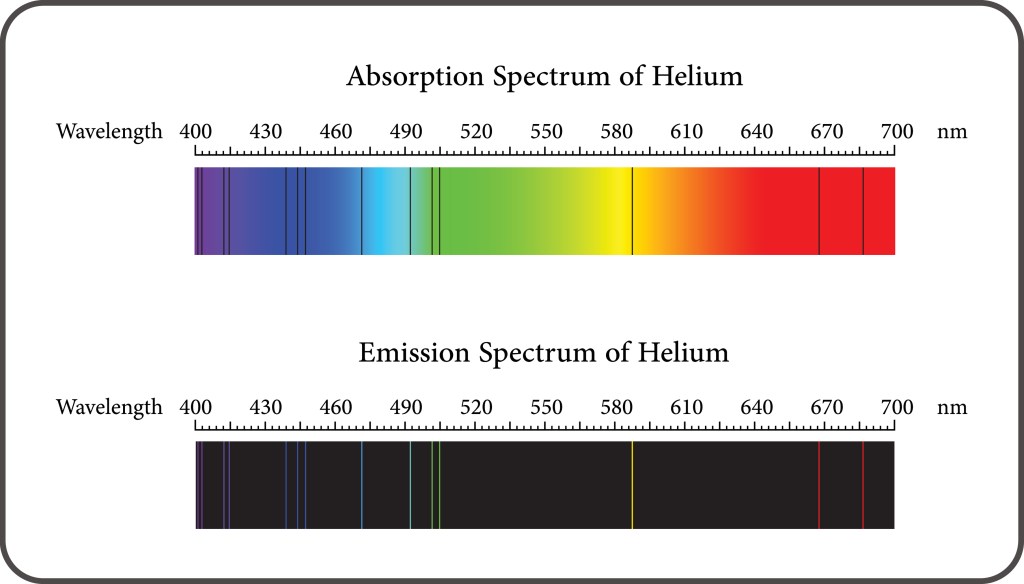
Examples of Absorption Spectra
An interesting, related fact is that Helium was discovered in the Sun before it was found on Earth, with the help of emission spectra (August 18, 1868). Emission spectra are the opposite of absorption spectra. It should be noted that while emission spectra are commonly used for identifying the composition of interstellar gas, absorption spectra are commonly used for identifying the composition of stars.
Using Redshift to Determine how fast Stars are Moving Compared to us
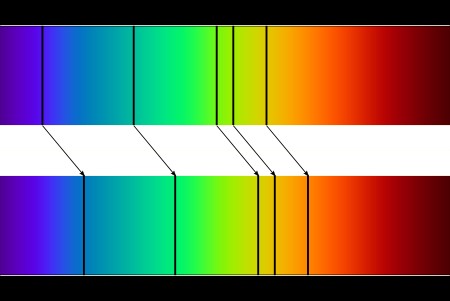
A star or galaxy that is moving towards us will have a blue shifted spectrum. A star or galaxy that is moving away from us will have a red shifted spectrum. Red shifted means that the absorption lines have moved towards red because the frequency of the light has been shifted due to the motion.
This is called the doppler effect. You can notice this phenomenon for the case of sound when an ambulance is coming towards you and then speeding by you. The sound changes. The astronomer Hubble was using redshift to the determine that the further away a galaxy was from us the faster it was moving away from us. Measuring the redshift of a faraway galaxy or star, not only tells us its speed compared to us but can indirectly help us determine the distance to the galaxy or star.
There are other things you can tell from the light from stars and from their electromagnetic spectrum such as the type of star, the size of the star, and the age of the star, but that is for another post. This post is long enough.
To see the other Super Facts click here

My name is Thomas Wikman. I am a software/robotics engineer with a background in physics. I am currently retired. I took early retirement. I am a dog lover, and especially a Leonberger lover, a home brewer, craft beer enthusiast, I’m learning French, and I am an avid reader. I live in Dallas, Texas, but I am originally from Sweden. I am married to Claudia, and we have three children. I have two blogs. The first feature the crazy adventures of our Leonberger Le Bronco von der Löwenhöhle as well as information on Leonbergers. The second blog, superfactful, feature information and facts I think are very interesting. With this blog I would like to create a list of facts that are accepted as true among the experts of the field and yet disputed amongst the public or highly surprising. These facts are special and in lieu of a better word I call them super-facts. View all posts by thomasstigwikman