


The floating wind solution was adapted from a proven offshore buoy concept.
The US has just approved a new floating offshore wind system, which is designed to support safer and more efficient installation and operation of floating offshore wind turbines (FOWT).
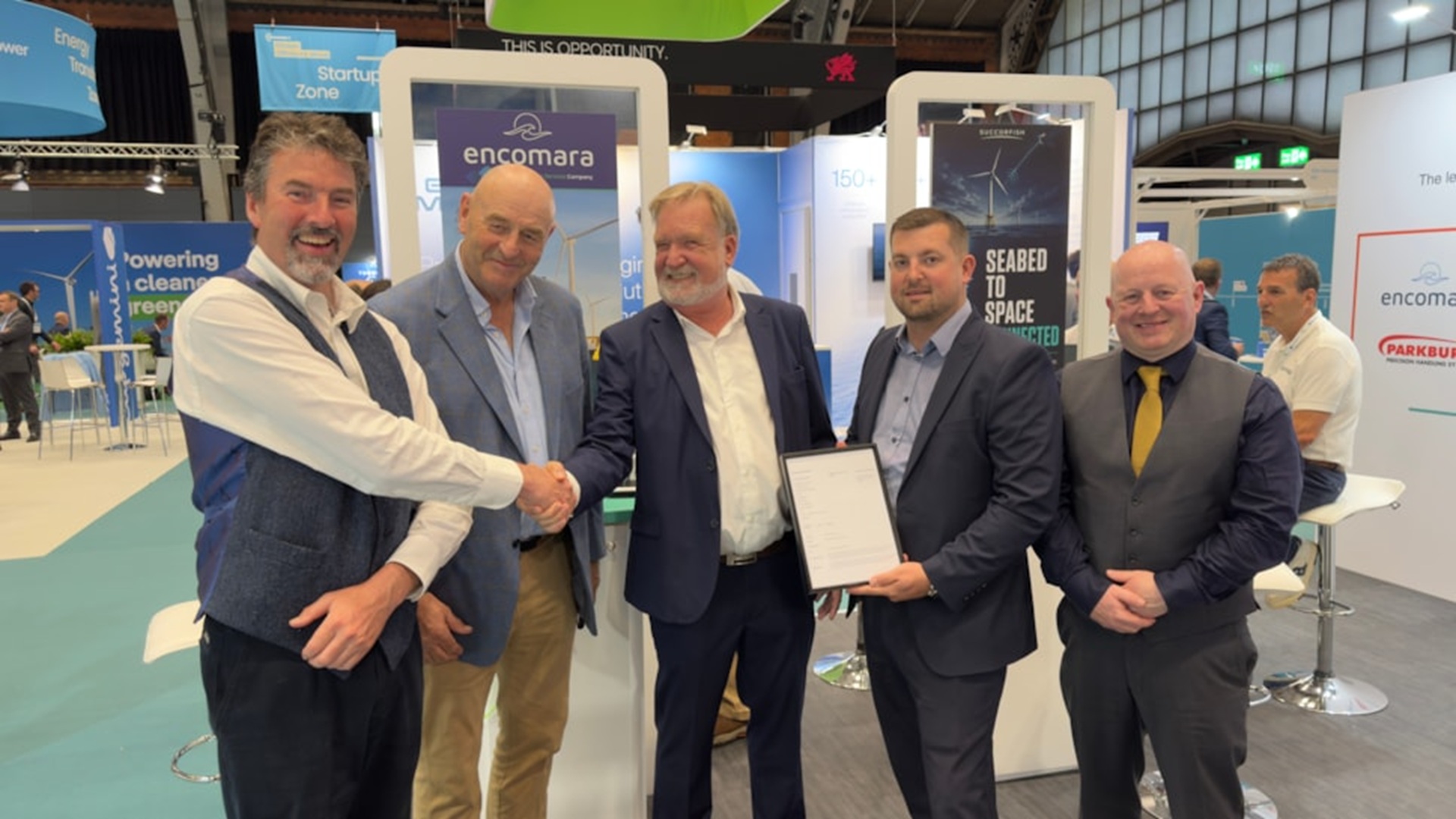
The American Bureau of Shipping (ABS) awarded a Product Design Assessment (PDA) to Scotland’s industrial equipment supplier Encomara for its Squid system on June 17. The quick-connect solution combines mooring and electrical cable protection for FOWTs.
As per the organization, the approval follows an earlier Approval in Principle (AIP) and represents a more advanced level of technical review and design verification. ABS said it completed a detailed assessment of the technology against class and industry requirements for floating offshore wind applications.
“ABS is proud to support Encomara in bringing that approach to this sector, and this assessment reflects the technical depth behind it,” Rob Langford, ABS Vice President of Global Offshore, said.
The Squid system
Floating wind systems are expected to play a major role in expanding renewable energy generation. They can be deployed in deeper waters where fixed-bottom turbines are not practical.
This would increase the amount of usable marine space, as well as unlock access to stronger and more abundant wind resources. Still, installation and maintenance operations remain complex and costly. As a result, this has left developers looking for technologies that can simplify offshore deployment.
Credit: Encomara
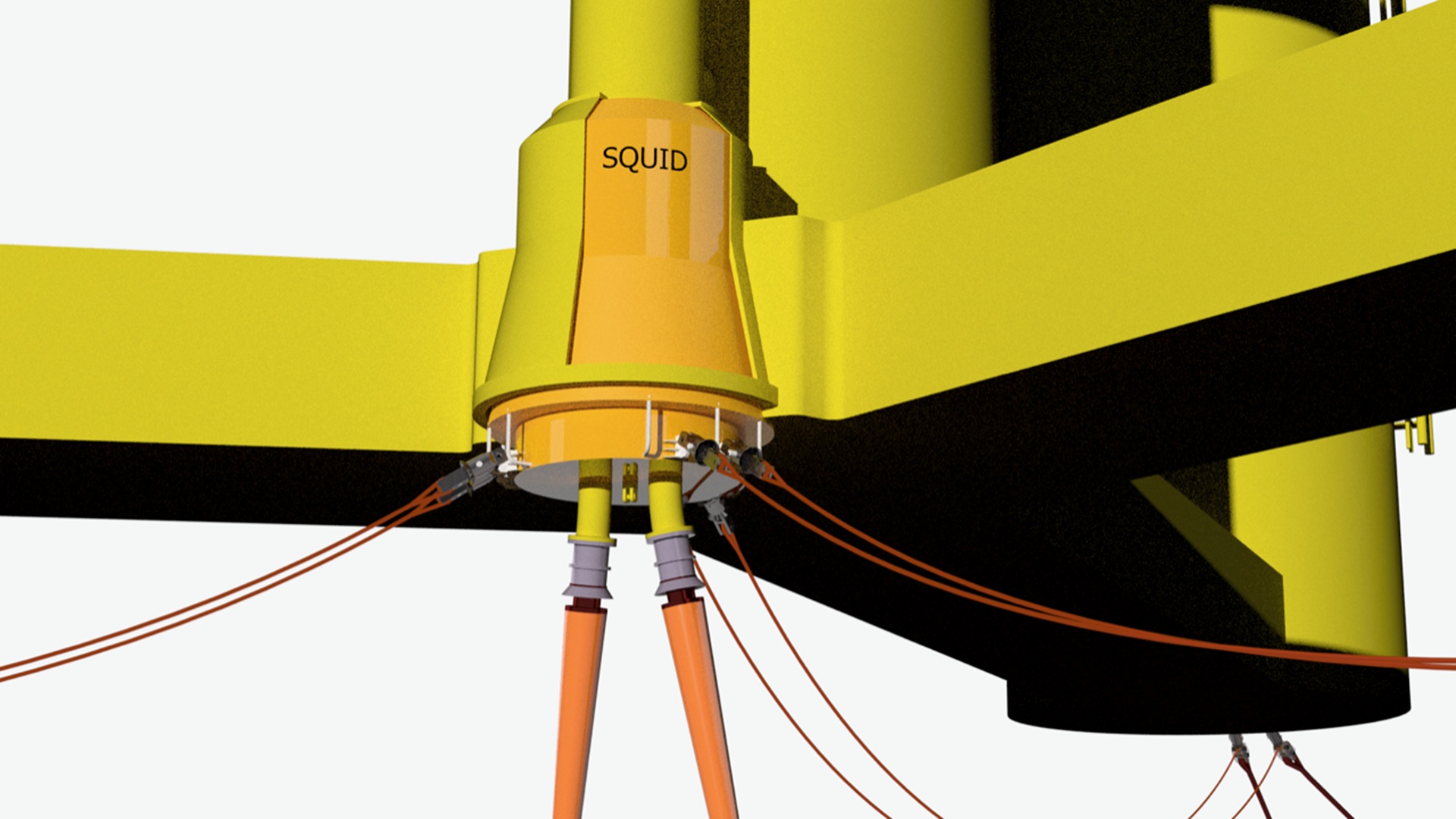
To tackle the issue, Encomara adapted the Squid system from the Disconnectable Turret Buoy (DTB). The technology has been used for years in floating oil and gas production. It is made from conventional offshore components that already have high technology readiness levels.
The Squid technology is built to protect moorings and interarray cables during turbine installation and off-station periods. It relies on procedures already well understood across the offshore industry.
What’s more, its disconnectable design can support repair scenarios throughout the unit’s entire service life. This helps reduce risks when temporary disconnection is required.
A proven technology
The company estimated that the Squid could increase floating turbine installation rates by 42 percent per season and raise energy yield during project ramp-up by 27 percent. It also projected a 2.5 percent lifetime increase in energy output.
This, according to Ian Donald, Encomara Managing Director, is equivalent to 3.3 terawatt-hours (TWh) of additional electricity generation for a 1.2-gigawatt (GW) floating wind development.
Donald pointed out that receiving a PDA from ABS marks a pivotal step in Squid’s qualification journey. “We’ll be conducting further inshore wet testing in Ardersier in the coming months, representing the next steps toward Technology Readiness Level assessment and commercial adoption,” he continued.
Credit: ABS
Encomara plans to carry out onshore demonstrations at AES’s Huntly site in July.
In August, the company will move on to inshore wet trials and demonstrations for customers.
Studies backed by Scottish Enterprise and industry developers suggest the Squid system could slash installation times by up to 50 percent. It could also potentially deliver savings of USD 1.35 billion (GBP 1 billion) per gigawatt of floating wind capacity.
“Floating wind developers need proven, bankable solutions, and this is exactly what Encomara is delivering,” Donald concluded in a press release.
Recommended Articles

Get the latest in engineering, tech, space & science - delivered daily to your inbox.
Based in Skopje, North Macedonia. Her work has appeared in Daily Mail, Mirror, Daily Star, Yahoo, NationalWorld, Newsweek, Press Gazette and others. She covers stories on batteries, wind energy, sustainable shipping and new discoveries. When she's not chasing the next big science story, she's traveling, exploring new cultures, or enjoying good food with even better wine.