


War, they say, never changes. While that may be true in terms of the destruction it brings, the same cannot be said for the weapons used to wage it.
In fact, we’ve seen many “quantum leaps” in technology throughout history that have changed the face of conflict beyond all recognition. The introduction of steel weapons, the rise of aircraft, and the advent of nuclear arms each transformed conflict beyond recognition, shifting not just how wars are fought, but who holds the advantage.
Today, another shift may already be underway, one defined not by increasingly complex and expensive systems, but by something far simpler: cheap, expendable gear like unmanned aerial systems/drones and missile-loitering munition hybrids. The proliferation of these systems are enabled by exploiting dual use technologies and commercial off the shelf components which facilitate economies of scale resulting in significant reduction of unit costs.
From Ukraine to Iran, these cheap, adaptable technologies are increasingly being used to overwhelm and defeat “exquisite” systems such as tanks, artillery, air defense systems as well as helicopters and aircrafts.
So, are we witnessing the next major evolution in warfare? Let’s find out.
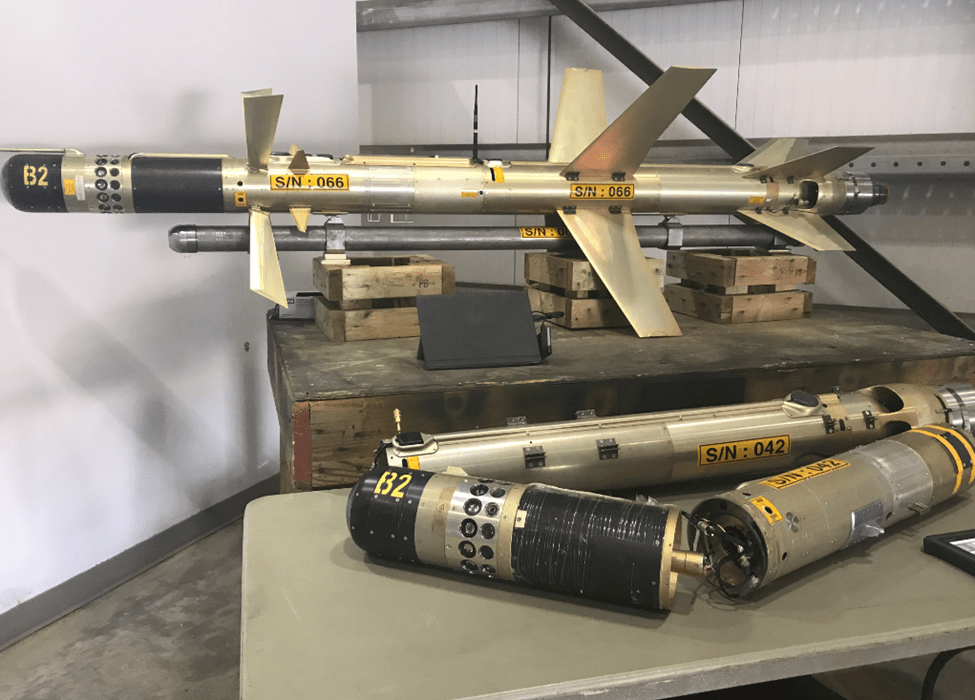
For even the casual observer, recent conflicts in Ukraine and in the Middle East all have one thing in common: employment of drone swarms to saturate and overwhelm defenses.
And for good reason; it makes more economic sense in the long run. While cruise missiles and precision-guided munitions are extraordinarily effective, they are also expensive and often time-consuming to replace once expended.
Hundreds of cheap drones, often termed as into Low Slow Small (LSS) drones, can often achieve similar operational goals. Importantly, they can be produced and deployed at scale for a fraction of the price than a handful of high-end weapons.
Of course, the use of either depends on the objective, but the trend appears to be, broadly, that cheap munitions are being used to force expensive responses.
When mixed in with “real” munitions, this forces a defender to treat all as potential real contacts and respond accordingly, and waste expensive interceptors needlessly. That is not just traditional warfare, but economic warfare in its purest form.
So, if it takes a $4 million interceptor to knock out a $35,000 one way attack drone, the economics of defense break pretty quickly. Of course, this is nothing new in the grander scheme of things.
The mighty battleship, after all, was rendered obsolete by massed aircraft attacks launched from aircraft carriers. The use of drones and decoys is, therefore, just a natural progression of this same idea, except on steroids.
Another interesting aspect of this trend is that cheap technology, like drones, is also lowering the barrier to effective warfare. This, in theory, enables smaller forces to be able to challenge major powers, at least for a time.
In theatres like Ukraine, for example, cheap consumer drones have been modified for use as first-person-view (FPV) loitering munitions as well as reconnaissance assets. This process is not only cheaper than conventional military procurement but also appears to be far more nimble.
It allows smaller forces to iterate and adapt rapidly, and modify equipment as needed, often at the front. Traditional military procurement, on the other hand, is famously sluggish.
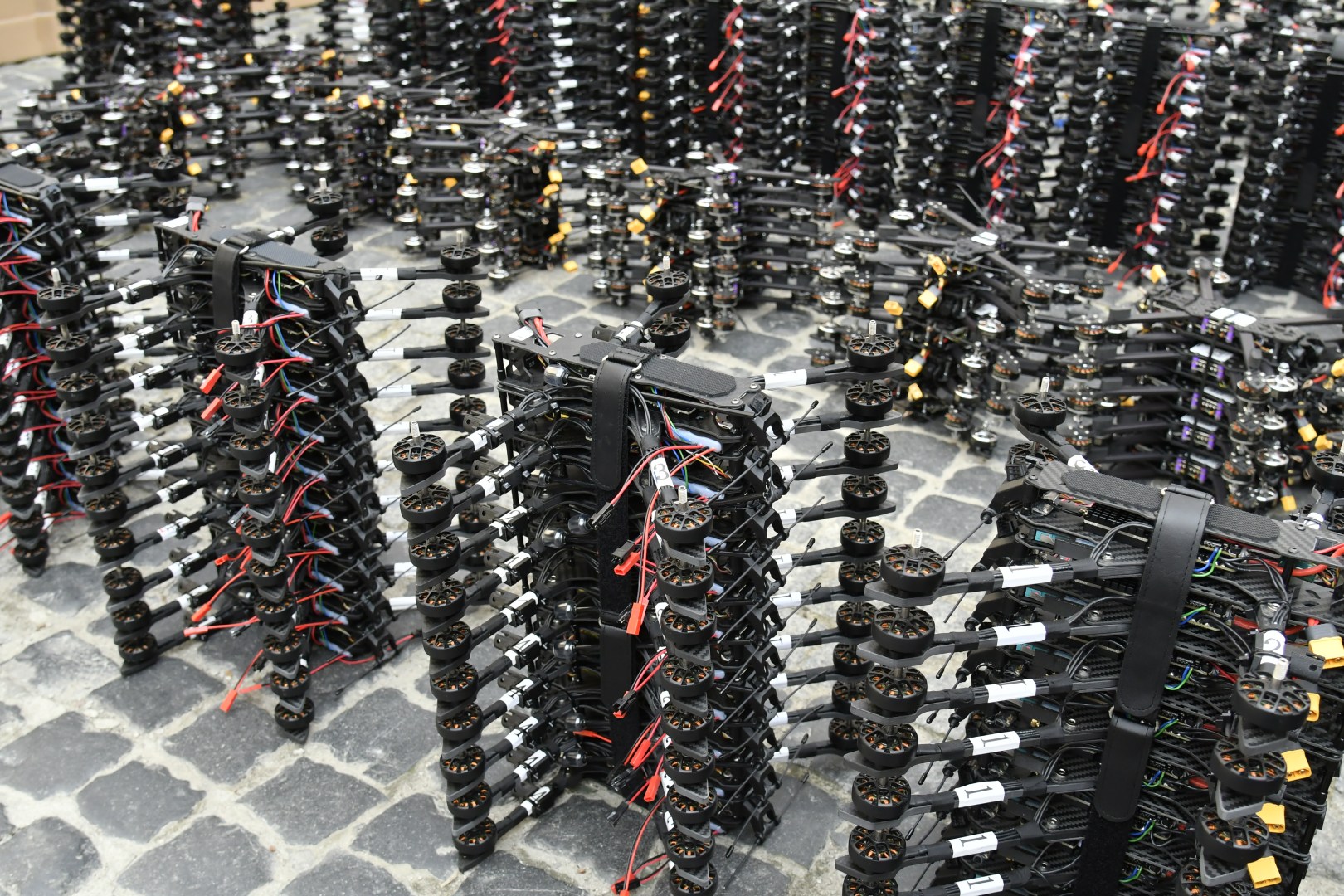
This asymmetric warfare enables smaller actors to conduct similar operations (like precision strikes, intelligence gathering, and logistics disruption) without the need for large air forces, armies, or navies.
Of course, they are still important for prosecuting a large-scale war, but if you just want to harass (guerrilla-style campaigns) or buy time, cheaper options are a bonus.
Even if smaller actors’ munitions are less effective one-for-one with sophisticated alternatives from larger nations, attacks from them still require a response. And that is the key: volume usually wins out in the long run.
And if your volume is cheaper (in absolute and relative terms), then you can go for longer.
Other areas of warfare are also set to change, too. One primary example is the role of snipers. Traditionally, they’d either play a critical part in massed assaults or act as lone wolves sent out to harass the enemy.
Nowadays, however, this latter role may have had its day. Cheap FPV drones with thermal imagery can spot them a mile away and either drop a grenade from height or coordinate other drones or artillery to take them out.
Even the best camouflage and training (again expensive) cannot hide you from physics.
Traditional armed forces have, obviously, also come to the same conclusion. Many nations around the world are already working on the integration of cheap technologies of their own, too.
What’s more, with considerably larger budgets, experience, and expertise, it is only a matter of time before the tides turn once again. This is through a combination of “if you can’t beat ’em, join ’em,” but also investment in counter-drone/decoy technology.
According to Defense One, the US Army is now committed to acquiring its own stockpile of cheap, disposable systems. As reported, the US Army is seeing something of a tectonic shift in doctrine from “exquisite” to “cheap and mass” assets.
One example is the Army’s Low Altitude Stalking and Strike Ordnance, or LASSO, dubbed the Hellhound S3. Entirely 3D-printed, this lightweight, turbojet-powered drone is multi-role and can be repaired or modified in the field.
But, there are also other avenues larger armies are also exploring: high-tech or repurpose “Golden Oldie” tech. One prime example is directed energy systems (both microwave and lasers). While not the cheapest tech to develop but once operational, each “shot” costs cents, travels at the speed of light, and is highly accurate.
Older technologies is also proving to be quite effective as drone countermeasures. These include rockets and air defense gun systems like single/multi barrel Bofors L/70, ZSU-23-4 Shilka (upgraded by using electro-optical/infrared and radar guidance and fire control systems). They are proven to be very capable of intercepting drone swarms in a cost-effective manner. Most of these systems fire numerous shots with air burst munitions to increase the chances of hitting the target.
Air platforms like A-10 Thunderbolts and AH-64 Apaches are also employing this cost effective combination of rockets and guns to knock out drone swarms. Being airborne these also have the added advantage of early detection of the LSS category drone swarms, as their radar cross section (RCS) likely lies in the range of 0.01-0.1 m2 (in between the RCS of a human and a bird) which makes detection as well as classification difficult.
And that’s your lot for today.
If history is any guide to go by, this shift will likely not mark the end of expensive military technology, but rather the beginning of a new balance. Exquisite systems will still matter, but increasingly they will operate alongside cheap, adaptable, and disposable platforms.
In modern warfare, victory may no longer belong solely to the most technologically advanced force, but to the one that can innovate fastest, adapt quickest, and produce at scale.
But, of course, time will tell.
此内容由惯性聚合(RSS阅读器)自动聚合整理,仅供阅读参考。 原文来自 — 版权归原作者所有。