


Scratched contact lenses often mean an expensive replacement, even if the damage is minor. Researchers in South Korea have now developed a self-healing material that can repair those tiny imperfections using just one hour of ultraviolet light, opening the door to more durable soft contact lenses.
The new hydrogel-based material restores itself at room temperature and could eventually help wearers extend the life of their lenses instead of discarding them after everyday wear. The technology also combines a protective coating that resists scratches and bacteria, adding another layer of durability for future designs.
Researchers Jung-Hyun Choi and Byoung-Ki Cho created the material using a hydrogel, a water-rich polymer network already widely used in soft contact lenses. They redesigned the structure so that ultraviolet light, instead of heat, activates the repair process.
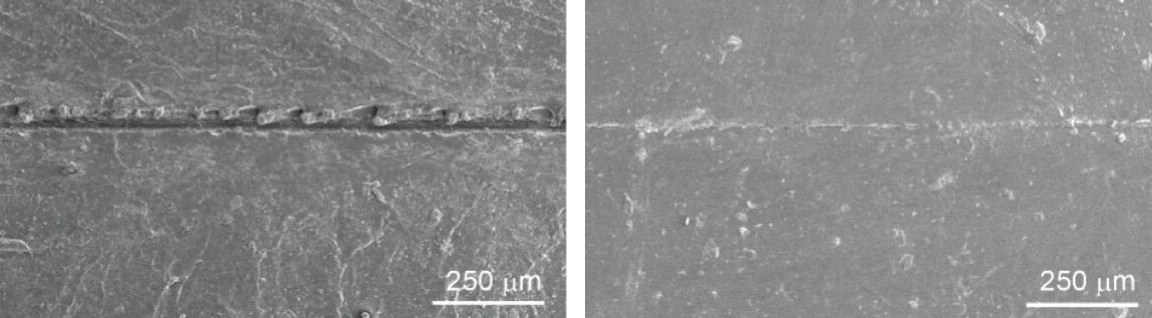
Exposure to UV light with a wavelength of 365 nanometers for one hour triggers a chemical reaction known as disulfide exchange. During that process, sulfur bonds temporarily break apart and reconnect with neighboring atoms, allowing the damaged polymer network to gradually rebuild itself.
The team had previously demonstrated a heat-driven self-healing hydrogel, but that approach required several hours of warming. Extended heating dries out contact lenses and makes them unsuitable for everyday use, making room-temperature repair a more practical alternative. Laboratory tests showed the healing process restored scratched samples with high efficiency, leaving behind a nearly seamless surface instead of visible damage.
The researchers also coated the hydrogel with another polymer designed to reduce bacterial growth and shield the surface from abrasion. That extra layer proved effective during durability testing. Even after repeated contact with fine-grit sandpaper, the coated material maintained its clarity. Transparency declined by only about 2%, suggesting that routine scratches would have little effect on vision quality.
The hydrogel also retained water and displayed mechanical characteristics comparable to those expected from commercial soft contact lenses. Those properties are critical because comfort depends on a lens remaining hydrated throughout the day.
According to the researchers, users could eventually repair minor damage with UV lamps already found in many homes, including devices used for cleaning or curing gel nail polish. The repair process can also be repeated, allowing the material to recover from multiple instances of wear.
Several steps remain before self-healing contact lenses reach consumers. The material must undergo additional stability evaluations and regulatory review to confirm it can withstand long-term use and repeated repair cycles.
If those hurdles are cleared, the technology could reduce waste and lower replacement costs for millions of contact lens users. Instead of treating every scratch as the end of a lens’s life, future designs may be able to recover from everyday damage and stay in service much longer. The project received funding from the National Research Foundation of Korea.
The study titled “Room-Temperature UV-Induced Self-Healing Hydrogels with Antifouling and Antiscratch Surfaces for Soft Contact Lenses” is published in the journal ACS Applied Polymer Materials.
Aamir is a seasoned tech journalist with experience at Exhibit Magazine, Republic World, and PR Newswire. With a deep love for all things tech and science, he has spent years decoding the latest innovations and exploring how they shape industries, lifestyles, and the future of humanity.
此内容由惯性聚合(RSS阅读器)自动聚合整理,仅供阅读参考。 原文来自 — 版权归原作者所有。