





Anna Moneymaker/Getty Images News
Listen below or on the go on Apple Podcasts and Spotify
Jerome Powell will stay as governor. (0:17) FOMC holds rates steady as four members dissent. (1:54) Treasury yields rise, markets see no rate moves this year. (2:37)
The following is an abridged podcast:
Jerome Powell said he will remain on the Federal Reserve Board as a governor until he is satisfied that the Justice Department’s investigation into the Fed is truly resolved.
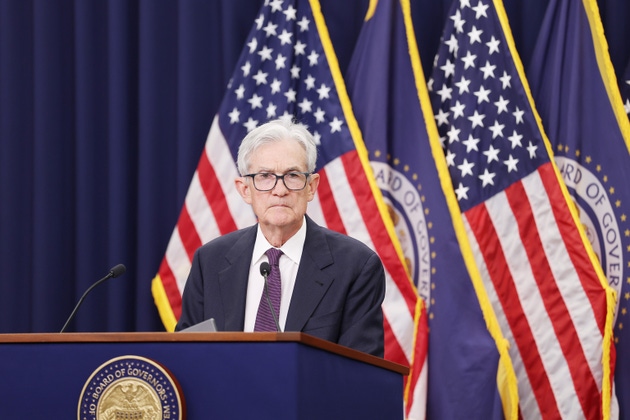
In his final press conference as chair, Powell struck a firm tone. While welcoming the DOJ’s decision to close the probe, he noted the department also said it could reopen the investigation, leaving him with “no choice but to stay” to safeguard the Fed’s independence.
“I am literally staying because of the actions of the administration,” Powell said, adding that his concerns were not about verbal criticism by elected officials.
President Donald Trump has repeatedly criticized Powell for not cutting rates and recently said he would move to fire him if he stayed on. Powell said his tenure as governor will continue for a period “to be determined.”
“My concern is really about the series of legal attacks on the Fed which threaten our ability to conduct monetary policy without considering political factors,” Powell said.
“These legal actions by the administration are unprecedented,” he added. “I worry these attacks are battering the institution.”
Renaissance Macro said the question now is “whether Trump takes the bait and decides to go after Powell for doing something that is within Powell’s remit,” adding that any attempt to remove him would escalate tensions around Fed independence.
Powell said he intends to keep a low profile when Kevin Warsh takes the helm. The Senate Banking Committee earlier advanced Warsh’s nomination to the full Senate.
Tom Graff, CIO at Facet, said, “Powell can say what he wants about not being a ‘shadow chair,’ but his words are going to carry so much weight with the FOMC. My guess is Powell becomes a stand-in for Fed independence within the FOMC.”
As for the decision itself, the FOMC held rates steady at 3.5%–3.75%, as widely expected. But there were four dissenting votes — the most since 1992.
Steve Miran voted for a rate cut. Beth Hammack, Neel Kashkari and Lorie Logan dissented over what they viewed as an easing bias in the statement, arguing policy language should remain neutral between hikes and cuts.
Macro strategist Dario Perkins said, “The dumb take is that Powell has lost control. The smart take is that this is the FOMC telling Warsh he won’t have control.”
Following the decision and press conference, market-implied odds of rates staying steady through year-end rose to 88%, with pricing showing slightly higher odds of a hike than a cut.
After all that, stocks ended little changed as traders reset for the onslaught of postmarket earnings. The S&P (SP500) and Nasdaq (COMP.IND) finished barely in the red, while the Dow (DJI) lost 0.6%.
The real Fed reaction showed up in the Treasury market, where yields moved higher across the curve.
The 2-year yield (US2Y), most closely tied to the fed funds rate, rose 9 basis points to 3.94%. The benchmark 10-year (US10Y) climbed 6 basis points to 4.42%. The 30-year (US30Y) approached the 5% level, rising 5 basis points to 4.99%.
As Powell stepped away from the lectern for the final time as chair, he closed with a simple line: “Thank you very much everyone. I won't see you next time.”
此内容由惯性聚合(RSS阅读器)自动聚合整理,仅供阅读参考。 原文来自 — 版权归原作者所有。