









South Africa will raise the alarm over the steep decline in global health aid at a UN HIV/AIDS meeting opening today, officials said, which comes as the US plans to permanently cut its $8 billion HIV relief programme, pushing the country’s fragile coalition government toward a fiscal and diplomatic crisis.
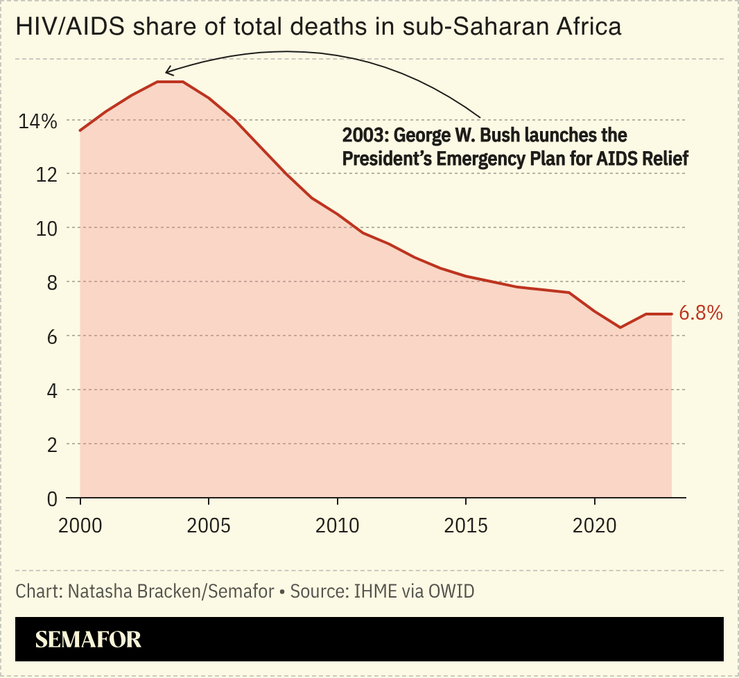
The withdrawal of the President’s Emergency Plan for AIDS Relief (PEPFAR), first reported by Semafor on Thursday had already been slashed by 75%, leaving a $115 million stopgap until March 2026.
Washington’s move has raised fears among frontline nonprofit organizations that interrupted health visits and missed treatment will hamper patient care in the country with the world’s largest number of HIV patients.
South Africa’s health ministry spokesperson Foster Mohale said the country had already been eyeing a plan B for HIV/AIDS funding, while acknowledging that the decision to wind down PEPFAR “did not come as a surprise” after the initial freeze at the beginning of last year.
“The department has long been working on a self-reliance plan... to minimize the impact of PEPFAR withdrawal,” Mohale said.
Pretoria plans to raise the issue of broader health funding cuts at a two-day UN High-Level Meeting on HIV/AIDS in New York, opening today, which brings together ministers, development banks, and major donors to assess the gap between global health needs and available funding.
South Africa is expected to use the meeting this week to rally more funding from delegates, including UNAIDS, the Global Fund, and the World Bank on grounds that the contraction of US support risks reversing two decades of progress in the world’s largest HIV program.
The PEPFAR decision comes against a backdrop of diplomatic tensions between Washington and Pretoria — in part over South Africa’s Iran relationship, and economic policies for its Black population — and could further strain ties.
A senior government official, speaking to Semafor on condition of anonymity, said they were surprised by Washington’s decision to link HIV treatment to domestic policy changes — including what they described as “invented issues” such as claims of genocide against Afrikaners. The official said the demand to dismantle Black Economic Empowerment policies was viewed internally as a direct reversal of commitments made to South Africans who fought against apartheid.
Another official said the move was especially baffling given recent progress in economic ties between the two countries, including the preliminary gas supply agreement between ExxonMobil and the planned Zululand LNG terminal.
But Kamil Ali, spokesperson for the trade, industry and competition department, said negotiations with the US over a new trade deal remained constructive.
此内容由惯性聚合(RSS阅读器)自动聚合整理,仅供阅读参考。 原文来自 — 版权归原作者所有。