


Wolterton Hall is folded so deeply into the countryside of the Bure Valley that you can’t even see the grand Palladian mansion when you enter the gates to the estate. This was once one of the four power houses of Norfolk, built by Thomas Ripley for Horatio Walpole. Inside, Wolterton is dripping in 18th-century treasures, furniture, then-fashionable Belgian tapestries, fusty old portraits of important types – but now also, knobbly bodily things, strange almost familiar shapes stuck to walls and chucked down the stairs, as if someone– namely Phyllida Barlow – had come in and trashed the place.
It’s a difficult thing to know what to do with these former country stately homes. Many have adopted a contemporary art programme as a way of challenging their history and bringing in new visitors. Simon Oldfield – Wolterton’s artistic director, brought in by the new owners, the Ellis family, two years ago – has done more than that. He has reinvented the space, making room for new ideas to take over. There’s no better artist for that than Barlow, whose works seem to take on a life of their own wherever they go. Her exhibition begins at the entrance, where the explosive installation Untitled: Stacked Chairs greets you. The cacophony of red plywood chairs feels like a statement about throwing things out and starting again. It’s rebellious, disruptive and direct.
Up the elegant staircase, there’s a room dedicated to small-scale Barlow sculptures, framed by immense views to the estate. There’s a rare outing for an early work called Loaf – yes, it resembles a loaf of bread but it’s tar-black glass and paper coated with latex. It is a perfect example of Barlow’s approach to reshaping the everyday with unconventional materials. It’s maybe even a little bit sexy. More recent wall sculptures cobbled together with cement, hessian scrim, with plaster and other bits like rope chucked in look like big gobs of bubblegum stuck rudely to the wall, their pockmarked surfaces interrupting the space.
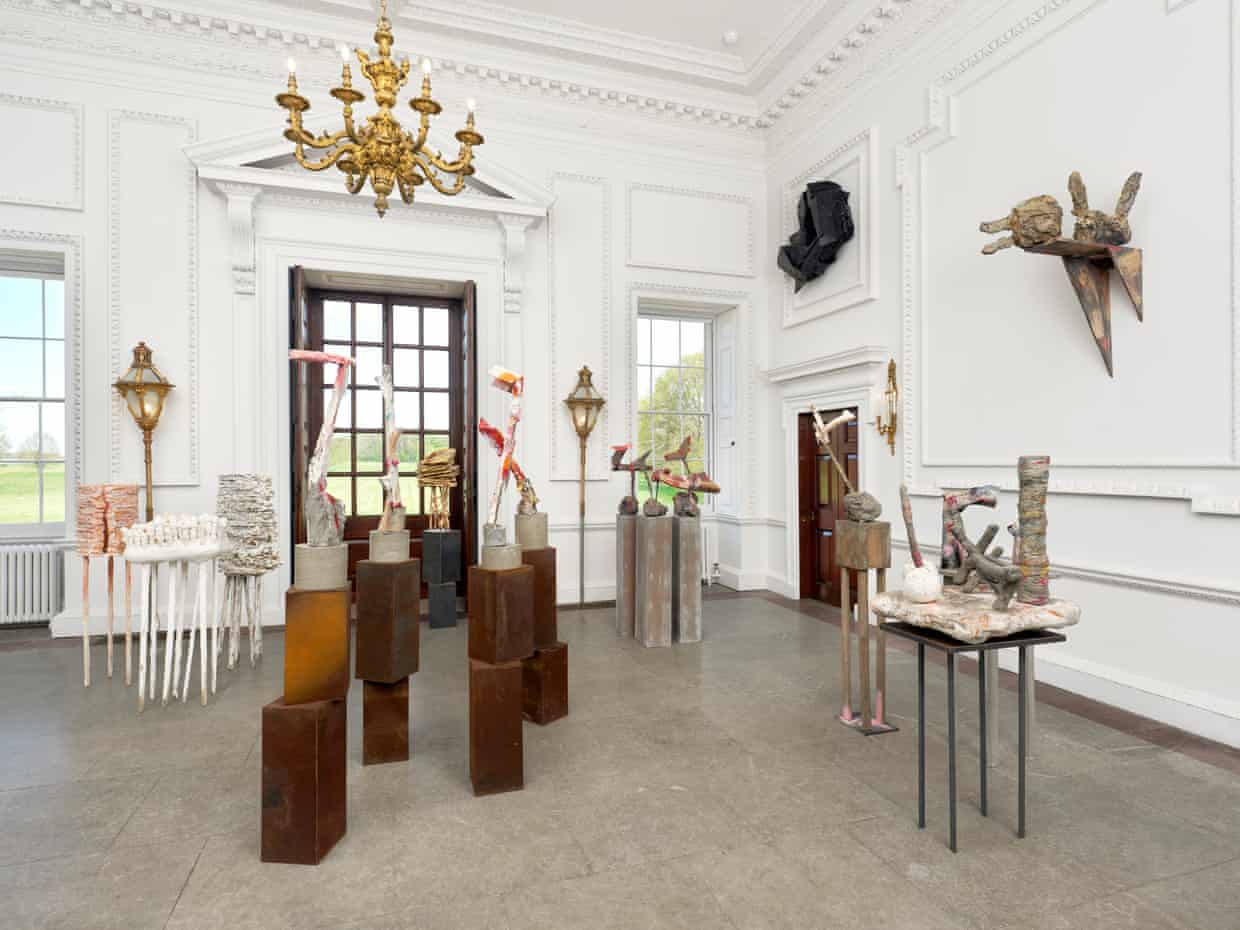
On plinths are several knobbly towers, creating a kind of cyborgian forest that echoes nature outside – but not quite. They’re messy, sloppy, fashioned with energy and pace. The whole room reverberates with Barlow’s irreverent punk attitude, the cheapness of her materials – there’s cardboard, foam, plaster, plywood and plastic – contrasting with the opulence of the house.
Throughout her career, Barlow often put works in random rural places where few people might see them (though I’m told visitor numbers are good at Wolterton). So this all feels very her. The artist, who died in 2023, thought of her works as “monuments to impermanence”, and that has a charge in a place whose architecture expresses an abiding belief in legacy. Barlow’s work is also about what materials communicate. The house says, I am here, I’m important – Barlow says, everything is precarious, nothing goes as planned. It’s electric and a bit cheeky too.
Oldfield’s vision for Wolterton feels different to those of other similar grand estates. His team hasn’t been afraid to strip out some of the history – whole rooms of historic family portraits are gone (into storage). The exhibition of Barlow continues into one such room, the portrait gallery, now filled with Barlow’s drawings from the 1970s to the early 2010s. They’re cartoonish abstractions, sketches for sculptures, dynamic forms that bounce off the walls. And those walls have been stripped of their wallpaper, revealing original pencil markings, measurements, drawings and notes left on them by builders centuries ago. It creates a different kind of conversation with history – Barlow and the 18th-century labourers having a chat about forms and how to position things.
On my way to the final Barlow piece, I sidestep into a concurrent, smaller solo show by Daisy Parris, Fist Full of Dreams. It’s a suite of new paintings inspired by a visit to Wolterton in February, and a reconfiguration of a five-metre-long abstract textile piece, its knotted and sewn surface a landscape of its own. Parris’s works respond more directly to Wolterton and its alteration – since the artist was here and experienced them – but they feel more emotionally than materially reactive. The poems that work their way into the paintings call up images of fading winter light, flowers struggling to bloom, that angst and brooding of deep winter contrasting with the pinky, orangey bright drips and striations of Parris’s painting.
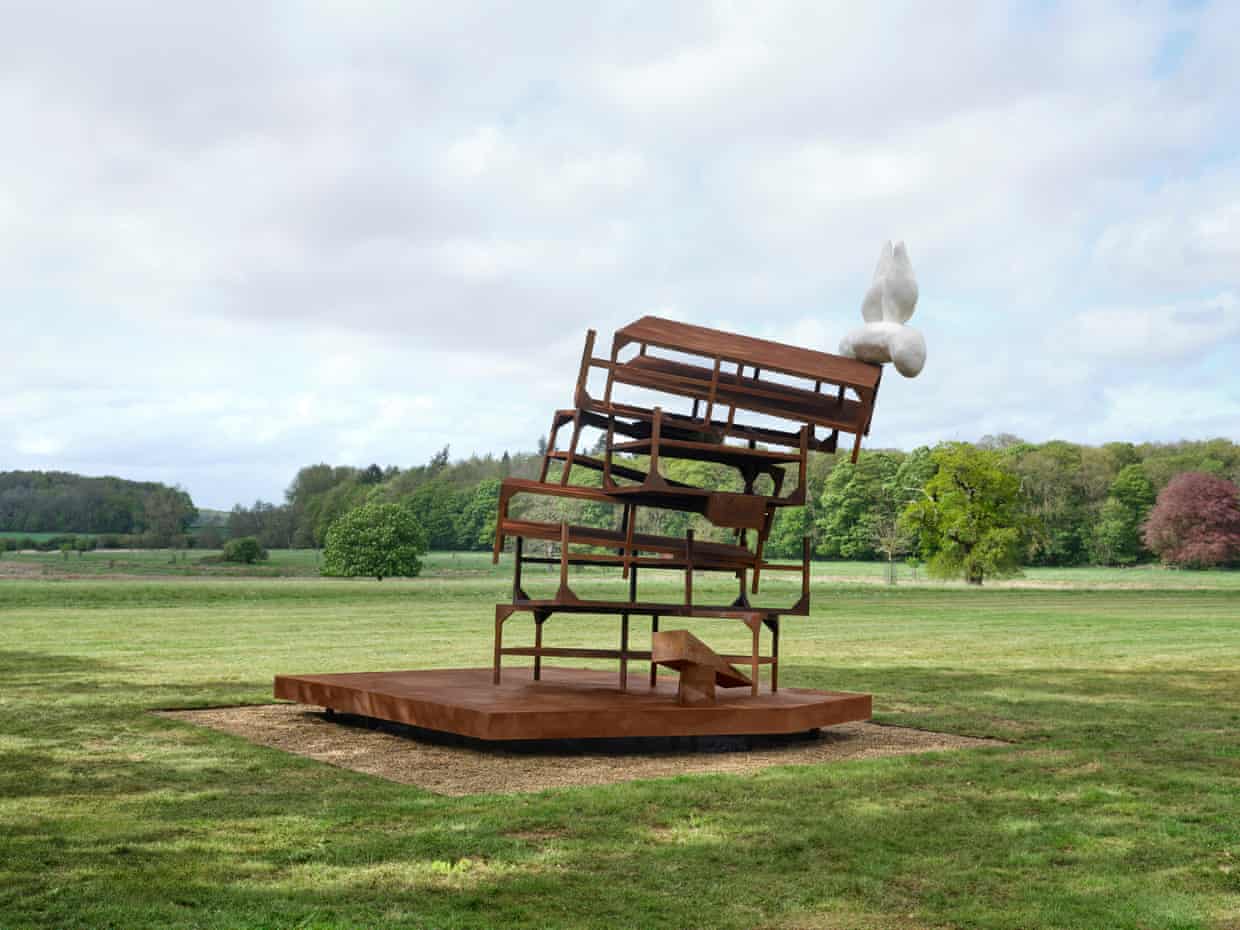
Barlow: Disruptor ends outside with the sculpture PRANK: jinx, a teetering stack of her rusty old studio work tables, with her trademark rabbit ears on top. The work was part of a late series Barlow produced, one of her last bodies of work – wonky and ungainly, it was her riposte to what public monuments and artworks could be. A lot of thought and effort went into its position here, but it doesn’t do a lot for me – I’ve never especially liked Barlow’s bunny ears, a motif she played with since the 1990s. At least it continues the sense of tension, adding something industrial to a sublime Romantic landscape, to deliberately jarring effect. Not everything has to be harmonious. And these historical heritage places can be reborn, with imagination, wit and charm.