


The work begins at sunrise, ahead of her first Instagram post. Astha Chhetri starts the day on her phone, combing through supplier lists, checking shipment updates and preparing stock for her online store.
The evenings find Chhetri, 26, with her mobile still in hand, photographing and posting reels of clothes for sale and replying to customer messages.
What started as a side hustle while she was working in a poorly paid call centre role has become her full-time job.
“I was not enjoying my job, neither mentally nor financially,” Chhetri says. “I wanted to build something of my own.”
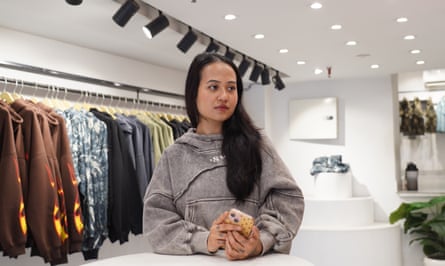
From Instagram sales to street markets, students and younger people facing a shrinking job market are fighting back by following the trend for vintage and secondhand fashion to make a living in India’s booming informal economy.
India’s secondhand clothing market is worth an estimated ₹33,000 crore (£2.5bn) annually. Most buyers are students or younger professionals looking for distinctive, affordable fashion.
“I love browsing Instagram for unique hoodies and tees,” says Ananya Khan, 21, a college student in Delhi. “I usually spend ₹800-₹1,500 per item.”
The boom is shaped by the rising cost of living as well as high unemployment rates among India’s digitally-savvy youth. In 2025, about 10% of people aged 15–29 were out of work, according to the Periodic Labour Force Survey.
Filling this gap, thrift resale offers what formal employment often cannot: low start-up costs, flexible hours and immediate cashflow.
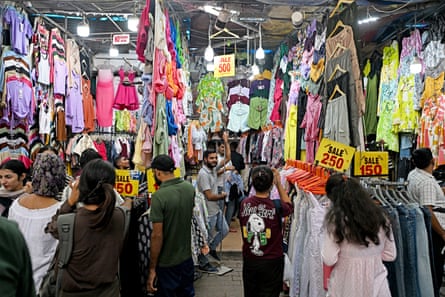
For Vishu Roy, 22, who runs a thrift store near Sarojini Nagar market in south Delhi, his business began almost accidentally.
“I started with just ₹5,000-₹10,000 in savings from part-time work and family help,” he says. “I saw people buying old clothes in markets and realised they could be resold. Now, it is my main income.”
Roy began online but later opened a small store. He spends six to seven hours a day managing his social media accounts, posting reels on Instagram and WhatsApp, replying to messages and tracking orders.
“I always check his Instagram drops first thing,” says customer Rohan, 23, a digital marketing assistant. “Sometimes I even wait to snag rare pieces before they sell out.”
“If you stop posting, you disappear,” Roy says. “Consistency is everything in this business.”
Every part of the process – sourcing from wholesale and local markets in Delhi, photographing, marketing and delivery – is self-managed. There are no contracts, but also no predictable income. Some months bring profit, others losses.
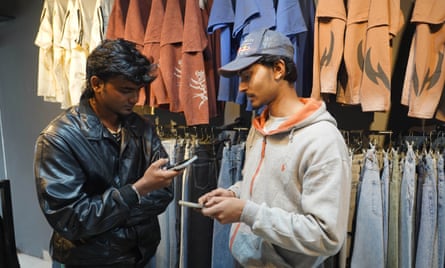
Roy admits: “Some months are great, others slow. But it is still better than waiting for a job that doesn’t come.”
Social media platforms have become the backbone of India’s thrift economy, helping sellers reach customers far beyond their cities. They use Instagram shops, WhatsApp catalogs and YouTube for promotion but dependency on platforms is a double-edged sword: visibility drives income, but the system is fragile. Scams, or changes in algorithmic trends can threaten livelihoods overnight.
“Around 70% of my sales come from Instagram,” says Chhetri. “If reach drops, sales drop too. One bad week on the algorithm can hurt the whole month.”
Roy spends hours daily maintaining engagement, aware that one missed post could reduce visibility. “You can’t stop,” he says. “Social media is your storefront.”
Yet Delhi’s street markets, from Sarojini Nagar to Janpath, remain the centre of the thrift economy where many resellers source their stock, build contacts and learn the trade.
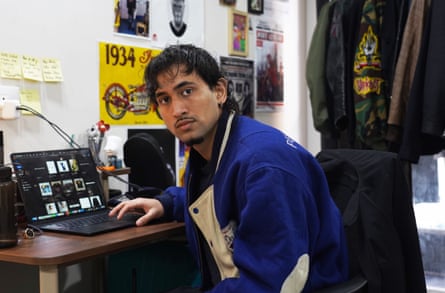
Abhin Bougia, 22, from Jammu, started in 2021 with ₹1,000 and his cousin as a partner. They scouted markets for branded surplus clothes and sold them online.
“We started from nothing,” Bougia says. “We bought a few pieces, took photos, posted them on Instagram and WhatsApp and called it our first ‘drop’. That’s how it began.”
His earnings vary wildly, from modest profits to exceptional days.
“Once, I made ₹35,000 in a single day,” Bougia says. “But sometimes, clothes take months to sell.
“Sometimes you buy stock for ₹1,500 and can’t sell it at all. If it doesn’t move, you are stuck with dead stock.”
Panipat and Sarojini Nagar market traders have seen a surge in young buyers.
“People come early in the morning, pick the best pieces and sell them online later at three times the price,” says vendor Adarsh Kumar.
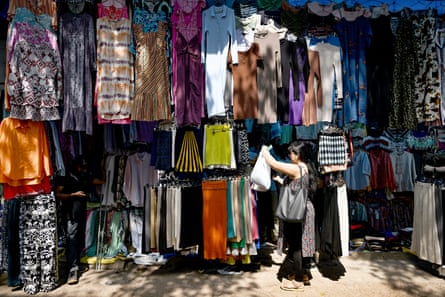
Much of the clothing in the markets originates from export-surplus or factory-reject stock. Garments, initially meant for overseas brands, enter informal supply chains through traders and wholesalers, reaching the street markets.
Roy now imports some items directly from suppliers in China and Bangladesh. He distinguishes between categories: “Surplus are factory rejects that may have a small defect, or cancelled order. Thrifted pieces are part of export consignments. Most people don’t know the difference, but it matters for quality and price.”
For Chhetri, sourcing is her biggest cost and greatest risk.
“I import clothes from abroad and pay customs and shipping,” Chhetri says. “Sometimes I even hire a local guide when sourcing overseas. It is a detailed and expensive process.”
Despite the creativity and labour involved, thrift reselling reflects India’s labour market weaknesses, says Arup Mitra, professor of economics at South Asian University in New Delhi.
“This is not a gainful activity,” he says. “Young people turn to such ventures only when other productive avenues are unavailable.”
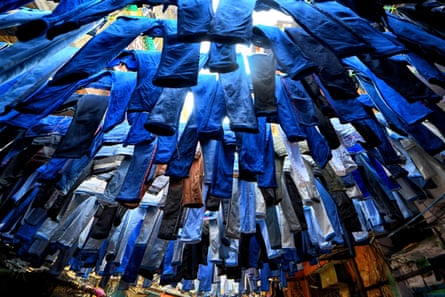
It comes with constant anxiety says Bougia, who calls his thrift business “a passion, but also a gamble”. He has faced fake payments, returns and scam buyers.
“People send fake UPI [Unified Payments Interface] screenshots. You have to check your account before trusting anyone,” Mitra says.
Chhetri echoes the pressure. “It is all on you: the sourcing, the marketing, the stress. There is no safety net.”
Portrayed online as an eco-friendly movement, many sellers admit survival is not about sustainability.
“People buy for style, not the planet,” Chhetri says.

Roy, who focuses on vintage band T-shirts, says his passion lies in curation: “It’s mostly about fashion. Sustainability comes later, if at all.”
At the end of the day, Roy scrolls through his new messages: price negotiations, discount requests, questions about size and delivery. He will answer them all tonight, and tomorrow he will film a new reel.
Chhetri is preparing her next shipment from overseas, packing and labelling items for international shipping. Bougia is editing photos to get ready for his next online drop.
“There is no certainty,” Chhetri says. “Every day is different, some good, some bad. But for now, it works.”