
惯性聚合 高效追踪和阅读你感兴趣的博客、新闻、科技资讯
阅读原文 在惯性聚合中打开

推荐订阅源

Apple Machine Learning Research
J
Java Code Geeks
博客园 - 聂微东
Microsoft Azure Blog
量子位
T
Tailwind CSS Blog
Vercel News
Vercel News
I
InfoQ
Stack Overflow Blog
Stack Overflow Blog
U
Unit 42
Engineering at Meta
Engineering at Meta
L
LangChain Blog
大猫的无限游戏
大猫的无限游戏
D
Docker
博客园_首页
P
Proofpoint News Feed
月光博客
月光博客
T
The Blog of Author Tim Ferriss
MyScale Blog
MyScale Blog
酷 壳 – CoolShell
酷 壳 – CoolShell
Martin Fowler
Martin Fowler
腾讯CDC
N
Netflix TechBlog - Medium
freeCodeCamp Programming Tutorials: Python, JavaScript, Git & More

The Guardian

Rory McIlroy surges into six-shot Masters lead with stunning second-round flourish ‘That’ll be the end’: actor Sam Neill joins fight to stop controversial goldmine near his New Zealand vineyard Roberto De Zerbi targets ‘Ange-ball’ revival to save Spurs from relegation Bath hit back to reach semi-final after stunning Northampton in 11-try epic Secret Garden to Outcome: the week in rave reviews Zebras, wealth and power: Hungary’s election tests Orbán’s grip on power ‘TikTok effect’ brings sellout crowds and younger fans to Grand National meeting The war over Omagh’s gold: the £21bn mine plan tearing a community apart Britain’s shadow workforce is paid as little as 65p an hour. Who cares for the carers? From You, Me & Tuscany to Euphoria: your complete entertainment guide to the week ahead Six great reads: the man who let snakes bite him, masked heavy metal and the brutal reality for foreign students in the UK American Classic review – I defy you not to fall in love with Kevin Kline and Laura Linney’s tender comedy Cuba’s doctors were a lifeline for the world. Now the Caribbean is shamefully complicit in the US drive to expel them An environmental disaster in Moldova has Russia’s fingerprints all over it RMIT drops misconduct case against student who accused university of being ‘complicit in Gaza genocide’ Ichiro Suzuki statue unveiling goes awry as bronze bat snaps during ceremony Survivors of Epstein’s abuse accuse Melania Trump of ‘shifting burden’ on to victims European football: Real Madrid held at home by Girona to extend winless run Arne Slot insists he is ‘aligned’ with Liverpool board and fans as squad is rebuilt Kamala Harris ‘thinking about’ running for president again in 2028 JD Vance warns Iran against trying to ‘play’ the US in peace talks West Ham double up twice to thrash Wolves and put Spurs in relegation zone Trump administration releases new renderings of so-called ‘Arc de Trump’ Crispin Odey drops £79m libel claim against FT over sexual misconduct allegations Bafta apologises for events surrounding John Davidson’s Tourette’s outburst Cocktail of the week: Bar Shrimp’s la rosita – recipe New drug may extend survival in aggressive ovarian cancer, trial shows One dead and 27 injured after bus with British passengers crashes in Canary Islands Pope adds to Smith’s mass of Surrey runs with England woes a world away OpenAI CEO Sam Altman’s home targeted with molotov cocktail
World ‘unprepared’ for next pandemic as countries fail to...
Kat Lay, Glo · 2026-05-05 · via The Guardian

A key deadline to finalise a global pandemic treaty has been missed by negotiators, prompting warnings that the world remains unprepared for the next major disease outbreak.

Countries have been trying to agree how they should share information on pathogens, such as bacteria or viruses, that could cause pandemics – and what access to any resulting vaccines, tests and treatments they should be guaranteed in return.

That “pathogen access and benefit sharing” (Pabs) system must be in place before the World Health Organization’s pandemic agreement, governing how the world should respond to large-scale disease outbreaks in the future, can come into force.

It was “deeply regrettable” that countries had failed to find agreement ahead of this month’s World Health Assembly in Geneva, Ellen Johnson Sirleaf, former president of Liberia, and Helen Clark, former prime minister of New Zealand, who co-chaired the WHO’s Independent Panel for Pandemic Preparedness and Response, said in a statement.

The panel recommended a pandemic agreement five years ago after reviewing the international response to Covid-19 and finding millions of lives could have been saved by a faster and more coordinated response.
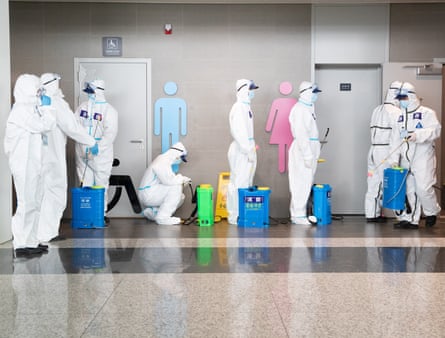
People in full white hazmat suits with goggles carrying large spray canisters
Chinese emergency workers sterilise Wuhan airport in April 2020 after Covid-19 shut down air traffic. A global pandemic treaty was proposed the next year. Photograph: CFoto/Future/Getty

“If a new pathogen emerged today, the world remains largely unprepared for it. A lack of action to prevent and prepare for the next pandemic threat is a disservice to humanity,” the statement said.

Dr Tedros Adhanom Ghebreyesus, the WHO’s director general, urged nations to “continue approaching the outstanding issues with a sense of urgency because the next pandemic is a matter of when, not if”.

World leaders first announced plans for a pandemic treaty in March 2021. However, high levels of mistrust between richer and poorer countries have slowed progress. One problem was the amount of disinformation circulating on social media, including false claims that the accord would cede national sovereignty to the WHO.

The pandemic agreement was finally passed in May 2025, and praised as “a victory for public health”, particularly in the context of fragmenting global cooperation and the US withdrawal from the WHO.

But the accord was only passed by pushing the thorny issue of Pabs into an annexe to the main treaty, subject to further negotiations. The agreement comes into force 30 days after 60 countries have ratified it but it will not be open for signatures until the annexe is completed.

The main dispute is broadly between developed and developing countries. Negotiating blocs such as the Group for Equity and the Africa Group want a standard contract that makes it mandatory for pharmaceutical companies to share any medical products developed as a result of countries sharing dangerous pathogens with them.

Several European countries have argued this could stifle research and development and reportedly proposed a hybrid model, with a mix of mandatory and voluntary requirements.

The plan had been to present an agreed Pabs system for approval in Geneva this month. However, a statement from negotiators said they needed more time, suggesting the 2027 World Health Assembly as the new deadline.