


Photo courtesy of Unsplash
Swimmers load up beaches all dotting the eastern seaboard.
To the eyes of the sea, perhaps it looks like a buffet.
In perfect timing for the latest summer blockbuster, “Jaws” anxiety is invading sleepy hamlets the country over.
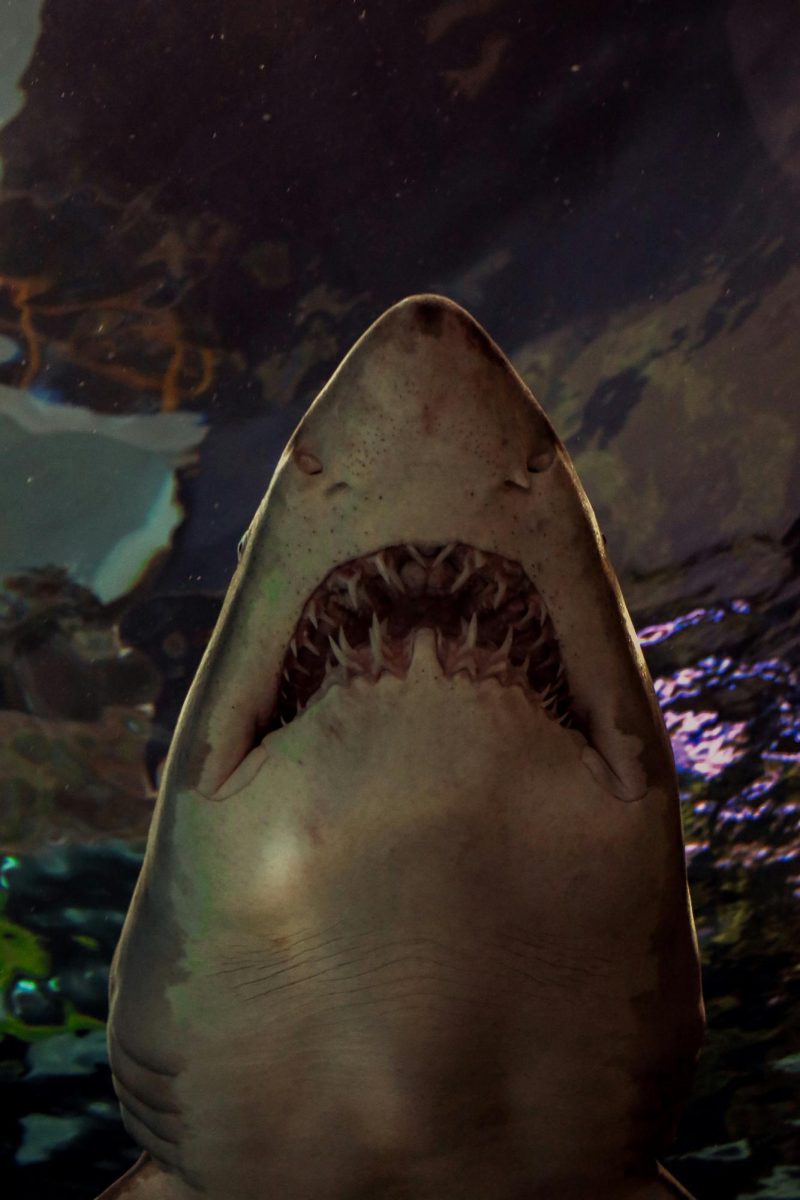
On July 3, A man was bitten while swimming at a New York City beach. Following the attack, shark sightings have reached record highs at nearby beaches.
Following the blood in the water, perhaps?
Maybe just nerves make everyone pay a little more attention. The current suspect in the Independence Day foot attack is a sand tiger shark.
Sand tiger sharks are typically rather docile towards humans — making the attack a slight anomaly.
But the ocean is full of three things: water, salt and mysteries.
Sharks bite about 60 to 65 swimmers unprovoked every year, making up only a mere fraction of murky maritime mayhem. And sometimes those mysteries bite into something much larger than a few toes.
A Knox-class destroyer clips, flying 50 stars and 13 stripes, through the seductive pitch-black duvet that is the Pacific Ocean at night. From fifty fathoms under the lightless depths, a beast erupts.
Hungry for its next meal — the ocean’s hunger is old.
Since man has looked upon the sea, it has spoken of the unfathomable residents that dwell within it. Tales of the Kraken filled the taverns of Dutch privateers with dread.
Leviathan sea serpents recur so often in mythology that it is worth a thorough academic review of their place as an archetype in culture. Sailors have braved the unknown for millennia, and while no one has yet had to ram their ship into an elder-God, they have certainly had many encounters with what humans only a few generations ago might have labeled a monster.
Modern sailors have found scarier things yet: real-life monsters.
In 1978, the Pacific Ocean was a tense place. It was the liquid-iron wall separating the west from the east. The bravest sailors of both sides were placed on this long, wet front and set to guard their empire. That Knox-Class destroyer was named the USS Stein. While looking for Soviet Submarines or some other Cold War business, something else went looking for the Stein.
The sonar cry she sent to the ocean specifically.
Little is known exactly about what happened. It was not quite as exciting as it sounds — no tendrils of the Kraken plumed from the midnight-indigo-glass surface, pulling the most heroic and beloved of men down to the bottom. At least if it did happen that way, it’s still classified.
The story goes that the sonar dome that allowed the ship to detect hostile submarines started behaving oddly. It was not a repair that could be made at sea.
To the men onboard, the failure must have been a mystery. A new Soviet Toy? Or something as boring as a fried circuit?
The truth rested somewhere in the middle.
Upon its arrival in Long Beach, the system was found to be covered in scratch marks from hooks and suckers.
The calling of a really big squid.
The internet has gone on to inflate the size of this mischievous cephalopod, with the wildest of Redditors claiming the beast might have reached 150 feet long. That is, to put it politely, outlandish.
The claim seems to originate from an old episode of Arthur C. Clarke’s “Mysterious World.” Episode two, titled “Monsters of the Deep,” details all kinds of legends of the sea — including a section recounting the USS Stein.
However, the USS Stein section seems to have lingered in the mainstream of pop science due to its military credibility.
Several naval servicemen and engineers are interviewed in the episode. The show has gone on to be praised for its factual accuracy, even while still playing with the famous author’s trademark humor.
This is because the show never said the squid was 150 feet long. As a matter of fact, the show never said how long the squid was.
A marine biologist named Frederick Aldrich (a perfect example of an aptonymism; that is when a person seems named for their job) describes the possible maximum size of a giant squid later in the episode. He claims, which modern academics are skeptical of, that the species could grow as large as 150 feet.
At no point does he claim that the creature that attacked the Stein was that large.
Modern scientists are far more boring with their reading.
They believe the vandal squid may have been simply a large giant, or perhaps a colossal squid at most. Somewhere between 30 and 50 feet, depending on who you ask.
Still not a fun thing to do the backstroke next to.
To a wise old man of the sea, the scariest monster of them all is likely not squids, nor mermaids, nor sharks — probably not even the Kraken himself is as frightening as the scariest horror of the deep.
The jellyfish. One of nature’s most simple creations. Immediately, one wonders how natural selection would allow a 500 million-year reign of such a thing.
Nature presents a scary answer. The most dangerous things do not need muscles or teeth. There is a much simpler solution: toxins.
An animal might look upon it and doubt. But the jellyfish knows. It might speak softly, but it carries many sticks.
Sharp. Big. Sticks.
There are many jellyfish in the sea. None of them are good swim friends.
An annual death toll on jellyfish is harder to get than an annual death toll on sharks. Due to their primary residence in tropical parts of the world with less developed medical care, it is believed that they are often missed as a cause of death.
What is known is that in the Philippines alone, the box jellyfish has an annual death toll of between 20 and 40 people. Experts in the Philippines even claim the death rate might be higher there.
In 2025, there were 12 recorded shark deaths worldwide.
Looks can be deceiving. The scariest monsters do not always have giant fangs and roaring muscles. They are sometimes seemingly helpless, like pathetic blobs that make one wonder how they even eat.
It is a hot summer. Some experts are already predicting the hottest year on record.
So hit the beach. Do not mind the monsters, respect the sea and it usually respects you.
Maybe even appreciate the Great Lakes. Fresh water is noted for being much more monster-free.
But to some, lampreys, sturgeons and pike are monsters enough.
此内容由惯性聚合(RSS阅读器)自动聚合整理,仅供阅读参考。 原文来自 — 版权归原作者所有。