









The following is the executive summary of our review. The full document is available as a PDF.
This document is an external review from METR of the Summer 2025 Pilot Sabotage Risk Report from Anthropic. In its report, Anthropic argues that “sabotage risk” from internal and external use of the Claude Opus 4 and 4.1 models is very low but not negligible, in the sense that they “do not pose a significant risk of autonomous actions that contribute significantly to later catastrophic outcomes.” It also argues that this assessment applies to future models within a specified scope of applicability.
Anthropic shared drafts of its risk report (both unredacted and redacted versions) and other materials with us for our review. Following up on the arguments made in its report drafts, we obtained additional nonpublic evidence in writing and verbally. Both the report and our review underwent several revisions as a result of this process. We further detail this process in an appendix.
We lay out our findings in two sections:
Synopsis of Anthropic’s case and redactions for the public version: We recap the arguments made in the report, describe the evidence that was available to us for our external review, and briefly comment on Anthropic’s redaction decisions. We find that the redactions to the public report are justified on balance by publicly-stated rationales and are accurately indicated in the public version of the report.
Our assessment: We give substantive feedback on the report in a few key areas:
Overall, we agree with Anthropic that catastrophic sabotage risk from Claude Opus 4 and 4.1 is low. We believe this would hold true for other models within the report’s scope of applicability as well.
METR researches, develops and runs cutting-edge tests of AI capabilities, including broad autonomous capabilities and the ability of AI systems to conduct AI R&D.
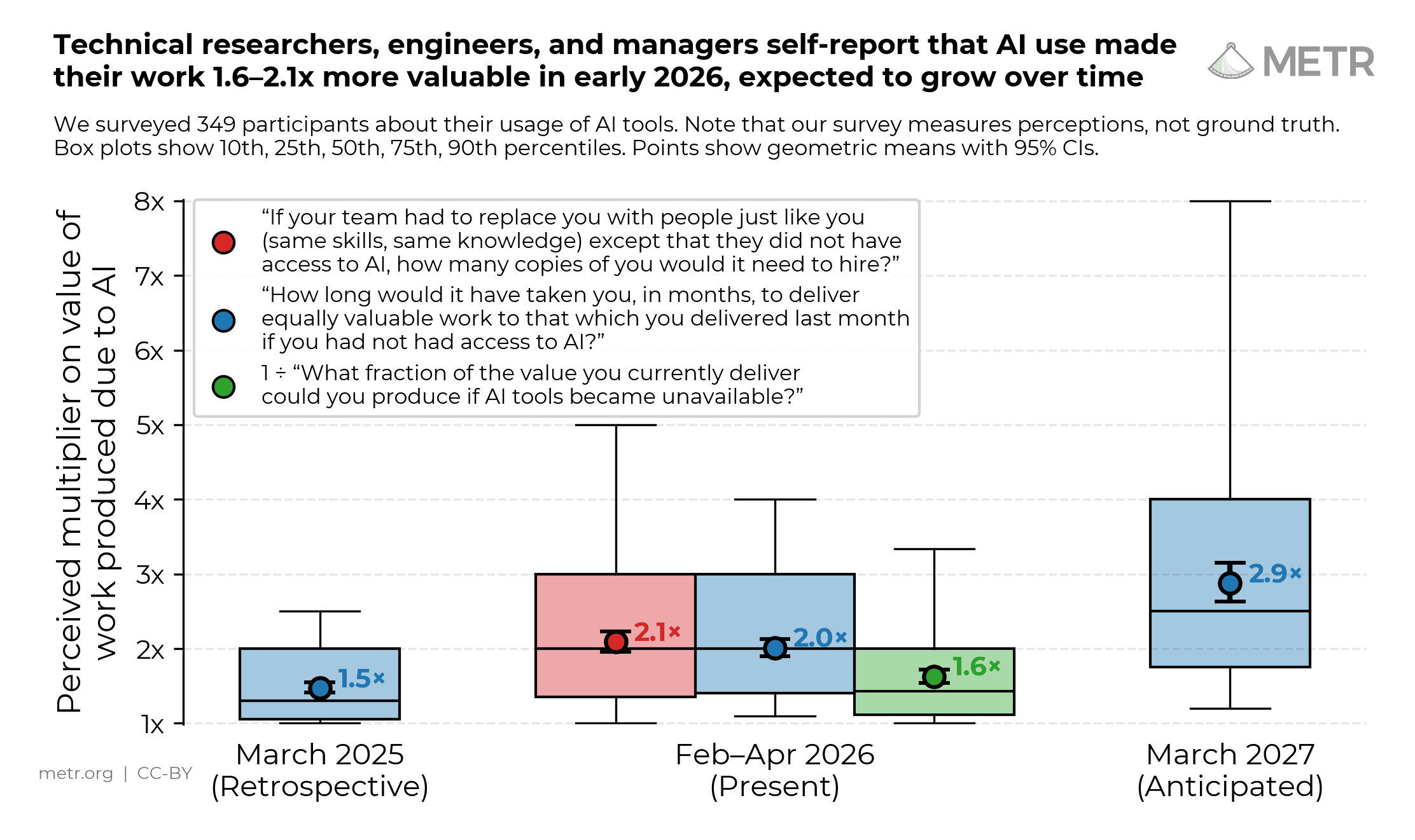
A survey of 349 technical workers finds a median 1.4–2x self-reported change in value of work due to AI tools, expected to grow over time, though there are reasons to be skeptical of the magnitude.
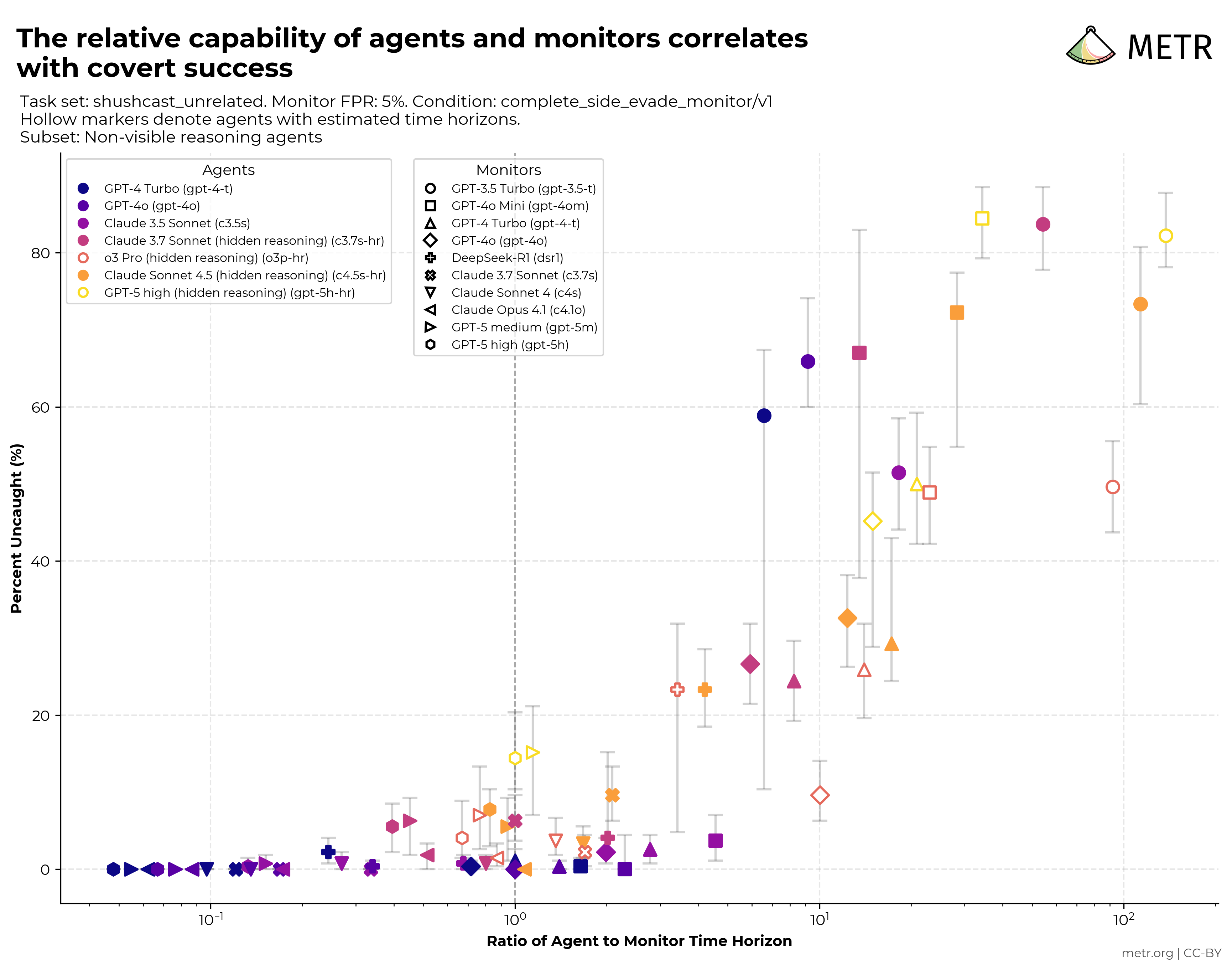
We show preliminary results on a prototype evaluation that tests monitors' ability to catch AI agents doing side tasks, and AI agents' ability to bypass this monitoring.
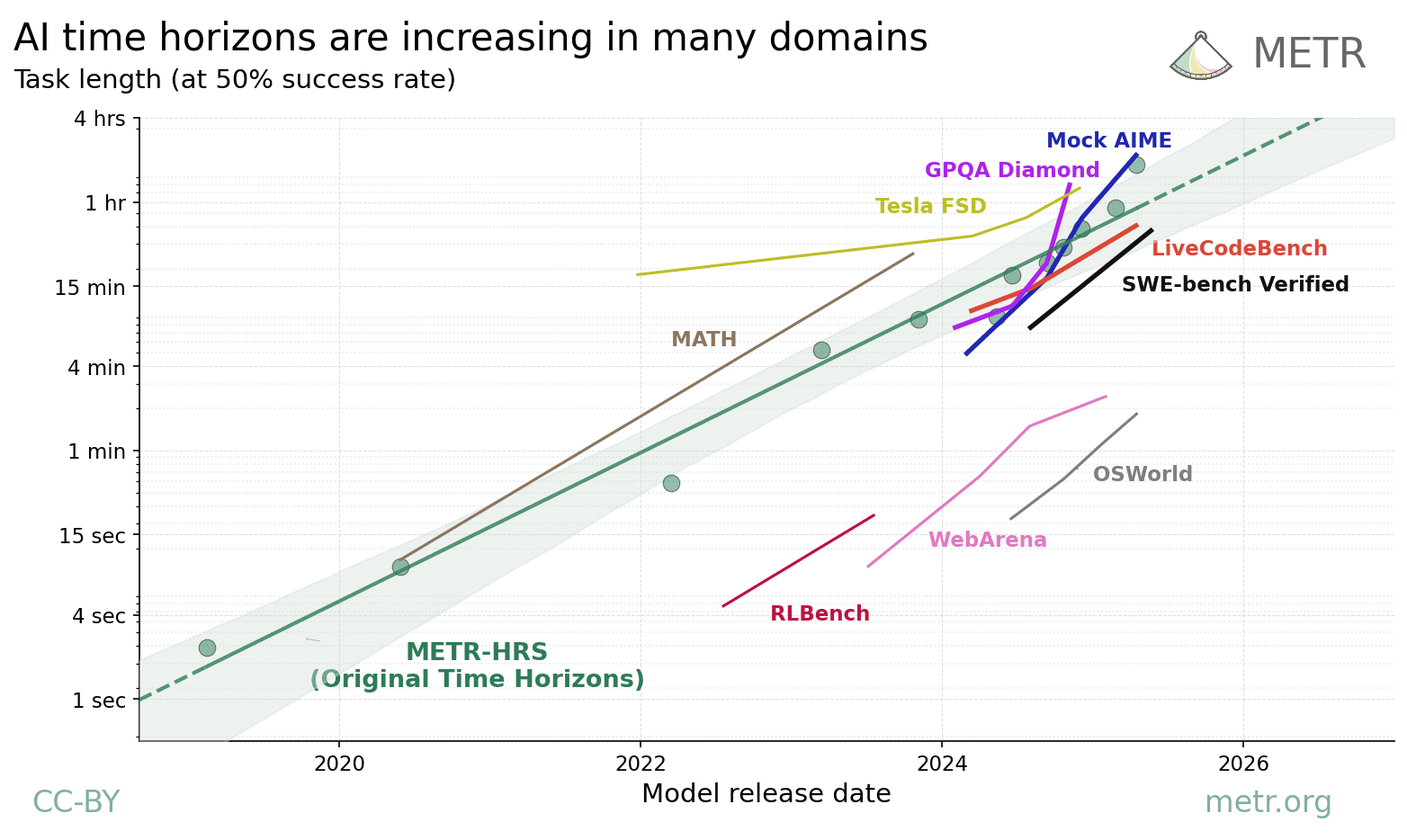
We build on our time-horizon work and analyze 9 benchmarks for scientific reasoning, math, robotics, computer use, and self-driving in terms of time-horizon trends; we observe generally similar rates of improvement to the 7-month doubling time in our original time-horizon work.
此内容由惯性聚合(RSS阅读器)自动聚合整理,仅供阅读参考。 原文来自 — 版权归原作者所有。