


Editor’s note: Faig Mahmudov is a journalist based in Azerbaijan covering regional security, foreign policy, and geopolitical developments. The views expressed in this article are his own and do not necessarily reflect the official position or editorial stance of News.Az.
Relations between Azerbaijan and Ukraine have, in recent years, evolved into something far more consequential than routine diplomatic engagement. What we are witnessing is not merely the strengthening of bilateral ties in the traditional sense, but the gradual construction of a pragmatic and resilient partnership model shaped by shared strategic instincts, converging geopolitical pressures, and a clear understanding of mutual benefit. This transformation deserves to be examined not only through the lens of official statements and ceremonial visits, but through the deeper logic guiding both Baku and Kyiv toward closer alignment.
Ukrainian President Volodymyr Zelensky's recent working visit to Azerbaijan is emblematic of this shift. It is tempting to interpret such visits as symbolic gestures, but in this case, symbolism is closely intertwined with substance. The frequency of high-level interactions between Zelensky and Azerbaijani President Ilham Aliyev, including seven presidential meetings within four years, signals a deliberate effort to institutionalise dialogue. This is not diplomacy driven by crisis or convenience. It is diplomacy that is becoming systematic, predictable, and increasingly strategic.
What stands out is the consistency of political alignment between the two countries on core principles of international relations. Both Azerbaijan and Ukraine have faced challenges related to sovereignty and territorial integrity, and this shared experience has fostered a degree of empathy that is often absent in purely transactional partnerships. When Ilham Aliyev emphasises that both states support each other’s sovereignty and territorial integrity in all international organisations, it reflects more than rhetorical solidarity. It is a reflection of a common worldview shaped by lived geopolitical realities. In a fragmented international system where alliances can be fluid and conditional, such principled consistency carries significant weight.
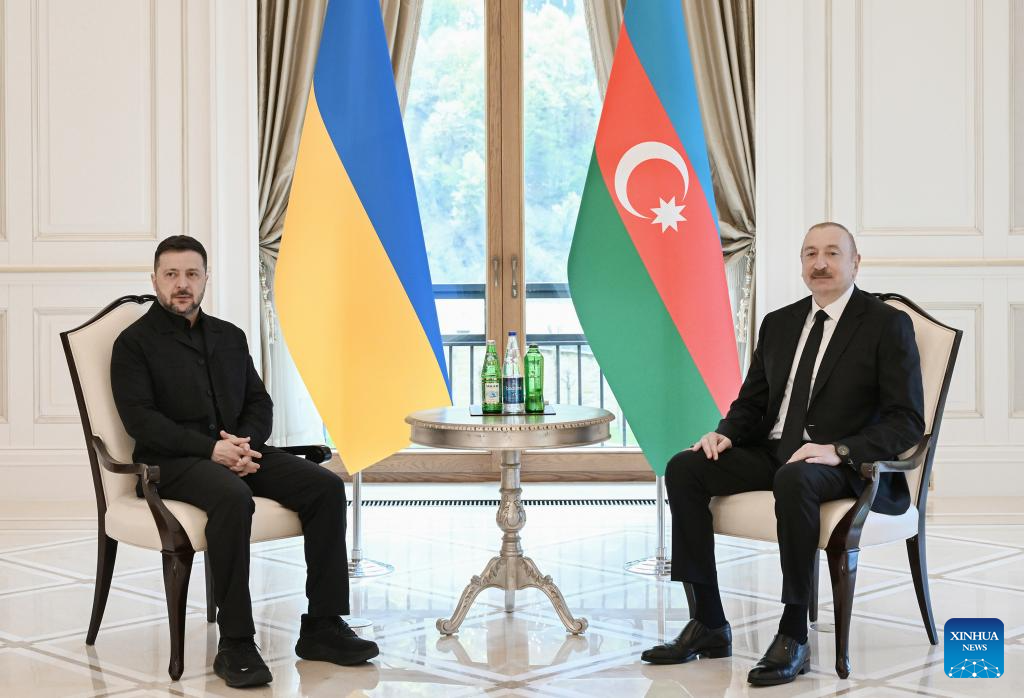
Source: AzerTAG
However, political alignment alone does not sustain long-term partnerships. What gives Azerbaijani-Ukrainian relations their depth is the expansion of cooperation into multiple domains, particularly energy. Azerbaijan’s role as an energy producer and Ukraine’s strategic position as a transit corridor create a natural synergy. This is not a new dynamic, but one that is being redefined in light of current geopolitical shifts. The long-standing presence of the State Oil Company of Azerbaijan in Ukraine is a tangible manifestation of this cooperation, but more importantly, it serves as a foundation for future initiatives.
Energy today is not just about supply and demand. It is about security, diversification, and geopolitical leverage. For Ukraine, diversifying energy partnerships is essential to reducing vulnerabilities. For Azerbaijan, expanding its energy footprint beyond traditional markets enhances its strategic relevance. Discussions around new investment projects and joint initiatives indicate that both sides understand the broader implications of energy cooperation. It is no longer a sectoral issue. It is a cornerstone of their strategic partnership.
Economic cooperation, meanwhile, is gradually catching up with political ambition. A trade turnover exceeding $500 million is a respectable figure, but it does not yet reflect the full potential of the relationship. The acknowledgment by both sides that there is room for growth is significant. It suggests a willingness to move beyond current limitations and explore new avenues of cooperation. Sectors such as agriculture, industry, and investment are particularly promising, as they offer opportunities for diversification and resilience.
The role of the Intergovernmental Commission in this context should not be underestimated. Such institutional mechanisms often operate away from public attention, but they are critical in translating political will into practical outcomes. If effectively utilised, this platform can accelerate the pace of economic integration and ensure that cooperation is not confined to a few flagship projects, but becomes more comprehensive and inclusive.
One of the more intriguing aspects of Azerbaijani-Ukrainian relations is the growing emphasis on military-technical cooperation. This is an area where both countries bring valuable experience to the table. Azerbaijan has invested significantly in modernising its defence capabilities, while Ukraine, particularly in recent years, has accumulated extensive operational experience under extremely challenging conditions. The possibility of exchanging expertise and developing joint production projects introduces a new dimension to the partnership.
![Azerbaijan, Ukraine upbeat on ties [PHOTO]](https://irss.plus//node/data/uploads/original/image/b0/fb/b0fb5dc5f1e0d0359fb878dba3462e4a.jpg)
Source: APA
It is not merely about strengthening defence capabilities. It is also about technological advancement and industrial development. Defence industries often serve as catalysts for innovation, and cooperation in this domain can have spillover effects into civilian sectors. However, this aspect of the relationship also requires careful management, as it intersects with broader geopolitical dynamics. Both Baku and Kyiv will need to balance their cooperation with their respective international commitments and strategic considerations.
Equally important, though sometimes overlooked, is the humanitarian dimension of the relationship. In many ways, this is where the partnership acquires its most human and relatable form. Azerbaijan’s humanitarian assistance to Ukraine, particularly its support for children affected by war, is a powerful gesture that goes beyond political calculation. When Zelensky expresses gratitude for the support provided to more than 500 Ukrainian children, it highlights the tangible impact of such initiatives.
Humanitarian cooperation plays a crucial role in shaping public perceptions and building trust between societies. It transforms interstate relations into something more personal and enduring. In the long term, these connections can be just as important as economic or political ties, as they create a social foundation for partnership. This is further reinforced by cooperation in education and culture. The presence of Azerbaijani students in Ukrainian universities is not just an academic exchange. It is an investment in the future of bilateral relations.
These young people, who experience each other’s cultures and societies firsthand, become informal ambassadors of the partnership. They carry with them not only knowledge but also a sense of familiarity and connection that can influence future interactions at multiple levels. In this sense, educational cooperation is not a peripheral aspect of the relationship. It is a strategic asset.
When viewed against the broader geopolitical landscape, the deepening of Azerbaijani-Ukrainian relations acquires additional significance. The world is undergoing a period of profound transformation, characterised by shifting alliances, emerging power centres, and increasing uncertainty. In such an environment, partnerships that are flexible, multifaceted, and grounded in mutual interests are likely to be more resilient.
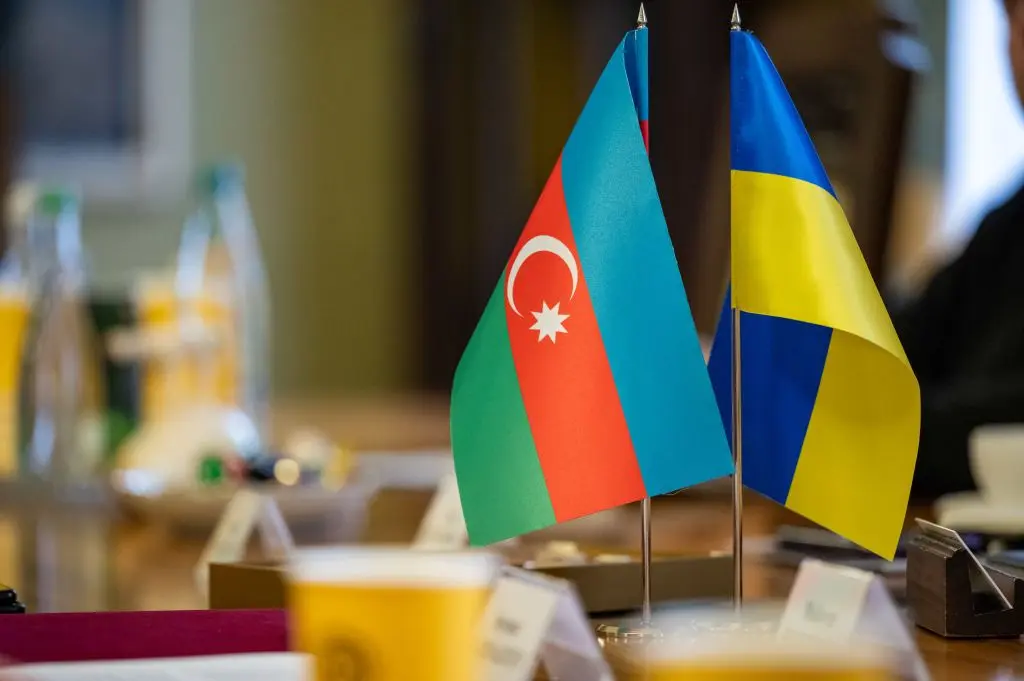
Cooperation between Azerbaijan and Ukraine in areas such as energy security, transport corridors, and food security extends far beyond their bilateral context. It contributes to regional stability and offers alternative pathways for economic and strategic connectivity. For instance, the development of transport corridors linking different regions can enhance trade flows and reduce dependency on traditional routes. Similarly, collaboration in food security can address challenges that are increasingly global in nature.
At the same time, it is important to approach this partnership with a degree of realism. While the trajectory is positive, there are also challenges that need to be addressed. Economic cooperation, for example, still requires significant expansion. Institutional frameworks need to be strengthened to ensure the effective implementation of agreements. Moreover, both countries operate within complex geopolitical environments that can influence their bilateral dynamics.
Yet, what distinguishes Azerbaijani-Ukrainian relations is the evident commitment on both sides to overcoming these challenges. The continuity of high-level contacts, the willingness to explore new areas of cooperation, and the emphasis on practical results all point to a partnership that is evolving thoughtfully and deliberately.
In this context, Zelensky’s visit to Azerbaijan can be seen as more than a diplomatic event. It is a marker of a new phase in the relationship. It signals that both countries are not only maintaining their partnership but are actively seeking to deepen and expand it. This is a process that will likely continue in the coming years, shaped by both internal priorities and external developments.
Ultimately, the relationship between Azerbaijan and Ukraine offers an interesting example of how countries can build meaningful partnerships in a complex and often unpredictable international system. It is a model that combines political alignment, economic pragmatism, strategic foresight, and human connection. While it may not fit neatly into traditional categories of alliances or partnerships, it reflects a modern approach to international relations — one that is adaptive, multidimensional, and grounded in mutual respect.
(If you possess specialized knowledge and wish to contribute, please reach out to us at opinions@news.az).
此内容由惯性聚合(RSS阅读器)自动聚合整理,仅供阅读参考。 原文来自 — 版权归原作者所有。