


Editor’s note: Moses Becker is a special political commentator for News.Az. He holds a PhD in political science and specialises in inter-ethnic and inter-religious relations. The views expressed in this article are those of the author and do not necessarily reflect the position of News.Az.
Despite the seemingly chaotic nature of US President Donald Trump’s foreign policy, a well-thought-out strategy can clearly be seen behind it. Guided by the slogan “Make America Great Again”, Trump seeks to restore Washington’s weakened dominance both economically and politically. To revive erstwhile American power, he needs resources. That is why the struggle for rare earth metals, oil and other strategic resources has intensified.
In reality, the United States is largely indifferent to the type of regime governing Iran. Pakistan is also an Islamic republic, yet it does not seek regional domination and actively cooperates with Washington. The rulers of the Islamic Republic of Iran, however, have openly declared expansionism to be a foundation of their foreign policy. Using slogans about defending Muslims around the world, the ayatollah regime seeks to subordinate neighbouring countries to its influence.
As recent developments have shown, Tehran is even prepared to attack Muslim countries such as the UAE, Oman and Qatar. Furthermore, the Iranian leadership is attempting to effectively claim international waters in the Strait of Hormuz as its own sphere of control. Through its actions, Tehran has demonstrated what the region could face if the Islamic Republic were ever to acquire nuclear weapons.
Iran effectively fractured Lebanon by using Hezbollah as a proxy force, allowing the organisation to create a state within a state. At present, around 90 per cent of Lebanese Christians, Sunni Muslims and Druze reportedly support the disarmament of Hezbollah. The same view is reportedly shared by approximately 30 per cent of Lebanese Shiites.
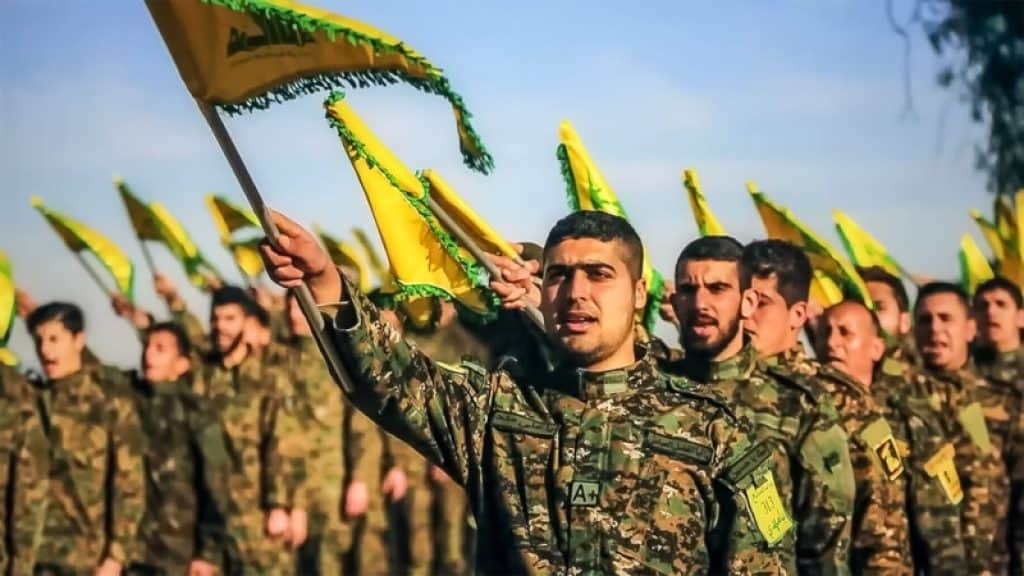
Source: Reuters
Unsurprisingly, the United States could not allow Iran to establish control over more than 20 per cent of global oil transit routes. In order to permanently curb the ambitions of the ayatollah regime, Washington began promoting the idea of peace negotiations between Lebanon and Israel. The primary objective is to eliminate Hezbollah’s military power and restore the sovereignty of the Lebanese state.
According to Bloomberg, on 14 April 2026, Israeli and Lebanese officials met face-to-face for negotiations for the first time in 33 years. The meeting took place at ambassadorial level with the participation of US Secretary of State Marco Rubio, who described it as a “historic opportunity” to begin moving towards a settlement while acknowledging that complex issues could not be resolved quickly.
Israeli Ambassador to the United States Yechiel Leiter stated that both sides were “united in the desire to free Lebanon from Hezbollah”. He also claimed that the Lebanese government had “clearly stated” that the country should no longer remain under the control or influence of the movement.
Hezbollah, in turn, accused the Lebanese leadership of violating the constitution by holding direct negotiations with Israel.
Escalation between Israel and Hezbollah has continued since March, when the movement supported Iran by launching rockets into Israeli territory. According to the Lebanese Health Ministry, Israeli military strikes have killed more than 1,800 people and forced over 1.2 million residents to flee their homes.
According to Hezbollah’s own leadership, the organisation lost approximately 5,000 fighters killed and 13,000 wounded during the confrontation.
Following reports of a two-week ceasefire between Iran and the United States, Hezbollah announced a suspension of operations against Israel, but later resumed attacks in response to massive Israeli strikes on Lebanon. Tehran and Islamabad claimed that Israeli attacks violated the terms of the ceasefire. However, President Trump emphasised that Lebanon had not been included in the parameters of the agreements reached.
Musa Assi, head of Al Mayadeen television’s bureau in Geneva, stated that the Israeli delegation participating in negotiations in Washington had a limited mandate and was primarily focused on Hezbollah’s disarmament. According to him, the delegation had no authority to discuss a broader political settlement package.
He further claimed that the Israeli plan included the phased creation of security control zones in southern Lebanon extending roughly eight kilometres, areas to which displaced residents would not initially be allowed to return. The goal, according to Assi, is the dismantling of Hezbollah infrastructure.
The third phase of the plan reportedly envisions transferring responsibility for Hezbollah’s disarmament to the Lebanese army. At the same time, a key condition remains that Israeli troops will not fully withdraw until Hezbollah is either significantly weakened or eliminated as a military force.
Marwan Abdallah, head of foreign relations for the Lebanese Christian Kataeb Party, outlined Beirut’s key priorities in negotiations with Jerusalem in comments to Izvestia.
“The most important thing is that Lebanon must not return to war. That is the first red line. The second red line is that the outcome of the agreement or negotiations must lead to the complete withdrawal of Israeli troops from Lebanon,” he stated.
Abdallah also stressed that Lebanon must fulfil its obligations regarding the disarmament of Hezbollah and other armed groups in order to restore full state sovereignty throughout Lebanese territory.
“Full diplomatic relations with Israel are certainly possible after the war ends, after armed groups are disarmed, and after Israeli forces withdraw. We have a number of issues to discuss, including land and maritime border demarcation, resource sharing and the historical aspects of relations between the two countries,” the Kataeb representative emphasised.
Professor Jamal Wakim of the Lebanese University believes that the current negotiations between Lebanon and Israel are taking place under US pressure and with the participation of internal Lebanese forces opposed to Hezbollah. However, he doubts they will produce significant political results. In his view, the process is more about prolonging negotiations than achieving meaningful outcomes.
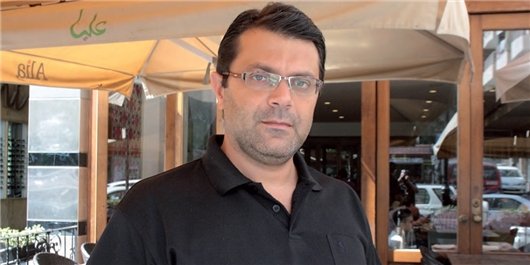
Photo: Professor Jamal Wakim
According to the professor, Lebanon’s key red lines should remain the unconditional withdrawal of Israeli troops from occupied territories, an end to military strikes and guarantees preventing future attacks.
He also stressed that the real negotiations concerning Lebanon are not taking place on a bilateral level, but rather within the framework of dialogue between the United States and Iran. The future situation in Lebanon, he argued, will ultimately depend on the outcome of those talks.
The US State Department announced on Thursday that the third round of negotiations between Israeli and Lebanese representatives would take place in Washington on 14 and 15 May.
The previous two meetings in Washington were held at ambassadorial level because Beirut, despite pressure from the United States, refused to organise a meeting between Lebanese President Joseph Aoun and Israeli Prime Minister Benjamin Netanyahu.
Aoun stated that high-level engagement would be inappropriate until a security agreement is reached and until Israel halts strikes on Lebanese territory.
During the negotiations, the parties are discussing the framework of a future peace agreement that would include the withdrawal of Israeli troops from Lebanon, the disarmament of Hezbollah and the normalisation of diplomatic relations between Jerusalem and Beirut.
(If you possess specialized knowledge and wish to contribute, please reach out to us at opinions@news.az).
此内容由惯性聚合(RSS阅读器)自动聚合整理,仅供阅读参考。 原文来自 — 版权归原作者所有。