





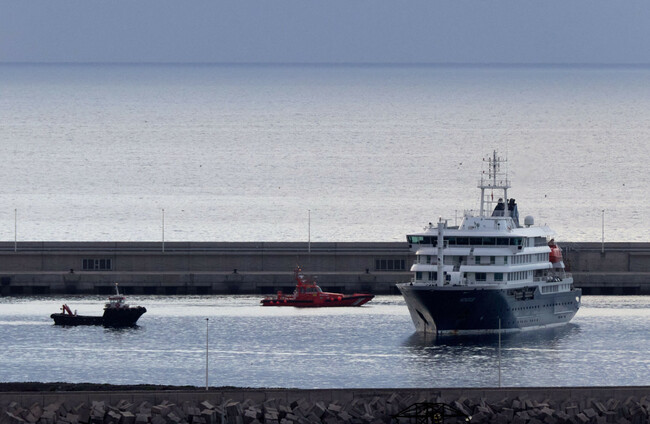
ALMOST ALL THE passengers and crew of the cruise ship hit by a deadly hantavirus outbreak who had to quarantine in the Netherlands are now allowed to return home, the WHO chief said Thursday.
There were 12 confirmed and one probable case stemming from the MV Hondius, including three deaths, in an outbreak which sparked an international health alert.
Two Irish people who were on board the cruise ship were quarantining here in a HSE-run facility.
Day zero of their quarantine was 6 May, and they had to remain quarantined for 42 days, or five weeks.
The Dutch-flagged ship set off 1 April from Ushuaia, Argentina, taking in remote islands in the South Atlantic Ocean before heading north to Cape Verde, then Tenerife in Spain’s Canary Islands, where remaining passengers were evacuated.
The polar exploration ship docked on 18 May in Rotterdam harbour in the Netherlands, Europe’s largest port, with the skeleton crew facing weeks of quarantine.
#Hantavirus update:
— Tedros Adhanom Ghebreyesus (@DrTedros) June 18, 2026
- Almost all of MV Hondius passengers and crew members who have been quarantined in the Netherlands are now allowed to return home, including non-nationals.
- The number of reported cases remains 13, including three deaths. With no new cases reported in over… pic.twitter.com/rpwcCbsHds
“Almost all of MV Hondius passengers and crew members who have been quarantined in the Netherlands are now allowed to return home, including non-nationals,” Tedros Adhanom Ghebreyesus, the head of the World Health Organization (WHO), said on X.
He said that “with no new cases reported in over deaths reported since 2 May, the situation remains stable”.
On 30 May, the ship was cleared to put to sea again after cleaning and disinfection.
And on 8 June, St Helena, where many passengers disembarked, announced the conclusion of the hantavirus major incident declared on the remote British island, home to around 4,400 close-knit people.
“All individuals who were identified as contacts and required to self-isolate have now successfully completed their mandatory 42-day isolation periods,” the island’s government said.
Their “immense patience and resilience were vital to ensuring the safety of our entire community”, it said.
“There are no active, suspected, or confirmed cases on the island, and there is no further risk to the public.”
Spread by rodents, hantavirus is a rare virus for which no vaccines or specific treatments exist.
The Andes species behind the Hondius outbreak is the only strain of hantavirus known to be able to jump from human-to-human.