






My predictions for Apple’s smart glasses
Today I’m going to make a prediction. This may sound alarmist, but it’s really just the logical extension of where things have been headed for some time.
Here it is: Within the next 18 months, Apple will launch surveillance glasses, upending all expectations of personal privacy.
I’m hardly the first person to point out the growing popularity of wearable tracking devices, and where that trend might lead. Among other critics, Chris Gilliard has written extensively on the topic, coining the phrase “luxury surveillance” (see this Real Life essay, co-authored with David Golumbia). Over at Insider, articles like this one (Nov 26) have been speculating about Apple’s plans.
No one knows the exact launch date, though late 2022 is a possibility. One thing that seems pretty clear is that Apple intends for this device to eventually replace the iPhone altogether. This is a huge deal. The launch of the iPhone was arguably the most important tech development of the past 20 years, as it inaugurated the mobile revolution and paved the way for surveillance capitalism, as smartphones morphed into spy devices.
Apple’s willingness to replace the iPhone, a massive profit center for almost 15 years, must mean that they’re designing something much, much more intrusive. Data capture from a face-mounted spy device has endless potential.
Spreading surveillance
Surveillance devices are already everywhere. The profusion of so-called “smart” watches, Fitbits (now owned by Google), and other wearable surveillance devices are all clear indicators of where Silicon Valley is directing its investments. Just yesterday, news broke about Google’s upcoming surveillance watch, intended to compete with Apple’s own wrist-worn ankle bracelet. Apple’s new glasses will accelerate the spread.
I’ve been warning against these things for years, writing columns like Smart glasses aren’t back in September 2020, in which I predicted:
We have one year before tech gets much, much more intrusive. . . . Surveillance eyewear will arrive in 2021.
Right on time, in September 2021, Facebook launched its surveillance eyewear, in partnership with Ray-Ban. Below, a photo from the Ray-Ban website, where Facebook is barely mentioned at all:
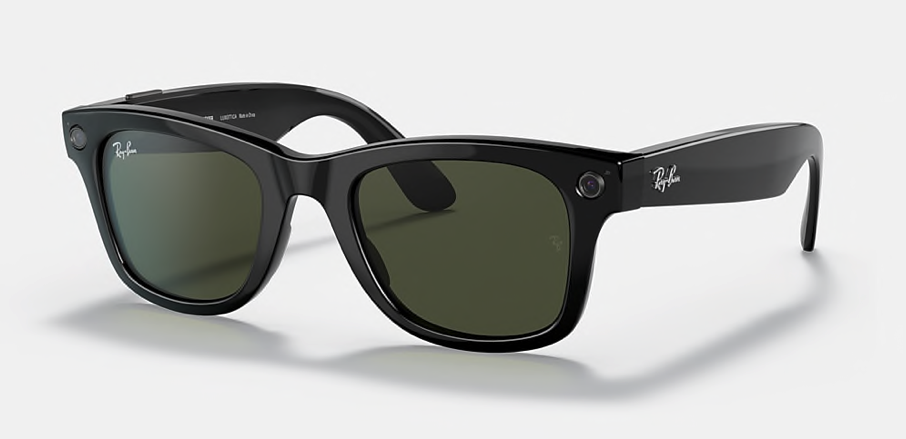
Notice the not-very-obvious cameras on either side of the lenses, which can take photos and videos, with audio, of everyone in range of the device. Essentially this is the facial-mounted spy camera that Google Glass was designed to be, back in 2013, before it flopped. (The day after the launch I wrote The Google Glass feature no one is talking about, which promptly went viral worldwide and helped launch the public’s wholesale rejection of the device.)
Now here we are in 2021, and Facebook is making its own attempt to capture the wearable spy cam market. But the really significant launch of surveillance glasses isn’t coming from Facebook. The company is finally getting scrutiny (hence its recent name-change to Meta, as I wrote about in Smiling in the metaverse) and is under immense pressure…
• from Congress, which correctly views Facebook as a predatory monopoly,
• from younger users, who consider Facebook unfashionable and, in some cases, are abandoning Instagram for TikTok,
• and from competitors like Apple, which under the guise of “privacy” is replacing Facebook’s mobile surveillance with its own.
Please chip in.
This newsletter isn’t free. If you’d like it to continue, please join Creative Good. As a member, you’ll gain access to all posts and comments on the members-only Forum.
This is all to say that Facebook’s surveillance glasses are not likely to become a hit, given that Zuckerberg is busy with lying to regulators and somehow fending off Apple’s clawback of user data and trying to build his sad little metaverse platform.
Thus the truly significant launch of surveillance glasses is yet to happen. I predict that it will come from Apple.
Below I’ll describe my prediction in more detail.
What Apple’s glasses will look like
From Ming-Ching Kuo at MacRumors we see The Information’s sketch of what the headset might look like:
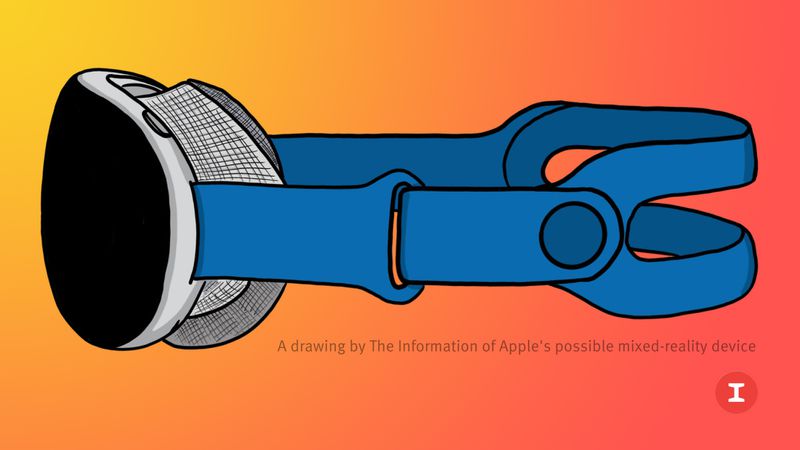
I know it’s just a guess, but the sketch does not seem plausible. It seems to depict an opaque headset - suitable for VR goggles - but VR just isn’t Apple’s top priority right now. After all, VR shuts off the user from the outside world. By contrast, AR goggles allow users to capture footage of the people and places around them, which is just what Apple will encourage users to do. That’s why I think Apple is more likely to launch a surveillance-friendly AR device, much like Facebook did.
As for appearance, Apple’s surveillance glasses will share one similarity with Facebook’s: they’ll be easily mistaken for regular glasses, to help normalize the introduction of surveillance gear. But Apple’s device will be different in that it will offer some cues that these are genuine Apple overpriced surveillance gear.
Above all, Apple will want to signal luxury, as in (and here I’m writing in the condescending voice of a brand manager) something more high-class than Facebook’s pathetic middle-brow choice of partner in Ray-Ban.
Which is why - what the heck, another bold prediction - Apple is going to partner with Gucci.
Below, my sketch of what Apple’s Gucci surveillance glasses might look like:
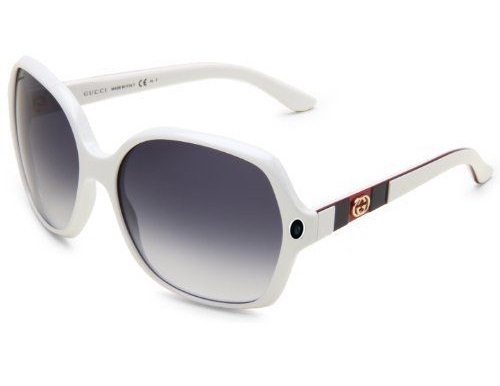
Notice the spy-camera conspicuously located on the side of the glasses, for all to see. Buyers will want people to notice their glasses, because next to the camera lens is the Gucci logo. “That’s right,” the glasses are saying, “this person isn’t some loser wearing dollar-store Facebook surveillance glasses from Ray-Ban. This is the genuine Gucci-Apple article, truly luxury surveillance. You should feel lucky to be caught on this camera.”
How Apple will market the glasses
As always, Apple will invest heavily in the marketing of its new launch. Giant billboards featuring larger-than-life closeups of the device, attractive young people exuding the pure bliss of wearing surveillance gear, and lots and lots of fawning press coverage of the live infomercial (excuse me, the “launch event”) and product reviews.
Throughout all of these channels, Apple’s marketing will hammer a few simple messages:
• Tag line: “Look up.” “Things are looking up.” Some version of this will be the favored tag line of the devices, reminding people that they no longer need to look down at their phone as they walk. There may be secondary messages around safety, as pedestrians looking down at a screen are liable to walk into traffic.
• Liberation as chief benefit: Apple will lean heavily on the idea that phones demand people’s undivided attention, preventing people from fully connecting in the real world. Apple will present its surveillance glasses as a tool for personal liberation, allowing people fuller connections with other people and nature.
• Better than Facebook: Apple will frame its device as the enlightened alternative to predatory, unprincipled Facebook - not mentioning, of course, that Apple’s business model is increasingly similar to Facebook’s (capturing customers’ data in order to manipulate those customers, in this case to buy more overpriced offerings).
• Screen privacy: whatever AR digital display is located inside the glasses will be “for your eyes only.” In other words, people around you will no longer be able to glance at what’s on your phone screen. Apple will shamelessly promote this as a “privacy” feature, despite the glasses destroying the privacy of everyone in range of the glasses.
Apple, in its marketing efforts, will certainly try to drive strong early sales. But it will have a longer-term goal that’s perhaps even more important: Apple will need to habituate the public to the idea of living and working around people wearing surveillance glasses. The obvious truth of the device - an incredibly intrusive tool for ambient surveillance, with all data fed back to Apple servers for permanent storage, opaque analysis, and sharing with unnamed third parties - must never be uttered. The word “surveillance” will never once appear in the marketing. Instead, liberation, luxury, even “privacy” will be hammered in, again and again and again, until the public is fully habituated.
Please chip in.
This newsletter isn’t free. If you’d like it to continue, please join Creative Good. As a member, you’ll gain access to all posts and comments on the members-only Forum.
It’s no secret that Big Tech companies are trying to habituate the public to surveillance devices. This is described in detail in The Voice Catchers by Joe Turow, who I interviewed on Techtonic and wrote about in Voice surveillance must die (there’s a Forum comments page, too). Facebook, Google, Amazon, and others are working tirelessly to convince us all that (a) there’s no downside to building a corporate surveillance state, and (b) the whole thing is inevitable anyway, so you might as well try to enjoy it. One point of agreement throughout Big Tech is that the public’s natural revulsion toward intrusive surveillance must be eliminated.
But specifically for habituating people to surveillance glasses, it has to be Apple who does it. Google failed with Google Glass; Amazon is more concerned with its Alexa surveillance pucks; Microsoft is focused on workplace surveillance; and Facebook is increasingly reviled and treated as, at best, a necessary evil. Apple has the money, the brand, the cachet, and - above all - the best chance to get Americans to trust them. “How bad could the surveillance state be? The cameras are all mounted on Gucci frames.”
Post a comment on this column, for Creative Good members only.
Until next time,
-mark
Mark Hurst, founder, Creative Good – see official announcement and join as a member
Email: mark@creativegood.com
Read my non-toxic tech reviews at Good Reports
Listen to my podcast/radio show: techtonic.fm
Subscribe to my email newsletter
Sign up for my to-do list with privacy built in, Good Todo
Twitter: @markhurst
- – -