





A study by the Coller School of Management at Tel Aviv University and Pompeu Fabra University in Barcelona examined the flagship program of the Ministry of Economy: "Israel's Basket", two months after it took effect. The findings present a particularly complex picture: On one hand, a significant price reduction was recorded for the products included in the government basket, but simultaneously, a widespread wave of price increases occurred in other products – something that may completely erode consumer savings.
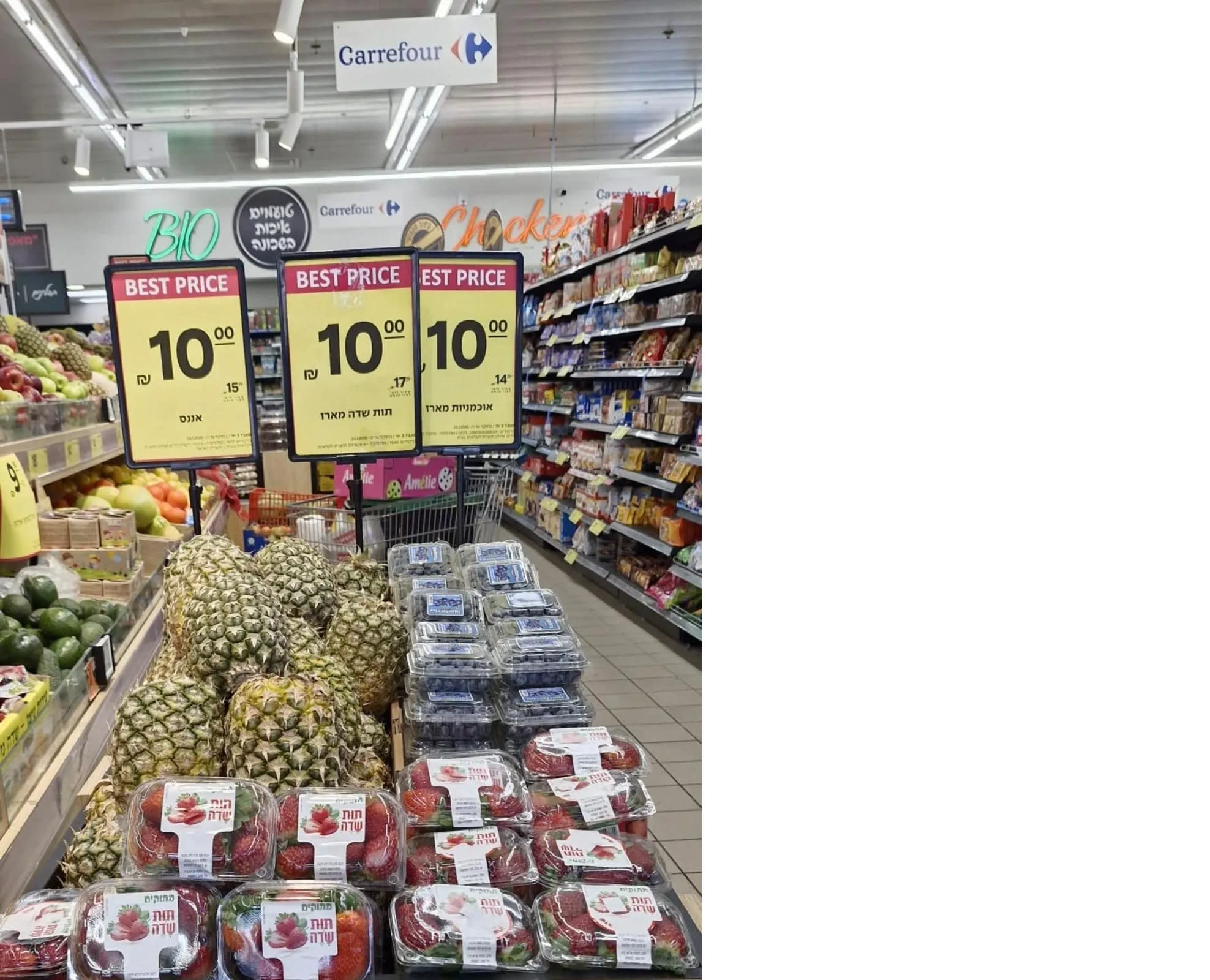
As a reminder, under the framework of the program which began operating on April 15, 2026, the Carrefour chain – which was the only chain that participated in the government tender – committed to selling a basket of 100 common consumer products for a fixed total price of NIS 1,098 (compared to an average price estimated at approximately NIS 1,700 prior to the launch). In exchange for maintaining this price for half a year in 50 of its branches and on its website, the chain received a budget of NIS 50 million from the state for a broad advertising campaign.
The initiative drew sharp criticism in the media due to a lack of effectiveness and the granting of public funds to a private entity, contrasted with the absolute backing of Minister of Economy Nir Barkat, who even fiercely attacked the food monopolies and retail chains that he claimed boycotted the tender and coordinated positions. Now, the scientific analysis by researchers Prof. Itai Ater, Adi Omer, and Dr. Or Avishay–Rizi, which is based on data from the Pricez platform covering about 70 sub–chains and over 2,000 branches, presents the real effect on the shelves.
Basket products plummeted – but how did competitors react?
The study found that the prices of the basket products in the participating Carrefour branches were indeed reduced by 35% compared to the period preceding the launch, and an average decrease of about 37% was recorded on the chain's online website. Some impact was also recorded in Carrefour branches not participating in the initiative, where the prices of these products decreased by about 6%.
However, outside the walls of the Carrefour chain, the impact of the move on the market remained limited and measured. In examining the physical branches of all food chains in Israel, no statistically significant average price reduction was found for the basket products. Only when focusing on the large discount chains was an average price reduction of about 3% measured, with responses between the chains being completely different:
Machsanei Hashuk: Led the competitive response with a price reduction of about 10%.
Hazi Hinam: Recorded a decrease of about 5%.
Yohananof: Reduced the basket products by about 4%.
Victory and Rami Levy: Recorded a decrease of about 3% each.
In the Shufersal Deal, Universe, and Osher Ad chains, no significant price reduction was found at all.
On the online channel of competing chains, an average decrease of only about 2.3% was recorded in the prices of the basket products, with Rami Levy Online leading with a reduction of about 9%, and Hazi Hinam Online reducing by about 4%. Conversely, on Shufersal Online – which holds the largest market share in e–commerce – and on Machsanei Hashuk Online, no price reduction was recorded at all.
The researchers also examined whether physical proximity to a Carrefour branch affects the pricing of competing stores in the same city, and found that there is no difference whatsoever. The conclusion is that the major chains manage uniform pricing at the national level, and do not engage in localized, point–of–sale competition.
The worrying figure: A surge in the prices of what is not in the basket
The most prominent and worrying finding in the study relates to the conduct of the Carrefour chain regarding products that remained outside government publications and supervision. The researchers examined 76 narrow product categories to which the basket products belong (containing hundreds of different products that are not in the basket itself), and discovered widespread price increases.
In Carrefour's physical branches, price increases were recorded in 46 out of the 76 categories examined, with the increase being statistically significant in 23 of them. Among the prominent price increases in branches:
• Laundry gel and liquid – a surge of about 9%.
• Pudding, jelly, and whipped cream – an increase of about 7%.
• Shampoo and conditioner for adults – an increase of about 7%.
• Pasta, spaghetti, and lasagna – an increase of about 6%.
• Butter and flavored cookies – an increase of about 6%.

On Carrefour's online channel, the phenomenon was even more severe, with price increases in 55 categories (31 of which were significant). The prominent price increases online:
• Shampoo and conditioner for adults – a surge of about 14%.
• Petit Beurre and biscuits – an increase of about 9%.
• Laundry gel and liquid – an increase of about 8%.
• Pasta, spaghetti, and lasagna – an increase of about 8%.
• Various savory snacks – an increase of about 7%.
In addition to these categories, the researchers examined a control group of 86 popular food products unrelated to the basket, and found that following the launch of the program, their prices increased at Carrefour by an average rate of about 1.5% in the physical branches, and by about 2% on the online website.

"In economics, there are no magic tricks"
"There is no doubt that the program succeeded in lowering the prices of the basket products in the relevant branches of the Carrefour chain and bringing about a certain reduction in prices among some competitors as well," summarizes Prof. Itai Ater.
"But in economics, there are no magic tricks and there are no free gifts. When looking beyond the 100 products at the center of the campaign, one sees that price increases were simultaneously recorded in dozens of other categories. Therefore, consumers who saved on the purchase of the basket products paid more for other products. The real test is not the price of an individual product, but the total bill at the end of the shopping trip. From this perspective, it is possible that the desire to lower the shopping cart led to the opposite result."
Ministry of Economy: "Two months of data do not constitute a 'study'"
The Ministry of Economy and Industry stated: "Only two months ago, 'Israel's Cheapest Basket' initiative was launched, and already over 800,000 Israelis are saving hundreds of shekels on every purchase at Carrefour. In addition, consumers who do not shop there also benefit from a 4.75% price drop on popular products included in Israel's cheapest basket across the 18 leading chains in the market, according to CHP data presented by the Minister last week. We hope that Tel Aviv University researchers do not usually define the collection and analysis of two months of data as a 'study,' and we would be happy to see a more meaningful analysis upon the expiration of the engagement period, which was set for half a year, at a cost of NIS 25 million (and not as stated) and based on data from 54 branches (and not as stated), along with the details of all data collected (and not as it was unreleased)."
Carrefour Israel stated: "Carrefour fully met its commitment to the public and reduced the basket products by about 35%. The data clearly show that in the large stores where the consumer purchases the bulk of the basket, prices were kept stable. Anyone talking about a price increase is confusing a promotional price that ended with an intentional price hike, which never happened and will never happen. We are leading the largest price reduction in the market, and we will continue to provide the Israeli consumer with an affordable and fair solution. We will continue to be the leading chain in lowering prices for the consumer."