


Over the course of a decade, under the radar, a significant new player in Israel's healthcare system has grown up, and it has now announced itself officially as a new private hospital network.
At the beginning of January, four medical centers will be consolidated operationally and will start to operate as the Medica network. The aim is that 75% of its activity will come from the health funds, that is to say from the public health system.
The first step towards setting up Medica took place in 2015, when Zvi (Zvika) Barinboim together with his partners - Zvi Barak's Caesarea Medical Electronics Holdings, the Arkin family, and investment house Altshuler Shaham - bought the NARA clinics.
Two years later, NARA bought the Elisha Hospital in Haifa, which also operates clinics in other places, and changed its name to Medica. In 2018, Medica opened the Rosen Medical Center (RMC) in Afula, and in 2019 it competed a deal with the Meuhedet health fund whereby Meuhedet bought 40% of it.
In 2024, came the move that enabled Medica to become a network when it bought the Raphael Hospital in Tel Aviv for NIS 550 million. The hospital had been set up by a group of private investors and insurance company Harel on the basis of an old license of a hospital in Bat Yam for carrying out almost all types of surgery. The Leumit health fund joined as a shareholder in the network.
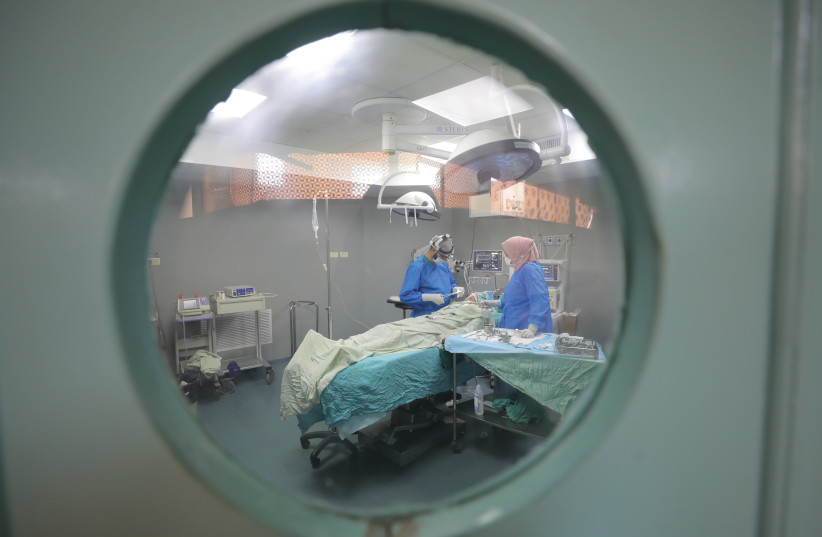
Medica CEO: Private medicine enables doctors to earn what they deserve
"We couldn't really base a network on one large hospital in Haifa, not from the point of view of purchasing power and not from the point of view of the agreements," says Dr. Shlomi Yisraelit, CEO of the network. "But with the addition of Raphael, together with that of Leumit to the network's ownership, we became a significant force in the health market. But there remain many challenges vis-a-vis the regulator, which still sees us as private medicine."
Such as what?
"Such as obtaining licenses to expand our capabilities, to set up additional centers, to be perceived as a provider of services to the public health system and not as its enemy. To see us as partners and not as competitors."
Dr. Yisraelit describes several processes that led to the formation of the Medica network as it is. The first is the entry of the health funds into ownership of hospitals. Clalit always had public hospitals, and in recent years it has become the owner of a medical center in Herzliya. Maccabi, which owns the Assuta hospitals, became the owner of a public hospital as well when Assuta Ashdod was built. The Meuhedet and Leumit funds remained without hospitals and without the synergies that can be generated when a health fund sends members to its own hospitals. They will be the owners of the Sheba Negav public hospital, but that will happen only in several years' time.
Ownership of a private hospital network enables the health funds to take advantage of these synergies thanks to another process: the reform that enables and encourages the health funds to buy services from private hospitals such that a patient can undergo surgery or other medical procedure at them with a commitment from the fund to pay for it (Form 17).
"In recent years, almost no public hospitals have been built in Israel, but a process has taken place that amounts to quiet nationalization of private medicine," sats Yisraelit. "Most of the private hospitals receive most of their work from the health funds, and not from private health insurance. "
In addition to the hospitals and clinics that it has acquired, the group has set up a pathology laboratory in Rehovot that will work to advance fluid biopsy technologies. "There were only two pathology labs in Israel, and then one of them was bought by Clalit and the other by Assuta," says Dr. Yisraelit. "As soon as a health fund comes into it, you don't control response times, quality of responses, and the ability to communicate with the lab. When the lab is ours, there is full integration of results in the patient's records."
Will you want to acquire additional clinics?
"At the moment we're busy with stabilizing and with organic growth. In the future we'll open additional points, where the health funds need us: Jerusalem, Bet Shemesh, Ashdod; and where the country needs us, which brings us to Katzrin, for example. I don't know whether this will materialize, but there's a serious intent on our part to provide an answer to the residents and soldiers there. We're also in touch with various places beyond the Green Line, it's an opportunity."
Every time a new hospital is set up, the question of manpower arises, and of cannibalization within the system.
"Private medicine enables doctors to earn what they believe they deserve and keeps them in the health system, and in Israel. There is a manpower shortage, and we are experiencing it. This is something that needs to be solved by the state, according to the needs of the system as a whole."