
惯性聚合 高效追踪和阅读你感兴趣的博客、新闻、科技资讯
阅读原文 在惯性聚合中打开

推荐订阅源

V
Visual Studio Blog
奇客Solidot–传递最新科技情报
奇客Solidot–传递最新科技情报
G
Google Developers Blog
J
Java Code Geeks
爱范儿
爱范儿
Microsoft Azure Blog
美团技术团队
人人都是产品经理
人人都是产品经理
Martin Fowler
Martin Fowler
IT之家
IT之家
博客园_首页
B
Blog RSS Feed
Google DeepMind News
B
Blog
U
Unit 42
Apple Machine Learning Research
L
LangChain Blog
Stack Overflow Blog
Stack Overflow Blog
罗磊的独立博客
N
Netflix TechBlog - Medium
T
Tailwind CSS Blog
博客园 - 聂微东
腾讯CDC
A
About on SuperTechFans

JPost.com - Archaeology | The Jerusalem Post

What was the Qumran sect's mysterious calender used for? | The Jerusalem Post Ancient structure near Stonehenge may have inspired its solstice alignment | The Jerusalem Post Ancient tablet found at Roman fort bears Greek curse against enemies | The Jerusalem Post Archaeologists unearth ancient Byzantine-era city in Egypt’s Dakhla Oasis | The Jerusalem Post Ancient mosaics, coins to go on display in new exhibit in northern Israel | The Jerusalem Post Archaeologists find inscriptions of pharaohs, ancient deities in Egyptian temple | The Jerusalem Post Italy buys famed Etruscan tomb, displays it in Rome museum | The Jerusalem Post New AI project aims to uncover origins of the Dead Sea Scrolls | The Jerusalem Post Site of Alexander the Great’s battle with Persians under historic protection | The Jerusalem Post Previously unknown Iron Age grave found ahead of construction in Germany | The Jerusalem Post Collector finds rare Hebrew-inscribed Moroccan mortar in Jerusalem's Old City | The Jerusalem Post Stone from Tel Eton may hold evidence of ancient religious reforms, study claims | The Jerusalem Post Complete text of carbonized Herculaneum scroll unlocked for first time | The Jerusalem Post Study: New identification technique pushes back timeline of human fire use | The Jerusalem Post Over 3,000 artifacts from Stone Age to WWII found in Netherlands valley | The Jerusalem Post American family repatriates four ancient artifacts to Egypt | The Jerusalem Post Remains of Queen Elisenda, 24 others unearthed in Barcelona for study | The Jerusalem Post Two ancient statues uncovered during Israel Railways excavations near Haifa | The Jerusalem Post Marble bust believed to depict Roman goddess of love found during excavations at Alicante beach Ancient Greco-Roman cemetery unearthed at archaeological site in Egypt's Nile Delta Ancient jars unearthed at biblical Shiloh days before annual wine festival WATCH: A Paleolithic time capsule: Rare prehistoric cave discovered near highway outside of Haifa Ancient water reservoirs discovered at Red Sea's Port of Aydhab site near Egypt-Sudan border Collection of ancient Egyptian, Greek, Roman-era artifacts discovered at Egypt’s Heracleopolis First near-complete ancient Egyptian funerary set discovered at Heliopolis necropolis site WATCH: Norway recovers Chinese porcelain, European-made goods from 18th-century shipwreck Neanderthals' ancient toolkit included hammers, blades made from rhino teeth, study finds Evidence of ancient Native American life uncovered near Cape Canaveral Space Force Station Rare, intact ancient Roman burial unearthed during excavations in eastern Croatia - report Plaster-making technique attributed to Romans used at Motza some 8,000 years earlier, study shows
Second century CE Roman military fort found north of Hadr...
MIRIAM SELA-EITAM · 2026-03-27 · via JPost.com - Archaeology | The Jerusalem Post

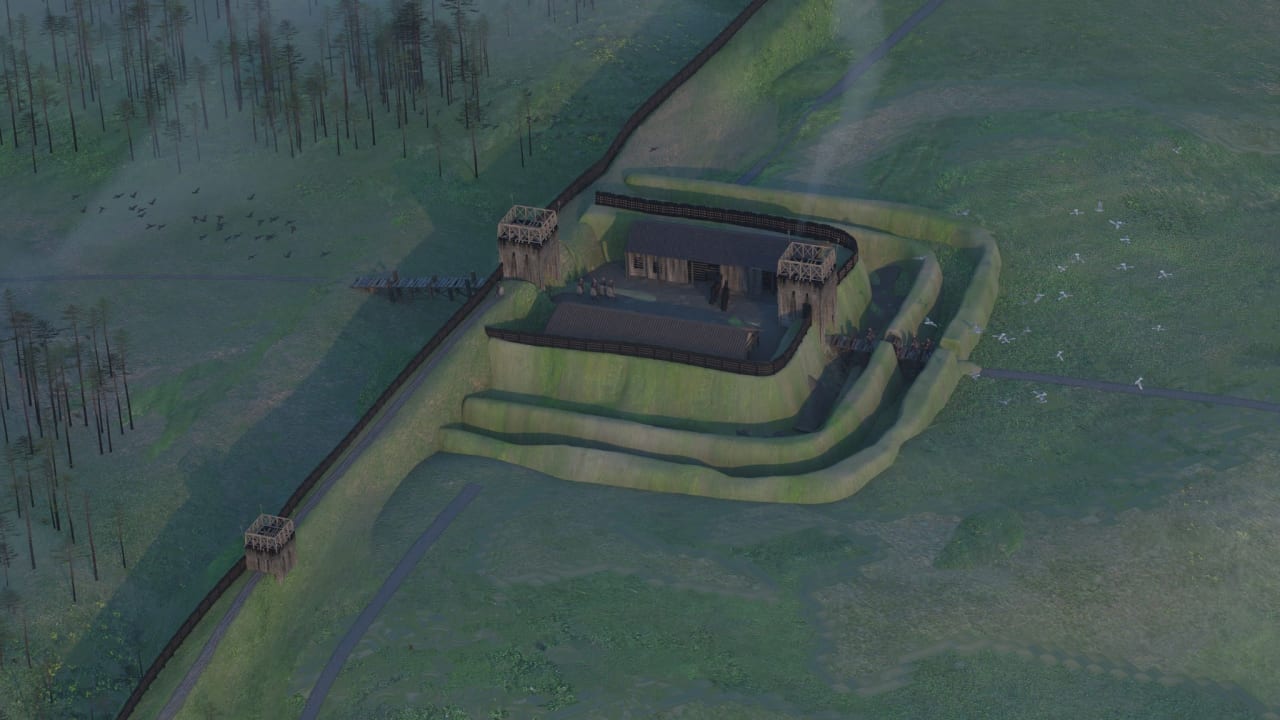
According to GUARD, the fort was constructed on high ground along the Antonine Wall, granting it an unobstructed view of the surrounding area, and intervisible with a much larger fort to the west.
Follow us on Google
The Boclair Road Roman Fortlet as it may once have been, March 25, 2026.
(photo credit: Screenshot/Facebook/GUARD Archaeology Ltd/Eduardo Pérez-Fernández)
ByMIRIAM SELA-EITAM

Ruins of a Roman “fortlet” built along the Antonine Wall may have been used as part of the empire’s defense against the unconquered Scottish lands to the north, according to a March statement from GUARD Archaeology. 

While the fortlet was originally discovered in the back gardens of three homes in Bearsden, Scotland during 2017 excavations ahead of various property development projects, the complete findings were recently published in Archaeology Reports Online. 

The Antonine Wall, constructed on the orders of Roman Emperor Antoninus Pius in the second century CE, was a defensive border built to separate the conquered southern Scotland from the unconquered lands to the north. 

However, about 20 years after its construction, the wall and its fortifications were abandoned by  the Romans during their retreat south to Hadrian’s Wall.

According to GUARD, the fort was constructed on high ground along the Antonine Wall, granting it an unobstructed view of the surrounding area, and intervisible with a much larger fort discovered to the west.
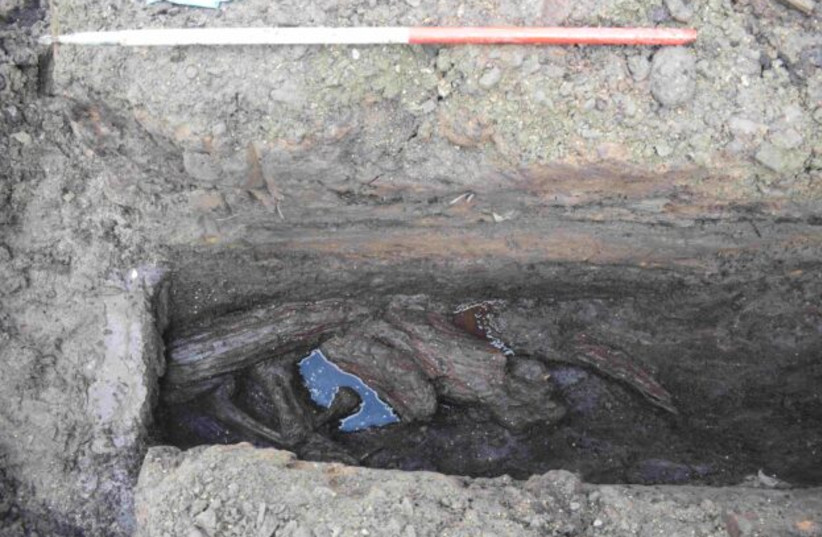
In situ wood discovered in a ditch surrounding a Roman fortlet in Bearsden, Scotland, March 25, 2026.
In situ wood discovered in a ditch surrounding a Roman fortlet in Bearsden, Scotland, March 25, 2026. (credit: GUARD Archaeology Ltd)

Additional finds discovered at the fortlet

Following the fortlet’s discovery, Historic Environment Scotland commissioned further excavations of the area, the statement said, which revealed a ditch dug parallel to the structure containing peat deposits, wood and vegetation.

Two Roman pottery shards were also discovered.

Archaeologists radiocarbon-dated the wood to approximately 127–247 CE, lining up with historical record of the Roman’s use of the wall and the years following their departure.

Additional analysis of the vegetation and fossil evidence from the ditch revealed that when the fort was built, “the surrounding landscape was open pasture with areas of partially cleared woodland, mainly alder, hazel and willow, with lesser amounts of oak and birch,” GUARD added.

Further surveys of the area revealed additional stone structures believed to have belonged to the Antonine Wall itself. 

Follow us on Google