
惯性聚合 高效追踪和阅读你感兴趣的博客、新闻、科技资讯
阅读原文 在惯性聚合中打开

推荐订阅源

Blog — PlanetScale
Blog — PlanetScale
Vercel News
Vercel News
奇客Solidot–传递最新科技情报
奇客Solidot–传递最新科技情报
量子位
Y
Y Combinator Blog
IT之家
IT之家
博客园 - 聂微东
L
LangChain Blog
爱范儿
爱范儿
H
Help Net Security
GbyAI
GbyAI
F
Fortinet All Blogs
B
Blog
Microsoft Security Blog
罗磊的独立博客
C
Check Point Blog
博客园 - 三生石上(FineUI控件)
小众软件
小众软件
D
DataBreaches.Net
Last Week in AI
Last Week in AI
WordPress大学
WordPress大学
B
Blog RSS Feed
酷 壳 – CoolShell
酷 壳 – CoolShell
宝玉的分享
宝玉的分享

Latest from TechRadar

Quordle hints and answers for Monday, April 13 (game #1540) NYT Strands hints and answers for Monday, April 13 (game #771) NYT Connections hints and answers for Monday, April 13 (game #1037) Morbid Metal developer explains why he ditched an origami art direction in favor of gritty sci-fi — 'It worked, but it didn't really feel like me' '71% of US households get routers from ISPs': Why new FCC rules could leave millions stuck with outdated,… 'The CPU is the system’s executive layer': Intel joins SambaNova as both face existential threat from… ‘More bang for your buck’: 7 easy ways to boost your MacBook Neo’s performance for free DJI Romo P vs Roborock Saros 10R — which robot vacuum comes out on top when it comes to dodging obstacles? I put… I spent 6 hours with Genshin Impact on the Galaxy S26 Ultra, and I can't believe how far mobile gaming has come What is the release date for The Testaments episode 4 on Hulu and Disney+? I reviewed the LG G6 for 3 weeks, and it's a fantastic OLED TV that's the new best option for brighter rooms Is your bird feeder camera doing more harm than good? 3 tips for using it safely as RSPB issues urgent disease warning Chelsea vs Man City Live Streams: How to watch Premier League 2025/26 from anywhere in the world, team news How to watch Alcaraz vs Sinner for FREE: TV Channels for Monte-Carlo Masters Final Sunderland vs Tottenham Live Streams: How to watch Premier League 2025/26 from anywhere in the world, team news Are these the best-designed workout headphones ever? I used them for a month to find out How to watch Snooker 900 John Virgo online (it's free) – stream O'Sullivan vs Higgins anywhere I've only just discovered the Walk With Frodo app on Garmin's Connect IQ store — and as as a huge LOTR nerd, it's going to make the next 1,800 miles fly by 'Just not sustainable': Why your monthly £25 broadband internet bill could soon hit £45 How to watch Paris-Roubaix 2026: Free Streams & TV Info as Tadej Pogacar chases third Monument How to watch Euphoria season 3 online – stream Zendaya & Sydney Sweeney drama from anywhere today '$15K bill destroyed a solo developer’s startup': How hackers are using leaked Google API keys to… There's a sneaky way to watch UFC 327 really cheap... NYT Connections hints and answers for Sunday, April 12 (game #1036) NYT Strands hints and answers for Sunday, April 12 (game #770) Quordle hints and answers for Sunday, April 12 (game #1539) Amazon's Ring cameras are the perfect solution to secure your home on a budget — shop today's best deals… I've tested every iPhone since the iPhone 12, and Ceramic Shield 2 is the first iPhone glass I fully trust UFC 327 live stream: how to watch Procházka vs Ulberg, start time, preview, full card We're officially getting the DJI Pocket 4 on April 16, but here's how Insta360 could beat it
'1,000x faster internet': New Chinese crystal breakthroug...
Efosa Udinmw · 2026-04-19 · via Latest from TechRadar
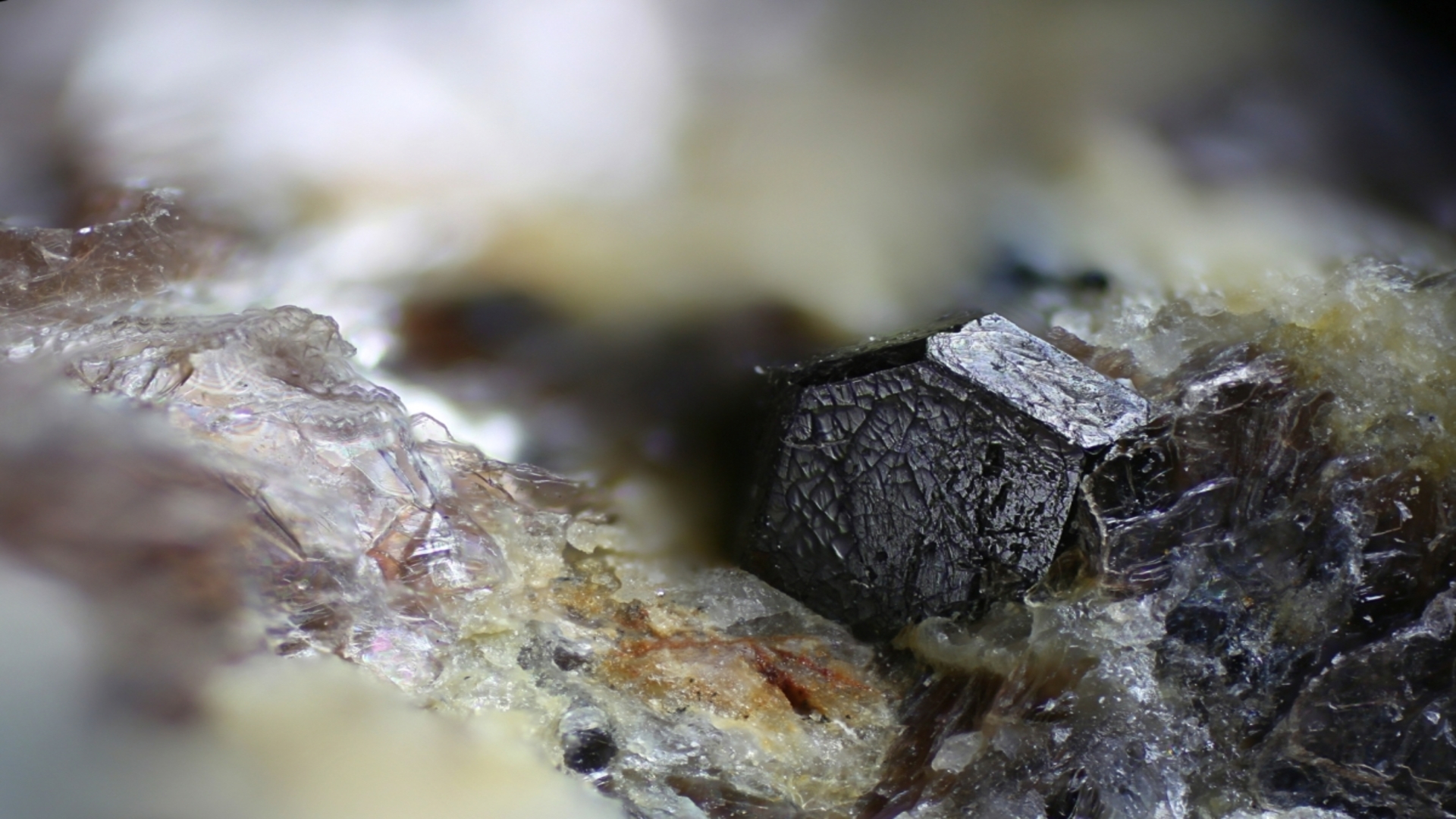
Thorium Crystal (Image credit: Al Majalla)
  • Nuclear clocks promise accuracy far beyond existing atomic timekeeping systems
  • Thorium 229 offers a rare pathway to practical nuclear time measurement
  • Ultraviolet breakthrough reduces one of the hardest barriers in nuclear clock development

A new crystal developed by Chinese scientists has broken the world record for ultraviolet light conversion, bringing nuclear clock technology closer to reality.

The fluorinated borate compound pushes laser light to a wavelength of 145.2nm, beating the previous benchmark of 150nm set by a Chinese crystal from the 1990s.

This wavelength is suitably short to meet a key requirement for ultra-precise portable nuclear clocks being developed in the United States, China, and other countries.

Article continues below

Nuclear clocks - a major upgrade to GPS

Nuclear clocks keep time using vibrations inside an atomic nucleus rather than electron vibrations used in atomic clocks.

Atomic nuclei are far more stable than electrons and less affected by temperature, external vibration, and magnetic fields, meaning nuclear clocks could be 10 to 1,000 times more accurate than today’s atomic clocks.

Such precision would enable navigation in places where GPS does not work, including deep space and underwater.

Submarines currently need to surface for GPS fixes, making them vulnerable to detection - so a nuclear clock could allow them to navigate freely underwater using dead reckoning based on speed, direction, and elapsed time.

Sign up to the TechRadar Pro newsletter to get all the top news, opinion, features and guidance your business needs to succeed!

The research team, led by Pan Shilie at the Xinjiang Technical Institute of Physics and Chemistry, turned to thorium 229 for its work.

This element is special because its nucleus vibrates at a very low energy level, making it relatively easy to monitor and measure.

However, measuring it requires extremely precise UV lasers with wavelengths around 148.3nm, which have been very hard to produce.

The new crystal converts laser light to 145.2nm, still short of the target but a major step forward.

The team wrote that its work "paves the way for the practical development of the thorium 229 nuclear clock."

If the magic number is ever achieved, the crystal could also help missiles become immune to navigation jamming, an advantage during wartime.

For spacecraft, autonomous deep space navigation without Earth-based corrections would become possible, and signals from stars, pulsars, and radio sources could also serve as navigation aids.

The work also offers a new way to design next-generation deep ultraviolet materials for various applications.

In theory, the extreme precision of nuclear clocks could enable far tighter network synchronization, potentially leading to faster internet speeds in future systems.

However, such clocks will likely not render GPS entirely redundant but will help reduce reliance on these systems if perfected.

GPS can be jammed or spoofed with fake signals, making it vulnerable during wartime, and it does not work well underwater or underground. A thorium nuclear clock would address all these limitations.

Google logo on a black background next to text reading 'Click to follow TechRadar'

Follow TechRadar on Google News and add us as a preferred source to get our expert news, reviews, and opinion in your feeds.

Efosa has been writing about technology for over 7 years, initially driven by curiosity but now fueled by a strong passion for the field. He holds both a Master's and a PhD in sciences, which provided him with a solid foundation in analytical thinking.

You must confirm your public display name before commenting

Please logout and then login again, you will then be prompted to enter your display name.