


The UK Government has finally announced its long-rumoured social media ban for under-16s. While the current proposal focuses on social media platforms, lawmakers are also considering restrictions on gaming platforms, streaming services, and, potentially, VPNs.
Previously, the Online Safety Act’s age verification requirements led swathes of people to use VPNs to avoid the measures. Now, the worry is that, without restrictions to VPN access, circumvention of the social media ban would leave children exposed to the materials the move aims to block.,
The problem is that circumvention risks have blinded policymakers to a key factor — VPNs are crucial to securing children online.
Be it securing their data against leaks or the growing integration of features such as parental controls, there’d be greater harm from banning these tools than from leaving them be. What’s more, with the UK adopting an ‘Australia plus’ model, there’s little chance VPNs would help anyway.
How VPNs actually improve children’s online safety
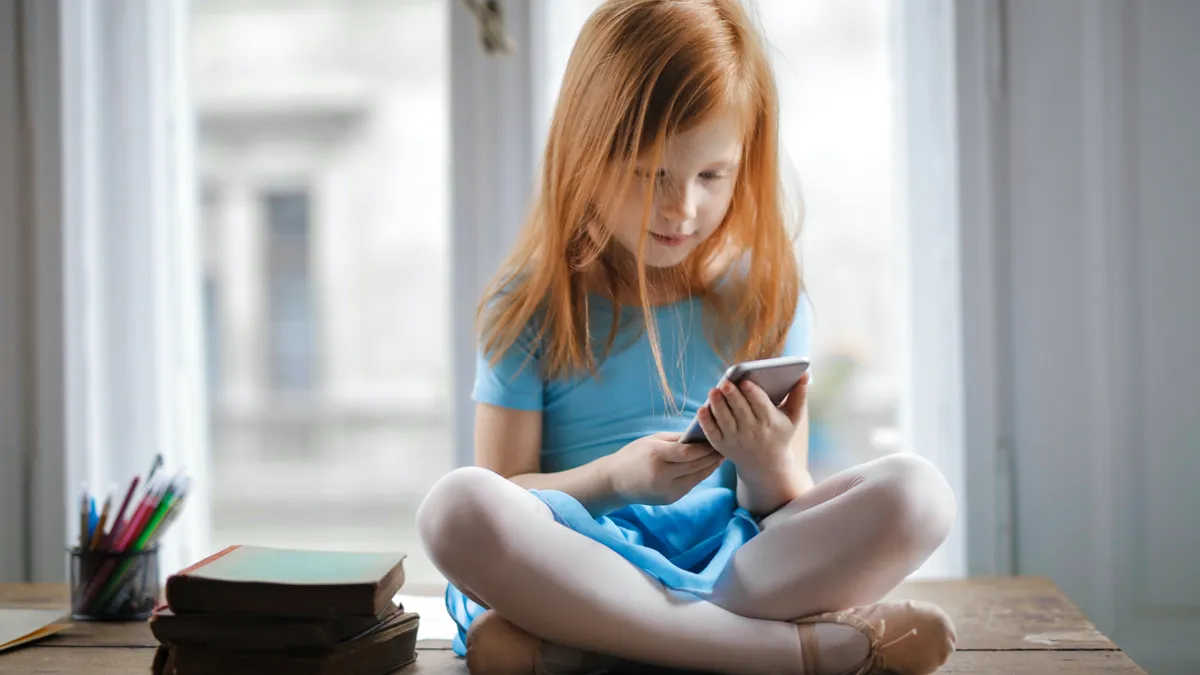
Research by Childnet in late 2025 showed that while VPN providers saw searches increase over 300% when age verification arrived, there was no huge rise in VPN uptake by children when age verification landed that July. Uptake in the 3 months after was only 2% higher than a year earlier.
In the same study, 38% of children said that their primary reason for using a VPN was to stay safe online. By contrast, only 10% of children said they used a VPN to access content that they shouldn't.
Talking to TechRadar, Childnet International CEO Will Gardner elaborated, saying:
“Children that use VPNs do so for a variety of reasons, and, in fact, the primary reason they gave was to protect their privacy/online safety… any steps to restrict children from using this technology will be overriding these [reasons].”
Unsurprisingly, the VPN industry itself isn’t oblivious to the risks that children face online either.
The primary reason they gave was to protect their privacy/online safety"
Will Gardner, CEO of Childnet International
Speaking to TechRadar, Chief Research Officer at ExpressVPN, Pete Membrey, underlined how VPNs can shield children from tracking and online profiling, and “provide private access to health information and safeguarding services”.
In other words, children can access the materials they need to remain healthy, even if they are in unsafe living situations.
ExpressVPN took this one step further earlier this year. Partnering with the International Watch Foundation (IWF), a foundation aiming to eliminate all child sexual abuse material online, ExpressVPN now blocks all sites listed by the IWF as hosting child sexual abuse material (CSAM).
This means any child using the internet while connected to ExpressVPN cannot see these materials. What’s more, parents can take this one step further thanks to adult content blocking settings in-app. If VPNs were restricted, neither of these capabilities would be accessible.
ExpressVPN has also made the technology for blocking CSAM material, OpenBoundary, open source, in a move to encourage other services to take similar measures.
Speaking on the importance of the partnership, Membrey explained:
“Our partnership with the Internet Watch Foundation takes [protecting children online] further…it shows that VPN providers can actively contribute to child protection while preserving the privacy that makes VPNs valuable in the first place."
“We empower parents to protect their children by applying these VPN benefits to their kids’ online activity.”
ExpressVPN is not the only VPN to have taken action to protect children. Countless of the best VPNs now offer measures such as parental controls and content blocking to protect children online — including NordVPN, Surfshark, Windscribe, and more.
VPN providers can actively contribute to child protection while preserving the privacy that makes VPNs valuable in the first place."
Pete Membrey, Chief Research Officer at ExpressVPN
The UK Government is also looking at gaming and streaming as part of the measures. In these instances, VPNs can not only secure the data you send online but also help prevent doxxing, meaning revealing someone's personally identifying details online, and other malicious practices that children can be exposed to.
Parental controls integrated into VPNs can also limit access to these services without the need to compromise VPNs entirely, unlike a total ban which risks leaving children totally exposed.
The VPN industry is also taking to other areas of parenting problems, disrupting those other markets by solving them in a more secure way.
HeyPolo is one example, a private location-tracking solution built by the team behind Surfshark.
Its tracking is entirely consent-based, so no one is tracked more than they want to. More importantly, no user data is sold to advertisers, protecting children from unwanted online profiling before they understand what it is.
Compare that to the current market-leading family tracking service, Life 360, which openly sells user data and bombards with advertising, rather than focusing on the online safety of the children using the platform.
The risks of imposing VPN restrictions
VPN restrictions are no guarantee of online child safety. App stores are constantly flooded with VPNs claiming to be safe that are entirely the opposite.
Blanket bans push kids out of such curated, supervised, beneficial experiences and towards anonymous, less safe services.”
Jay Stoll, YouTube spokesperson
A TechRadar study recently found that over 75% of Android VPNs fail basic transparency tests, and it’s unlikely that restrictions would stop the emergence of such services appearing and being available to download before being restricted.
So any government-imposed restrictions on known VPNs would very likely push children to these untrustworthy and often malicious services. This could lead to children’s data being collected and monetized or put into databases at risk of breach from bad actors.
The same can be said for social media platforms. As YouTube spokesperson Jay Stoll,, explained while speaking to Wired: “Blanket bans push kids out of such curated, supervised, beneficial experiences and towards anonymous, less safe services.”
When age verification measures arrived on adult content in the UK, the number of people accessing this content via unregulated websites skyrocketed.
Did you know?

Baroness Lucy Faithfull was the first social worker to sit in the UK House of Lords. She also played a key role in the Children Act of 1989
Data from the Lucy Faithfull Foundation, a foundation named after its founder, suggested that up to 39% of adults had accessed content through unregulated sites.
Were the proposed restrictions to come in, there’s little to stop this from occurring again.
If, however, VPNs weren’t restricted, malicious content blocking tools included in these services would be a simple solution.
Keeping children protected and private
There’s little opposition to the need to protect children online. Where problems arise, though, is the UK government’s proposal to diminish online privacy to achieve this. Suggesting that one must be compromised so the other remains is a false dichotomy and undermines the broader benefits of a VPN to children and the wider population.
VPN restrictions are still under consideration for the coming months, and that means there’s still time for a solution that protects children online without compromising their access to protective, privacy-focused tools, but the signs aren’t good.
This is the second time in the past 12 months that VPNs have come under extreme scrutiny in the UK.
Many of the suggested actions are technically impossible. Adding age verification to the VPNs themselves, for example, would fundamentally contradict the no-logs policies these tools are built on, and the infrastructure VPNs use wouldn’t be capable of verifying a user's age without breaching this.
Regardless, it’s becoming difficult to see a future where access to these services isn’t restricted in some form to allow for greater protection of children and vulnerable adults online.
Australia’s model, which the UK Government’s proposal is built from, puts the onus on social media platforms to prevent VPN misuse, we’ll have to wait and see whether the UK will follow suit.