惯性聚合 高效追踪和阅读你感兴趣的博客、新闻、科技资讯
阅读原文 在惯性聚合中打开

推荐订阅源

Project Zero
Project Zero
WordPress大学
WordPress大学
Cyber Security Advisories - MS-ISAC
V
Visual Studio Blog
爱范儿
爱范儿
P
Proofpoint News Feed
F
Fortinet All Blogs
雷峰网
雷峰网
小众软件
小众软件
Jina AI
Jina AI
人人都是产品经理
人人都是产品经理
TaoSecurity Blog
TaoSecurity Blog
Exploit-DB.com RSS Feed
S
Secure Thoughts
Recent Commits to openclaw:main
博客园 - 司徒正美
freeCodeCamp Programming Tutorials: Python, JavaScript, Git & More
Microsoft Azure Blog
IT之家
IT之家
S
Security @ Cisco Blogs
Help Net Security
Help Net Security
GbyAI
GbyAI
Webroot Blog
Webroot Blog
T
Troy Hunt's Blog
B
Blog
MongoDB | Blog
MongoDB | Blog
月光博客
月光博客
H
Heimdal Security Blog
Google Online Security Blog
S
Security Affairs
云风的 BLOG
云风的 BLOG
Engineering at Meta
Engineering at Meta
www.infosecurity-magazine.com
H
Help Net Security
O
OpenAI News
H
Hacker News: Front Page
博客园 - 叶小钗
Last Week in AI
Last Week in AI
S
Schneier on Security
The Last Watchdog
The Last Watchdog
C
Cyber Attacks, Cyber Crime and Cyber Security
cs.CV updates on arXiv.org
MyScale Blog
MyScale Blog
Recorded Future
Recorded Future
博客园 - 【当耐特】
V
Vulnerabilities – Threatpost
大猫的无限游戏
大猫的无限游戏
N
News | PayPal Newsroom
The Hacker News
The Hacker News
A
Arctic Wolf

BankInfoSecurity.com RSS Syndication

OnDemand | Why Cloud Intrusions Still Evade Detection Bank information security news, training, education Bank information security news, training, education Bank information security news, training, education Bank information security news, training, education Startup Geordie AI Lands $30M to Secure Enterprise AI Agents AI Exploit Risks Pushing Healthcare Security Shift Miasma Worm Hits Microsoft's AI Coding Ecosystem Senate Committee Leader Seeks Answers on NYC Health Hack Webinar | Securing the Agentic Enterprise: An Integrated Policy Framework for Enterprise AI Security Webinar | Securing the Agentic Enterprise: An Integrated Policy Framework for Enterprise AI Security AI Generated Code Is Expanding the Attack Surface What DORA, AI Oversight, and Cloud Dependency Mean for Business and Risk Leaders Why Hospitals Must Rethink Cyber Resilience Why The Privacy Risks of Embedded, Shadow AI in Healthcare The End of Static Security: Why AI Demands Real-Time Microsegmentation Anthropic Submits Pre-IPO SEC Filing, Leads Market Cap Fight AI Agents Are the New Insiders Demystifying Claude: Signal vs. Speculation Integrity or Innovation? Mixed Signals in Trump's Exec Orders Health Cyberthreat Sharing Is Advancing But Gaps Persist AI Is Reshaping Cybersecurity Training Priorities Claude Mythos 5 Can Build Exploits But Can't Power Campaigns Are Small Models Closing the Gap on Frontier AI Cyber Tools? Securing AI in Financial Services with Zero Trust Beyond the Inbox: Defending Against AI-Enabled Social Engineering Webinar | 6 Layers Standing Between Your Enterprise and AI Risk Webinar | 6 Layers Standing Between Your Enterprise and AI Risk How AI Governance Protects Patient Care and Sensitive Data Election Systems Are Now a Persistent Cyber Target DOJ, FBI Seize 13 Domains in Chinese Recruitment Op A Security Gets $37M to Thwart Weaponized AI With Automation Breach Roundup: CISA Says Agencies Should 'Patch Smarter' Joint Commission Certification Targets Healthcare AI Risks German Court: Google Liable for AI Summaries Google Sues Chinese Phishing Service Over Gemini Abuse Policy as Code: From Documents to Machine Intelligence Ozempic Drug Maker Loses Clinical Trial Data in Hack ISMG Editors: Anthropic Unleashes Claude Mythos 5 ISACA Survey: AI Adoption Is Rising, Visibility Is Not Anthropic Limits on OT Access to Mythos Draw Criticism Webinar | Frontier AI and Identity Security in Financial Services US Pulls the Plug on Anthropic 1Password Buys Apono to Expand AI Access Governance US Anthropic Export Controls Sparks Sharp EU Reaction GovSec Summit USA 2026: Cyber Resilience Amid Fiscal Reality Why AI Defenses Fail Without Data and Identity Fundamentals Geopolitics Is Now a Cybersecurity Problem Mythos Shutdown Contains a Message: Don ShinyHunters Hits Universities Via Oracle Zero-Day Labcorp Agrees to Pay $35M to Settle AMCA Data Breach US FCC Eases Router Ban for Cable ISPs How FDA Chinese Hacking Firm Upgrades With New Windows Backdoor South Korea Fines Coupang $409M Over Massive Data Breach Cyber Resilience Summit Dallas Prioritizes Risk Management Hacker: Restore Fable and Mythos Access, Cybersecurity Leaders Urge Live Webinar | Behind Dell’s AI Infrastructure Performance Rokarolla Android Banking Trojan Enables Device Takeover Ent Raises $100M to Reinvent Endpoint Security for AI Era The AI Accountability Gap CIOs Can Chinese Espionage Actor Abuses Email Rules to Steal Research Data AWS Unveils Continuum to Fight Vulnerability Backlog SpaceX Bets Big on AI Coding With $60B Cursor Deal Quantum-Safe Cryptography Isn Heart Monitoring Firm Tells SEC Hackers Stole Sensitive Data Mastra AI Framework Poisoned in npm Supply-Chain Attack Cyberspace Locked in a Nation-State Contest, Says NCSC CEO Webinar | The Future of SASE: Top 5 Predictions and Trends The Gentlemen Ransomware Gang Standardizes EDR Killing CISA Urges OT Resilience in Dark Remarks About Cyberattacks Attackers Steal Salesforce Data From Klue Battlecards Users Crime Gang Sells Access to 74,000 Fortinet Firewall Devices JPMorgan Pulls Anthropic Claude Access in Hong Kong Webinar | From SBOM to Submission: Operationalizing CRA Vulnerability Handling 6 Ways to Contain Enterprise Risk in Model Context Protocol Breach Roundup: ShinyHunters Leaks 26M MSG Records AI Inherits People Accenture Buys Majority Stake in Dragos in $4.2B Deal Multimillion-Dollar Settlement Reached in MCNA Dental Hack Addressing Quantum Readiness in Healthcare Security Klue Confirms OAuth Token Theft Led to Salesforce Data Heist Cybercrime Initial Access Service SocGholish Disrupted Experts Warn of From Reflection to Shadow: AI, Us and the Space in Between ISMG Editors: Cyber Backlash Over the US Ban on Anthropic AI France and Germany Boost Digital Sovereignty Push North Korean IT Workers Try, Try, Try Again HIPAA Europe Seeks to Advance 6G Security, Privacy No Zero-Day Tied to 80,000 Harvested Fortinet Credentials Is It Time to Put Some Teeth in Post-Quantum Guidelines? New AI Model Aims to Transform Behavioral Health Lawsuits Already Getting Filed in Drug Maker Sakana AI Bets on Agent Orchestration Over Frontier Models OpenAI Lets Cyber Vendors Embed GPT-5.5 in Defenses AryStinger Botnet Converts Legacy Routers to Global Proxies Trump Executive Order Accelerates Post-Quantum Security Push
Microsoft Weighs DeepSeek for Copilot Amid Security Debate
Emilia David · 2026-06-24 · via BankInfoSecurity.com RSS Syndication

Artificial Intelligence & Machine Learning , Next-Generation Technologies & Secure Development

Lower-Cost AI Model Could Cut Agent Costs But Raise Enterprise Risks June 23, 2026    
Microsoft Weighs DeepSeek for Copilot Amid Security Debate
Image: Thrive Studios ID/Shutterstock

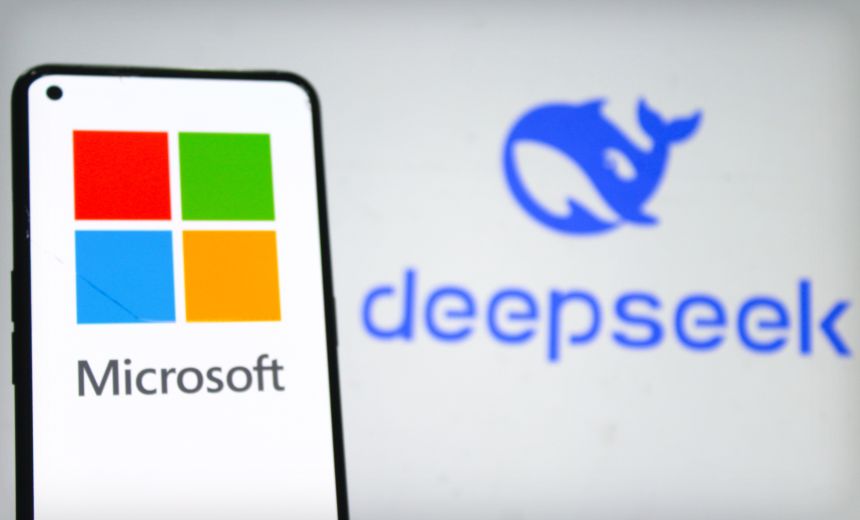
Microsoft's ubiquitous Office suite could come bundled with the Chinese-made DeepSeek artificial intelligence model, a move Redmond said may be necessary given the high costs of running U.S.-made models.

See Also: Edge Transformation: Top 5 SASE Predictions and Trends

Embedding DeepSeek into the computing giant's Copilot AI digital assistant raises obvious geopolitical and security risks, even if it comes with a lower price tag for customers. Mitigating those risks could even become an additional cost consideration for organizations in the future.

As first reported by Axios, Microsoft said it is testing alternative models to Anthropic's Opus 4.8, Sonnet 4.6 and Open's GPT-5.5 from OpenAI, which currently power Copilot Cowork, the agentic AI feature in Microsoft 365.

"DeepSeek is one of several models under consideration. We'll share more specifics on the underlying model closer to release," a Microsoft spokesperson told ISMG. The company has not made a final decision on any new models that will power Copilot Cowork.

Copilot Cowork lets users delegate tasks to AI agents, including those that require multiple steps. This kind of agentic use case can get expensive because the agents need to hold their state and remember prior conversations, tool use and reasoning, tasks that accumulate more and more tokens. Every time the agent calls an API or taps data, it adds to the cost. Much of the pricing for these agents depends on the models that power them - and given the capabilities of both Anthropic and OpenAI, costs can accumulate quickly.

Copilot Cowork users have two payment options: either a pay-as-you-go or a usage volume in advance system. The pricing is also based on the models' API costs. For example, Claude Opus 4.8 costs $5 per million input tokens and $25 per million output tokens.

DeepSeek is a famously less expensive option, charging $0.28 per million output tokens for DeepSeek v4. But its country of origin may be a difficult hurdle for users and Microsoft to overcome, given long running suspicion in the West of any technology coming out of China.

Microsoft said that any DeepSeek model it adds will be fine-tuned with additional safeguards and hosted within its Azure cloud environment to address data-residency concerns. The company is also developing its own cheaper model, Cowork 1, that could operate underneath Copilot Cowork.

DeepSeek v4 and other Chinese models have come under scrutiny, particularly after the House Select Committee on China launched an investigation in April into the adoption of these systems by U.S.-based companies. A recent Booz Allen Hamilton report found that Chinese LLMs produced more vulnerable code when prompted by a U.S. government persona and could inject political bias into their responses. DeepSeek v4-Pro scored the lowest among Chinese models in Booz Allen's vulnerability and bias tests.

One way enterprises could mitigate potential risks from DeepSeek v4 in Copilot Cowork is to add their own guardrails - an approach could bring additional costs that negate Microsoft's offering a cheaper option.

Yves-Gabriel Leboeuf, co-founder and CEO of Deck, told ISMG that even cheaper models become expensive if organizations need additional retries, validation or oversight to get the same outcome.

"The instinct is always to pile on oversight layers, but that's the expensive, reactive path," Laboeuf said. "What actually works is architectural. You just don't let the platform directly touch your sensitive systems. You put a mediation layer in between that controls what the agent can see, what it can do and what it can write back."

He added that ultimately what matters more is auditability.

"Chinese origin models raise real questions around training data provenance and reinforcement learning with human feedback objectives, not because of geopolitics, but because you have basically zero visibility into the process. But U.S. labs aren't automatically trustworthy either; they're just more litigable," Laboeuf said.

Jason Corso, a computer science academic at the University of Michigan and co-founder of Voxel51, said in a separate interview that even domestic models should be thoroughly validated and internally de-risked, so the geographical origin of models is of less critical focus.

What enterprises must ensure when third-party providers like Microsoft add open-source models is a "more significant level of expertise internally in DevOps and infra, along with expertise in measuring bias and hallucination risk along the most critical axes of an enterprise," Corso said.