


Version 153.0a1, first offered to Nightly channel users on May 19, 2026
Firefox Nightly gets updated every day and as a consequence, the release notes for the Nightly channel are updated continuously to reflect features that have reached sufficient maturity to benefit from community feedback and bug reports.
Warning: Features listed here may or may not make a final release of Firefox.
In addition to these release notes, you can follow ongoing development on our @FirefoxNightly Bluesky account, our @FirefoxNightly Mastodon account as well as read our Nightly Blog.
You can interact with other Firefox Nightly users and give your feedback to Mozilla staff in the Nightly Matrix room on chat.mozilla.org.
Starting with Firefox 152, Nightly builds have an in-memory cache for the JavaScript compilation result, which is shared across navigation within the same domain, in order to improve the page load performance. The cache works in the same way as the existing in-memory cache for the stylesheets and the images. This can affect how the cached requests/responses are handled in DevTools, WebDriver, and WebExtensions APIs such as webRequest and declarativeNetRequest.
Starting with Firefox 151, Firefox for Android nightly builds include settings for enabling fine-grained control of AI features and also allows you to block future AI features.
Starting with Firefox 152, the address bar in Nightly builds autofills the pages you visit most - including specific pages within a site, not just site homepages - based on your browsing habits, and lets you dismiss suggestions you don’t want.
High dynamic range video is now supported in Firefox on Windows 10 and 11 for HDR displays connected to AMD and NVIDIA GPUs (notably this excludes Intel+NVIDIA laptops for now), work is underway to enable this feature on more GPU vendors. To use this feature you must ensure that HDR mode is enabled for the relevant displays in Windows Settings - Display. HDR videos may appear brighter in Firefox than in other browsers, which will be improved in a future release, as well as optimizations for performance.
Added support for Apple's system-wide full-screen keyboard command (Globe-F)
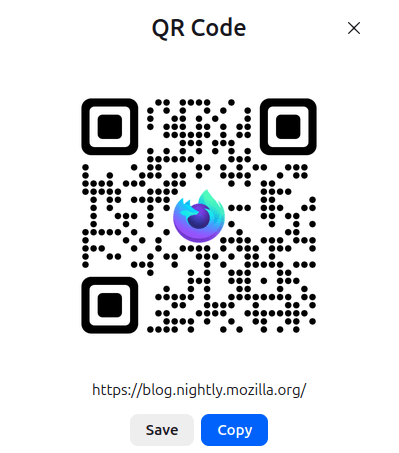
Share any open page with a QR code. Right-click a tab, select Share > Generate QR Code. Great for posters, invitations, banners, and other printed materials. On macOS, you can also right-click the address bar to access the Share menu.
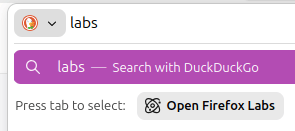
Firefox Labs can now be opened quickly by typing "labs" or "experiment" in the address bar and selecting the Open Firefox Labs quick action.
Firefox now verifies and displays Qualified Website Authentication Certificates (QWACs) in accordance with eIDAS regulations.
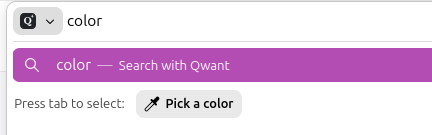
Quickly pick and copy a color from any page by typing "pick color", "color picker", or "eyedropper" in the address bar and selecting the "Pick a color" quick action.
It is now possible to add images as new pages within PDFs using the Firefox PDF editor.
Added improved support for videos with overlays so users can more easily access video actions from context menus.
It is now possible to merge multiple PDFs by dragging a PDF in the PDF sidebar.
Firefox now highlights the location permission icon in red whenever a website has access to your location. The permission icon is also now visible on search results pages where it was previously hidden.

In Firefox for Android, sharing a remote PDF will now share the file itself, rather than its URL, that you can still share by copying it from the awesomebar.
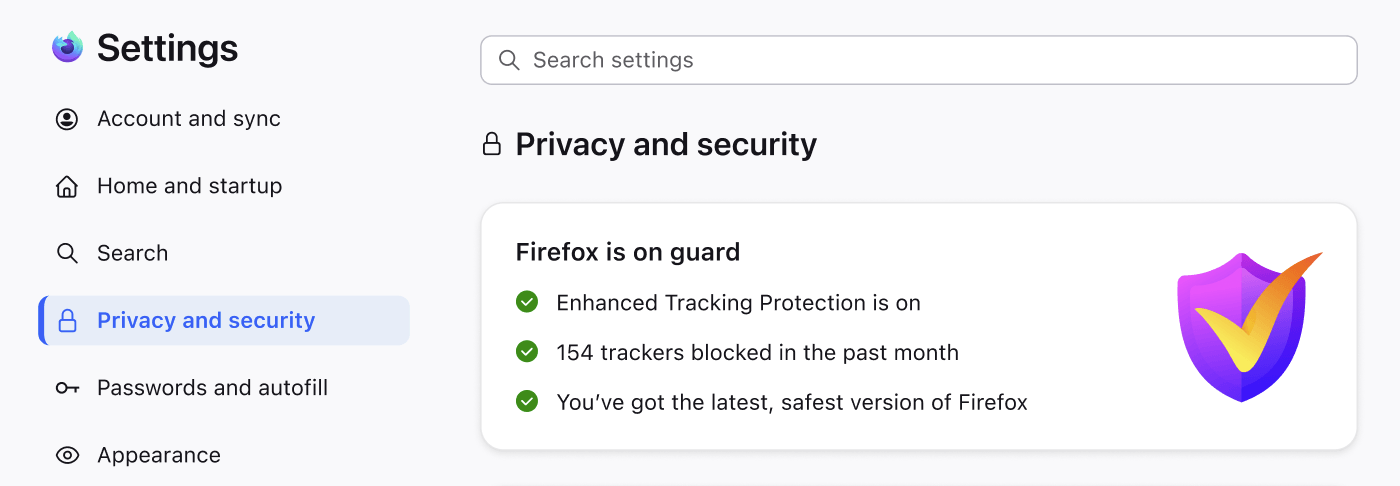
Firefox Settings features a brand-new look with streamlined organization, clearer groupings, and improved navigation for easier customization.
Text selected in PDFs is now highlighted clearly like in normal web pages. The selection color also follows OS settings like high-contrast mode.
Extensions can no longer access local files by default. Users can grant or revoke this access via the new "Access local files on your computer" permission, separate from "Access your data for all websites".
Starting with Firefox 151, the JavaScript Tracer can be enabled from DevTools Settings panel in Nightly builds. This enables tracing all JavaScript function calls. Unlike the performance profiler, this doesn't record a sample; instead, it traces all function calls.
Starting with Firefox 152, Nightly builds now support the WebAssembly JS-Promise-Integration proposal, improving the porting of applications to the Web.
Firefox now supports a limited subset of the non-standard ::-webkit-scrollbar pseudo-element to improve web compatibility:
width/height disable overlay scrollbars for the affected container.display: none on ::-webkit-scrollbar behaves like scrollbar-width: none, hiding the scrollbar.@supports selector(::-webkit-scrollbar) now evaluates to true.Starting with Firefox 152, Nightly builds allow the attr() function to be used in any CSS property. It now also allows to specify how the attribute value is parsed into a CSS value.
Updated HTML parsing rules for <select> elements, aligning with web standards to support future customizable select dropdown features.
The vertical-align property was converted into a shorthand for baseline-source, alignment-baseline, and baseline-shift in Firefox 149. Now, alignment-baseline supports the new keywords alphabetic, ideographic, central, mathematical, and hanging, extending the variety of baselines to choose for alignment.
Implemented the new popover=hint spec, which removes a series of inconsistent and unexpected behaviors.
The newly added Error.stackTraceLimit property allows to set the maximal depth of the captured JavaScript error stack as a performance optimization.
Developers can now use the text import attribute to import text files using the module system.
The Picture In Picture API exposes a way for web developers to make use of user agent Picture-In-Picture functionality.
The Intl.LocaleInfo proposal adds the ability to query Locale information, such as week data (first day in a week, weekend start day, weekend end day), text direction and hour cycle used in the Locale.
Starting with Firefox 153, Firefox Nightly now supports the sibling-index() and sibling-count() CSS functions. These functions allow an element to be styled with calculations that use its index among its siblings and its total count of siblings (including itself), respectively. Documentation.
Starting with Firefox 153, Firefox Nightly ships an experimental implementation of the link-parameters property by Tyler Thrailkill.
Starting with Firefox 153, Nightly builds support the new JPEG XL image format, which generally has better compression than WebP, JPEG, PNG and GIF and is designed to supersede them.
此内容由惯性聚合(RSS阅读器)自动聚合整理,仅供阅读参考。 原文来自 — 版权归原作者所有。