
惯性聚合 高效追踪和阅读你感兴趣的博客、新闻、科技资讯
阅读原文 在惯性聚合中打开

推荐订阅源

人人都是产品经理
人人都是产品经理
Google DeepMind News
博客园 - 【当耐特】
量子位
博客园 - 司徒正美
爱范儿
爱范儿
Hugging Face - Blog
Hugging Face - Blog
博客园 - 聂微东
Jina AI
Jina AI
J
Java Code Geeks
腾讯CDC
大猫的无限游戏
大猫的无限游戏
V
Visual Studio Blog
I
InfoQ
D
Docker
Recent Announcements
MongoDB | Blog
MongoDB | Blog
博客园 - Franky
宝玉的分享
宝玉的分享
G
Google Developers Blog
GbyAI
GbyAI
Y
Y Combinator Blog
有赞技术团队
有赞技术团队
H
Help Net Security

Hackread – Cybersecurity News, Data Breaches, AI and More

Operation Endgame Disrupts StealC, Amadey and SocGholish Malware Networks New GhostShell Hacking Group Targets Ukraine’s Drone Defense Sector Fake npm Packages Impersonate PostCSS Tool to Steal Chrome Passwords Best Crypto Payment Solutions for E-Commerce Businesses Internet Society Foundation Opens Global Call for Common Good Cyber Fund to Strengthen Cybersecurity LastPass Confirms Customer Data Breach After Klue OAuth Token Theft ‘Cordyceps’ CI/CD Flaw Exposes Microsoft, Google, Apache Repos to Pipeline Hijacking The Rise of AI-Powered Academic Fraud: Beyond Traditional Plagiarism New CryptoBandits Malware Uses USB Drives and Tor to Steal Crypto The Evolution of iGaming Fraud: What Security Teams Should Expect in 2027 2 Scattered Spider-Linked Hackers Plead Guilty Over £39M TfL Cyberattack Beats Studio Buds Flaw Could Let Nearby Attackers Eavesdrop on Users Texas Parks and Wildlife Data Breach Affects Over 3M License Customers Threat Hunting Beyond Alerts: Finding the Activity Detection Misses Scammers Use Fake GitHub Stars, VirusTotal Reviews to Spread Crypto Clipper Salesforce Disables Klue Integration After OAuth Token Theft Hits Customer Data MDR Provider Comparison: Time to Discover and Respond to Threats Meteor 3.0 Migration Helped Rocket.Chat Move Off End-of-Life Node.js Runtime Gcore Helps Ucom Safeguard Public Live Broadcast Infrastructure During Armenia’s Parliamentary Elections Nintendo America Employee Data Exposed After Shadowbyt3$ Targets TinyPulse eFAQ Publishes Investigation Into Alleged Scam Activity and Coordinated Reputation Attacks FIFA World Cup 2026: Hackers Target Football Fans With Fake Tickets Sites MacBook Neo vs Windows Laptops for Cybersecurity Tasks Operation Endgame Disrupts SocGholish Malware Infrastructure What Businesses Should Know Before Migrating Their CMS DragonForce Ransomware Abused Microsoft Teams to Hide Malware Activity Agentjacking: Researchers Show How One Fake Bug Report Can Hijack AI Coding Agents FortiBleed Attack Exposes Fortinet Firewall Credentials in 194 Countries SpyCloud Report Finds Phishing Attacks Surge as Employee Data Is Exposed at 86% of Fortune 100 Companies 152 Chrome Live Wallpaper Extensions Hid Ad Tracking and Fake Search Clicks
Suspected Cyberattack Sends Fake Emergency Alert to Phone...
Deeba Ahmed · 2026-06-25 · via Hackread – Cybersecurity News, Data Breaches, AI and More

Last week, Brazil’s emergency alert system was taken offline after a suspected cyberattack sent fake warnings to phones across several regions.

People in several parts of Brazil woke up on Saturday morning to a strange emergency text message on their mobile phones. The message appeared as an Extreme Alert containing the word “misantropi4,” a version of the Portuguese word “misantropia,” meaning hatred toward humanity.

It is suspected that hackers replaced the letter “a” in “misantropia” with the number “4,” creating “misantropi4,” a leetspeak style often used in hacker culture.

This false alarm caused a lot of confusion, mainly because no natural disasters or emergencies were occurring. The message first appeared on phones in the southern state of Paraná. However, within minutes, it reached people in major cities such as São Paulo and Rio de Janeiro. Some residents also received the text via normal SMS messages.
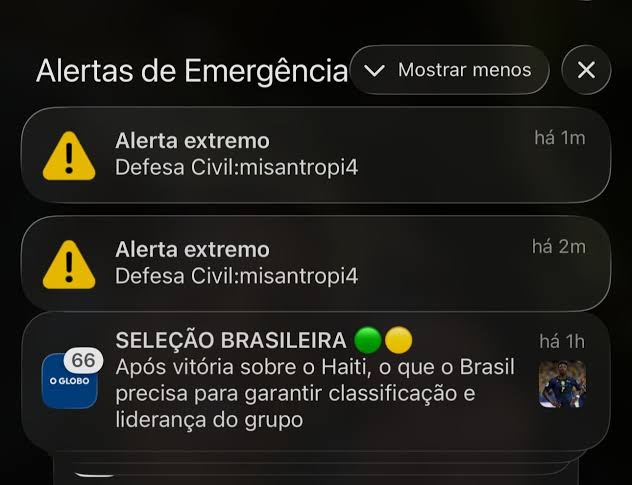
Suspected Cyberattack Sends Fake Emergency Alert to Phones Across Brazil
Fake emergency alert received by residents in Brazil (Image via @vxunderground on X)

Turning Off the System

In Brazil, a tool called Cellbroadcast is used to send out urgent public warnings. It is managed by the country’s National Telecommunications Agency (known as Anatel), and it works just like any other emergency alert system used in other countries, with the basic purpose being to warn citizens about dangerous weather.

Because the text came from someone outside the government network, officials had to take the National Civil Defense warning platform offline at around 1:30 a.m. local time. The system will stay disabled until authorities finish checking its security.

How the Attack Happened

According to an X (formerly Twitter) post from the online malware repository administrator vx-underground, the fake alarm was the work of an individual using the name “mizanthropiaz” who managed to compromise the system because of weak security measures.

The post further revealed that a government employee accidentally infected their computer with infostealer malware back in 2016. The malicious software exposed the employee’s username and password. It is shocking that this password was never changed over the last ten years, and was the same as the username.

The government network lacked basic security settings. It didn’t require a secure private connection or extra login codes like a text message verification. There was a security puzzle to stop automatic guessing attacks, but it always asked the simple question “2+2=” and never changed.

Local civil defense teams across the country confirmed that none of their agents sent the text. Local authorities are now working with Anatel to investigate how the system was breached.