惯性聚合 高效追踪和阅读你感兴趣的博客、新闻、科技资讯
阅读原文 在惯性聚合中打开

推荐订阅源

WordPress大学
WordPress大学
Security Latest
Security Latest
C
Cisco Blogs
P
Palo Alto Networks Blog
Know Your Adversary
Know Your Adversary
Project Zero
Project Zero
C
Cyber Attacks, Cyber Crime and Cyber Security
NISL@THU
NISL@THU
Exploit-DB.com RSS Feed
S
Secure Thoughts
P
Privacy International News Feed
V
Vulnerabilities – Threatpost
D
Docker
Google Online Security Blog
K
KPMG report finds enterprise disconnect between AI and its ROI | CIO
Recent Announcements
T
The Exploit Database - CXSecurity.com
G
Google Developers Blog
Schneier on Security
小众软件
小众软件
爱范儿
爱范儿
GbyAI
GbyAI
J
Java Code Geeks
T
Tailwind CSS Blog
Cisco Talos Blog
Cisco Talos Blog
The Hacker News
The Hacker News
D
DataBreaches.Net
Blog — PlanetScale
Blog — PlanetScale
TaoSecurity Blog
TaoSecurity Blog
MyScale Blog
MyScale Blog
B
Blog RSS Feed
Cyberwarzone
Cyberwarzone
有赞技术团队
有赞技术团队
Martin Fowler
Martin Fowler
C
CXSECURITY Database RSS Feed - CXSecurity.com
S
Securelist
L
Lohrmann on Cybersecurity
cs.CL updates on arXiv.org
Y
Y Combinator Blog
S
Schneier on Security
Latest news
Latest news
Apple Machine Learning Research
博客园 - 叶小钗
F
Fortinet All Blogs
M
MIT News - Artificial intelligence
PCI Perspectives
PCI Perspectives
V
V2EX
V2EX - 技术
V2EX - 技术
O
OpenAI News
W
WeLiveSecurity

KIRUPA | Designers and Developers Unite

Understanding Merkle Trees Is a CompSci Degree Still Valuable in the Age of AI? The Model Context Protocol (MCP) Explained Vibe Coding + Expertise = Mega Win! 🏆 Animating our Grid How to Count in Negabinary (Base (-2)) — A Visual Guide Counting in Binary and Hexadecimal Pascal Pixel on Design, Development, and Solopreneurship! Do we really need to know how things work? 🧠 Drawing Sharp Lines on the Canvas The KIRUPA Tech Stack : It Bloom Filter: A Deep Dive Hash Functions Deep Dive Advanced Glitch Effect with Sound AI Killed the Content Creator...Star 🤩 Measuring the Distance Between Two Points by using the Pythagorean Theorem Detecting Browser Zoom Changes in JavaScript Creating a Fullscreen Grid Drawing a Perfect Grid on the Canvas Preserving the Pixel Art Look in Web Content Ensuring our Canvas Looks Good on Retina/High-DPI Screens Finding Prime Numbers Using a Sieve of Eratosthenes Two-Dimensional (2D) Arrays in JavaScript Two-Dimensional (2D) Arrays in JavaScript You’ll Always be Building & Designing Creating a Cluster Growth Animation: From Biology to JavaScript Timsort: A Lightning Fast Hybrid Sorting Algorithm Merge Sort: A Simple Step-by-Step Walkthrough 😀 - YouTube Bubble Sort: A Detailed Deep-Dive 🛁 Insertion Sort: A Deep Dive! 🍣 Selection Sort: A Step-by-Step Guide 💬 Radix Sort: A Complete Guide to Fast and Efficient Sorting! ⚡️ Career Growth Secrets Counting Sort : A Friendly (yet Detailed!) Deep Dive! 🎯 Bogosort: Sorting in the Slow Lane! 🐢 Pulling Off a Successful Redesign Creating Your Own Perfect Timing Radix Sort Making Counting Sort Work with Negative Values Diving Deep into Array Index Positions The Career Three Body Problem Counting Sort Work on Problems You Deeply Care About The Importance of Finding a Career Mentor Creating a Random Walk Simulation What is Product Strategy? Thinking about an 8K Resolution Future! 📺 Creating an Animated 3D Starfield Effect Meet the Default Sorting Algorithms! Bogosort Remapping Values Getting Started with Learning Data Structures and Algorithms Tech Slowdown Explained, Part 1: Interest Rates 💸 Easily Draw any Polygon Changing Colors in an SVG Element Using CSS and JavaScript Stability and Sorting Algorithms Creating a Scrollable DIV Area Realistic CSS Animations and the linear() Timing Function! 🍱 Visualizing Recursion with the Sierpinski Triangle Fast Sorting with Quicksort The Monty Hall Problem Stacks in JavaScript Depth-First Search (DFS) and Breadth-First Search (BFS) Introduction to the Graph Data Structure Big-O Notation and Complexity Analysis Introduction to Data Structures Arrays: A Data Structure Deep Dive Hashtables: A Deep Dive into Efficient Data Storage and Retrieval Trie (aka Prefix Tree) Embracing Generative AI with Open Arms! 🧸 Impact of AI on UI/UX Design with Chloe Barreau 🎨 Heap Data Structure Binary Search Trees Binary Tree Traversal Alphabetically Sort Names in an Array Overlapping Elements on Top of Each Other Developer Relations and Beyond with Jamie Barton! 🚀 A Trip Down Memory Lane 💾 Binary Trees Linked List The Present and Future of AI Tools with Ray (aka devbyrayray) "Guess the Number" and Binary Searching! 🔍 Switching Web Hosts in 2023 😱 SVG: Converting Shape to Path The Versatility of SVGs 🌀 Spinning Circular Text Introduction to Trees Faster Searching with Binary Search Search Algorithms and Linear Search Fibonacci and Going Beyond Recursion Guess the Number Game
Animations: From Biology to JavaScript! 🦠
KIRUPA 🍊 · 2024-10-13 · via KIRUPA | Designers and Developers Unite

Hi everybody - I recently spent some time creating a cluster growth animation, and it looks as follows (see live version + deconstruction):

This was a fun animation to create for several reasons. One reason was that it gave me a break from writing about algorithms, but the biggest reason was that it gave me an excuse to play with creating a retro-themed animation after my last chat with Helena about sci-fi user interfaces.

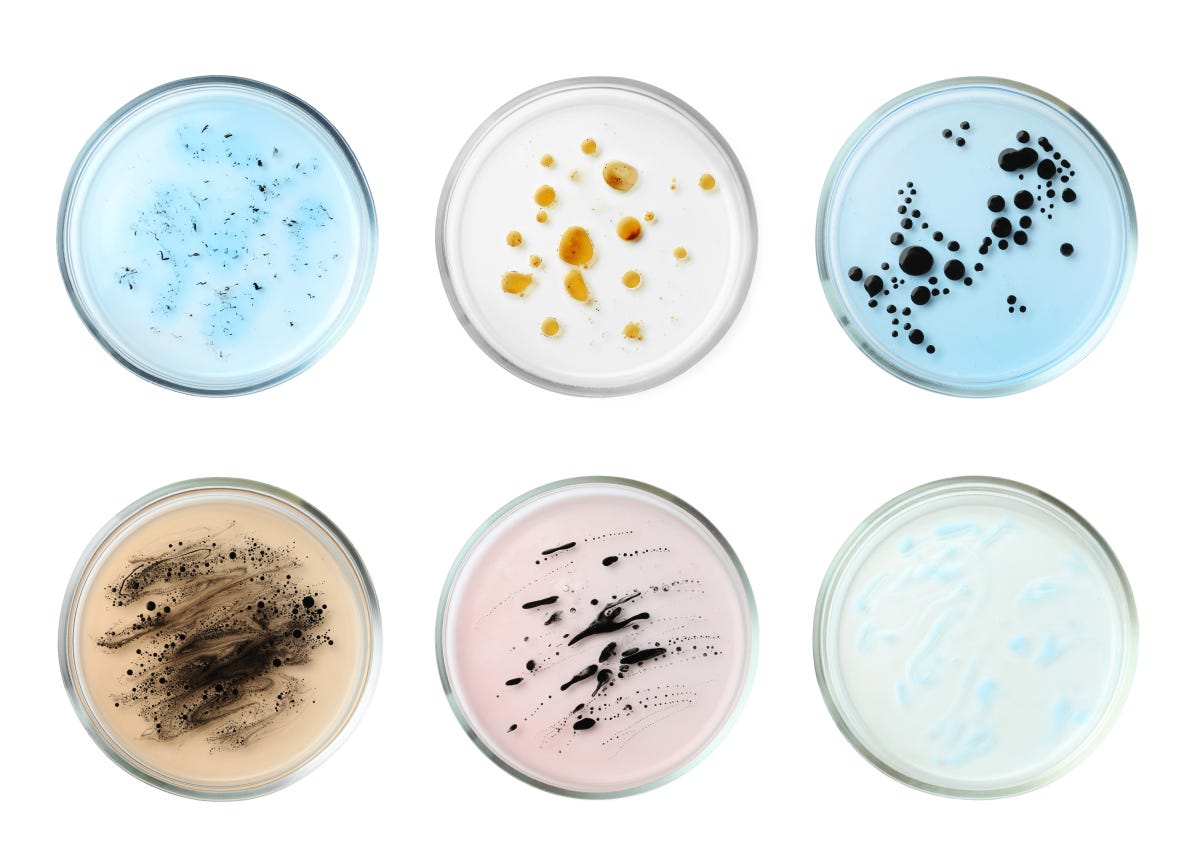
With many animations, the primary source of inspiration is physics. So much is focused on how something moves - its acceleration, timing curves, collisions, gravity, and so on. With this cluster growth animation, the source was biological cell growth similar to how you may see bacteria growing in a petri dish:

There is a starting point where a few cluster of cells are introduced. Over a period of time, these cluster of cells will multiply and grow outward. How they do so is a bit random. It’s never a predictable pattern.

With this cluster growth animation, I tried to mimic as many of the biological cell growth processes as possible while trying to build it in a performant way using vanilla JavaScript instead of ThreeJS or other more common libraries for something like this.

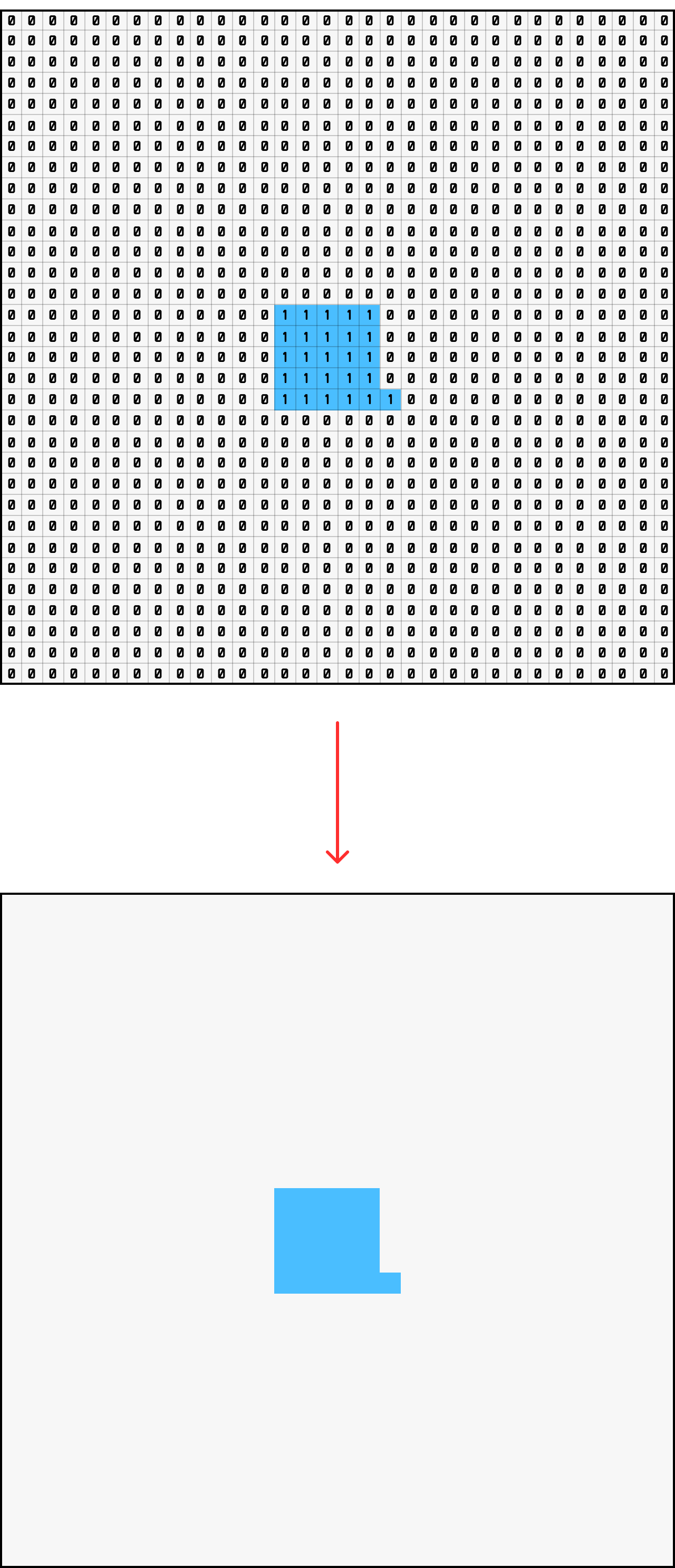
The full article deconstructs how I created this animation in more detail, but one technique I used is to have an intermediate in-memory representation of our cells in a 2D array:

This 2D array would then map to the actual pixels drawn on the screen. By separating the data from the final visuals, beyond maximizing performance, we have a lot of flexibility in how we draw the final cells. The cells could be drawn on the canvas as in this implementation. They could also be drawn on the DOM. They can even be represented as a physical grid of flippable tiles.

Customization FTW! 😱
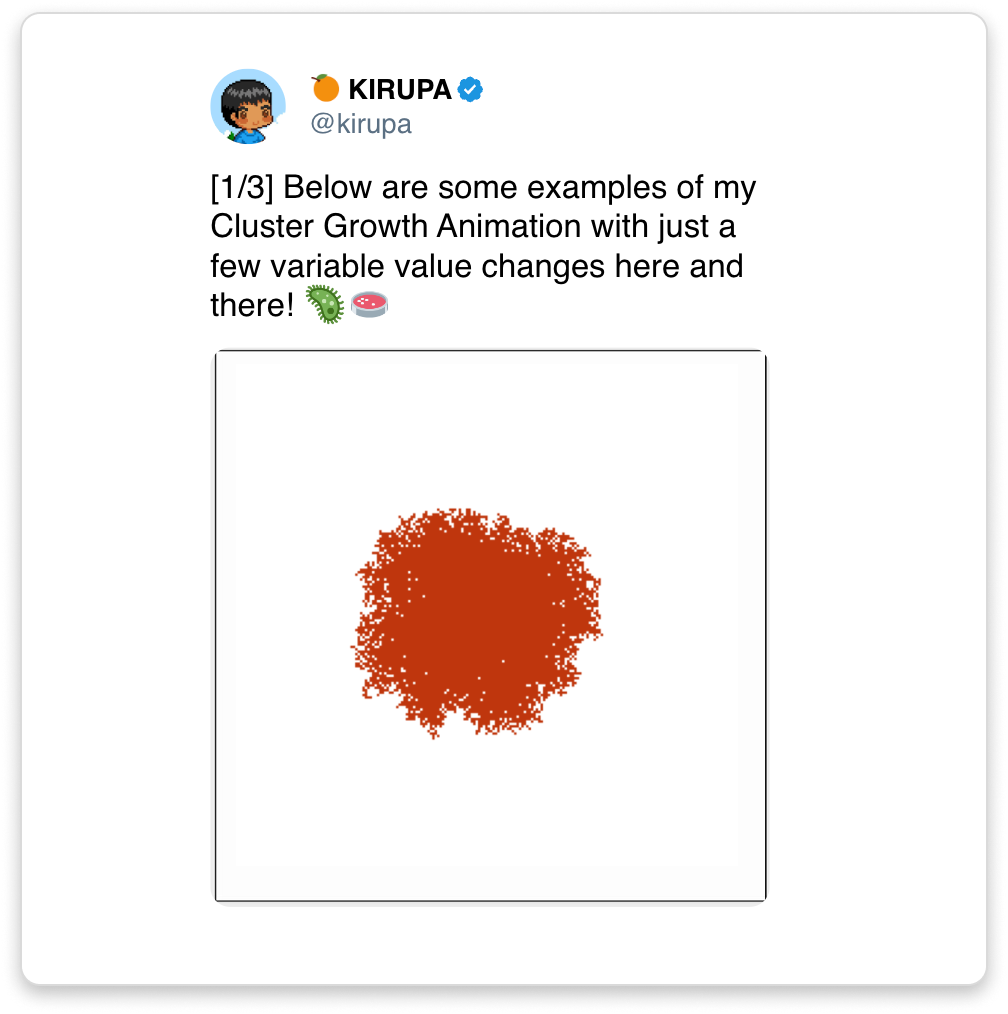
With just a few tweaks of some values here and there, there is a massive amount of control we have in customizing how the cells grow and how they look output looks.

This Twitter / X thread shows what a few of these variations look like!

I hope you enjoyed this look at how to take something that occurs all the time in nature and turn it into something we can visualize using code. There is a chance I may do a live coding session where I build this live, so let me know if that would be of interest to you.

If you have any questions or comments, the easiest way to reach me is by posting in this forum thread dedicated to the Cluster Growth Animation or by replying to this email.

Cheers,
Kirupa 😇