惯性聚合 高效追踪和阅读你感兴趣的博客、新闻、科技资讯
阅读原文 在惯性聚合中打开

推荐订阅源

L
Lohrmann on Cybersecurity
Martin Fowler
Martin Fowler
Engineering at Meta
Engineering at Meta
腾讯CDC
钛媒体:引领未来商业与生活新知
钛媒体:引领未来商业与生活新知
Microsoft Azure Blog
G
Google Developers Blog
TaoSecurity Blog
TaoSecurity Blog
博客园_首页
Vercel News
Vercel News
Hugging Face - Blog
Hugging Face - Blog
D
Darknet – Hacking Tools, Hacker News & Cyber Security
Last Week in AI
Last Week in AI
cs.CL updates on arXiv.org
T
The Exploit Database - CXSecurity.com
量子位
Project Zero
Project Zero
A
Arctic Wolf
小众软件
小众软件
NISL@THU
NISL@THU
C
CERT Recently Published Vulnerability Notes
有赞技术团队
有赞技术团队
MongoDB | Blog
MongoDB | Blog
博客园 - 聂微东
OSCHINA 社区最新新闻
OSCHINA 社区最新新闻
N
News and Events Feed by Topic
宝玉的分享
宝玉的分享
freeCodeCamp Programming Tutorials: Python, JavaScript, Git & More
T
Troy Hunt's Blog
P
Privacy & Cybersecurity Law Blog
Security Latest
Security Latest
B
Blog
酷 壳 – CoolShell
酷 壳 – CoolShell
D
DataBreaches.Net
Schneier on Security
The Hacker News
The Hacker News
K
Kaspersky official blog
C
Check Point Blog
Hacker News: Ask HN
Hacker News: Ask HN
cs.AI updates on arXiv.org
Webroot Blog
Webroot Blog
www.infosecurity-magazine.com
人人都是产品经理
人人都是产品经理
AI
AI
Cisco Talos Blog
Cisco Talos Blog
MyScale Blog
MyScale Blog
Cloudbric
Cloudbric
B
Blog RSS Feed
S
Schneier on Security
P
Palo Alto Networks Blog

Kent C. Dodds Blog

Implementing Hybrid Semantic + Lexical Search Simplifying Containers with Cloudflare Sandboxes Migrating to Workspaces and Nx Offloading FFmpeg with Cloudflare Building Semantic Search on my Content Helping YOU ask ME questions with AI How I used Cursor to Migrate Frameworks The Dow's Start on the Covenant Path 2025 in Review AI is taking your job How I increased my visibility Launching Epic Web 2023 in Review Stop Being a Junior RSC with Dan Abramov and Joe Savona Live Stream Fixing a Memory Leak in a Production Node.js App 2022 in Review My Car Accident I Migrated from a Postgres Cluster to Distributed SQLite with LiteFS I'm building EpicWeb.dev A review of my time at Remix Remix: The Yang to React's Yin How I help you build better websites Why I Love Remix The State Initializer Pattern How to React ⚛️ Get a catch block error message with TypeScript Building an awesome image loading experience How Remix makes CSS clashes predictable Introducing the new kentcdodds.com How I built a modern website in 2021 How to use React Context effectively Static vs Unit vs Integration vs E2E Testing for Frontend Apps The Testing Trophy and Testing Classifications Array reduce vs chaining vs for loop Don't Solve Problems, Eliminate Them Super Simple Start to Remix Super Simple Start to ESModules in Node.js JavaScript Pass By Value Function Parameters How to write a Constrained Identity Function (CIF) in TypeScript How to optimize your context value How to write a React Component in TypeScript TypeScript Function Syntaxes Listify a JavaScript Array Build vs Buy: Component Libraries edition Using fetch with TypeScript Wrapping React.useState with TypeScript Define function overload types with TypeScript 2020 in Review Business and Engineering alignment Hi, thanks for reaching out to me 👋 useEffect vs useLayoutEffect Super simple start to Firebase functions Super simple start to Netlify functions Super Simple Start to css variables Favor Progress Over Pride in Open Source Testing Implementation Details How getting into Open Source has been awesome for me useState lazy initialization and function updates Use ternaries rather than && in JSX Application State Management with React Use react-error-boundary to handle errors in React JavaScript to Know for React How I structure Express apps What open source project should I contribute to? When I follow TDD AHA Programming 💡 How I Record Educational Videos Should I write a test or fix a bug? Stop mocking fetch Intentional Career Building Improve test error messages of your abstractions Tracing user interactions with React Eliminate an entire category of bugs with a few simple tools Common mistakes with React Testing Library Super Simple Start to React Stop using client-side route redirects The State Reducer Pattern with React Hooks Function forms Replace axios with a simple custom fetch wrapper How to test custom React hooks React Production Performance Monitoring Should I useState or useReducer? Stop using isLoading booleans Make Your Test Fail Make your own DevTools An Argument for Automation Fix the "not wrapped in act(...)" warning Super Simple Start to ESModules in the Browser Implementing a simple state machine library in JavaScript 2010s Decade in Review Why users care about how you write code Why I avoid nesting closures Don't call a React function component Why your team needs TestingJavaScript.com Inversion of Control Understanding React's key prop How to Enable React Concurrent Mode How to add testing to an existing project Profile a React App for Performance
The next chapter: EpicAI.pro
2025-04-10 · via Kent C. Dodds Blog

For over a decade, we've embarked on learning journeys together. From mastering JavaScript testing fundamentals with TestingJavaScript.com, to diving deep into React with EpicReact.dev, and building robust full-stack applications with EpicWeb.dev, my focus has always been on teaching the enduring principles and practical applications that empower you to build great software and advance your careers.

Now, I see the landscape shifting again, perhaps more profoundly than ever before. We're standing at the edge of a new era in application development, one driven by Artificial Intelligence. But it's not just about sprinkling some AI features onto existing apps. It's about a fundamental transformation in how users interact with technology and, consequently, how we need to architect our applications.

A visual metaphor representing the evolution of user interfaces: On the left, dimly lit, slightly fragmented traditional UI elements (buttons, forms, menus). On the right, brightly glowing, abstract representations of conversational AI and interconnected services communicating seamlessly. A subtle, luminous pathway connects the two sides, showing a transition. Style: Clean digital art, optimistic, futuristic, tech-focused, blue and purple hues

The familiar paradigm of forms, buttons, links, and direct manipulation is evolving. Users, increasingly comfortable with conversational AI, will expect digital experiences that are adaptive, context-aware, deeply personalized, and capable of accomplishing complex tasks across multiple services with simple instructions. Think less clicking, more telling. Think a single input – text, voice, maybe even video – driving sophisticated workflows orchestrated by an intelligent agent.

This isn't science fiction; the early signs are everywhere. And as these AI agents become more capable (think Jarvis, but real and tailored to each user), they'll need tools to interact with the digital world on our behalf. They'll need ways to book that meeting, reserve that soccer field, order those groceries, or manage complex project updates.

And that's where we, as developers, come in. We need to build the interfaces for these AI agents. We need to architect our applications not just for human eyes and fingers, but for machine understanding and interaction.

Introducing EpicAI.pro

This realization has led me to my next major focus, and I'm thrilled to announce it today: EpicAI.pro.

EpicAI.pro is my new place to teach you how to build the next generation of applications – applications architected for intelligent interaction and powered by AI.

Consistent with the philosophy behind Epic React and Epic Web, EpicAI.pro won't be about chasing fleeting trends or hyping specific vendor tools. Instead, we will focus on the foundational principles and sound architectural practices needed to build robust, maintainable, and genuinely intelligent systems. We'll explore:

  1. Designing for AI Interaction: How do we fundamentally rethink application structure when the primary "user" might be an AI agent acting on behalf of a human?
  2. Structuring Data and Capabilities: How can we expose our application's services in a way that AI can reliably understand and utilize?
  3. Understanding Context Protocols: Diving deep into emerging standards like the Model Context Protocol (MCP), which provides a framework for this AI-to-application communication. MCP allows AI agents to discover, understand, and use your app's capabilities securely and predictably.
  4. Building Secure & Reliable Systems: Addressing the unique challenges, like authentication/authorization, security (challenges like "tool poisoning"), and reliability, that arise when letting AI interact with our systems.

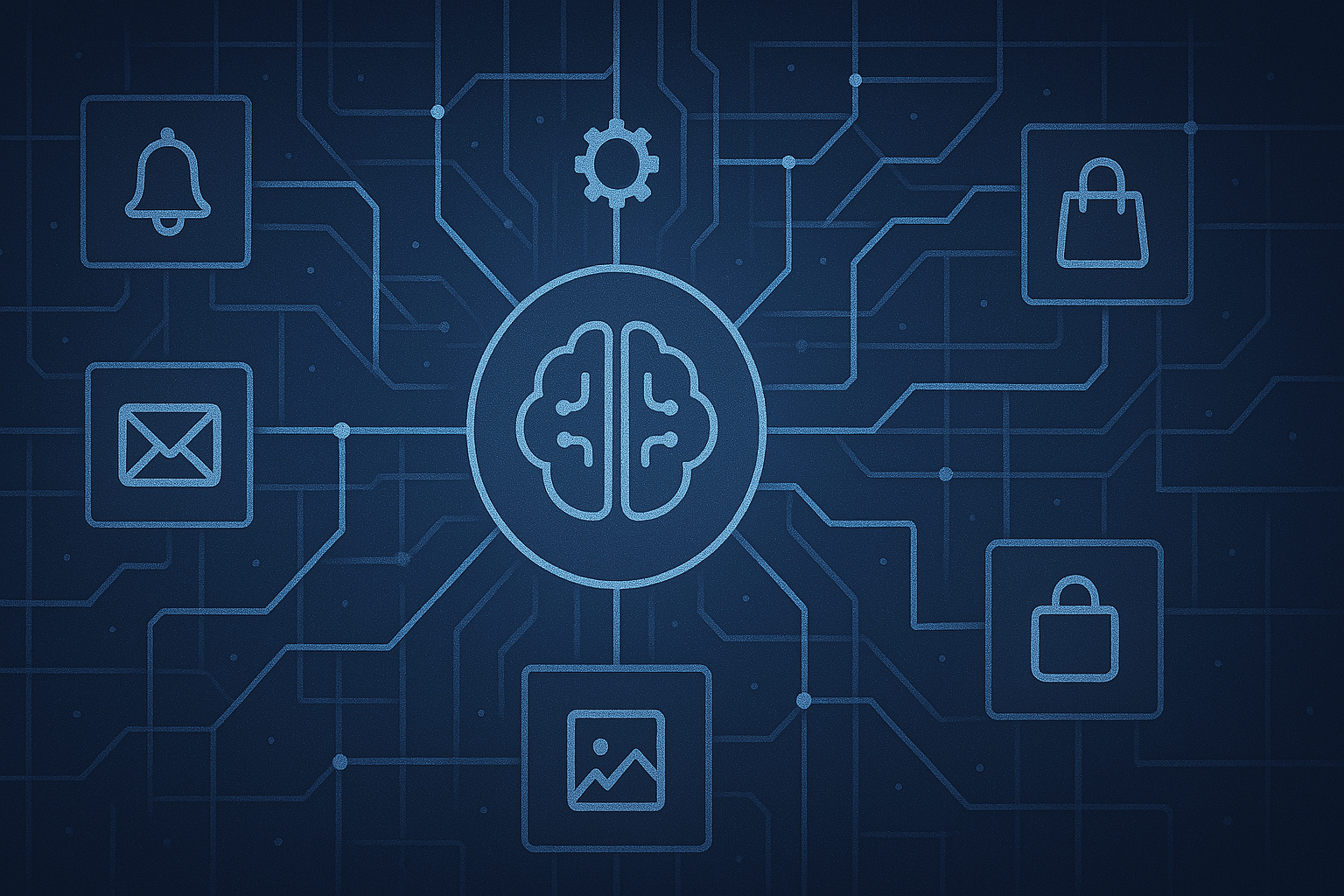
An intricate, glowing digital schematic illustrating the architecture for AI interaction. Show stylized representations of different application services as nodes connected by well-defined, structured, luminous pathways, visualizing the concept of a protocol like MCP enabling reliable communication with a central AI agent core. Style: Sophisticated digital blueprint, abstract tech illustration, focusing on structure and connection, predominantly blue and white glows on a dark background

My goal is to equip you with the knowledge and skills to become architects of these sophisticated, AI-driven user experiences. The future belongs to applications designed for intelligent interaction, and the developers who understand how to build them will be leading the way.

Why This Focus? Why Now?

For me, this isn't just about jumping on the AI bandwagon. I'm generally a pretty skeptical person (I've been teaching you all React for a decade now). We've seen hyped things that would "change everything" come and go (blockchain, NFTs, smart contracts, web3, etc.). I'm not a "jump on the hype train" kind of software professional.

No, what it's always been about for me is recognizing where the most significant potential for improving user experiences lies. Imagine the accessibility gains when users can interact with any service via voice or text, bypassing complex UIs entirely. Imagine the efficiency when a single request can orchestrate actions across multiple, previously siloed applications without brittle, custom integrations.

This requires a new way of thinking, structuring our applications, and integrating capabilities. There's a long way to go, but the potential here is solid. It's an architectural challenge, and solving architectural challenges with solid principles is what I love teaching most. This feels like the natural evolution of the problems we've been solving in web development, applied to a powerful new interaction model.

Our First Step: Join Me for a Live Event

EpicAI.pro is currently under construction, but the shift towards intelligent experiences is happening now. To give you a concrete look at what this future entails and our role in building it, I'm hosting a free live online event:

Letting AI Interface with Your App with MCPs Live Zoom Session Wednesday, April 16th @ 9:30 AM Mountain Time

Kent waving at you with a play button over his face

In this session, I'll dive into the practicalities. I'll live-code an MCP server and demonstrate how an AI assistant can use it to interact with an application's capabilities. We'll catch a vision of what this future looks like and discuss how we can start building towards it. There will also be plenty of time for Q&A.

Please note: A recording will not be made available afterwards, so you'll definitely want to catch this one live!

Let's Build the Future, Together

This is a new frontier, and like all frontiers, it presents both challenges and incredible opportunities. I'm genuinely excited to explore it and share what I learn with you. If you're ready to understand the principles behind AI-powered application architecture and position yourself at the forefront of this evolution, I invite you to join me.

Registering for the live event is the best way to get started and ensure you receive future updates, insights, and resources from EpicAI.pro as it develops.

➡️ Register for the Live Event & EpicAI.pro Updates ⬅️

I believe this is the next big leap in application development, and I can't wait to navigate it with this amazing community.

Let's build something epic, again!