惯性聚合 高效追踪和阅读你感兴趣的博客、新闻、科技资讯
阅读原文 在惯性聚合中打开

推荐订阅源

F
Full Disclosure
Stack Overflow Blog
Stack Overflow Blog
H
Help Net Security
Microsoft Azure Blog
The GitHub Blog
The GitHub Blog
cs.CV updates on arXiv.org
cs.AI updates on arXiv.org
Recorded Future
Recorded Future
Y
Y Combinator Blog
Cloudbric
Cloudbric
Threat Intelligence Blog | Flashpoint
S
Schneier on Security
K
KPMG report finds enterprise disconnect between AI and its ROI | CIO
C
Cybersecurity and Infrastructure Security Agency CISA
TaoSecurity Blog
TaoSecurity Blog
Security Latest
Security Latest
N
News and Events Feed by Topic
Hacker News - Newest:
Hacker News - Newest: "LLM"
D
DataBreaches.Net
Security Archives - TechRepublic
H
Hacker News: Front Page
C
Cisco Blogs
L
LangChain Blog
aimingoo的专栏
aimingoo的专栏
Recent Commits to openclaw:main
V
Vulnerabilities – Threatpost
L
LINUX DO - 最新话题
cs.CL updates on arXiv.org
Google Online Security Blog
D
Darknet – Hacking Tools, Hacker News & Cyber Security
A
About on SuperTechFans
www.infosecurity-magazine.com
Jina AI
Jina AI
C
CXSECURITY Database RSS Feed - CXSecurity.com
Schneier on Security
T
Tenable Blog
N
News and Events Feed by Topic
W
WeLiveSecurity
有赞技术团队
有赞技术团队
AI
AI
爱范儿
爱范儿
大猫的无限游戏
大猫的无限游戏
Latest news
Latest news
T
The Blog of Author Tim Ferriss
S
Security Affairs
Know Your Adversary
Know Your Adversary
Simon Willison's Weblog
G
GRAHAM CLULEY
Google DeepMind News
The Cloudflare Blog

Software Defined Talk

Episode 579: The Headless Lifestyle Episode 578: War for Talent Episode 577: Let’s go to Buc-ee’s Episode 576: Observability's Next Phase Episode 575: UI blizzard Nobody Wants to Be a Measurer Episode 573: How many quadrillions in a Googol? The world isn’t curl Episode 571: The Enterprise Dunbar number The Enterprisification of Agents Episode 569: Agent Assimilation Episode 568: Claude Code, OpenAI Drama, and Is Anyone Still Using Backstage? Episode 567: Building Voice and Streaming Apps for the Enterprise with Alberto Episode 566: The code is actually kinda useless Episode 565: Field Engineering is the YOLO team New Token Machines Episode 563: Claude Camp Episode 562: Bureaucracy: Still Unsolved Episode 561: Two Guys and Their Tokens You Can Feel It Coming Episode 559: A series of OODA loops Episode 558: Tara Raj on Amazon Nova Act Episode 557: Moltbot Maximists Episode 556: This Conversation is Hardened After the Dream The Alpha and The Omega Episode 553: 2025 Year in Review Episode 552: Tech Strategy: Past, Present, Future Episode 551: An Australian Documentary Episode 550: Typeface Philosophy Episode 549: The Fermi Paradox of Agentic Development Episode 548: Household CMDB Episode 547: Whitney goes to KubeCon Episode 546: The cURLing Test Episode 545: No one cares about Chickens Episode 544: The Enterprise Turing Test Arts and Crafts Yuriy Shyyan on owning your own Cloud. Episode 541: Why not do everything Episode 540: How to build a factory Episode 539: The Final Demand Episode 538: Michael Irwin on Docker, Developers, and AI Episode 537: YOLO acquisitions My search engine couldn’t help me Episode 535: Don’t put randomness in your workflow Episode 534: Capitalism is working Episode 533: It’s a Type 2 Kolache Less Goofy. More Enterprise. Episode 531: YAYAML Episode 530: His proper name is Sasquatch Episode 529: Windsurf, AI Agents, and Kiro Episode 528: You can’t spell Clippy without CLI Episode 527: Victor Adossi on WebAssembly Episode 526: The Optimist, the Origin, and the Deck Episode 525: AI Native vs. AI Add-on Episode 524: It’s a Box in a Box Episode 523: Sterling Chin on APIs, AI, and Building MCP Servers Episode 522: A 5-star cannot stand Episode 521: The MacGuffin Episode 520: Excited is overused Episode 519: This is a “hit by pitch” Episode 518: It Is What It Is Episode 517: Trademark’s in the Mail Episode 516: Vibe Strategy Episode 515: Rick Houlihan, MongoDB Field CTO on Document Databases Episode 514: It’s All Affiliate Links Episode 513: Put On A Musical Episode 512: Let’s Not Ruin This Episode 511: G-Wiz Episode 510: Vibe Code This Baby Episode 509: It’s like the Suburbs Episode 508: Software Defined Interviews Crossover: PaaS and Career Advice with Brian Gracely Episode 507: Battery of Potential Episode 506: Put It On Ice Episode 505: There Could be Extra Innings Episode 504: Socrates Didn’t Whiteboard Episode 503: Maybe Puppies Solve Everything Episode 502: Have a Plan or Throw It Away Episode 501: Checkbox Features Episode 500: 2024 Year in Review Episode 499: Star, Archive, or Spam? Episode 498: I’m not ready to start a new streak Episode 497: Big Math Episode 496: It’s Not About Being Paranoid Episode 495: The most honorable of mentions Episode 494: We are going to move the couch Episode 493: Stay in the sandbox Episode 492: Aran Khanna on Cloud Insurance Episode 491: The OSS Money Trap Episode 490: AI's use UI's Episode 489: Whitney Lee: From Wedding Photographer to Cloud-Native DevRel Episode 488: Am I Here for the Mission or the Paycheck? Episode 487: WordPress Drama and Chicken Sandwiches Episode 486: Platform Engineering vs. DevOps Episode 485: It's an Ending, That's Enough Episode 484: A Lot of USB Ports Episode 483: [AGPL does not close deals for you] Episode 482: Tip Jar Economy There Never Was a Rug Episode 480: No offsite content
RedHat buys CoreOS, Heptio DOES NOT have a distro - the kubernetes kids are over their Christmas hangovers
Software Defined Talk LLC · 2018-02-06 · via Software Defined Talk

Episode 120 · February 6th, 2018 · 56 mins 30 secs

Red Hat buys CoreOS, 451 says the container market is worth $1.5bn now and will more than double by 2021, Heptio and Cisco put out Kubernetes distros. Also, Bezos, Buffet, and Dimon are gonna fix healthcare.

The kubernetes market be like…

75% of IT decision-makers believe “that container management and orchestration software, such as Kubernetes, is sufficient to replace private cloud software, such as OpenStack or VMware,” @ripcitylyman & @alsadowski (@451Research).

This episode brought to you by: Datadog!

This episode is sponsored by Datadog, a monitoring platform for cloud-scale infrastructure and applications. Built by engineers, for engineers, Datadog provides visibility into more than 200 technologies, including AWS, Chef, and Docker, with built-in metric dashboards and automated alerts. With end-to-end request tracing, Datadog provides visibility into your applications and their underlying infrastructure—all in one place. Sign up for a free trial (and get a free Datadog T-shirt) today at https://www.datadog.com/softwaredefinedtalk.

Yes, thank you, I’D LIKE A FREE T-SHIRT, SON!

KublaiKash: RedHat Buys CoreOS

@dgonyeo

  • Price of $250m - “an innovator and leader in Kubernetes and container-native solutions.”
  • $50m in funding, since 2015, but CoreOS was started in 2013.
  • Matt Rosoff: “CoreOS has 130 employee…Docker, meanwhile, has raised more than $240 million.”
  • 451 revenue estimates, July 2017, Jay Lyman: “CoreOS has about 120 employees [up from 75 reported in Sep 2016, “about 30 employees” in April 2015], and estimated annual revenue in the $15-20m range.” Sep 2016 customers: “CoreOS reports more than 1,000 paying customers across its products, with a solid group of CoreOS lightweight Linux clients and a growing number of Quay Enterprise and Tectonic customers.”
  • Plus, Ibid.: “ The company says most revenue is coming from Amazon Web Services deployments, with some bare-metal, VMware and other deployments.”
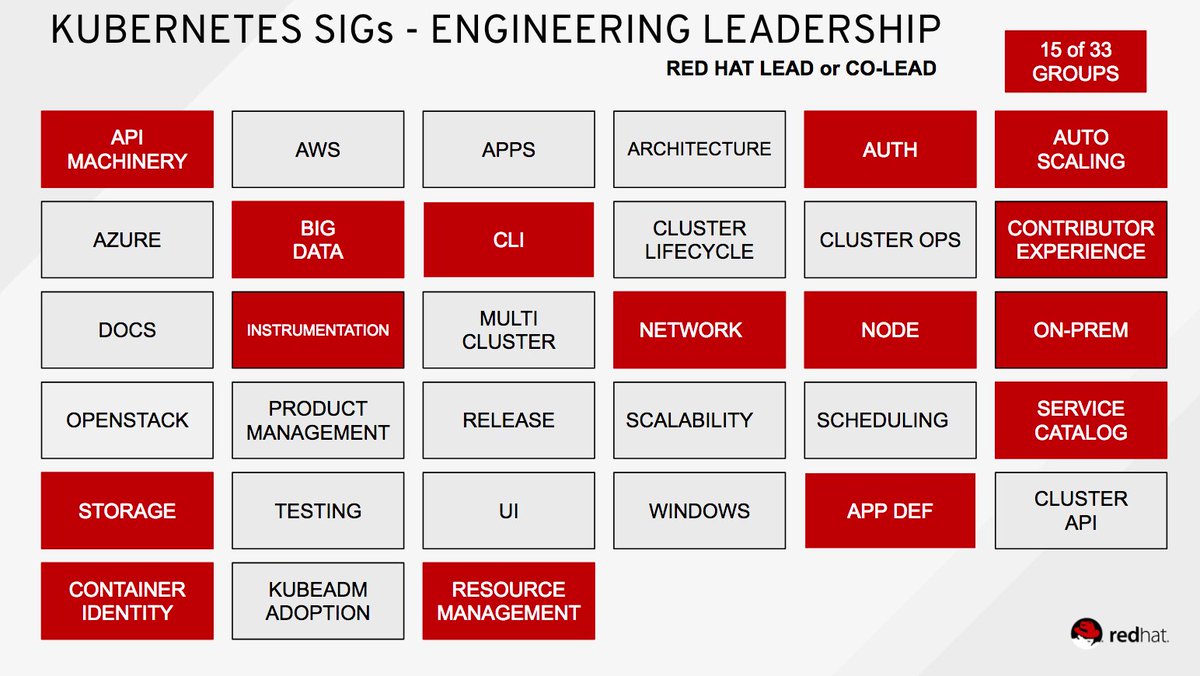
  • Good perspective on the big picture, from Al & Jay at 451: “Red Hat's efforts will likely be worthwhile because Kubernetes is more than just container management orchestration software and is actually a distributed application framework that is very well timed with enterprise adoption and use of multi and hybrid cloud infrastructures.”
  • Product description from the same: “CoreOS Tectonic wraps services – such as automated operations, application services, governance, monitoring and portability – around the Kubernetes container management and orchestration software. Automated operations have been a key focus of the latest CoreOS Tectonic update, with capabilities such as automated patching, failover and high availability and automated cluster deployment included.”
  • CoreOS describes itself: “CoreOS is the creator of CoreOS Tectonic, an enterprise-ready Kubernetes platform that provides automated operations, enables portability across private and public cloud providers, and is based on open source software. It also offers CoreOS Quay, an enterprise-ready container registry. CoreOS is also well-known for helping to drive many of the open source innovations that are at the heart of containerized applications, including Kubernetes, where it is a leading contributor; Container Linux, a lightweight Linux distribution created and maintained by CoreOS that automates software updates and is streamlined for running containers; etcd, the distributed data store for Kubernetes; and rkt, an application container engine, donated to the Cloud Native Computing Foundation (CNCF), that helped drive the current Open Container Initiative (OCI) standard.”
  • Synergy Corner! All ‘bout that k8s: “Kubernetes is a leading container orchestration tool for organizations of all sizes, on its way to potentially becoming as ubiquitous as Linux….We are thrilled to continue this mission at Red Hat and work to accelerate bringing enterprise-grade containerized infrastructure and automated operations to customers.” But they also throw in that original mission: “our mission to make the internet more secure through automated operations.”
  • 451: “Red Hat will continue to support CoreOS customers as it integrates Tectonic and other CoreOS technology into its own offerings, primarily OpenShift. Red Hat also indicates it will open-source the Tectonic software as it has with previously acquired technologies.”
  • More on what Red Hat will do with it: “Red Hat intends to leverage the CoreOS Tectonic container stack to bolster and enhance OpenShift and RHEL capabilities. In particular, Red Hat says the deal will help it to improve security of container and cluster deployments, enable portability of container applications across hybrid cloud infrastructures and further drive ease of use and automation in its software.”
  • Combined market-share. This is based off early, CNCF surveys and such, but it’s likely a fine wet-finger-in-the-wind, from The New Stack: “Our analysis of a CNCF survey provides some answers. Out of the 34 CoreOS Tectonic users identified, five also use Red Hat’s OpenShift. Thus, the combined entity would still have just 14% of respondents using it to manage containers. Only 4 percent of Docker Swarm users said they also used Tectonic.”
  • Wut?: “According to a 451 Research Advisors project survey of 201 enterprise IT decision-makers at large container-using organizations in April and May 2017, three-quarters [75%] of them indicated that container management and orchestration software, such as Kubernetes, is sufficient to replace private cloud software, such as OpenStack or VMware. “
  • Bad day for beards.
  • Coté wrote a the first 451 report on them in 2014 - ain’t he precious!
  • The wikibon crew says little revenue traction, and has a diagram.
  • Some contributor boasting:

  • More coverage: The Register, click-slides at CRN.

The Heptio kubernetes distro…or not?

  • Heptio releases it’s managed kubernetes service (I get that right?) - how’d that Bluebox business work out?
  • Or, wait, no: I think in this case, sometimes a distro’s just a distro….plz advise.
  • Official page, with a link to a PDF, even!
  • Multi-cloud positioning (they even italicized it!): “Just as container technology took off in large part to organizations’ move to the cloud, Kubernetes’ continued proliferation can be attributed to the growing importance of multi-cloud. Beyond the threat of lock-in to a single cloud provider — which is real — organizations need the flexibility to deploy applications in the environment where they are best suited. Kubernetes provides the right level of abstraction to deploy applications on a cloud solution and to an environment that looks and behaves the same on-premises.” # TAM: Container Cash Context
  • “451 Research's Market Monitor expects the application container market to be worth $1.6bn in 2018 with a CAGR of 36% through 2021,” Al and Jay in the CoreOS acquisition write-up.
  • Also: We now estimate total app container market revenue at just over $1.1bn for '17, growing at a CAGR of 35% to $1.6bn in '18.
  • And some 451 numbers, from a recent webinar:

  • Narrowing down to “orchestration”:

  • The rest of the taxonomy, numbers not in slides:

AWS snubs healthcare industry

  • Not exactly the intended headline, I know.
  • ”They decided their combined access to data about how consumers make choices, along with an understanding of the intricacies of health insurance, would inevitably lead to some kind of new efficiency — whatever it might turn out to be.” And also speculation of lame things like making booking doctors easier.
  • Just lookin’ to make things cheaper, no big deal.
  • No details, but a theory: “Based on the executives who have been named to top roles at the new company, Jefferies & Co. analyst Brian Tanquilut said there is a good chance it will eventually try to negotiate prices directly with health care providers like hospitals, bypassing companies that act as middlemen.”
  • Ben’s on that aggregation theory shit: ‘The key words there are “commoditize and modularize”, and this is where the option I dismissed above comes into play, but not in the way most think: Amazon doesn’t create an insurance company to compete with other insurance companies (or the other pieces of healthcare infrastructure); rather, Amazon makes it possible — and desirable — for individual health care providers to come onto their platform directly, be that doctors, hospitals, pharmacies, etc…. After all, if Amazon is facilitating the connection to patients, what is the point of having another intermediary? Moreover, by virtue of being the new middleman, Amazon has the unique ability to consolidate patient data in a way that is not only of massive benefit to patients and doctors but also to the application of machine learning.’
  • The upshot of all of this, at the moment, is that there were no details given and much fan-boy speculation typed up. Which is fine, please fix US healthcare.
  • A perfectly done story from NY Times: lots of context, much speculation, and all sorts of input.

Relative to your interests

  • KuCisco - Cisco wants some of that sweet Kubernetes Kash: “The company said the Container Platform takes care of the “setup, orchestration, authentication, monitoring, networking, load balancing and optimization” of containers. Deployment of containers is also simplified through automation, as the platform takes care of the most repetitive tasks in this process. It can also be extended to other important aspects of IT, such as networking, security and more, officials said.”
  • Private cloud boosters have a new URL to point to: “The era of the cloud’s total dominance is drawing to a close.”
  • Sorry to make you look at this guy, but split view on the iPad is pretty cool, email and Newsify works too!

Conferences, et. al.

SDT news & hype

Looks good with sun glasses…
…or without!

Recommendations

Matt: Bruce Sterling/Jon Lebkowsky State of the World 2018; New Zealand’s South Island.
Brandon: Manhunt UNABOMBER
Coté: iPad Pro 10.5”. Yup. SHIT DOG!