


You should never be first in line to buy a completely new Apple product. Not in the literal sense–although those guys are totally putting themselves out for no good reason–but in the generational one. It’s nearly always smarter to wait a year or two.
Owning an original iPhone was fun from a bragging point of view, and I fondly remember the unaccustomed attention I received while carrying it about on holiday. As a medium-term value proposition, however, it was objectively a bad idea: a bold and pioneering starting point that would nevertheless be vastly improved within a few years of launch by the addition of 3G and GPS (iPhone 3G), a better camera and general performance (iPhone 3GS), FaceTime and a far sharper screen (iPhone 4), and numerous other hardware and software upgrades along the way. All without a significant increase in price. The same goes for the iPod, iPad, MacBook Air—you get the idea.
Veterans of the 2007 iPhone launch may have noted some similarities when the iPhone Air came out last year. There was much the same sense of awe, the idea that nothing would be the same again: normal-sized phones, reviewers speculated, might be ruined forever for anyone who’s held an Air and marvelled at its miraculous slenderness. There were, admittedly, rather more complaints about its hardware limitations (namely the battery and camera performance), but canny observers will have recognised that, like its celebrated forebear, the iPhone Air was likely to find numerous ways to improve in subsequent generations.
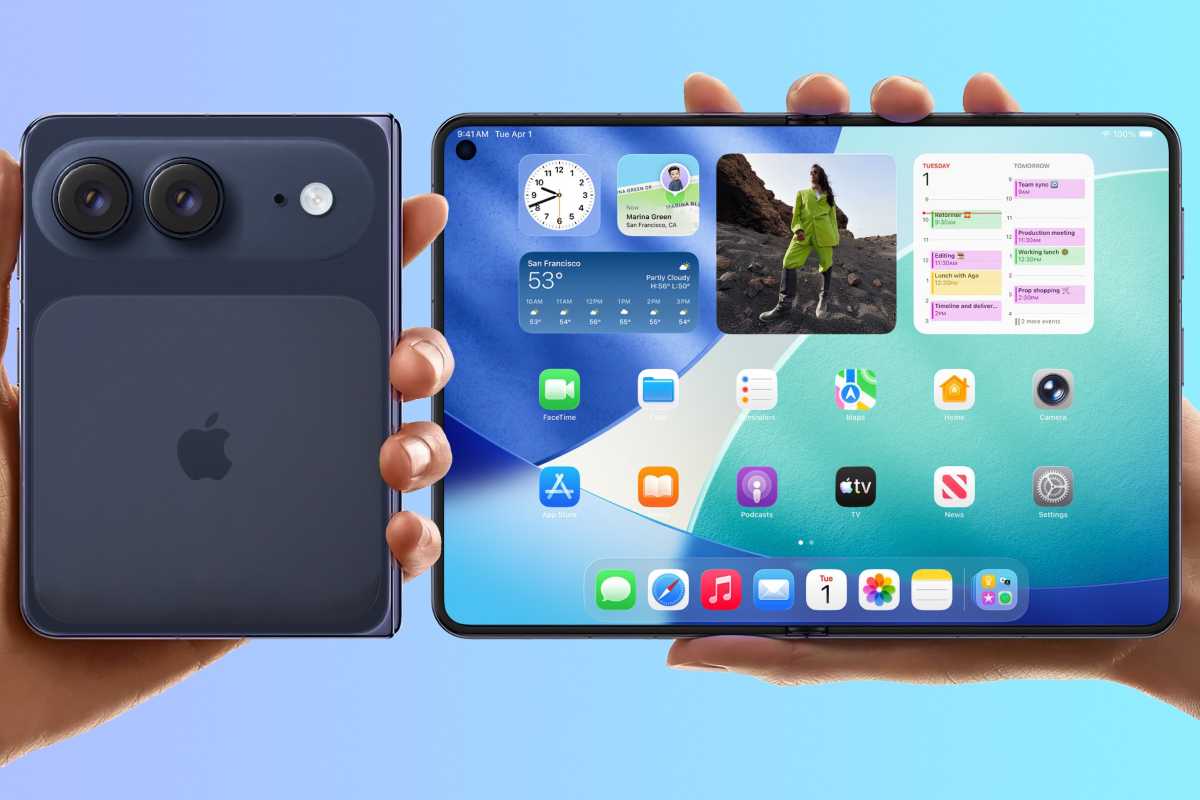
The general consensus is that Apple won’t release a new Air this fall. September will see the launch of two premium iPhones (the 18 Pro and 18 Pro Max) and one super-premium model in the form of the foldable iPhone Ultra. Bearing in mind Apple’s recent price rises in the iPad and Mac ranges, these are likely to be seriously expensive devices.
Foundry
So while the Air 2 will be the premium model of its own mini generation in spring 2027, doubtlessly costing more than the iPhone 18 and considerably more than the 18e, it’s likely to seem affordable by comparison with the late-2026 phones: it currently starts at $200 less than the cheapest Pro, and that gap may widen when the price rises kick in. At the same time, it will seem far more appealing than those normal-sized phones it will launch with, thanks to its futuristic design and what increasingly looks to be a classic set of 2nd-gen fixes.
If you found the Air’s camera performance suboptimal, you’re in luck: almost all pundits agree that the Air 2 will get a second camera lens on the rear, a 48MP ultrawide. If you complained about its battery life, you’ll be pleased to hear that its capacity is now expected to increase by 11 percent. Apple has recognised the two biggest problems with the original product and addressed them both, setting up the Air 2 as the company’s best follow-up since the Apple Watch Series 2 solved its predecessor’s GPS, water resistance, speed, and battery life shortcomings in a single generational leap.
Where does this leave the iPhone Ultra? In precisely the same 1st-gen limbo the Air experienced in 2025. On the one hand, Apple has no experience of making and launching a foldable phone; on the other, it knows that celebs, tech braggarts and early adopters will buy its first attempt at the category regardless. Chuck in the necessity of selling an upgraded version the following year, and you’ve got the perfect formula for a flawed proof of concept. It’s far too early to say whether the Ultra will be a good phone or not–it might very well be a commercially adored smash hit–but we can say with some certainty that the worst Ultra to buy will be the first.
The big seller of the generation, of course, is likely to be either the iPhone 18 or the 18e, for obvious cost-of-living reasons. But I think the humble Air 2, undercut by the cheaper models, overshadowed by the Ultra, dogged by the mixed reception accorded to its predecessor, could be the underrated star of the iPhone 18 generation. Read those Air 1 reviews again. This, most agree, is the form factor of the future; it just wasn’t ready in 2025. At that point in its development, the Air was too flawed for the mainstream. By the look of things, that isn’t going to be the case in 2027.
此内容由惯性聚合(RSS阅读器)自动聚合整理,仅供阅读参考。 原文来自 — 版权归原作者所有。