惯性聚合 高效追踪和阅读你感兴趣的博客、新闻、科技资讯
阅读原文 在惯性聚合中打开

推荐订阅源

酷 壳 – CoolShell
酷 壳 – CoolShell
P
Privacy & Cybersecurity Law Blog
G
GRAHAM CLULEY
T
The Exploit Database - CXSecurity.com
www.infosecurity-magazine.com
Threat Intelligence Blog | Flashpoint
Project Zero
Project Zero
S
Security @ Cisco Blogs
TaoSecurity Blog
TaoSecurity Blog
A
Arctic Wolf
Webroot Blog
Webroot Blog
Hacker News - Newest:
Hacker News - Newest: "LLM"
Security Latest
Security Latest
H
Heimdal Security Blog
N
News and Events Feed by Topic
N
News | PayPal Newsroom
T
Tor Project blog
OSCHINA 社区最新新闻
OSCHINA 社区最新新闻
GbyAI
GbyAI
The Last Watchdog
The Last Watchdog
Y
Y Combinator Blog
宝玉的分享
宝玉的分享
Scott Helme
Scott Helme
A
About on SuperTechFans
M
MIT News - Artificial intelligence
V
V2EX
V
Visual Studio Blog
Recorded Future
Recorded Future
博客园 - 叶小钗
F
Fortinet All Blogs
L
Lohrmann on Cybersecurity
The GitHub Blog
The GitHub Blog
博客园 - Franky
P
Proofpoint News Feed
MyScale Blog
MyScale Blog
D
Darknet – Hacking Tools, Hacker News & Cyber Security
S
Secure Thoughts
D
DataBreaches.Net
Cyber Security Advisories - MS-ISAC
博客园 - 三生石上(FineUI控件)
I
InfoQ
SecWiki News
SecWiki News
Blog — PlanetScale
Blog — PlanetScale
Engineering at Meta
Engineering at Meta
J
Java Code Geeks
B
Blog RSS Feed
AWS News Blog
AWS News Blog
Know Your Adversary
Know Your Adversary
V
Vulnerabilities – Threatpost
H
Help Net Security

Modular Blog

Qualcomm to Acquire Modular Modular 26.4: SOTA MoE Serving, Model Bringup via Agent Skills, Mojo 1.0 Beta 2 and More ModCon 2026: Modular’s Developer Conference Day Zero: MiniMax M3 Open Weights on Modular Cloud Modverse #55: Mojo 1.0 Beta, Community Mojo Libraries, and Real-Time Patient Conversations Powered by MAX What about OpenCL and CUDA C++ alternatives? (Democratizing AI Compute, Part 5) Why LLM Inference Needs a New Kind of Router - Part 3 Three trends from MLSys 2026 Why LLM Inference Needs a New Kind of Router - Part 2 How I built a pure Mojo app (and 10 libraries) with AI agents Hippocratic AI partners with Modular to power flexible, high-quality inference for real-time patient conversations Translating to Mojo via AI Agents Inkwell: Why Your Inference Platform Matters As Much As Your Model Why LLM Inference Needs a New Kind of Router - Part 1 Modular 26.3: Mojo 1.0 Beta, MAX Video Gen, and more Modverse #54: AMD AI DevDay, New Modular Offices, and a Community That Keeps Shipping How Frontier Coding Agents Built a Video Diffusion Pipeline on MAX TileTensor Part 1 - Safer, More Efficient GPU Kernels Modular Opens Edinburgh & San Francisco Offices Structured Mojo Kernels Part 4 - Portability and the Road Ahead Day Zero Launch: Fastest Performance for Gemma 4 on NVIDIA and AMD Modverse #54: From GTC to Edinburgh, a Community Building Momentum Software Pipelining for GPU Kernels: Part 1 - The Pipeline Problem Structured Mojo Kernels Part 3 - Composition in Practice Modular 26.2: State-of-the-Art Image Generation and Upgraded AI Coding with Mojo Modular at NVIDIA GTC 2026: MAX on Blackwell, Mojo Kernel Porting, and DeepSeek V3 on B200 Structured Mojo Kernels Part 2 - The Three Pillars Modverse #53: Community Builds, Research Milestones, and a Growing Ecosystem Structured Mojo Kernels Part 1 - Peak Performance, Half the Code The Claude C Compiler: What It Reveals About the Future of Software BentoML Joins Modular The Five Eras of KVCache Modular 26.1: A Big Step Towards More Programmable and Portable AI Infrastructure How to Beat Unsloth's CUDA Kernel Using Mojo—With Zero GPU Experience The path to Mojo 1.0 Modverse #52: Advancing AI Together — Community Projects & Platform Milestones Modular 25.7: Faster Inference, Safer GPU Programming, and a More Unified Developer Experience "TTS 1 Max" (powered by Modular Platform) Ranked #1 Speech Model on Artificial Analysis PyTorch and LLVM in 2025 — Keeping up With AI Innovation Achieving State-of-the-Art Performance on AMD MI355 — in Just 14 Days Modular Raises $250M to scale AI's Unified Compute Layer Modular 25.6: Unifying the latest GPUs from NVIDIA, AMD, and Apple Matrix Multiplication on Blackwell: Part 4 - Breaking SOTA Modverse #51: Modular x Inworld x Oracle, Modular Meetup Recap and Community Projects Matrix Multiplication on Blackwell: Part 3 - The Optimizations Behind 85% of SOTA Performance Matrix Multiplication on Blackwell: Part 2 - Using Hardware Features to Optimize Matmul Matrix Multiplication on Blackwell: Part 1 - Introduction Modverse #50: Modular Platform 25.5, Community Meetups, and Mojo's Debut in the Stack Overflow Developer Survey Modular Platform 25.5: Introducing Large Scale Batch Inference SF Compute and Modular Partner to Revolutionize AI Inference Economics AI Agents for AWS Marketplace Modverse #49: Modular Platform 25.4, Modular 🤝 AMD, and Modular Hack Weekend Inside Modular Hack Weekend: Top Projects and Community Highlights How is Modular Democratizing AI Compute? (Democratizing AI Compute, Part 11) Modular 25.4: One Container, AMD and NVIDIA GPUs, No Lock-In Introducing Mammoth: Enterprise-Scale GenAI Deployments Made Simple Modular + AMD: Unleashing AI performance on AMD GPUs Modverse #48: Modular Platform 25.3, MAX AI Kernels, and the Modular GPU Kernel Hackathon Exploring Metaprogramming in Mojo Modular GPU Kernel Hackathon Highlights: Innovation, Community, & Mojo🔥 Modular’s bet to break out of the Matrix (Democratizing AI Compute, Part 10) Modular Platform 25.3: 450K+ Lines of Open Source Code and pip Packaging A New, Simpler License for MAX and Mojo Why do HW companies struggle to build AI software? (Democratizing AI Compute, Part 9) Modverse #47: MAX 25.2 and an evening of GPU programming at Modular HQ What about the MLIR compiler infrastructure? (Democratizing AI Compute, Part 8) What about Triton and Python eDSLs? (Democratizing AI Compute, Part 7) MAX 25.2: Unleash the power of your H200's–without CUDA! What about TVM, XLA, and AI compilers? (Democratizing AI Compute, Part 6) Modverse #46: MAX 25.1, MAX Builds, and Democratizing AI Compute CUDA is the incumbent, but is it any good? (Democratizing AI Compute, Part 4) MAX 25.1 - Introducing MAX Builds How did CUDA succeed? (Democratizing AI Compute, Part 3) Paged Attention & Prefix Caching Now Available in MAX Serve What exactly is “CUDA”? (Democratizing AI Compute, Part 2) Modular DeepSeek's Impact on AI (Democratizing AI Compute, Part 1) Modular Hands-on with Mojo 24.6 Evaluating Llama Guard with MAX 24.6 and Hugging Face Modular Introducing MAX 24.6: A GPU Native Generative AI Platform MAX GPU: State of the Art Throughput on a New GenAI platform Understanding SIMD: Infinite Complexity of Trivial Problems Community Spotlight: Writing Mojo with Cursor Hands-on with Mojo 24.5 MAX 24.5 - With SOTA CPU Performance for Llama 3.1 Announcing stack-pr: an open source tool for managing stacked PRs on GitHub Debugging in Mojo🔥 Write hardware-agnostic custom ops for PyTorch | Modular Take control of your AI Develop locally, deploy globally A brief guide to the Mojo n-body example What's new in MAX 24.4? MAX on macOS, fast local Llama3, native quantization and GGUF support What’s new in Mojo 24.4? Improved collections, new traits, os module features and core language enhancements MAX 24.4 - Introducing quantization APIs and MAX on macOS Deep dive into ownership in Mojo What ownership is really about: a mental model approach Fast⚡k-means clustering in Mojo🔥: a guide to porting Python to Mojo🔥 for accelerated k-means clustering
🔥 Modular 2025 Year in Review
No items found. · 2025-12-19 · via Modular Blog

As 2025 draws to a close, we want to reflect on the extraordinary year we've had at Modular. This year, we committed ourselves fully to a singular mission: building the AI infrastructure for the future—a unified compute layer that empowers developers and enterprises to deploy AI at any scale, on any hardware, without compromise. With that, here are the 'top ten' highlights from the year. Thank you for being a part of them.

Top Ten Highlights of 2025

1. Launching AMD Support and Achieving SOTA on AMD MI355X

When AMD launched the MI355, we achieved state-of-the-art performance in just two weeks. This accomplishment came only three months after our first AMD GPU support. The rapid achievement demonstrates how MAX's unified abstraction layer lets you deploy optimized models on new hardware without rewriting code or waiting months for vendor-specific implementations.

Read the story

2. Setting Performance Records on NVIDIA Blackwell

Our four-part series documenting the path to record-breaking matrix multiplication performance became essential reading for anyone serious about LLM optimization. The series walks through every optimization step—from baseline implementations to advanced techniques like warp specialization and async copies—showing you exactly how to extract maximum performance from cutting-edge hardware.

Start the series

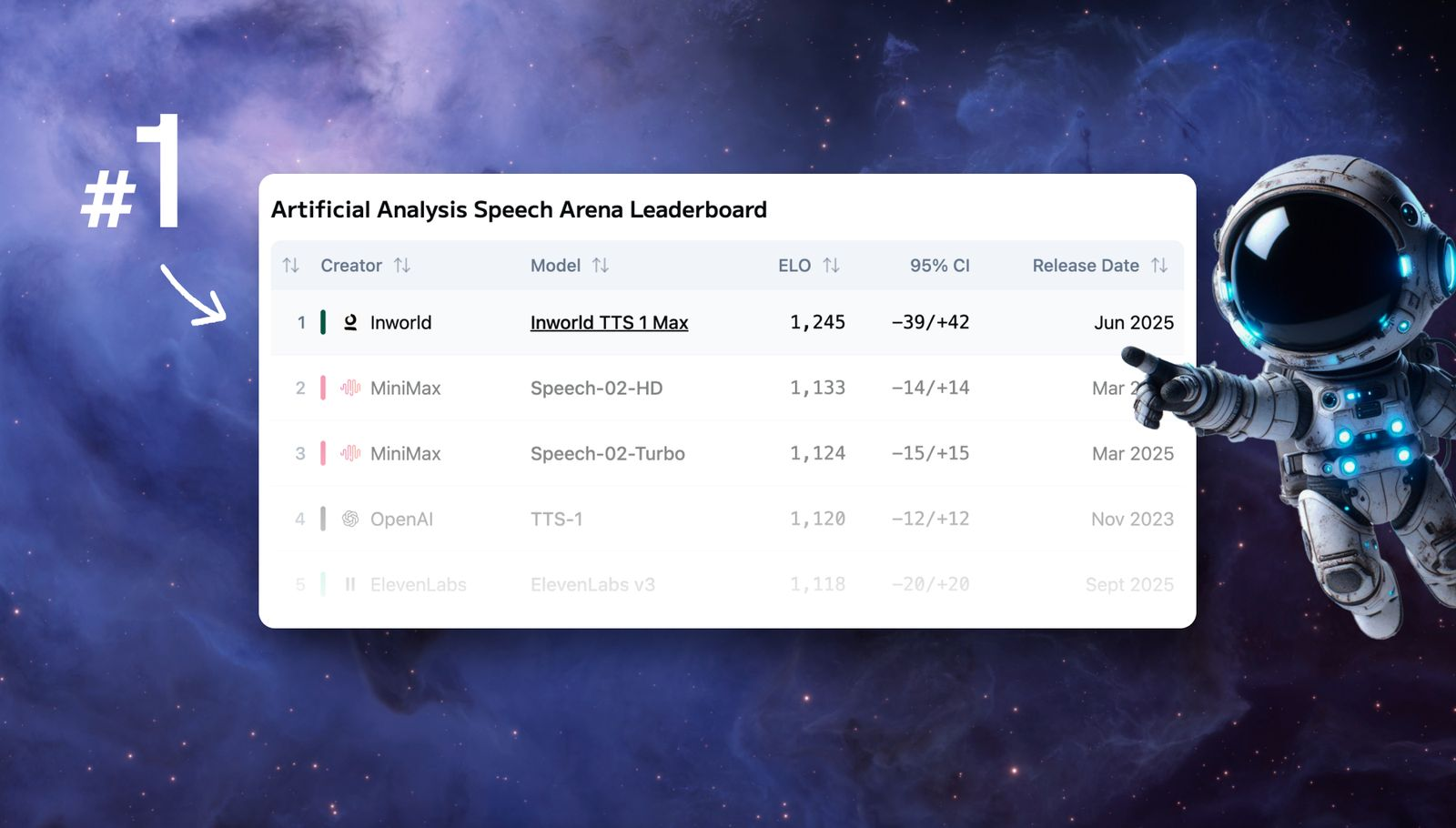
3. Powering the #1 Speech Model

Inworld TTS 1 Max, running on the Modular Platform, claimed the top spot on the Artificial Analysis Speech Leaderboard—with 70% faster latency and 60% lower costs. This means production-ready text-to-speech that's both higher quality and more economical than alternatives, proving that performance and cost efficiency don't have to be tradeoffs.
See how we did it

4. MAX AI Kernels and Mojo Standard Library Go Open Source

Throughout 2025, Modular open-sourced substantial portions of the Mojo and MAX codebase. We completed opening up the Mojo standard library (started in 2024), revealing our low-level GPU interactions. We then released over 450,000 lines of Mojo code for MAX kernels—the world's largest Mojo code repository. This gives developers a comprehensive reference for writing high-performance GPU kernels with memory safety guarantees and the low-level control needed for optimal hardware utilization.

Explore the 25.3 changelog

5. MAX Python API Goes Fully Open Source

The MAX Python API is now fully open-sourced on GitHub—giving developers complete visibility into how MAX models are built, executed, and served across hardware. You can now inspect, modify, and contribute to the entire model execution stack, from high-level Python APIs down to the hardware-specific optimizations.

Explore the 25.7 changelog

6. Mammoth Launched: Infinite scale made easy for the largest AI workloads

Our Kubernetes-native control plane for enterprise-scale GenAI deployments. Disaggregated inference, intelligent routing, multi-model orchestration—coming to a managed endpoint near you in 2026. Mammoth handles the complexity of running multiple models across distributed infrastructure, automatically scaling resources and routing requests to optimize both performance and cost.

Watch the Tech Talk

7. New Ways to Learn GPU Programming

We launched Mojo GPU Puzzles for hands-on learning and a YouTube tutorial series for developers new to GPU concepts. Whether you're learning GPU fundamentals or sharpening advanced optimization skills, these resources let you build intuition through interactive problems and clear explanations.
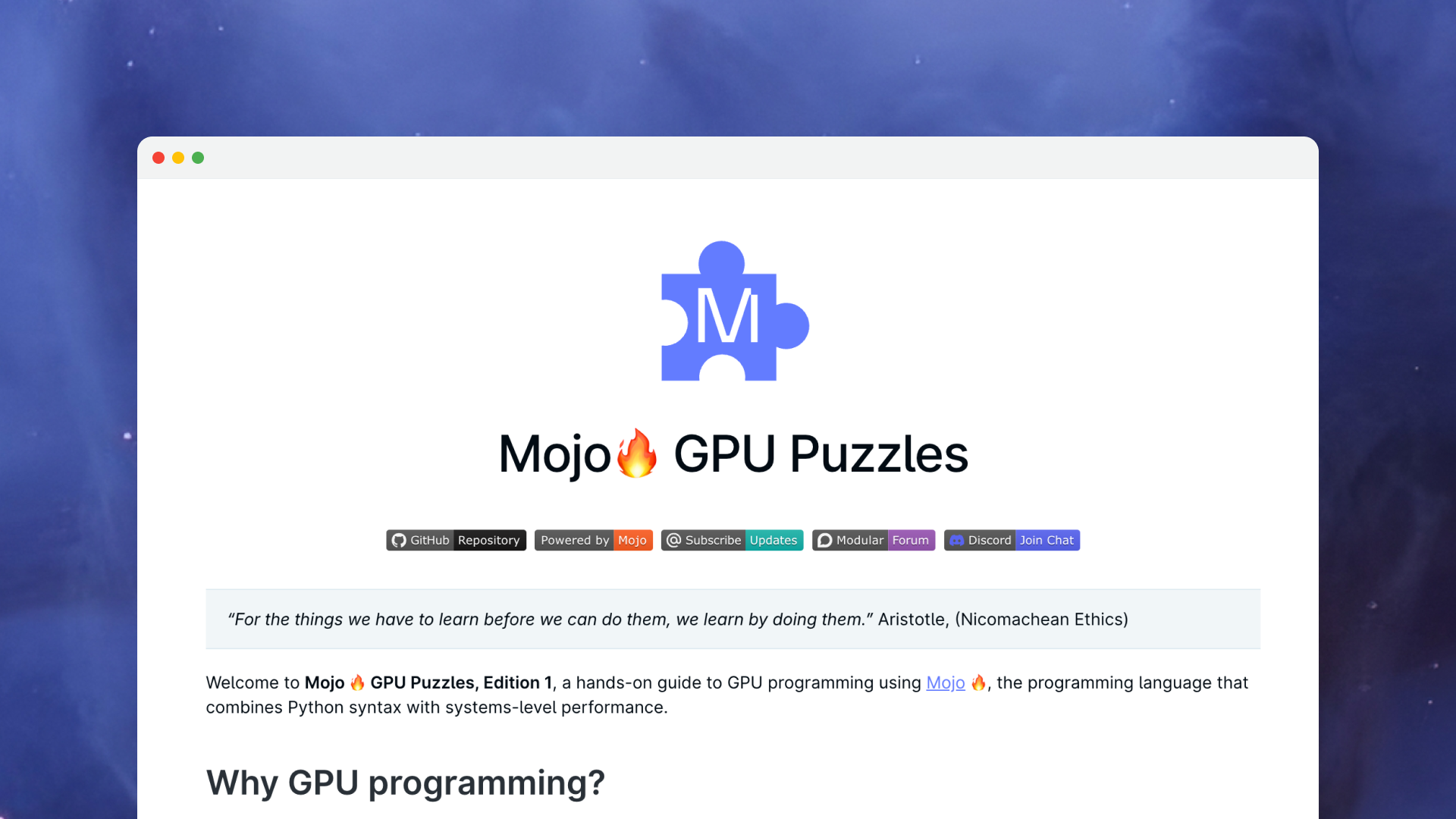
Try the puzzles yourself

8. New MAX API

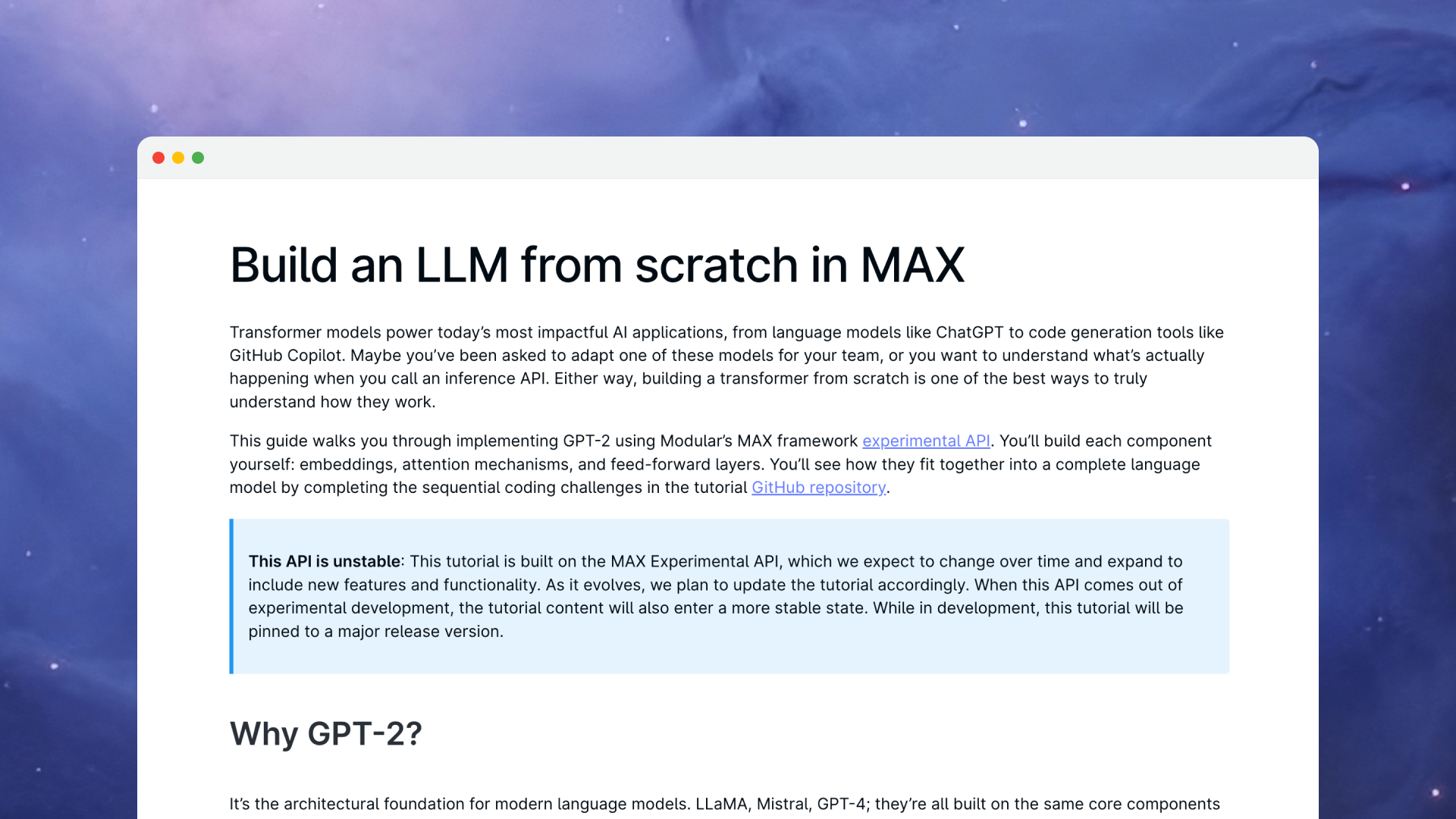
We released our new API for building custom models in MAX—and created a hands-on tutorial to showcase it. Build a transformer from scratch: embeddings, attention mechanisms, feed-forward layers, all the way to a working language model. The tutorial demonstrates how to construct production-quality models from first principles, giving you the foundation to implement novel architectures tailored to your specific use cases.

Build an LLM from scratch in MAX

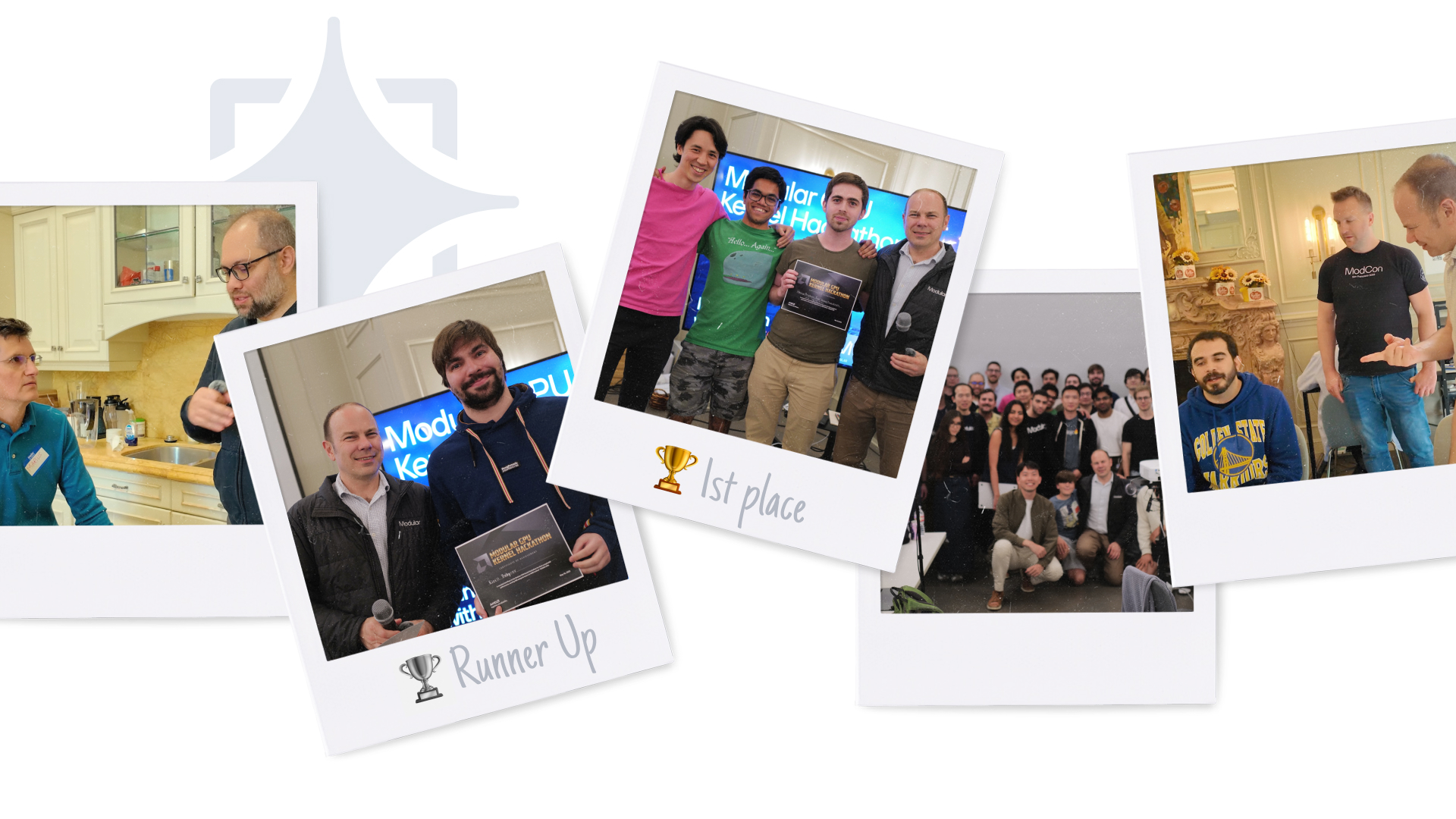
9. Two Hackathons, One Amazing Community

From the GPU Kernel Hackathon at AGI House to Hack Weekend at our Palo Alto office—you showed up, built incredible things, and made 2025 unforgettable. Multiple hackathon projects directly contributed to the Mojo ecosystem. We also hosted community meetings throughout the year, including a Modular Meetup on December 11th that offered a look inside the MAX Framework. In the livestream below, watch Chris Lattner explain his vision for MAX as the best and most open Generative AI framework.
Watch the Livestream

10. $250M to Scale AI's Unified Compute Layer

We raised $250 million to accelerate our mission—building the infrastructure layer that makes AI portable, performant, and accessible everywhere. This funding enables us to expand hardware support, grow our engineering team, and deliver enterprise-grade features that make deploying AI workloads simpler and more reliable across any infrastructure.

Read the announcement


Thank You

To our community members who contributed code, filed issues, and shared knowledge in our forums—you shaped what Modular has become. To our design partners who pushed our platform with real-world workloads and invaluable feedback—you made us better. To everyone who joined us at conferences, hackathons, meetups, and community discussions—this year belonged to you.

2026 is going to be even bigger. Stay tuned.

— The Modular Team 🔥

Join the community · Book a demo