
惯性聚合 高效追踪和阅读你感兴趣的博客、新闻、科技资讯
阅读原文 在惯性聚合中打开

推荐订阅源

Microsoft Azure Blog
GbyAI
GbyAI
P
Proofpoint News Feed
Engineering at Meta
Engineering at Meta
Recent Announcements
L
LangChain Blog
B
Blog
阮一峰的网络日志
阮一峰的网络日志
Microsoft Security Blog
博客园 - 【当耐特】
M
MIT News - Artificial intelligence
D
Docker
WordPress大学
WordPress大学
J
Java Code Geeks
奇客Solidot–传递最新科技情报
奇客Solidot–传递最新科技情报
The GitHub Blog
The GitHub Blog
博客园 - 叶小钗
Last Week in AI
Last Week in AI
Stack Overflow Blog
Stack Overflow Blog
有赞技术团队
有赞技术团队
MyScale Blog
MyScale Blog
H
Hackread – Cybersecurity News, Data Breaches, AI and More
MongoDB | Blog
MongoDB | Blog
博客园 - Franky

Consumer Insights

The ransomware negotiator who was working for the other side After years on the run, alleged Ryuk ransomware operator pleads guilty INTERPOL crackdown shows scammers shifting to social media Meta lets strangers remix your public Instagram photos with AI—here’s how to opt out Invited to a "job interview" with Netflix or OpenAI? Beware! Your Google password could be at risk Two arrested over credit card phishing - as the Netherlands is named Europe's worst for payment fraud India pauses WhatsApp username feature over security concerns Alleged teen ransomware hustler faces US charges after arrest in Finland WhatsApp usernames explained: how to reserve yours and stay safe Scammers race to cash in on Venezuelan earthquake disaster USB drives carrying China-linked malware infected Japanese military networks for nearly a year WhatsApp tests new safety prompt before you chat with strangers Social media is worth celebrating. It's also worth protecting. Polish police dismantle SIM-swap gang accused of crypto theft Operation Endgame deals fresh blow to StealC and Amadey malware networks Hacker hijacks Brazil's national alert system, sending "misanthropy" to millions of phones Cybercrime now rivals traditional crime across parts of Asia Apple's Hide My Email tweak leaves privacy fans fuming Americans lost $3.5 billion to imposter scams last year — and the scams are getting harder to spot Scammers have killed the physical Steam Gift cards Crypto investment scam sends couriers to collect victims' cash, FBI warns Maine forced to take down data breach portal after fake notices filed with authorities Privacy own-goal: World Cup blunder leaks Lionel Messi's passport details Why schools remain one of cybercriminals' favourite targets WhatsApp detects new spyware activity from Israel’s NSO Group despite court order Got a LinkedIn message from a recruiter? It might be Chinese intelligence, warn FBI and MI5 Europol cracks down on illegal streaming globally Hackers didn't hack Instagram; they just asked Meta AI FBI Warns Fans About FIFA Scams Ahead of 2026 World Cup Virtual knife, real lawsuit: Counter-Strike skin dispute ends in court
Police arrest man following hack of Ajax football club
Graham CLULEY · 2026-05-29 · via Consumer Insights

Dutch police have arrested a 35-year-old man suspected of hacking into the computer systems of Amsterdam football giant Ajax, after the personal data of hundreds of thousands of supporters was put at risk.

According to a Dutch police statement, the unnamed suspect was arrested on Tuesday in Buren, on suspicion of repeatedly gaining unauthorised access to Ajax's IT systems.

When news of a possible security breach at Ajax first broke earlier this year, the club was keen to play down its scale - acknowledging that an outsider had gained unauthorised access to data, including supporters' email addresses, but suggesting that only a few hundred fans had been affected.

However, it quickly emerged that the claim of a "few hundred" potential victims was wide of the mark, as it was reported that the incident could have exposed the personal details of around 300,000 registered Ajax supporters.

In short, the number of supporters whose details were exposed was around 1000 times larger than the club's initial estimate.

The problem was linked to security weakness in the official Ajax app - used by fans to access their tickets, and allowing an attacker to reportedly view fans' personal details, steal and resell match and season tickets, and even view or alter information about the roughly 500 people banned from attending matches.

For that last capability to fall into the hands of unauthorised parties was particularly troubling. It transpired that someone could silently remove individuals from the ban list (which would include those banned due to hooliganism)- or add the names of innocent people to it.
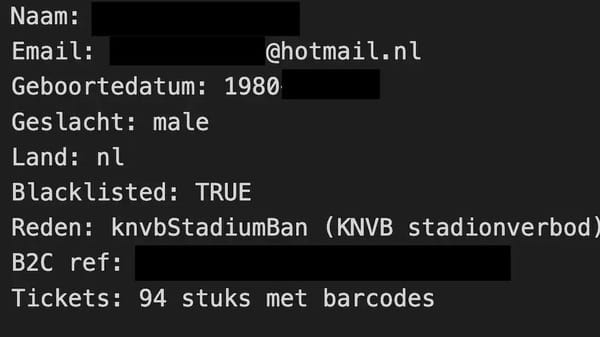
As Bart Schermer, the professor of privacy and cybercrime at Leiden University, pointed out, a prospective employer might think twice about hiring someone banned from attending football matches - leading to the possibility that the vulnerability in Ajax's app could be weaponised against individuals.

Ajax says that it has worked with external experts to patch the vulnerabilities, and has strengthened its security. Which is obviously good news, but little relief for those whose data might have already been accessed.

It is easy to imagine that just a database of email addresses linked to football fans could be attractive to scammers who might launch phishing attacks posing as ticket offers, refunds, or special promotions to supporters.