Pope Convenes Global AI Working Group that includes SCS Professor
As we apply artificial intelligence to more of the mechanisms of our world — from education and healthcare to transportation and finance — debates around AI’s role and power in society are sharpening.
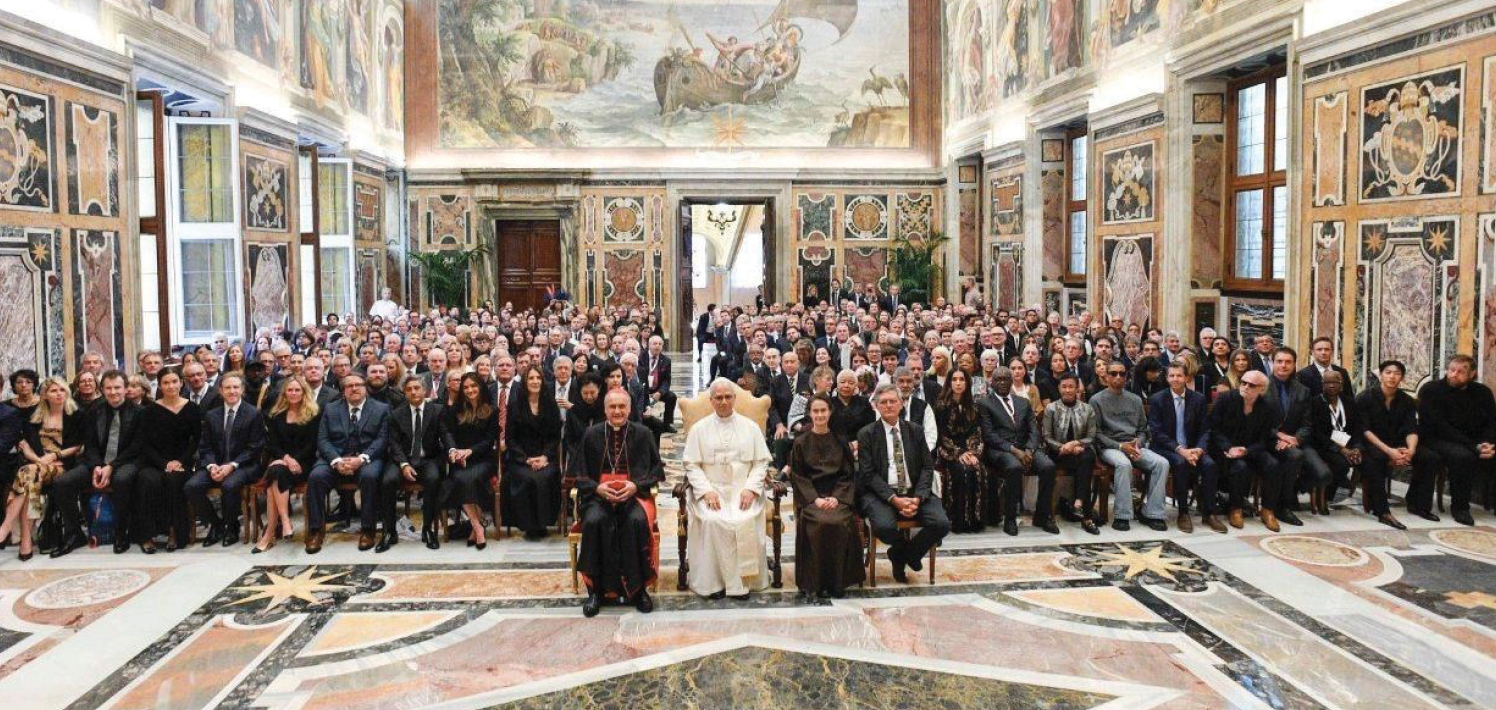
In September, at the invitation of Pope Leo XIV, Alexander Waibel, a professor in SCS’s Language Technologies Institute, participated in the AI and Human Fraternity Working Group at the Vatican, to discuss and hammer out recommendations to ensure AI benefits humanity, and to suggest ways to mitigate AI’s potential risks. Pope Leo has called AI a critical matter and said that it poses “new challenges for the defense of human dignity, justice and labor.”
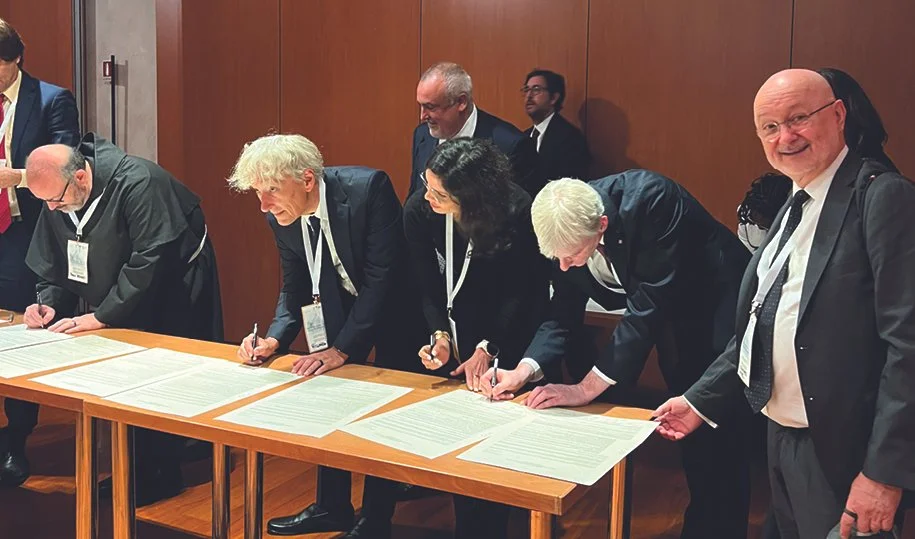
Alex Waibel (right), professor in LTI, pictured signing documents with other members of the Vatican Working Group on September 12, 2025.
In 2023, more than 350 AI industry leaders and researchers signed on to a one-sentence statement declaring AI an extinction risk on the level of nuclear war and pandemics. The list included such AI luminaries as Nobel Prize winner and former SCS faculty member Geoffrey Hinton and Yoshua Bengio, a co-winner of the 2019 A.M. Turing Award. Hinton and Bengio were both part of the 12-person September working group convened by Pope Leo, along with Waibel, Grammy-winning artist will.i.am., and other AI thought leaders.
The working group developed a set of AI guidelines that recognized its threat, implored that AI always be used as a tool under ultimate human control, and called for responsible development. “Vast and rapidly growing sums are devoted to creating agentic technologies with the potential to surpass human intelligence — what many in the AI research community refer to as ‘superintelligence,’” the letter stated. “These challenges call for moral leadership and urgent concrete actions.”
The first postulate regarding the regulation of AI, according to Waibel, is that AI cannot be stopped. “We all share concerns about AI having a bad impact, but if you try to inhibit it or take a six-month moratorium, others will double down and do more,” he said. “There will always be geopolitical and commercial contests, and we will never get them to have the well-being of society as a primary interest. That sounds cynical, but I think it is realistic. So, it’s up to us to come up with mechanisms that guide the technology in the direction we want it to go.”
Waibel’s thoughts demonstrate the difficulty facing those who wish to reap the benefits of AI while reducing its potential harm. In the face of powerful nations and corporations with their own interests, a panel of experts and thinkers, even those of the highest caliber, will be waging a contest for hearts and minds to sway those with the power of the purse and policy, and those with technical expertise, to think broadly about potential threats.
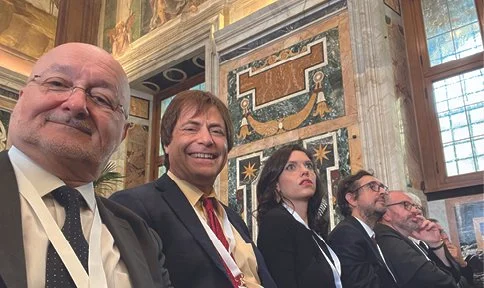
Alex Waibel (left), takes a selfie with some of the other members of Pope Leo XIV’s working group on AI guidelines at the Vatican.
Waibel suggests efforts begin at home. “At CMU for instance, if we put our heads together, we could take a bunch of these problems and look at ways at which we can impose different objective functions in the learning of AI,” he said. “I really do believe this is technically feasible.”
Asked about his long-term forecast for AI, Waibel says that while he is wary of potential dangers, he is generally optimistic. “We have to pay attention. We must develop societal guardrails and regulation for the technology. I think we need to work hard on making sure we find good counterweights to all of this, rather than simply stopping it, which is neither desirable nor realistic.” ■
More from the Spring 2026 LINK Issue
From the Dean: Widening the Aperture