
惯性聚合 高效追踪和阅读你感兴趣的博客、新闻、科技资讯
阅读原文 在惯性聚合中打开

推荐订阅源

Google DeepMind News
人人都是产品经理
人人都是产品经理
H
Hacker News: Front Page
Stack Overflow Blog
Stack Overflow Blog
B
Blog
I
InfoQ
GbyAI
GbyAI
T
The Blog of Author Tim Ferriss
F
Fortinet All Blogs
Y
Y Combinator Blog
Cyber Security Advisories - MS-ISAC
月光博客
月光博客
Hugging Face - Blog
Hugging Face - Blog
爱范儿
爱范儿
F
Full Disclosure
Hacker News - Newest:
Hacker News - Newest: "LLM"
Recent Announcements
freeCodeCamp Programming Tutorials: Python, JavaScript, Git & More
Jina AI
Jina AI
T
Tailwind CSS Blog
S
Secure Thoughts
P
Privacy International News Feed
美团技术团队
钛媒体:引领未来商业与生活新知
钛媒体:引领未来商业与生活新知
L
LINUX DO - 最新话题
H
Hackread – Cybersecurity News, Data Breaches, AI and More
C
Cybersecurity and Infrastructure Security Agency CISA
Last Week in AI
Last Week in AI
W
WeLiveSecurity
Google Online Security Blog
P
Privacy & Cybersecurity Law Blog
D
DataBreaches.Net
Engineering at Meta
Engineering at Meta
Know Your Adversary
Know Your Adversary
P
Palo Alto Networks Blog
I
Intezer
Application and Cybersecurity Blog
Project Zero
Project Zero
V2EX - 技术
V2EX - 技术
H
Heimdal Security Blog
博客园 - Franky
阮一峰的网络日志
阮一峰的网络日志
D
Darknet – Hacking Tools, Hacker News & Cyber Security
T
Troy Hunt's Blog
V
Vulnerabilities – Threatpost
H
Help Net Security
Martin Fowler
Martin Fowler
cs.AI updates on arXiv.org
G
GRAHAM CLULEY
博客园 - 【当耐特】

Latent.Space

[AINews] Claude Opus 5: Fable-level performance at Opus price (half Fable) [AINews] Black Forest Labs FLUX 3 - Multimodal Flow Models that beat Seedance 2.0, Gemini Omni and Grok Imagine, and FLUX-mimic video-action robotics model [AINews] "Laguna S 2.1 Released: Cheaper than Deepseek v4 Flash, Better than V4 Pro" Inside the Model Factory — Eiso Kant, Poolside AI [AINews] AI Cybersecurity becomes top of mind 🔬Causal Models Need Causal Data - Xaira’s X-Cell model for Drug Discovery (Bo Wang & Ci Chu, Chief Discovery Officer & Chief AI Scientist) [AINews] not much happened today [AINews] not much happened today [AINews] Kimi K3 2.8T-A50B: the largest open model ever released; Opus 4.8-class at Sonnet 5 pricing 🔬 The Lab of the Future Should Feel Like a Data Center — Andy Beam & Rafa Gómez-Bombarelli, Lila Sciences [AINews] Thinky's Inkling: 975B-A41B multimodal, new best American Apache 2.0 open model (with Inkling-Small, 276B-A12B) [AINews] not much happened today 5 Trends That Defined AI Engineering at World’s Fair 2026 [AINews] Codex usage up >10x in 6 months to 7M users, +1M in the past ~day; did Codex overtake Claude Code?? [AINews] not much happened today [AINews] OpenAI launches GPT 5.6 Sol/Terra/Luna, Codex becomes ChatGPT superapp [AINews] SpaceXAI launches Grok 4.5, first Opus-class model post Cursor acquisition Why AI Infrastructure must evolve for Agent Experience — Akshat Bubna, Modal CTO [AINews] Lilian Weng summarizes 35 papers on Harness Engineering for RSI [AINews] The Field Guide to Fable AIEWF Daily Dispatch: The great loops debate and the state of AI engineering The website of the future may assemble itself for every visitor Skill engineering and the case against one-shot AI design [AINews] not much happened today AIEWF Daily Dispatch: Autoresearch and the tension between AI and human agency Autoresearch: The feedback loop behind self-improving agents How Cursor deploys AI inside the enterprise 🔬 The Coolest Diffusion Research Isn't in LLMs — Evan Feinberg & Sergey Edunov, Genesis Molecular AI Warp CEO Zach Lloyd on why software factories are the next phase of coding AIEWF Daily Dispatch: Loops, Software Factories & Forward Deployed Engineers [AINews] Sonnet 5 today, and Fable 5 tomorrow Forward Deployed Engineers and the future of software engineering Ahmad Osman on why local AI is catching up [AINews] not much happened today [AINews] OpenAI GPT-5.6 Sol / Terra / Luna — restricted to trusted partners [AINews] OpenAI reports median internal Codex output tokens grew 56x in Research, 32x in Customer Support, 27x in Engineering, and 13x in Legal since November 2025. [AINews] It's Meta-Harness Summer Why the Frontier Ecosystem must be Open — Matei Zaharia and Reynold Xin, Databricks [AINews] Claude Tag: Multiplayer, Proactive, Persistent Agents in Slack [AINews] SpaceX is already a $28B/yr Neocloud Red-Teaming after Mythos — Zico Kolter & Matt Fredrikson, Gray Swan How to AIE Good [AINews] not much happened today [AINews] GLM-5.2 is the real deal; Z.ai forecasts Open Fable by EOY The Professor of Outputmaxxing — Anjney Midha, AMP [AINews] Midjourney Medical: scan your organs like you step on a scale 🔬 The Self-Driving Lab — Joseph Krause, Radical AI [AINews] GLM-5.2: the top Frontend Coding model in the world, IndexShare for Speculative Decoding [AINews] Satya on Loopcraft: Building Frontier Ecosystems [AINews] Fable and Mythos officially too dangerous to release [AINews] Loopcraft: The Art of Stacking Loops [AINews] Loopcraft: The Art of Stacking Loops [AINews] Open Models, Model Labs vs Agent Labs, and What's Untrainable — Sarah Guo [AINews] Anthropic Claude Fable 5 — Mythos but Safe, with Controversial Terms [AINews] FrontierCode: Benchmarking for Code Quality over Slop [AINews] not much happened today How to Stop Shipping Low-Quality RL Environments (with Examples) [AINews] not much happened today Reality: The Final Eval — Lukas Petersson and Axel Backlund of Andon Labs [AINews] Reve 2 and Ideogram 4: Layouts in Imagegen 🔬Scaling Past Informal AI - Carina Hong, Axiom Math ⚡️Satya Nadella: No Priors x Latent Space Crossover Special at Microsoft Build [AINews] Microsoft Build: MAI-Thinking-1 and MAI Family models GitHub's plan for Agents — Kyle Daigle, GitHub [AINews] NVIDIA Cosmos 3, Nemotron 3 Ultra, and RTX Spark Why Video Agent models are next — Ethan He, xAI Grok Imagine [AINews] Founders and Forward Deployed Engineers [AINews] Anthropic raises $965B Series H, releases Opus 4.8 and Dynamic Workflows/ultracode The Age of Async Agents — Cognition's Walden Yan & OpenInspect's Cole Murray [AINews] Cognition raises $1B in $26B Series D 🔬 ESMFold2: The Bitter Lesson is Coming for Proteins - Alex Rives, BioHub [AINews] New AI Infra decacorns: Fireworks, Baseten (with OpenRouter on the way) [AINews] All Model Labs are now Agent Labs [AINews] New AI Infra unicorns: Exa, Modal, TurboPuffer Giving Agents Computers — Ivan Burazin, Daytona [AINews] OpenAI GPT-next disproves 80 year old Erdős planar unit distance problem for under $1000 Railway: The Agent-Native Cloud — Jake Cooper [AINews] Google I/O 2026: Gemini 3.5 Flash, Omni (NanoBanana for Video), Spark (background agents), and Antigravity 2.0 [AINews] How to land a job at a frontier lab (on Pretraining) The Autonomous Drone Tech Stack & Economics of Drones — Yaroslav Azhnyuk, The Fourth Law & Guest Host Noah Smith, Noahpinion [AINews] Cerebras' $60B IPO: Slowly, then All at Once [AINews] Everything is Conductor AI-Native Healthcare: 100M Doctor Visits, 10–20 Hours Saved, Prior Auth in Minutes — Janie Lee & Chai Asawa, Abridge [AINews] Codex Rises, Claude Meters Programmatic Usage [AINews] The End of Finetuning [AINews] Thinking Machines' Native Interaction Models - TML-Interaction-Small 276B-A12B - advances SOTA Realtime Voice and kills standard VAD
Vercel's Andrew Qu on why agents are a new kind of software
Richard MacManus · 2026-07-03 · via Latent.Space
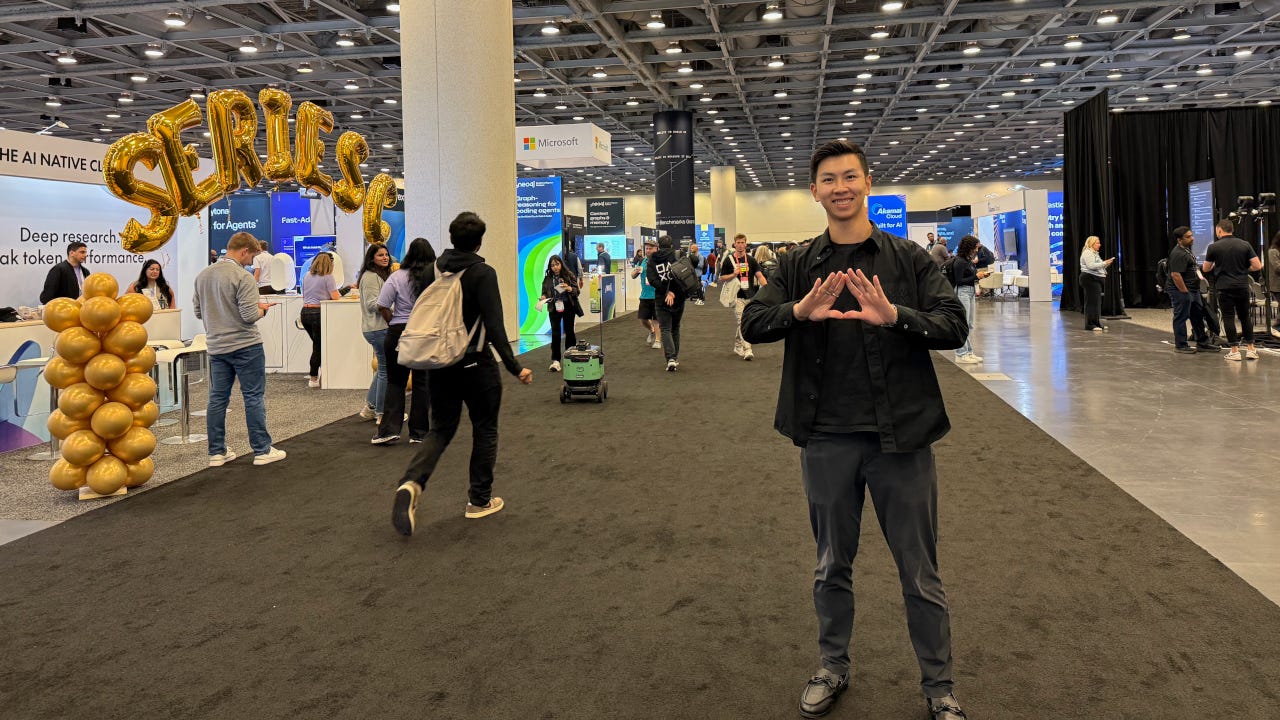
Vercel’s Andrew Qu on the AIEWF expo floor.

Andrew Qu is Chief of Software at Vercel, where he works with the CTO across internal engineering, product experimentation and emerging technologies. He has built libraries for MCP, created skills.sh and led the development of eve, Vercel’s framework for building agents.

In this interview with Latent Space, Qu explains why agents represent a new form of software, what Vercel learned from building its own, and why Vercel itself is turning into an agent!

Latent Space: What does a Chief of Software do at Vercel?

Andrew Qu: My role is pretty unique. I work with the CTO to ship impact in any way, shape or form. It’s a mix of internal engineering, external experimentation and staying on the frontier by building things.

That means building new libraries and frameworks and showing people how to do things for the first time. I built an MCP library that made it easier to create some of the first MCP servers, and I also built skills.sh to make agent skills easier to discover and use.

Latent Space: How did Vercel evolve from focusing on web development to investing heavily in agents?

Qu: Vercel’s origins were about making it easy for developers to ship websites and web applications. More recently, we’ve seen a shift from people building pages to people building agents.

While building our own agent in v0, our vibe-coding product, we ran into a lot of paper cuts that existing tooling did not solve: switching models or providers, adding fallbacks and making runs resumable.

We turned those solutions into reusable libraries that could support v0 and also help customers build their own agents. Over time, we accumulated a set of primitives and decided to assemble them more cohesively. That became eve.

Latent Space: How did you reach the point where Vercel needed a dedicated agent framework?

Qu: About a year ago, I started working toward putting an agent on every desk inside Vercel. That led me to build a successful data agent, and along the way a number of best practices emerged: filesystem agents, skills, compaction and subagents.

These were all things I wished had come out of the box. Eventually, we asked: what if there were a prescriptive way to do this, so other developers did not have to go through the same exploration? That is where eve came from.

Latent Space: Are agents simply another kind of application, or a genuinely new form of software?

Qu: I think agents are a new type of software. They are not as predictable as web applications. The infrastructure can look similar, but the interaction, interface and outputs are much more dynamic.

That changes how you build them. You need different primitives for context, tools, resumability and long-running work.

Latent Space: What kinds of problems are particularly well suited to agents?

Qu: We see a lot of business agents. Internally at Vercel, we use them for repetitive work ranging from a first pass at legal contract redlining, to marketing retrospectives and identifying people to contact, to writing queries against our data stores.

A good candidate is often a repetitive task that still requires some reasoning. It is not just fixed automation, because the system has to interpret the situation and decide what to do.

Latent Space: When should an agent work autonomously, and when should a human remain in the loop?

Qu: I don’t think the future is all autonomous loops, and I don’t think it is all human-in-the-loop. It is about choosing a feedback cycle that fits the task.

If the task is well defined and you know what the final output should look like, it can be reasonable to let a loop continue until it is done. For more careful or surgical engineering work, you should check back in and make sure you are steering the model correctly.

Latent Space: Your approach evolved through prompting, bespoke tools, coding-agent harnesses, filesystem agents and skills. What was the main lesson?

Qu: We are still figuring out what makes an agent productive. Along the way, we have been collecting these primitives and bringing them together in eve.

There will be more to add as best practices emerge. A year ago, we did not know sandboxes would become so important, or how much demand there would be for secure code execution and long-running jobs. As we learn more from production, there will be much more to build.

Latent Space: Is Vercel creating an end-to-end agent platform comparable to the one it built for web development?

Qu: Yes and no. We value partners that provide specialized parts of the agent lifecycle, but we also want it to be very easy for developers to get started.

If you deploy eve to Vercel, you get observability and evaluations out of the box. We want to make that experience more comprehensive while making it easy to integrate with partners rather than owning every component.

Latent Space: Why have skills become so important?

Qu: Skills are useful as portable, on-demand knowledge. Models often contain outdated information. For example, they still sometimes recommend Vercel Postgres, even though we deprecated it years ago in favor of our marketplace.

A skill can tell the agent that Vercel Postgres is deprecated and steer it toward the current approach. Until companies can audit and update every old piece of content, skills provide a way to forward-correct the model.

I would recommend publishing skills for the latest version of your product. But companies should also audit their existing content, identify what is outdated and update it or add clear notes.

Latent Space: How will websites evolve as more traffic comes from agents?

Qu: We have published reports showing bot traffic rising while human traffic is stagnant or declining, even as impressions increase, because agents and bots are hitting websites more frequently.

The future of the web is therefore to be as accessible to bots and agents as possible, so they can learn about your product and use it successfully.

At Vercel, we already detect when an agent makes a request and serve Markdown directly. Instead of forcing it to process HTML designed for a visual browser, we provide a format that is easier to read.

Latent Space: Does that mean one experience for humans and another for agents?

Qu: I think so. Humans may continue to receive the visual site, while agents receive a more structured, machine-readable representation. We are already doing that today.

Latent Space: What problems are you most interested in solving next?

Qu: One of the things at the top of my agenda is multiplayer agent development. Whenever a team collaborates, people struggle to share context.

I may have techniques for getting a front-end interface right on the first attempt, but another person may not know them. I am interested in how we can share that context between teammates and allow them to contribute to it.

Latent Space: Will agents become a separate application category, or a standard capability built into most software?

Qu: It depends on who you are and what you are building. For Vercel, Vercel itself is becoming an agent. We have an agent on the website, in Slack and in the dashboard that can do things on your behalf.

Other companies will ship agents as standalone products. For us, agents are tightly coupled to everything we build. We want the entire platform to be agent-friendly — and, in many ways, to make the platform itself an agent.