


While we congratulate (friend of the show!) General Intuition on their new model and (friend of the show!) Shunyu Yao on their new model, and the world awaits the release of GPT-5.6 Sol Ultra, people are racing to find the limits of Fable 5 before the subscription subsidy ends tomorrow.
Thariq had been working on a “Field Guide to Fable” blog series, and happened to have a keynote planned the day of the relaunch, so he kindly pivoted the entire keynote in one night to give the most timely advice he had, which was released today:
The 4 segments are (my watchalong commentary in italics):
0:00 Introduction and setting the stage for Fable
2:32 Unhobbling Claude: Understanding model behavior
The constraints on a model are often imposed by US - “the harness we put them in, and the way we prompt them”. Therefore when we encounter a new class of model, we should expect to remove or change those harnesses and prompts in order to elicit new behaviors that you otherwise would never see because you were overly limiting (aka hobbling) the model.
Case in point: most people have come to agree with Thariq on the unreasonable effectiveness of HTML.
9:08 Finding your unknowns: Navigating the gap between map and territory
a close cousin to “unhobbling” - if unhobbling is about clearing out outdated knowns, then this is about finding things you didn’t even know you didn’t know.
easiest techniques:
telling claude to do a “blindspot pass” for your unknowns
brainstorm for “wildly different design directions”
interview me - similar to /grill-me, but prioritizing high impact questions
use references: in the case of migrations
keep implementation-notes.md: a running log of underspecified decisions made on your behalf
quiz me - ensure MY understanding
14:29 Dealing with Grief: Reflecting on the emotional shift in coding productivity
What you used to spend weeks on is now done in hours
16:30 Being unreasonable: Demanding good, fast, and cheap results
“Tradeoffs are not real” - because Fable is more capable, you can be more ambitious and not accept tradeoffs.
“Building is easy, generating value is still hard”.
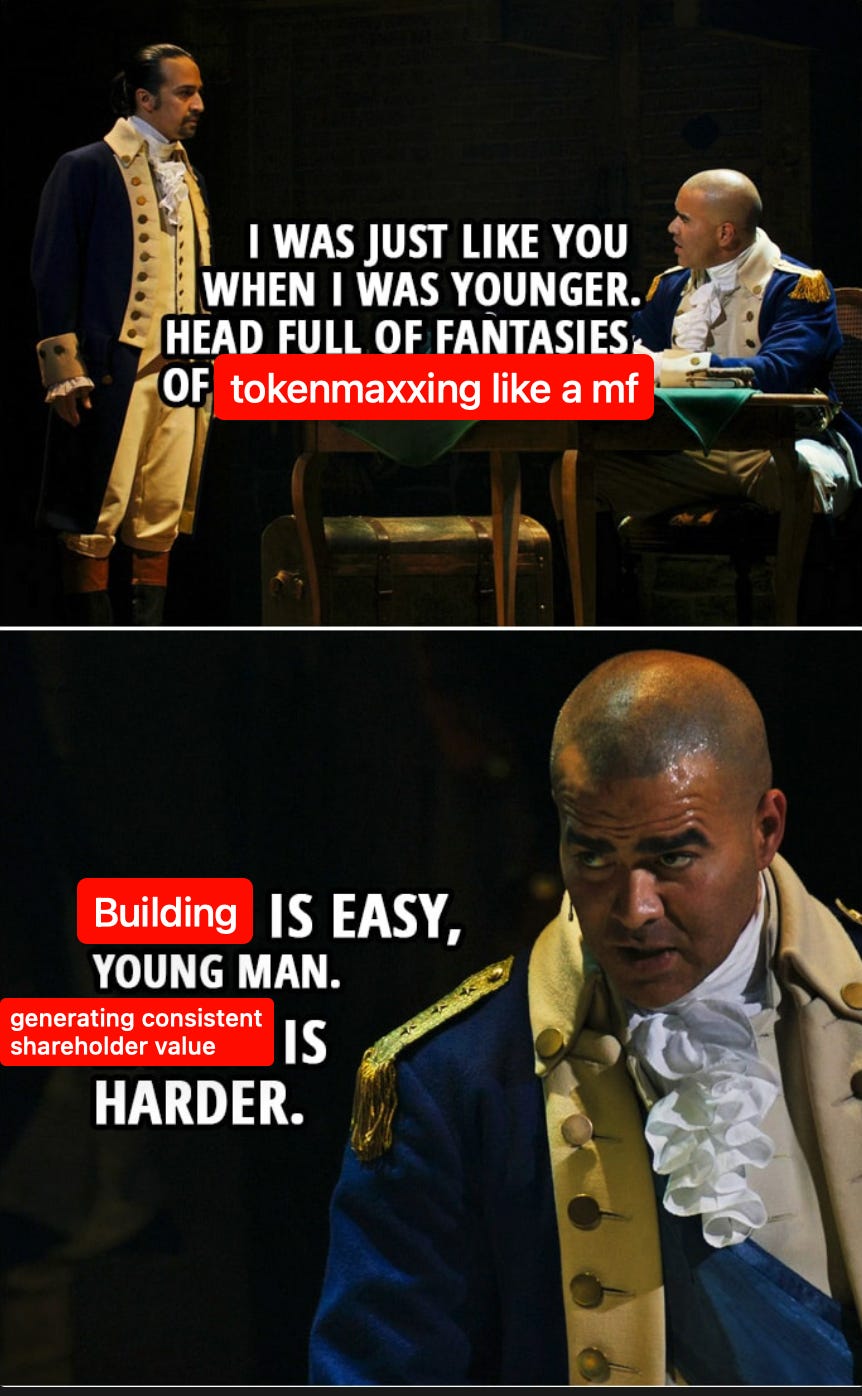
Overall, an excellent talk that we will be mapping out the implications of as the world acclimatizes to the first Fable-class models.
AI News for 7/04/2026-7/06/2026. We checked 12 subreddits, 544 Twitters and no further Discords. AINews’ website lets you search all past issues. As a reminder, AINews is now a section of Latent Space. You can opt in/out of email frequencies!
Tencent Hunyuan’s Hy3 Release and the Open-Weight Frontier
Hy3 lands as a serious open model: Tencent released Hy3 under Apache 2.0, a 295B MoE with 21B active parameters, 192 experts / top-8 routing, GQA, 256K context, and a 3.8B MTP layer for speculative decoding. Multiple posts framed it as competitive with much larger systems on reasoning, coding, and agentic tasks, with particular emphasis on reliability improvements like tool-calling stability and anti-hallucination work @eliebakouch, @HuggingPapers, @ShunyuYao12.
Inference support was unusually day-0 mature: @vllm_project said Hy3 runs natively in vLLM from launch with tool-call and reasoning parsers, MTP speculative decoding, and validated support on NVIDIA and AMD. A follow-up detailed Tencent production kernels now upstreamed into vLLM main, including load-balanced decode scheduling and fused FP8 MoE serving, with reported gains of up to 2.95x on mixed-length decode and latency reductions of roughly 24% TTFT and 17% TPOT versus default backends @vllm_project. Community reaction was strong enough that @Teknium quickly made Hy3 free on Nous Portal for two weeks.
Broader open-model context: Hy3 was immediately compared against GLM-5.2, with some posters arguing Tencent has now joined the very top tier of open-source labs if the benchmark and vibe-test results hold @teortaxesTex, while others still maintained GLM-5.2 as the best currently usable open-weight model in practice @tinygrad, @mbusigin. The net takeaway: the open frontier is compressing fast, and the competition is increasingly about deployment robustness rather than just raw leaderboard deltas.
Agent Benchmarks, Harnesses, and Long-Running Memory
AutomationBench-AA adds a more realistic agent eval: @ArtificialAnlys launched an independent leaderboard for Zapier’s AutomationBench, evaluating agents across 657 tasks and 40 simulated SaaS apps with both objectives and guardrails. Claude Fable 5 led at 48.6%, narrowly ahead of Opus 4.8 at 48.5%, with Gemini 3.5 Flash at 42.6% and GPT-5.5 xhigh at 42.1%. More interesting than the ranking: every model still breaks business rules, and Gemini looked notably strong on objective-per-guardrail-violation and cost efficiency. Open weights remain meaningfully behind, with GLM-5.2 max the best listed open model at 27.8%.
Capability indices are becoming multidimensional: Artificial Analysis also introduced six domain-specific indices—Finance & Accounting, Legal, Healthcare & Medical, Strategy & Ops, Engineering, Economics—to move past single scalar model scores @ArtificialAnlys. The headline was familiar—Claude Fable 5 plus Opus 4.8 fallback leads—but the more useful insight is how sharply rankings reshuffle by domain and how steep the price/performance frontier has become. This aligns with @fchollet, who argued that reporting benchmark scores without cost per task is increasingly meaningless.
Memory and retrieval remain bottlenecks for persistent agents: Two papers got traction here. First, A-TMA tackles “ghost memory,” where stale and current facts are retrieved together in long-running assistants; on the LTP benchmark, adding it to Graphiti reportedly improves conflict accuracy by +0.240 absolute @omarsar0. Second, ReContext is a training-free long-context inference harness that replays model-internal evidence right before answer generation, improving evidence utilization across eight 128K datasets @dair_ai. Combined with BlockSearch for million-token in-context retrieval @dair_ai, the theme is clear: better memory behavior is increasingly being engineered at inference time, not just trained in.
Anthropic’s J-Space / Global Workspace Results
Mechanistic interpretability took center stage: Anthropic released research claiming a global-workspace-like internal structure in Claude, centered on a small subset of activations they call J-space @AnthropicAI, @AnthropicAI. The core claim is not chain-of-thought extraction, but identification of a privileged internal representational substrate that appears available for report, modulation, and flexible reasoning. Anthropic also shipped a Neuronpedia demo for open-weight models @AnthropicAI.
Why researchers cared: Interpretability researchers treated this as stronger evidence for a model “working memory” or internal workspace than prior public work, even if they disagreed with the framing. @NeelNanda5 called it the best evidence yet for a working-memory-like mechanism. @Jack_W_Lindsey argued understanding this privileged space could be key to LLM cognition. Posts also highlighted practical safety angles: the workspace can reportedly surface hidden concepts, detect prompt injections, and expose internal sabotage-related features before they are verbalized @mlpowered, @LiorOnAI, @omarsar0.
But the “consciousness” language was contested: Anthropic’s public framing invited strong pushback. Supporters said the results suggest a functional analog of access consciousness rather than phenomenal consciousness @BorisMPower, while critics argued the company was overclaiming by conflating privileged latent activation with consciousness @AlanCowen. Even some sympathetic takes emphasized the bigger story is a new intervention point for auditing and steering models, not philosophy.
Inference, Serving, and Systems Efficiency
Speculative decoding remains hot infrastructure: @lmsysorg added DSpark to SGLang for confidence-driven, variable-length verification. The pitch is that under high load it avoids verifying every draft token, improving the throughput/latency tradeoff relative to fixed-budget speculative methods; DeepSeek-V4-Pro reportedly reached 383.7 tok/s at batch=1 on B300. Microsoft also discussed prompt-level optimization of GPT-5.5 in the GitHub Copilot harness to improve latency and token efficiency after launch @code, @pierceboggan.
Inference efficiency is increasingly the strategic bottleneck: @jon_durbin argued that inference, not training alone, is now “the whole game,” because every data pipeline, RL loop, and agent runtime ultimately cashes out as test-time compute. That perspective also showed up in lower-level kernel work: Chutes reported major speedups for MiniMax MSA and GatedDeltaNet-2, including ~7x sparse-attention training improvements on RTX Pro 6000 / SM120 and better fused FP8 kernels @jon_durbin.
Infra releases beyond model serving: Cloudflare launched Workers Cache, a regionally tiered cache in front of Worker entrypoints configured via standard HTTP headers @Cloudflare. OpenAI shipped GPT-Realtime-2.1-mini, bringing reasoning and tool use to the mini realtime line at the same price as the prior mini, alongside claimed 25%+ p95 latency reductions from caching improvements @OpenAIDevs, @OpenAIDevs.
World Models, Speech, and Document AI
MIRA is a notable world-model demo: General Intuition and Kyutai, with Epic Games, introduced MIRA, a playable multiplayer world model for Rocket League trained on 10k hours of bot-collected data @gen_intuition. It runs in real time at 20 fps, and posts highlighted a 5B-parameter model running an entire 2v2 match on a single NVIDIA B200, with no explicit physics or rendering engine @TheRundownAI. This was one of the clearest signals that video/world-model work is moving from toy demos toward interactive simulators.
Speech remains highly competitive: AssemblyAI released Universal-3.5 Pro Realtime, a streaming STT model with 4.1% WER on AA-WER Streaming and contextual priming that can be updated mid-call without reconnecting @ArtificialAnlys. On the TTS side, Artificial Analysis said Speechify Simba 3.2 now leads its Speech Arena at 1233 Elo, ahead of Gemini 3.1 Flash TTS, Sonic 3.5, and Inworld Realtime TTS 1.5 Max, while also being the cheapest among top-ranked models @ArtificialAnlys.
Document-context pipelines are becoming multimodal by default: LlamaIndex and LanceDB described a retrieval pipeline for messy PDFs that separates pages, chunks, and extracted assets into linked multimodal tables, reporting 82% any-page-hit@5 and 74% answer accuracy on a labeled ESG-report benchmark @lancedb, @llama_index. This pairs with Jerry Liu’s broader argument for a dedicated “document context layer” for agents @jerryjliu0.
Top tweets (by engagement)
Anthropic’s global workspace paper dominated engagement, with the primary announcement on Claude’s internal workspace/J-space far above everything else @AnthropicAI.
Tencent Hy3 was the biggest pure model-release story, especially among technical accounts discussing open-source competitiveness and deployment @teortaxesTex, @ShunyuYao12.
MIRA’s playable world model was the standout multimodal/system demo @gen_intuition.
Will Depue’s “Stargate for Data” thread was the most substantive strategy post, arguing that data collection—not compute alone—becomes the binding constraint and potential moat for frontier labs @willdepue.
John Carmack’s memory-system thread drew significant technical interest by arguing inference hardware could exploit deterministic access patterns and much cheaper memory tiers than HBM for large-model serving @ID_AA_Carmack.
longcat 2.0 (1.6T, ~48B active) weights are now open under MIT license (Activity: 638): LongCat 2.0 weights are now open under the MIT license via announcements from elie and ModelScope, with technical details in the LongCat 2.0 blog post. The model is a very large MoE system with 1.6T total parameters and roughly 48B active parameters per inference; commenters note the released weights occupy about 3.55 TB in BF16 and 2.05 TB in FP8. Commenters emphasized the practical deployment burden from the multi-terabyte weight size, and noted that Meituan—described as China’s Groupon/Uber Eats analogue—reportedly trained it on fully domestic Chinese chips, prompting discussion about the geopolitical/market significance.
Commenters highlighted the scale and deployment footprint of LongCat 2.0: 1.6T total parameters with approximately 48B active parameters, implying a sparse/MoE-style architecture. One user noted the released weights require about 3.55 TB in BF16 and 2.05 TB in FP8, which is important for anyone planning local storage or inference infrastructure.
A technical point raised was that Meituan reportedly trained the model on 100% domestic Chinese chips, which commenters framed as significant for AI hardware supply-chain independence. This is especially notable given Meituan’s role as a major Chinese internet company comparable to a mix of Groupon and Uber Eats rather than a traditional AI lab.
Several users focused on the permissive MIT license and planned benchmarking against frontier open models such as Qwen and DeepSeek. The combination of 1.6T total parameters, only ~48B active parameters, and open weights suggests the model may be practical to compare with other high-end MoE open models if inference tooling supports its architecture efficiently.
此内容由惯性聚合(RSS阅读器)自动聚合整理,仅供阅读参考。 原文来自 — 版权归原作者所有。