







Last Updated on June 22, 2026 by
Author(s): Dylan Tartarini
Originally published on Towards AI.
Compounding knowledge using AI Agents
Some time ago, Andrej Karpathy released a Github GiST containing a guide, or better, an intuition on how to build one’s own personal knowledge base. The core philosophy behind the concept is simple and to the point:
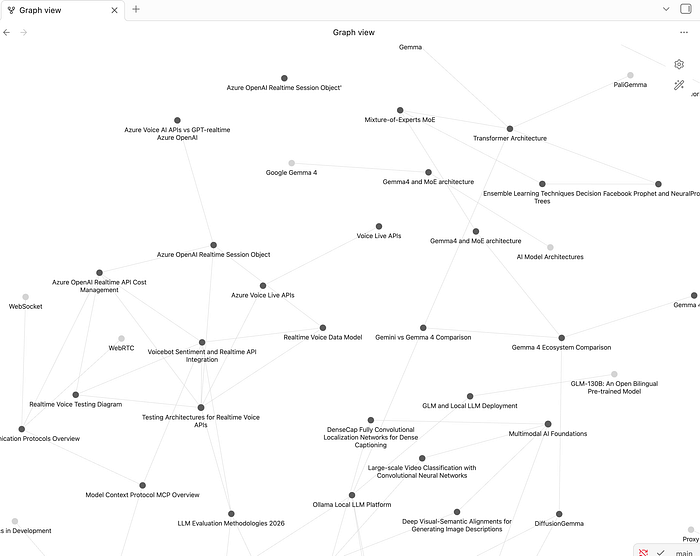
The author explains that while the original LLM-wiki idea emphasizes compiling personal notes into a compounding markdown wiki via an LLM agent, most implementations are too developer-centric, so they build their own approach (DyResearch). They outline the shift from a single coding assistant toward a team/faculty of specialized agents integrated with Obsidian, combining a compounding wiki concept with local, lightweight retrieval through a dual storage architecture. They describe the agent roles (Study Coordinator, Professor, Librarian, Researcher, Note Taker), how DyResearch is served via a FastAPI backend and connected to Obsidian through a custom community plugin, and how the system manages sessions/events and source retrieval. Finally, they detail their implementation choices for orchestration (Google ADK), database/session persistence (Postgres + pgvector vs local-first SQLite + LanceDB), and the plugin features that let users chat, ingest documents, and automatically generate or update notes inside their vault.
Read the full blog for free on Medium.
Published via Towards AI
Towards AI Academy
We Build Enterprise-Grade AI. We'll Teach You to Master It Too.
15 engineers. 100,000+ students. Towards AI Academy teaches what actually survives production.
Start free — no commitment:
→ 6-Day Agentic AI Engineering Email Guide — one practical lesson per day
→ Agents Architecture Cheatsheet — 3 years of architecture decisions in 6 pages
Our courses:
→ AI Engineering Certification — 90+ lessons from project selection to deployed product. The most comprehensive practical LLM course out there.
→ Agent Engineering Course — Hands on with production agent architectures, memory, routing, and eval frameworks — built from real enterprise engagements.
→ AI for Work — Understand, evaluate, and apply AI for complex work tasks.
Note: Article content contains the views of the contributing authors and not Towards AI.