


Europe is weeks away from crossing a critical threshold that represents a severe and immediate shortage of jet fuel, triggering many more flight cancelations and even the possible closures of smaller airports.
A new Goldman Sachs research report estimates that Europe’s commercial jet fuel inventories are slated to dip below the International Energy Agency’s critical 23-day shortage threshold sometime in June. “The U.K. appears most at risk of jet fuel rationing given its large net imports,” the report argued.
The threshold doesn’t mean Europe will run out of fuel supplies 23 days from that point—that would only occur without any replenishments. But it does mean global crude and fuel supplies are running dryer each day from the ongoing closure of the Strait of Hormuz amid the war in Iran. Europe could, for instance, dip below a more dire 20-day limit by July, resulting in more drastic rationing, and maybe 15 days by August.
Because European refineries have begun churning out higher percentages of jet fuel—refineries typically pump out much more gasoline and diesel—the more dire consequences aren’t likely to hit European airlines and their passengers until July or August, said Claudio Galimberti, Rystad Energy chief economist.
“We’re still kind of sleepwalking into this approaching disaster. There is little doubt there is going to be a disaster,” Galimberti told Fortune. “Unless we normalize Hormuz, there will be a shortage at some point in Asia. Europe has this additional buffer with the refineries that affords them a few more weeks, which is vital.”
Jet fuel inventories at the European benchmark of Amsterdam-Rotterdam-Antwerp are down 50% since the start of the war at the end of February, he said. “It is very concerning. It’s been a straight line down, and it will continue to be like that for at least the next few weeks no matter what we do.”
Already, many tens of thousands of flights have been canceled for this summer. Most notably, Lufthansa axed 20,000 flights through October. Airfare prices have spiked by 20% or more depending on the airline compared to last year’s costs.
The airline industry will get worse before things improve—even if a peace deal is worked out soon in the Middle East—because of supply chain bottlenecks that will persist for several more months, Galimberti said. “There’s not a historical precedent, so it is difficult to say how it will play out.”
The Goldman Sachs report highlights South Africa, India, Indonesia, Thailand, Taiwan, Malaysia, and Bangladesh as other countries facing critical supply levels.
Southern Europe also is highly vulnerable because it imports more petroleum from the Middle East, said Patrick De Haan, head of petroleum analysis at GasBuddy. He advised travelers to look for nonstop flights at major airports and to consider travel insurance as a precaution.
“If you’re going to Italy, look for something direct,” De Haan said, referencing southern Europe. “The smaller- and medium-sized airports and areas of Europe that are secondary are more at risk.
“For many governments in Europe and Asia, tourism is a main driver of the economy. So they want to keep those long-haul flights going.”
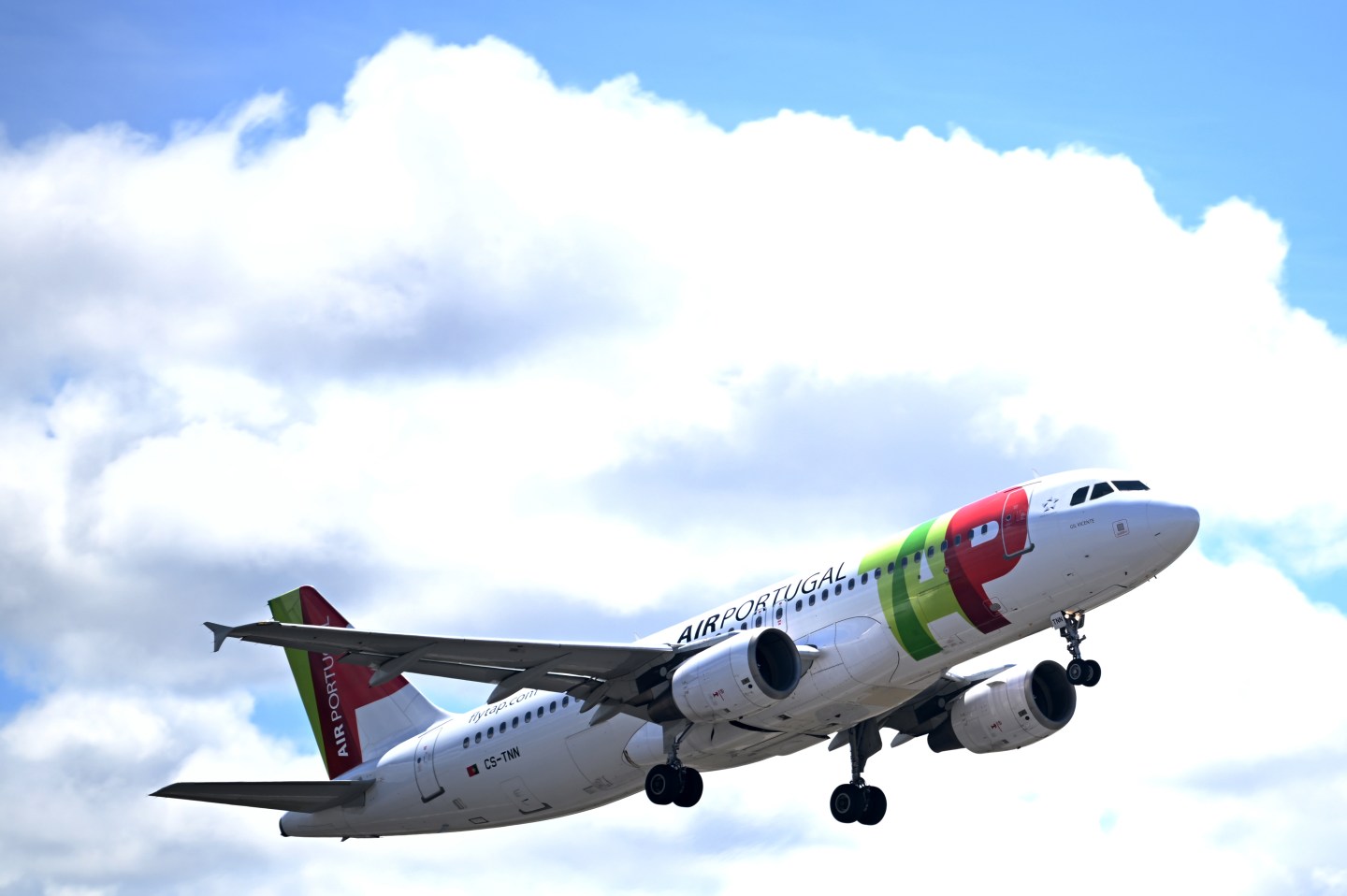
Because there’s so much more global demand for gasoline and diesel, jet fuel typically represents only about 10% of an oil refinery’s output.
That is changing now, but not as dramatically as airlines wish.
Patrick Pouyanné, the CEO of French Big Oil giant TotalEnergies, told investors on the company’s earnings call last week that the instruction to all European refineries is “max jet first.” But he cautioned that doesn’t mean doubling jet fuel volumes.
Instead, it means a refinery’s jet fuel output might grow from 10% to 13%, a modest but meaningful hike. Euro refiners BP and Austria’s OMV provided similar messages.
But Europe also has fewer oil refineries than it once did, increasingly leaning on Middle East and Asia-Pacific imports.
And, as jet fuel supplies plunge, a key technical aspect of storage tanks means nearly the last 20% or so of storage volumes cannot be withdrawn. Many fuel storage tanks utilize floating roofs that move up and down on the surface of the liquid to reduce evaporation and toxic air emissions. The problem is those roofs cannot go too low without the roof potentially collapsing, creating fire and explosion risks. So, storage volumes must be maintained no lower than 15-20%.
Essentially, that means fuel supplies are effectively more depleted than the numbers indicate.
The European Commission is working with the various countries and airlines to manage supplies. And the commission warned this week that they should prepare for all scenarios as uncertainty persists.
“I don’t think anyone knows how long this situation will last, so the best we can do, and the most effective thing that we can do, and that we are doing, is to prepare for all eventualities,” spokeswoman Anna-Kaisa Itkonen said.
In Asia, there are more wild cards, GasBuddy’s De Haan said. The situation could improve if China, which has the world’s largest storage supplies, decides to export more fuel. And India, which has a lot of refineries but not enough crude oil, could help a lot if it secures more oil from Russia and other sources.
The U.S., which initiated the war in Iran with Israel, may be the most insulated from the jet fuel shortage, but it is not immune.
U.S. airlines have spiked airfares and they are canceling many shorter-duration and less popular flight offerings.
Spirit Airlines shut down its operations over the weekend—after talks for a government bailout fell through—and more airlines may similarly fail if jet fuel prices remain above $150 per barrel. Budget carriers are the most at risk. Jet fuel prices averaged $181 a barrel last week worldwide, according to S&P Global Energy and the International Air Transport Association’s price monitor.
On its earnings call month, American Airlines estimated its 2026 fuel expenses at $4 billion higher than last year. Delta said it is facing a $2 billion spike in fuel costs just for the second quarter.
“If anything, you’re going to see jam-packed planes this summer because airlines are looking to trim flights to boost efficiency through higher utilization,” De Haan said.
And, with a couple of major refineries closing in California in recent months, even the West Coast of the U.S. could face physical jet fuel shortages in the months to come, De Haan said. “It’s going to be expensive, but I don’t necessarily anticipate drastic outages right now. It may certainly get worse in the weeks ahead.”
While the U.S. may lead the world in oil production, it is not an island. The U.S. still typically imports more oil than it ships out, especially to supply parts of the West Coast and Northeast that have fewer refineries and petroleum products pipelines.
“’Energy independence’ has long been a farce for politicians to either point fingers or to take credit,” De Haan said. “The U.S. is not cut off from the global economy. You can’t fence the U.S. off.”
此内容由惯性聚合(RSS阅读器)自动聚合整理,仅供阅读参考。 原文来自 — 版权归原作者所有。