
惯性聚合 高效追踪和阅读你感兴趣的博客、新闻、科技资讯
阅读原文 在惯性聚合中打开

推荐订阅源

P
Proofpoint News Feed
V
V2EX
WordPress大学
WordPress大学
Google DeepMind News
Martin Fowler
Martin Fowler
小众软件
小众软件
Blog — PlanetScale
Blog — PlanetScale
月光博客
月光博客
The Cloudflare Blog
T
Tailwind CSS Blog
H
Help Net Security
腾讯CDC
爱范儿
爱范儿
人人都是产品经理
人人都是产品经理
H
Hackread – Cybersecurity News, Data Breaches, AI and More
The GitHub Blog
The GitHub Blog
Microsoft Security Blog
Stack Overflow Blog
Stack Overflow Blog
D
DataBreaches.Net
C
Check Point Blog
量子位
酷 壳 – CoolShell
酷 壳 – CoolShell
美团技术团队
让小产品的独立变现更简单 - ezindie.com

Fortune | FORTUNE

One man can kill Bill Ackman’s $64 billion bid for Universal Music Group—and no one knows what he’ll do | Fortune Poppi’s cofounder pitched her startup on Shark Tank while 9 months pregnant and landed a $400,000 deal—now it's worth $2 billion | Fortune Teen boys are choosing AI girlfriends over real ones for 'maximum control, zero rejection'—experts say it could make them unemployable | Fortune A United American merger is by no means impossible given the president 'loves big deals' | Fortune Reed Hastings’s planned exit from $455 billion Netflix ‘had nothing to do with’ the failed deal for Warner Bros., says Ted Sarandos | Fortune Meet Joe McCann: The high-flying crypto trader held in Tanzania after sudden death of his influencer fiancée Ashly Robinson | Fortune Gen Z is carving a different path in the housing market by doing it alone | Fortune U.S. Catholic leaders criticize Trump for ‘disparaging words’ about the pope as Vatican clash risks alienating Catholic voters | Fortune China has ‘nearly erased’ America’s lead in AI—and the flow of tech experts moving to the U.S. is slowing to a trickle, Stanford report says | Fortune Self-made millionaire behind $5 billion Skims Emma Grede says it all began with a cold call to Kris Jenner: Emma Grede—the self-made millionaire behind the $5 billion Skims empire—says it all began with an audacious cold call to Kris Jenner: ‘The difference between me and someone else is, I made it happen’ | Fortune Americans have never been this gloomy about the economy. Wall Street has never cashed in harder | Fortune ‘The college grading system [is] almost meaningless’: People see the Ivy League as an easy A and with flawed admissions standards | Fortune The CEO of $8.5 billion Japanese car giant Nissan plays the drums in a band and hits the tennis courts to destress from the top job | Fortune New York governor's take on a millionaires tax: fancy pied-à-terre second apartments worth over $5 million | Fortune Pope Leo XIV: A ‘handful of tyrants’ are ravaging earth with war and exploitation | Fortune Trump has no plan to cut the $39 trillion national debt, but he does want to cut childcare. His budget director is scrambling to clarify | Fortune China's economy grows 5% in first quarter, surprising economists to the upside | Fortune Everyone was wondering what Trump wanted more: Warsh smoothly seated at the Fed, or for Powell to pay. We have our answer | Fortune Palantir exec: the biggest mistake retailers are making with AI? Trying to do it all with one agent | Fortune American YouTuber who calls himself a 'troll' sentenced to 6 months in Korean prison for literally dancing on wartime graves | Fortune BBC plans to cut up to 2,000 jobs to save 10% of annual budget | Fortune Canva debuts a new suite of agentic tools, as the design app quietly becomes one of the world’s most used AI services | Fortune Moody's CEO: AI has a trust problem – better models won’t fix it | Fortune Top New York surgeon: Americans have better data for choosing restaurants than surgeons. That has to change | Fortune The Iran war’s fertilizer shock is hammering American farmers, and 70% can’t afford what they need for this year’s growing season | Fortune Education experts to Mamdani: Why are you foisting AI on our kids? | Fortune This CEO pirated video games as a teen and became a hacker for the Air Force. Now he’s built a $3 billion cyber firm | Fortune Teacher, blame thyself: Yale report savages Ivy League schools for destroying American trust in higher education | Fortune Fed chair nominee Kevin Warsh is worth more than $100 million and has stakes in SpaceX and Polymarket | Fortune From wool sneakers to GPUs: Allbirds’ desperate AI pivot and 600% stock surge, explained | Fortune
From maritime trench warfare to a 'sloppy peace': Here's ...
Jason Ma · 2026-04-26 · via Fortune | FORTUNE

Unless Iran’s regime collapses, the Strait of Hormuz will never be open like it was before the war, according to Jared Cohen, co-head of the Goldman Sachs Global Institute and the bank’s president of global affairs.

Since the U.S. and Israel launched their war in late February, Tehran has discovered how much leverage it can wield over the global economy by closing off the Strait of Hormuz, he said Friday on CNBC. As a result, Iran will not let go.

“You may have traffic flowing through, but the Iranians will likely maintain partial or unilateral control,” Cohen predicted.

For now, both sides are observing a “sloppy ceasefire” where they refrain from launching ballistic missiles and drones at each other. But small fast-attack boats from the Islamic Revolutionary Guard Corps are firing on commercial ships in the Persian Gulf, keeping the strait closed and energy markets in crisis.

Meanwhile, the U.S. Navy has imposed a blockade on Iran-linked ships, even sending boarding parties of Marines to seize control of them, aiming to choke off Tehran’s top source of revenue.

Cohen described the standoff as “maritime trench warfare” with the U.S. and Iran each betting economic coercion will force an eventual surrender.

But from the perspective of the Gulf Cooperation Council, the Arab monarchies neighboring Iran, a comprehensive peace deal is unlikely as long as the Islamic republic remains, he said. Instead, their goal is to buy time and diversify away from the Strait of Hormuz, finding ways to get their energy to customers via other routes.

“My guess is the North Star on this, and where it goes is: you go from a sloppy ceasefire to a strong, enduring ceasefire and a sloppy peace,” Cohen explained. “And a sloppy peace is basically a bunch of half solutions on all the big issues.”

That could mean oil tankers transit through the Strait of Hormuz freely, but the Iranians can close it again at any time for any reason. It could also entail Iran agreeing not to fire missiles while still retaining 1,000-2,000 of them.
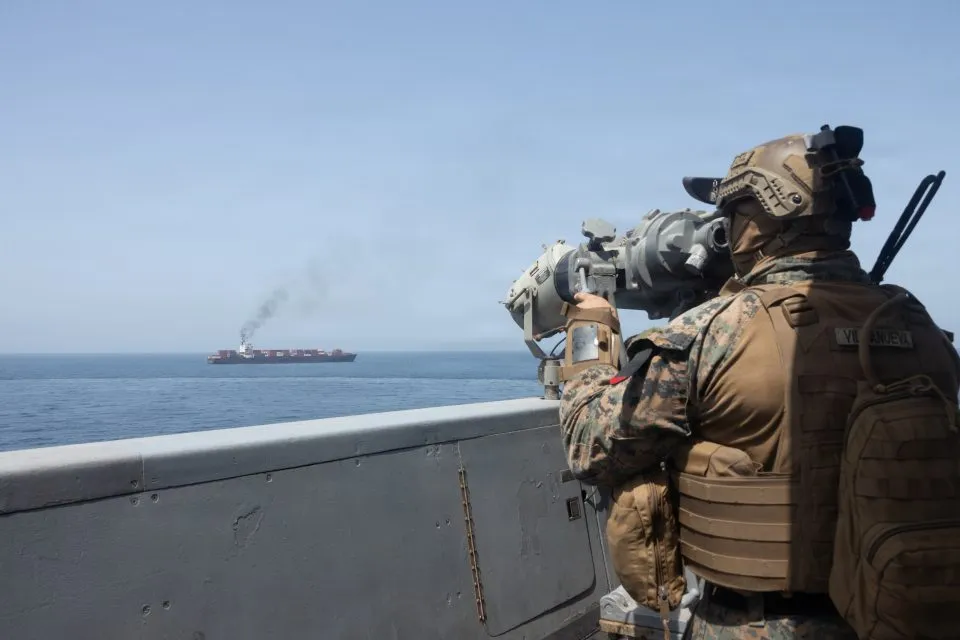
U.S. forces patrol the Arabian Sea near M/V Touska, April 20, 2026, after the Iranian-flagged vessel attempted to violate the U.S. naval blockade.

U.S. Navy

At the same time, the Gulf states will scramble to reduce their vulnerability to Iran. Saudi Arabia has already diverted much of its oil exports to the Red Sea via the East-West Pipeline.

The United Arab Emirates also has pipelines that can send oil to Fujairah on the Gulf of Oman, bypassing the Strait of Hormuz. And over the next two and half to three years, the UAE will look to reduce its Hormuz exposure from 50% of its oil exports to zero, downgrading the narrow waterway to a “commercial afterthought,” according to Cohen.

Until then, however, the U.S. and Iran are still going back and forth in on-again, off-again ceasefire talks. On Saturday, President Donald Trump said he would not send his envoys to Pakistan for another round of indirect negotiations after Iran’s top diplomat left Islamabad.

Arab governments think time is on Iran’s side, even as it stands to lose hundred of millions of dollars in oil revenue due to the U.S. naval blockade, Cohen said.

While Tehran waits patiently, the rest of the global economy faces oil and fuel shortages that some analysts warn could precipitate a disaster in the next two months.

“It’s a game of geopolitical chicken between the United States and the Iranians over who’s going to swerve first, and they both have the same theory of change,” Cohen said.
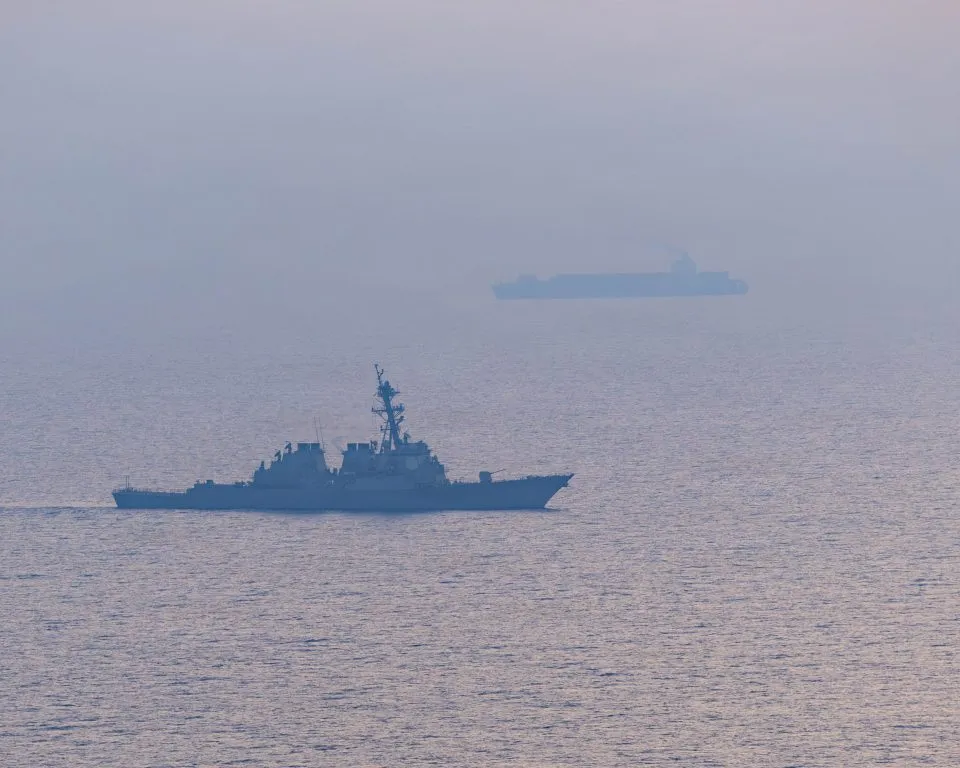
U.S. forces patrol the Arabian Sea near M/V Touska, April 19, 2026, after the Iranian-flagged vessel attempted to violate the U.S. naval blockade.

U.S. Navy