


For years, the working theory about health misinformation was reassuringly simple: It was a fringe problem, confined to a narrow slice of the population—the deeply partisan, the undereducated, the chronically online. A sweeping new global survey blows that theory apart.
The 2026 Edelman Trust Barometer Special Report: Trust and Health, based on responses from more than 16,000 people across 16 countries, found that seven in 10 people worldwide believe at least one of six widely debunked health claims to be true.
False claims to which survey respondents answered, “I believe this is true,” include:
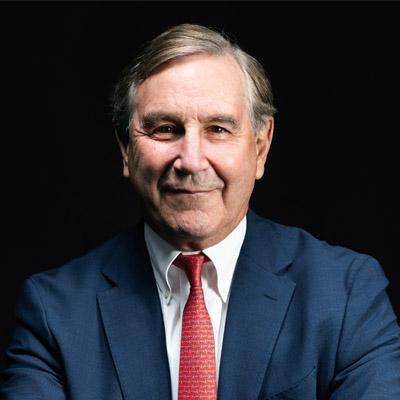
“It’s quite a stunning set of facts,” Richard Edelman, CEO of the global communications firm behind the five-year-old survey, told Fortune. The common assumption, he said, was that skeptics of mainstream health science “are the ones who really have questions about health truths … and it’s not true. It’s everybody.”
The data systematically dismantles every demographic explanation for why people believe what they do. Among people with a university degree, 69% hold at least one of these beliefs—nearly identical to the 70% of those without one. The beliefs cut across the political spectrum: 78% of right-leaning respondents hold at least one, but so do 64% of those on the left. The pattern holds across age groups and, strikingly, is more pronounced in developing countries than developed ones. The United States, long assumed to be the epicenter of health misinformation, doesn’t even rank in the top half of countries surveyed.
Courtesy of Edelman
“The reality is that there are many divides in how people think about health, both in developed and developing countries and across levels of education,” the report states. “Rather than pushing for uniformity of belief, it’s more effective to invest in health outcomes and impact.”
Edelman researchers, who have tracked the data since the health-specific report launched in 2021, described a yearslong process of social erosion that feeds the trend. “You have fears—the fears are chronically under- or unaddressed,” said Dave Bersoff, EVP and head of research at the Edelman Trust Institute. “That starts leading to some of the erosion of the social fabric. You get polarization, polarization leads to paralysis, paralysis leads to grievance, grievance leads to insularity.” The result, he said, is a growing “hardness” in how people relate to anyone outside their own group—a hardening of tribalism that makes trust across belief lines feel increasingly impossible.
“I think a lot of what we’re seeing today is this sort of hardening of our tribalism,” Bersoff added, “this idea that I can’t trust anybody who isn’t like me, and so anybody who isn’t like me when it comes to beliefs or values or cultural background is immediately distrusted by me because I think they’re out to get what I deserve, or anything they get comes at my expense. It’s a very negative, mean-spirited way of sort of interacting with the world, and a lot of what we’re seeing today.”
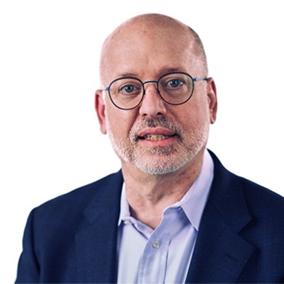
The misinformation crisis is compounding a separate but related emergency: a dramatic loss of confidence in people’s own ability to navigate health decisions. Public confidence in finding reliable health answers and making informed decisions has fallen 10 percentage points in a single year, to just 51%—with statistically significant declines in 14 of the 16 countries surveyed. Meanwhile, trust in the media to accurately cover health topics remains 11 points below its pre-COVID level, at just 46% globally.
Courtesy of Edelman
“People are overwhelmed with info, and I’m not sure they can differentiate between this source and that source,” Richard Edelman said. “There’s sort of an equality somehow of the sources.” The problem, he and his colleagues are careful to stress, is not a deficit of information—it’s the opposite.
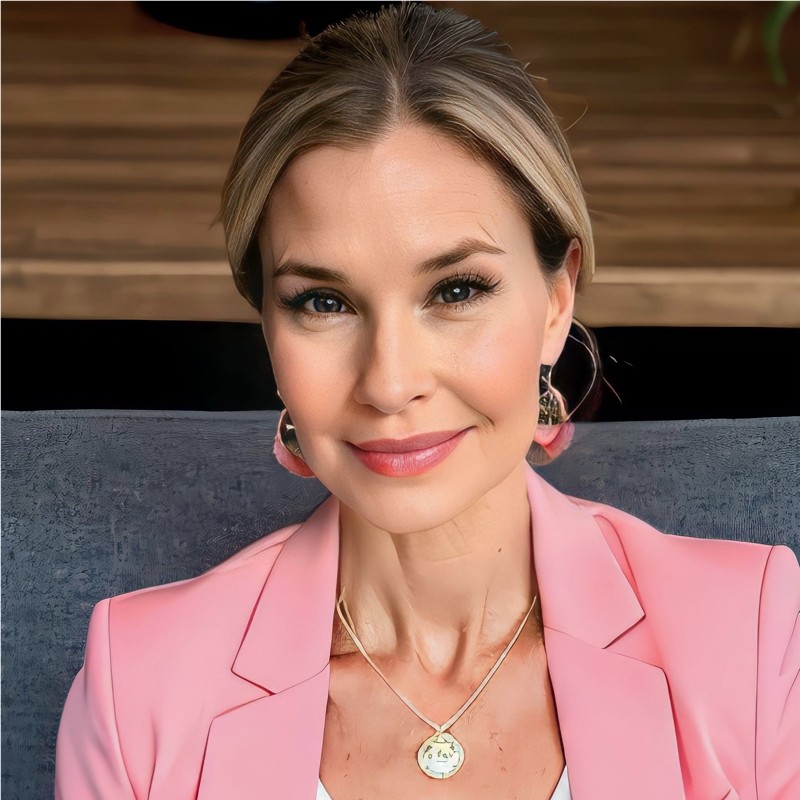
“I think we thought coming in that the divisive issues would be a result of the deficit of information,” said Jennifer Hauser, global health cochair at Edelman. “But in actuality, it’s the information abundance: ‘I’m getting so much information I don’t know who to trust, how to wade through this, and make my final call.’”
Into that vacuum, artificial intelligence is rapidly expanding its footprint. Thirty-five percent of respondents globally now use AI to manage their health in some form—and 64% believe a person fluent in AI can perform at least one medical task as well as, or better than, a trained doctor, including determining proper treatment or medication (21%) and diagnosing illness (17%).
The turn toward AI and self-directed health management doesn’t happen in a vacuum—it is, in large part, a rational response to a system that millions of Americans feel has failed them. Public trust in the U.S. health care system fell from 71.5% in 2020 to 40.1% in 2024, according to research from Johns Hopkins University.
Courtesy of Edelman
That erosion of confidence is compounded by the sheer difficulty of getting care in the first place. A 2025 West Health–Gallup study found that 35% of Americans reported being unable to access quality, affordable health care—the highest level recorded since 2021—with the burden falling hardest on Black, Hispanic, and lower-income adults.
Meanwhile, a January 2026 KFF Health Tracking Poll found that health care is the household expense Americans worry about most—more than rent, food, or utilities—with two-thirds saying they are concerned about affording care for themselves and their families.
The 2025 Edelman report found that in nine of the 16 countries surveyed, a majority of respondents believe institutions are actively undermining access to quality care—a perception that, whether entirely accurate or not, is shaping where people turn for answers.
Hauser said the data points to something more telling: People feel judged by their doctors and are seeking refuge in algorithms. “AI can be less judgmental than physicians,” she said. “AI can be more empathetic than perhaps what they’re finding with their physician.” Among the 35% who already use AI for health management, 84% use it to get immediate answers to health questions, and 74% use it to get a second opinion on a diagnosis.
Despite the upheaval, the survey offers a through line of hope—and not just because personal physicians remain the most trusted voice in health across all 16 markets. Justin Blake, executive director of the Edelman Trust Institute, argued that the report’s most important contribution may be to correct a fundamental misreading of who, exactly, is driving the misinformation surge.
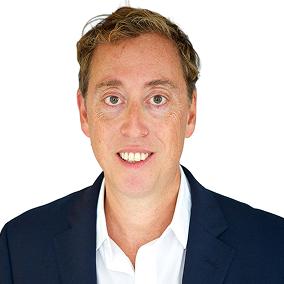
“In some ways, we’ve misunderstood who the audience agreeing with these divisive beliefs are,” Blake said. Now that the data has redrawn the map, he argued, there’s an opening, because that headline 70% misinformation finding means that, as he put it, “They are us.” Now that we know this, he added, “we can actually go about this in a less divided, polarized way and realize, like, ‘Hey, the entire information ecosystem has changed. How people like to be related to has evolved.’ And now that we kind of know what the playing field actually is, we can go ahead and make some progress.”
Courtesy of Edelman
Richard Edelman echoed that measured optimism, but insisted the path forward requires abandoning old habits. “Science for years has just been about the what,” he said. “I think in the next phase, they’re going to have to, as scientists, talk about the why and the how—because it’s not enough anymore to just say, ‘Here’s the solve, just go.’”
The prescription, the Edelman team agreed, is less broadcasting and more conversation—less authority, more partnership. “We have to listen. We’ve got to meet people where they are,” Richard Edelman said. “The to-do is go from the bottom up.”
Hauser put the sharpest point on it. “People don’t want their doctor to be their guru,” she said. “They want their doctor to be their guide.”
For this story, Fortune journalists used generative AI as a research tool. An editor verified the accuracy of the information before publishing.
此内容由惯性聚合(RSS阅读器)自动聚合整理,仅供阅读参考。 原文来自 — 版权归原作者所有。