


Once your child’s first tooth comes in, it’s time to start brushing with a fluoride toothpaste, according to the American Academy of Pediatric Dentistry — doing so helps prevent cavities and gum disease, and gets kids used to brushing from a young age. There is no difference between adult and kid toothpaste in terms of effectiveness, but choosing a product created specifically for children can make the experience more enjoyable for them, says Dr. Amr Moursi, a professor and chairman of pediatric dentistry at the New York University College of Dentistry. When they see a familiar cartoon character on the tube or get excited about the paste’s fruity flavor, brushing becomes something they look forward to.
“When kids take ownership of their oral health, they’re much more proactive about it,” says Dr. Lisa Creaven, a dentist and the co-founder of Made By Dentists. (Ed’s note: The inclusion of products sold by Made By Dentists in this article was made independently of Creaven.) “It’s all about establishing good habits in the long-term.”
I spoke to dentists about what to look for while shopping for kids toothpaste and rounded up a handful of options that meet their guidance. Dentists also shared tips for teaching kids how to brush their teeth in the most stress-free way possible.


Want more from NBC Select? Sign up for our newsletter, The Selection, and shop smarter.
All of the kids toothpastes below are made with fluoride, sugar-free, ADA-accepted, and have flavors and packaging that appeals to kids. I noted which ones are made with SLS in case you’re looking to avoid it, and noted which flavors each option comes in.
When you or your child squeeze this blue toothpaste out of its tube, you’ll see the sparkles mixed into its formula. It has a sweet flavor and screw-off cap.
To encourage kids to brush for long enough, this toothpaste changes color from blue to pink after two minutes of use. It has a flat, flip-top cap so you can stand it up.
Hello’s kids toothpaste comes in three flavors, and with this variety pack, your child can try all of them to decide which one they like best. The toothpaste is packed in colorful tubes that have flat, flip-top caps.
Some children may find dispensing toothpaste from this pump easier than squeezing it out of a standard tube. It also gives them more control over how much paste they put on their toothbrush. The packaging is bright and colorful, but its design is more subtle compared to toothpaste with cartoons on it, so older children may gravitate toward this option. The tube has a flat bottom.
The cute characters, colorful designs and many flavor options of Made By Dentists’ toothpastes are sure to make kids look forward to brushing their teeth twice a day. The toothpaste is free from artificial dyes and colors, and its tube is recyclable.
Any “Minions” fan will be happy to see their favorite characters smiling on this toothpaste’s packaging. The tube has a flat, flip-top cap so you can stand it up on counters or in cabinets.
Kids toothpastes marketed as “natural,” like this one from Burt’s Bees, tend to be free from artificial flavors, ingredients, preservatives, sweetness and colors, experts told me. Whatever causes a brand to call their toothpaste “natural” won’t impact its effectiveness, so long as it’s ADA-approved. This toothpaste has a flat, flip-top cap.
There’s not much of a difference when it comes to shopping for a kid toothpaste versus an adult toothpaste. Here are the most important factors to pay attention to.
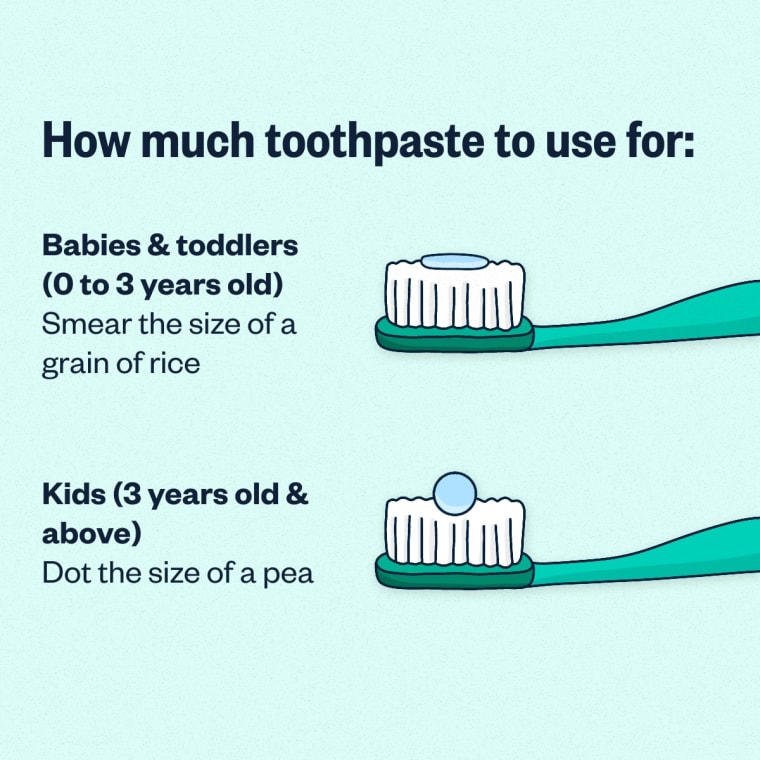
To brush a baby or kid’s teeth, use a dot of toothpaste the size of a grain of rice — such a small amount may not seem like much, but there’s enough fluoride in it to prevent cavities, says Moursi. Then, around age three, you can progress to using a pea-sized amount of toothpaste around age three, says Reboucas.
Spitting is a complex action that involves a lot of muscle control and dexterity, and kids have to learn how to do it, says Creaven — some kids start spitting around 2 years old, while some may not start until 4 years old or later. Because of this, kids tend to swallow some toothpaste while brushing, so it’s important to be careful about how much they use.
Much like potty training, teaching kids how to brush their teeth is all about starting early, consistency and making it a positive experience. One of the most important things to remember as a parent? Don’t stress — teaching your kids to brush their teeth is a long-term project. “For the first few times, if you just get the brush into their mouth, that’s enough,” says Creaven. “The more positive you make the experience, the more likely they are to develop good habits that last a lifetime.”
To help kids learn how to brush their teeth and actually enjoy it, follow these tips:
The AAPD recommends children start using a fluoride toothpaste as soon as their first tooth appears. This usually happens around six months of age, but for some kids, it’s even younger, says Moursi. Experts also recommend visiting a pediatric dentist when your child’s first tooth comes in to make sure everything looks healthy and to get oral care advice that’s tailored to your child’s mouth.
As far as effectiveness goes, there’s no difference between standard adult and kids toothpaste, says Moursi. They’re made with a similar concentration of fluoride to prevent cavities, and they clean teeth in the same way. The main differences lie in flavoring and packaging.
Kids’ taste buds are generally more sensitive than adults’, says Creaven. Because of this, kids’ toothpaste tends to be mildly flavored — instead of minty, which kids typically say tastes “spicy,” its fruity. Packaging is also specifically designed to appeal to children. It tends to have bright colors, recognizable characters, fun words or phrases and large font, making it something kids are drawn to and want to use.
There’s no specific age when kids should transition to adult toothpaste, says Reboucas. The transition is usually dictated by kids’ flavor and packaging preferences, as well as whether additional dental needs arise. For example, if your child develops tooth sensitivity and their dentist recommends using a toothpaste for sensitive teeth, you’ll probably have to go with an “adult” option.
Fluorosis is a dental condition that can occur in children where little white dots show up on the enamel (the outer layer) of their teeth, says Creaven. It’s caused by kids ingesting (swallowing) higher-than-recommended amounts of fluoride during teeth’s enamel formation, says Reboucas.
Getting fluorosis from fluoride toothpaste isn’t usually a concern if kids use the appropriate amount. “Parents are instructed to supervise their children’s brushing and provide the correct amount of toothpaste so it’s safe if they swallow it,” says Reboucas. It’s also important to keep the tube away from young children to prevent them from consuming high amounts of toothpaste when adults aren’t around.
Fluorosis is more of a concern in cases where dentists prescribe supplemental fluoride through gels, for example — if kids aren’t getting enough exposure through a combination of toothpaste, drinking water and their diet, they’re at a higher risk of getting cavities. But even then, fluoride is prescribed in specific, controlled, measured doses so it’s safe, says Reboucas.
Yes, kids need to floss and use mouthwash just like adults do, says Reboucas. Similar to kids toothpaste, brands make kids floss and mouthwash, which is flavored and packaged to appeal to them.
When your child should start flossing and using mouthwash is specific to their oral health, so talk to their dentist. Typically, however, Reboucas recommends kids start flossing when their teeth touch each other. They can start using mouthwash around 6 years old, but wait until later if they can’t effectively spit the solution out. Kids should not swallow mouthwash or use those that contain alcohol, he says.
At NBC Select, we work with experts who have specialized knowledge and authority based on relevant training and/or experience. We also ensure that all expert advice and recommendations are made independently and without undisclosed financial conflicts of interest.
I’m a reporter at NBC Select who has covered dental care since 2020, including topics like electric toothbrushes, water flossers and teeth whitening. To write this article, I interviewed three dentists about how to shop for kids toothpaste and rounded up the best ADA-accepted options to shop.
Catch up on NBC Select’s in-depth coverage of tech and tools, wellness and more, and follow us on Facebook, Instagram, Twitter and TikTok to stay up to date.
此内容由惯性聚合(RSS阅读器)自动聚合整理,仅供阅读参考。 原文来自 — 版权归原作者所有。