








Macau’s image is often defined by its huge casino developments, but with Baroque churches and Buddhist temples with Chinese-style tiled roofs standing side-by-side in its narrow backstreets, the former Portuguese colony also has a long history of serving as a crossroads where Chinese and Western cultures meet.
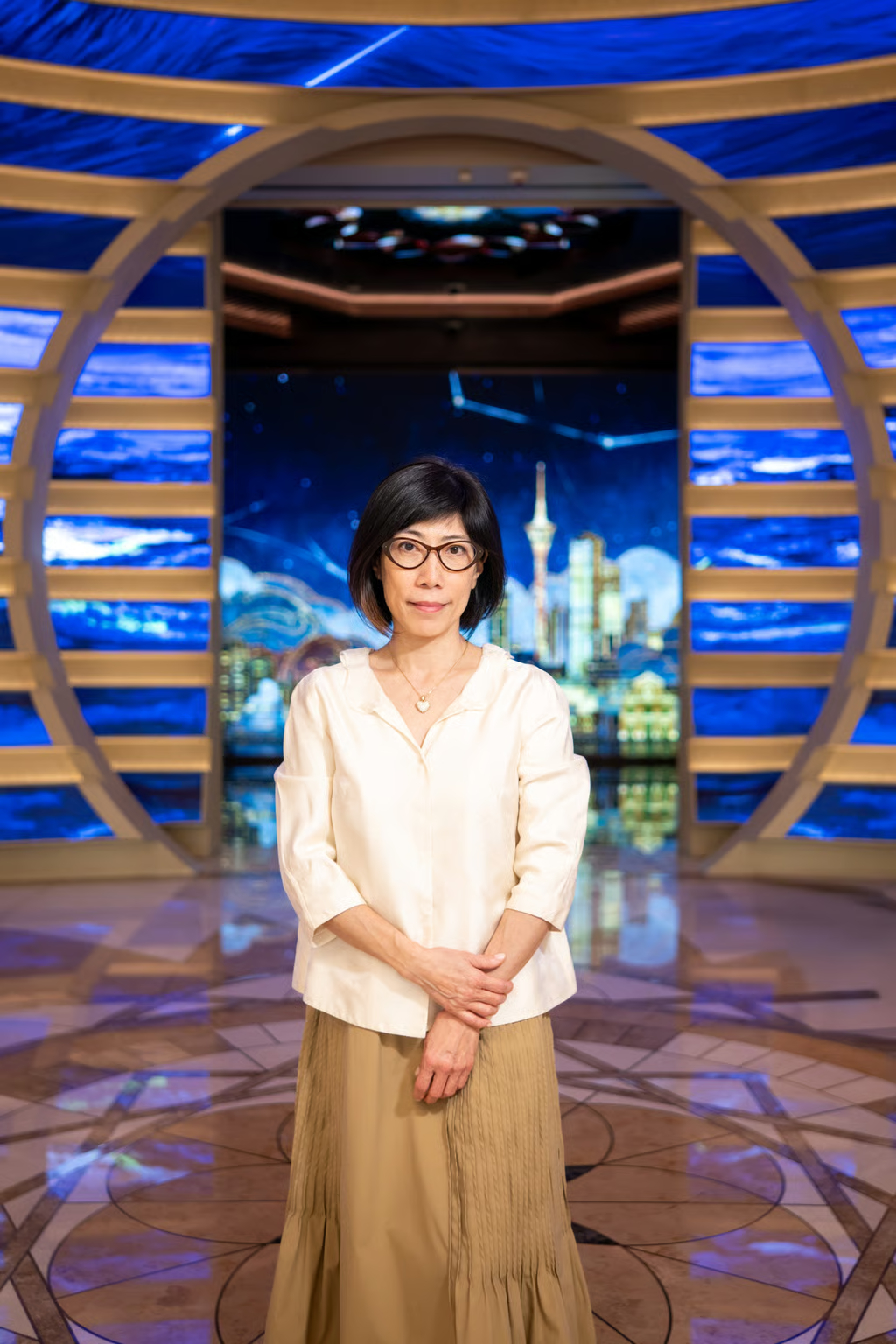
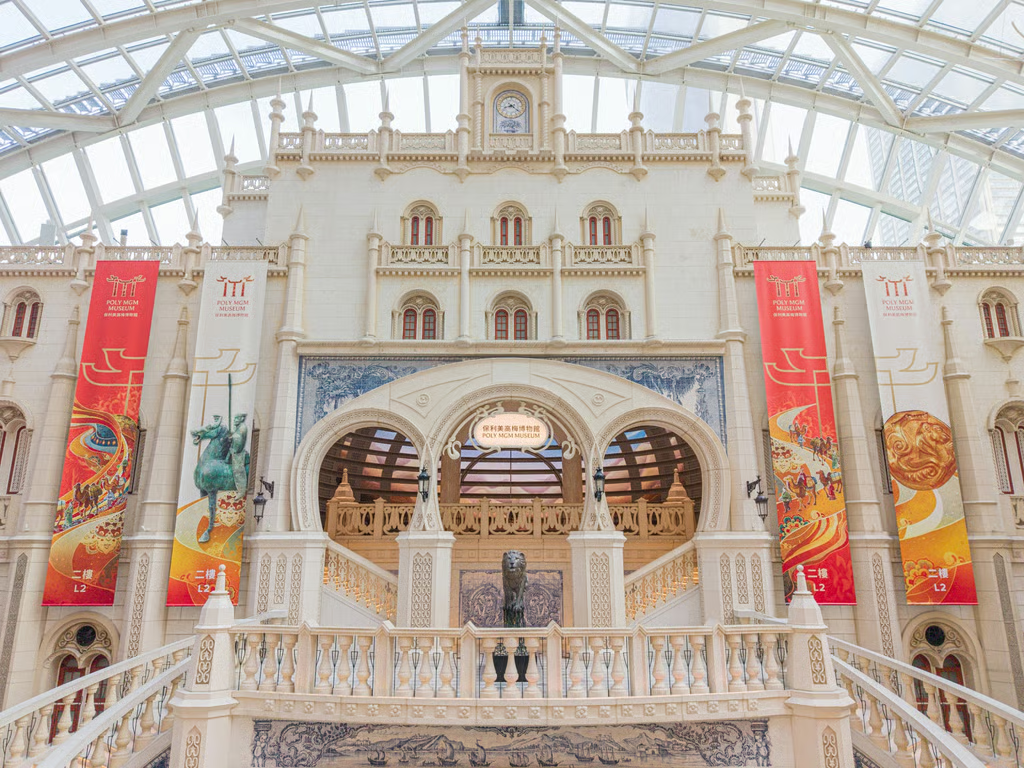
As one of Macau’s landmark cultural destinations – and the only museum in the region built entirely around the Silk Road – Poly MGM Museum’s “Silk Roads Beyond Borders” enters a fresh phase with three major additions. New Italian and Persian treasures make their Asia debut, illuminating centuries of exchange. Macau’s history as a major node of the Maritime Silk Road gives that mission a natural foundation. “That gives our work a level of authenticity that cannot be manufactured,” says Cristina Kuok, senior vice-president of arts and cultural development at MGM.
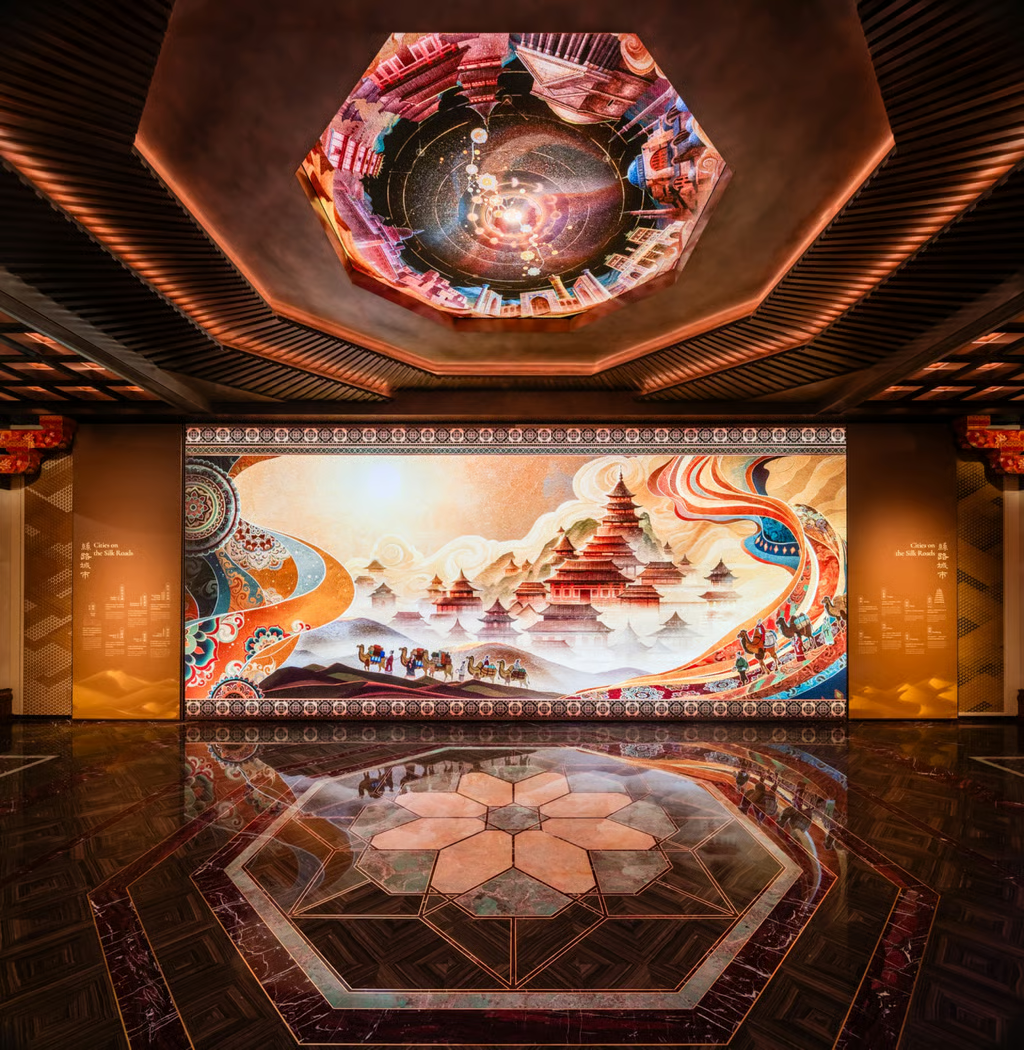
Building on Macau’s legacy as a historic port of trade, the Poly MGM Museum hosted its Silk Roads Cultural Exchange Programme 2026 on April 11, including the signing of memorandums of understanding with five institutions from Beijing, Xinjiang, Gansu, Shaanxi and Guangdong. “Our aim is to keep the Silk Road alive as a story of exchange, imagination and shared humanity,” says Kuok.
In addition, the museum announced an upcoming exhibition set to debut in the fourth quarter of the year, “Confluence in Glass: East-West Artistry Across Time”, presented in collaboration with the National Museum of China and Shandong’s Zibo Ceramic and Glass Museum. It will feature more than 180 works tracing three millennia of Chinese Zibo glassmaking craftsmanship.
“Visitors will encounter carefully considered juxtapositions where Eastern and Western glass pieces are placed side-by-side, revealing both contrasts in aesthetic language and shared mastery of technique,” Kuok explains.
Poly MGM’s ongoing “Silk Roads Beyond Borders” exhibition, which opened in October 2025, will also expand with the addition of a Persian Farahan carpet from the Museu Medeiros e Almeida in Lisbon, as well as 18th century works by Venetian School masters Giovanni Antonio Canal, better known as Canaletto, and Michele Marieschi, both on loan from The Paolo and Carolina Zani Foundation of Art and Culture in Brescia, Italy, with support from the Consulate General of Italy.
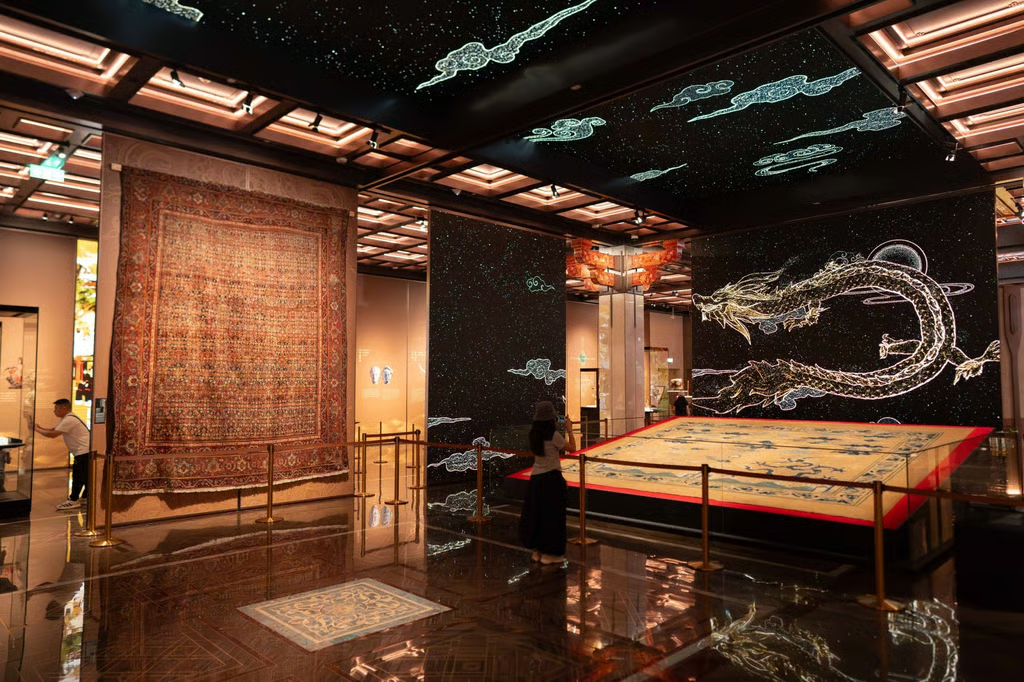
They capture Venice – a key European gateway for Silk Road goods – at the height of its mercantile power. Displayed alongside Chinese silk and porcelain, these works show how aesthetics travelled. “These works remind us that cultural exchange was never abstract,” Kuok says. “It was lived and felt across cities like Venice and the other Silk Road regions represented in our exhibition.”
此内容由惯性聚合(RSS阅读器)自动聚合整理,仅供阅读参考。 原文来自 — 版权归原作者所有。