


Michael Wooldridge is like the teacher you wish you’d had: approachable, able to explain difficult things in simple terms, neither dauntingly highbrow nor off-puttingly cool, and genuinely enthusiastic about what he does. “I love it when you see the light go on in somebody, when they understand something that they didn’t understand before,” he says. “I find that incredibly gratifying.”
He comes across a regular sort of guy, which, as an Oxford professor with more than 500 scientific articles and 10 books to his name, he clearly isn’t. Typically, his favourite work is his contribution to Ladybird’s Expert Books – an update of the classic children’s series – on artificial intelligence. “I’m very proud of this,” he says, as he hands me a copy from his bookshelf. We’re in his study in the University of Oxford’s somewhat municipal computing department on a sunny spring day. Maybe it’s the campus setting, but our discussion almost takes the form of a seminar.
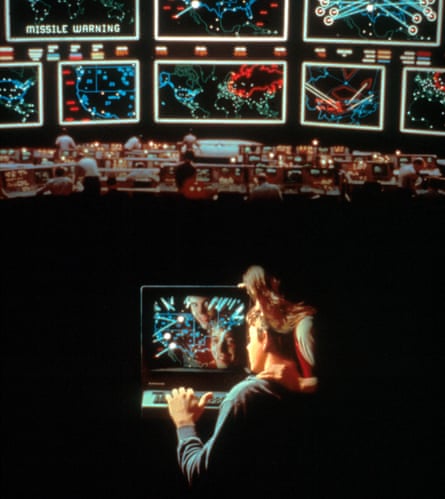
Wooldridge is an adept public communicator, especially on artificial intelligence – a field he has worked in for more than 30 years, but about which he retains a healthy scepticism. In his 2023 Christmas lectures for the Royal Institution, titled The Truth about AI, he brought in a robotic dog and asked his school-age audience to vote on whether they’d whack it with a baseball bat. And, to explain reinforcement learning, he recreated the classic 80s movie WarGames, in which a young Matthew Broderick averts nuclear catastrophe by getting the US military computer to play noughts and crosses with itself (until it concludes there is no real way to win). “Matthew Broderick was in London at the time. We tried to get him to come on the Christmas lecture, but he couldn’t do it,” says Wooldridge. “So we called our computer BrodeRick in his honour.”
WarGames is actually pretty close to the subject of Wooldridge’s latest book, Life Lessons from Game Theory: The Art of Thinking Strategically in a Complex World. He’s taught the subject to his students for more than 15 years, he says. Now it’s our turn. There’s no maths in Wooldridge’s book; instead he translates game theory into 21 digestible scenarios, incorporating everything from Atlantic cod fishing, to Pepsi v Coca-Cola, to the existence of God.
“It is surprising how many global events can be explained by a relatively small number of game theoretic models,” Wooldridge says. One of the simplest is the game of “chicken”, which he illustrates in his book using a scene from the James Dean movie Rebel Without a Cause (none of his students had heard of it, he admits). Two teenagers drive their cars towards a cliff; the first to jump is the “chicken”, and loses the game. If both jump at the same time, it’s a draw; don’t jump at all and you’ve lost the game pretty badly (spoiler alert: that’s what happens in the movie).
The theory lesson here is about Nash equilibriums (we won’t get into the details) – but, practically, we see this game playing out in real life all the time. The Cuban missile crisis used to be the go-to example, but another one is unfolding as we speak: the US-Iran war. “You’ve got two sides with ever-escalating threats against each other; somebody’s got to back down at some point,” says Wooldridge. “The danger is, if neither backs down then you’ve passed a point of no return and you get the worst-case scenario for everybody.”
Is there any way out of this? “Well, one of the ways that a game can get changed is if a third party comes in and provides some incentive for one of the parties to behave in a different way.” Another option is to circumvent the game by communicating with your opponent. That’s what happened in the Cuban missile crisis, but it feels less likely here. “Although, I have to say, Iran seems to be playing it a lot more cannily, in the sense that the US side is very, very unpredictable. Now, being unpredictable is a classic game theoretic strategy as well, but it makes it very hard for somebody on the other side to know how to respond. If you really are playing against an irrational player then one of the things game theory says is you just hedge your bets against the worst-case scenario.”
This is not just about warfare, or even games, Wooldridge stresses. He defines game theory in the book as “a mathematical theory that aspires to understand situations in which self-interested parties interact with one another”. That, he argues, could apply to all manner of situations: social, political and philosophical.

The concept of the “zero-sum game”, for example, has become a mainstream term (partly thanks to WarGames), even if it’s widely misunderstood. A zero-sum game is not simply one where one side gains what the other side loses; it is one where the incentive is to make your opponent lose as badly as possible, Wooldridge explains. So, technically, chess is not a zero-sum game because you’re just trying to win, not to destroy or humiliate your opponent. There’s a socio-political dimension to this. “This zero-sum mentality is very damaging. It’s a very male trait,” he says. “And the evidence is that, not only do you end up not necessarily doing as well in life as you could do, but actually you end as a more miserable person. You feel like you have less agency in your affairs. One of the important lessons from game theory is that, actually, the majority of interactions that we’re in are not zero-sum.”
This adversarial worldview is the engine of populist politics – in the “migrants are coming to take your jobs” sense. You are losing because others are winning. One of Wooldridge’s favourite games encourages us to think the opposite: the Veil of Ignorance was devised in 1971 by the philosopher John Rawls and the premise is that you can design society in any way you want, but afterwards, you will be placed randomly within it. Wooldridge describes it as “a beautiful thought experiment … It incentivises a socially desirable outcome, but people are still following their self-interest.” Bill Clinton and Barack Obama were both fans, he adds.
It’s not initially clear how game theory fits with AI, but the former is a big part of the latter these days, Wooldridge explains, especially in his primary area of interest, which is multi-agent systems – programs that interact with one another and act on your behalf. “So if I want to arrange a meeting with you, why would I call you up? Why doesn’t my Siri just talk directly to your Siri?” These types of interactions are embedded in our online life. Online auctions such as those on eBay, for example, where you’re trying to slip in the winning bid at the last moment. “If my agent is going to interact with your agent and my preferences are not necessarily aligned with yours, then the theory that explains how you should think about those interactions is game theory.”

When Wooldridge started out, AI was almost an abstract concept. He entered computing via amateur enthusiasm. Growing up in rural Herefordshire, the son of a middle manager at the local cider company, it was a big event when Wooldridge’s local electronics shop had a home computer for sale, in about 1980. “This sounded ridiculous because computers were multimillion pound things in my mind.” The shop owners generously let him have a go on it (it was a Tandy TRS-80). “I went back week after week and taught myself to program. I was literally sat in the shop window on the computer.” He went on to study computing as an undergraduate, began a PhD on AI in 1989, then did an internship with Janet (the Joint Academic Network), which was basically the UK branch of the early internet.
The technology has moved on astronomically since then, but essentially, Wooldridge says, “the core techniques that drove the current AI revolution were invented by the mid-80s”. He mentions Geoffrey Hinton, pioneer of artificial neural networks – the mechanism that now underpins machine learning. “The only obstacle standing in the way of the AI revolution in the 1980s, really, was that computers weren’t powerful enough and we didn’t have enough data.”
When it comes down to it, Wooldridge says, the breakthrough success of GPT-3 in 2020 was largely “based on a bet that OpenAI made that if they did the same thing, only 10 times bigger, that would deliver results. A lot of people at the time, including me, were very sceptical about it. I’m a scientist; I would like to see advances through scientific development, not just by throwing more computer power at it. But it turned out that, actually, that was a very successful bet.” Does that suggest OpenAI boss Sam Altman and his ilk are not the tech geniuses they’re taken to be? “I’ve never met Sam Altman; I don’t know,” he says diplomatically. “He’s clearly delivered something remarkable.”
Geniuses or not, these AI pioneers may be reaching their limits. A few years ago, the likes of Altman and Google DeepMind’s Demis Hassabis expected to achieve AGI – human-level artificial general intelligence – within a few years. “I personally think they’re overoptimistic,” Wooldridge says. You can talk to ChatGPT about quantum mechanics in Latin, he points out, “but at the same time, we don’t have AI that could come into your house, that it had never seen before, locate the kitchen and clear the dinner table” – something a minimum-wage human worker could do.
“The limits are the computer power and the data that you’re able to throw at it. And data is now a real constraint.” The whole of Wikipedia made up just 3% of GPT-3’s training data, he says. “Where do you get 10 times more data from next time around?” Data is becoming a valuable resource for that reason, and some organisations possess a potential trove of it. “The NHS is sitting on a huge amount of data about human beings. That’s the most valuable kind of data imaginable.” Private corporations would pay dearly for it, he says, “but I suspect that whoever signed off on such a deal would live to regret it”. He imagines a dystopian future scenario where “you’re only able to have access to the NHS if you agree to be wired up to wearable tech that monitors you on a regular basis … I think we are very quickly going to a world where the next generation of online influencers basically agree to have all of their life experiences, everything they say and do and see, harvested to provide data for AI.”

From an academic standpoint, Wooldridge resents the way Silicon Valley has come to dominate the AI field, both in terms of resources (“GPT-3 required 20,000-odd AI supercomputers to train; there are probably a couple of hundred in the whole of the University of Oxford”) and the public discourse. “We have seen the narrative stolen by Silicon Valley, which is promoting a version of AI [profit-driven, job-replacing and almost entirely focused on large language models] that certainly me and an awful lot of my colleagues have no interest in promoting or building,” he says. “It’s kind of depressing, as somebody who’s spent their career trying to build AI to make a better world and to improve people’s lives.”
He continues: “If you take in the broad picture, then there are a huge range of benefits to AI that often just don’t get noticed because large language models suck all the oxygen out of the room.” He mentions a team in Oxford that is developing an AI-assisted tool that can analyse a heart scan done using a simple ultrasound and sent to your GP via mobile phone. “This is the kind of expensive stuff that the NHS struggles to provide, all of a sudden available at negligible cost.”
In 2025, Wooldridge won the Royal Society’s prestigious Faraday prize for his expertise in communicating scientific ideas in lay terms. His accompanying lecture, given in February, was titled This Is Not the AI We Were Promised. Around the same time, Wooldridge speculated on AI having a “Hindenburg moment” – the Hindenburg crash killed the airship industry overnight. “It’s entirely plausible that we could see some similar AI-related disaster,” he says. “Computer programs go wrong in all sorts of ways and we are totally reliant on a computing network infrastructure where AI is increasingly embedded.” Having said that, when it comes to existential risks, “AI is not high on my list of things that keeps me awake at night,” he says. “I don’t worry about a robot takeover. At least, it’s not in my top five.” The fact that he considers nuclear war a greater threat is hardly reassuring, mind you.

If he could, though, he would slow the pace of AI development, “just so that we have more time to understand what’s going on”. It is, he points out, a classic “prisoner’s dilemma”, one of the foundational parables of game theory. In the standard scenario, two prisoners must separately decide whether to confess to a crime they have jointly committed, or keep quiet. If one confesses and the other doesn’t, only the confessor will be freed. If both confess, they will each serve a shorter term. If both keep quiet, they’ll serve even shorter terms. So they’d do better if both agreed to keep quiet, but neither knows what the other prisoner will do. Counterintuitively, perhaps, game theory concludes that the smartest option is to confess.
By the same logic, AI companies are locked in a race to get ahead. Their competition means even more expenditure, resources and energy-hungry datacentres, with no net increase in benefit for humanity. But here we are. “We’ve got a small number of very, very wealthy companies that are busy pursuing AI, while at the same time saying that they are afraid that something’s going to go horribly wrong with it. So why are they busy pursuing it? Because they think if we back down and we don’t pursue it, somebody else will.”
Was he ever tempted by Silicon Valley himself? “There are a few points at which that could have happened, I suspect,” he says. “But I’m 60 this year and it’s a young person’s game right now.” Some have argued there’s no point in studying at all these days, now that AI is predicted to replace so much of human activity. Wooldridge doesn’t see it like that. “I didn’t get into computing because I thought it was going to give me a good job. I got into it because I was just really interested in it.” He gets a lot of parents asking him what their kids should study at university, he says, “and the answer is: ‘Let them study something that they’re really passionate about.’ I think that’s the most important thing by far.”
Life Lessons from Game Theory: The Art of Thinking Strategically in a Complex World by Michael Wooldridge is published on 21 May (Headline, £25). To support the Guardian, buy a copy at guardianbookshop.com