


When the artist Jackie Morris collaborated with the writer Robert Macfarlane to celebrate the names of plants and animals controversially removed from the Oxford Junior Dictionary, they never imagined their book, The Lost Words, would become a cultural phenomenon.
Grassroots crowdfunding ensured the book was bought and donated to more than three-quarters of primary schools in England, Wales and Scotland and to every hospice in the country.
The book sold more than 500,000 copies worldwide and was turned into classical concerts, albums, theatre, hospital murals, jigsaws and boardgames. An exhibition toured for more than a decade and the movement became the subject of a recent film, Lost For Words.
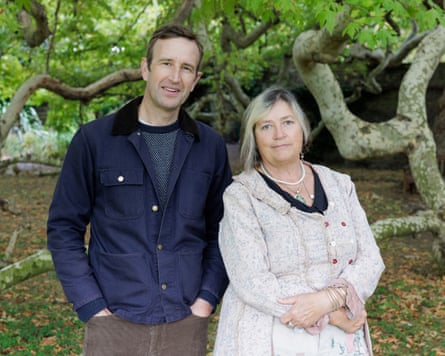
Nine years on, the pair’s new collaboration, The Book of Birds, aims to open all eyes to the wonder and peril of 49 species on the British red or amber list of declining and endangered birds. With paintings by Morris and words by Macfarlane, the book is a twist on the classic field guides that inspired both authors, evoking the spirit and poetry of birds from avocet to yellowhammer.
Morris, who has sold more than 1m books worldwide, was galvanised by the Reader’s Digest Book of British Birds as a child. “It opened my eyes to life that is not human and is around me,” she said. “I hope there are young people who will find The Book of Birds and that it gives them that anchor and also wings. I also hope it helps birds become visible to those who don’t see them. It’s more important than any other book I’ve done.”
Macfarlane said: “We wondered what a field guide or bird book would look like if it asked not ‘what is that bird?’, but ‘who is that bird?’; if it worked to help readers not only identify birds, but also identify with them. There are 3 billion fewer birds in North America than 50 years ago; 600 million fewer in Europe. Our skies are thinner, our springs quieter. This is a savage loss. We wanted, in paint and word, to pull birds back into focus and splendour – and warn against their vanishing.”
Morris, whose favourite painting in the book is of the shearwaters she watches from her home on the Welsh coast, admits she is never satisfied with her bird paintings. “Can you ever do justice to something so beautiful? The wildlife artist Charles Tunnicliffe is so much more accurate than me, but I am always chasing a life-force and the soul of a creature when I’m trying to paint.”
The book, which took seven years to make, has already inspired an exhibition at the Bodleian library, The Wonder of Birds, which opens on 6 May and features unseen work by the pioneering ornithological photographer Emma Turner, art from the legendary 19th-century American bird illustrator John James Audubon, and Percy Bysshe Shelley’s original handwritten annotations for To a Skylark.
Will The Book of Birds become another Lost Words? “I’ve never known a book to do things like the Lost Words did before,” Morris said. “I don’t think you can get that twice in a lifetime, can you? Is it going to be a catalyst for creativity in other people? I hope so.”
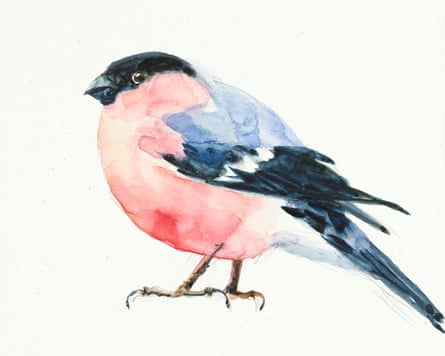
Bullfinch (Pyrrhula pyrrhula)
Plump little Bullfinch (Plum Bird, Bulldog) perched among the orchard branches, plucking at the buds. Pink little Bullfinch (Lum Budder, Blood Olp) puffing out your salmon chest and swaying as you sing. Burly little Bullfinch (staunch neck, stout beak) piping out your creaky notes, there amid the blossom. Ripe rosy Bullfinch (crisp apple, bright bauble) lighting up the winter trees, calling in the frost.
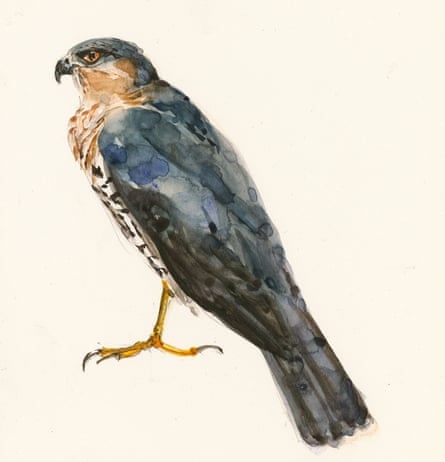
Sparrowhawk (Accipiter nisus)
Killer with the barred chest, the brown cloak, the blue hood: assassin of the bluebell wood. Fabulous, murderous Sparrowhawk, you’re the bolt loosed from the ratcheted bow, the bullet from the barrel. Whipcrack speed and utter focus: the strike’s past, the hit done, wickedly fast, before we even realize it’s begun. When you’re around, the birdworld shudders, huddles, paranoid. Alarm calls spike the air. Too late: target located, locked on, destroyed.
… I once watched as you mantled over a back-garden kill. Then your implacable, crocodile eyes flicked to mine – and the blast-doors of a furnace opened. Suburban bird-god, hawkheaded Horus, your irises are greenish-yellow when you’re young, then darken as you age, from buttercup to burnt orange, and then at last to diabolic late-day red, maximum threat, as if you were heading into your own sunset.
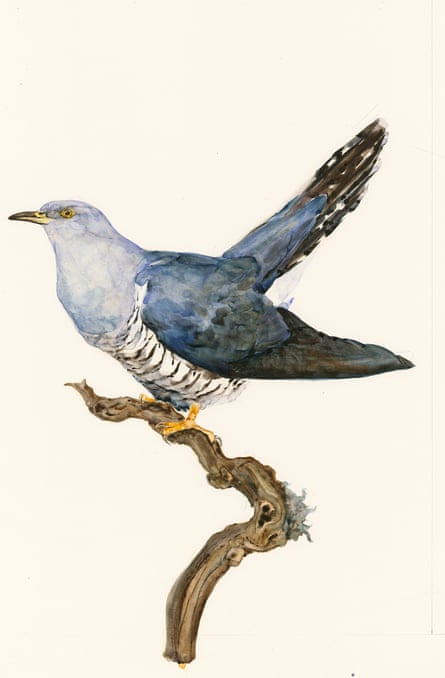
Cuckoo (Cuculus canorus)
Where to start with you, Cuckoo? Your one-two call, perhaps, from high on oak or yew, which heralds spring anew then beats out summer’s hot tattoo. The curious beauty of your feathers; their smalty blue, their smoky, petrol hue. And we must not forget, of course, the chilling trick you pull on other birds – your devious, monstrous switcheroo.
… But perhaps no other bird marks time and place the way you do. I know this for sure, Cuckoo: without you, April would not bloom so true. Year after year we prick our ears and wait to hear your call peal out clear over sea-cliff and suburb, cemetery and heath, hill and combe. There are fewer and fewer of you, Cuckoo, but it’s still the case that the first time your crooked call rings spring in, it confirms the trueness of the turning world. It’s relief, release – an exhalation. We’re still alive. We’re still here.
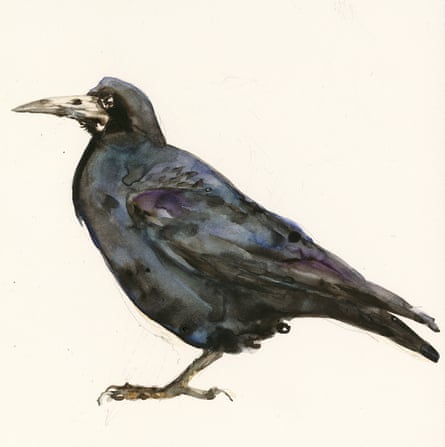
Rook (Corvus frugilegus)
Rook, Rook, everyday crook, hawker of goods, cooker of books; Rook, Rook, of the bald white bill and the barefaced cheek; Rook, Rook, blackmarketeer of the rocking, stocky, blocky gait – three hops forwards, then one away; Rook, Rook, aka the Cra, the Craw, the Caa, the Croaker, the Brandre, the Brancher, the Percher, the pale-masked ’Daw!
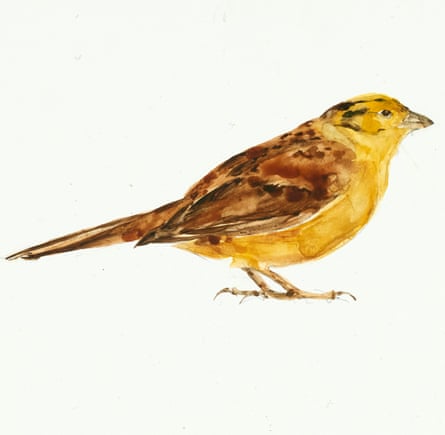
Yellowhammer (Emberiza citrinella)
Goldsmith of the hedgerows, Yellowhammer forges sunlight into coins and chains of precious metal, on the anvil of hawthorn’s leaf, spindle’s berry and blackthorn’s petal. Yellowhammer turns footpath to treasure chest, field into Wunderkammer. Yellowhammer’s a lark dipped in ochre, a scrubland canary, a twenty-four-carat sparrow. Yellowhammer doesn’t hide his light under a bush; he sings from topmost twigs, from allotment spades and sprays of broom – he fires out his witty song with its spiky clamour, its unmistakable seven short notes and one long, carried on the breeze: Little-bit-of-bread-and-no-cheese! Little-bit-of-bread-and-no-cheese!
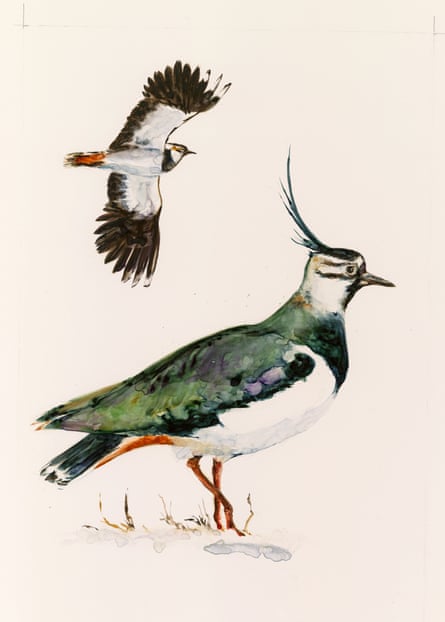
Lapwing (Vanellus vanellus)
Look – there are lapwings, facing the wind in fours and fives on fallow fields, hunkered on floodplains, floating over abandoned airfields, glimpsed from car, from train, in sunlight and rain. These are birds of farmland and marsh, lowland and levels, mud and grass and divot, who’ve followed the plough for a thousand years or more. Now, though, the great flocks of lapwings are gone, where once there were birds in such number that when they wheeled in flight it seemed the sky itself was on a pivot.
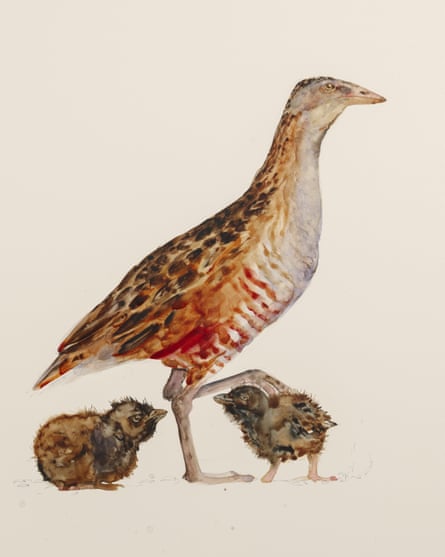
Corncrake (Crex crex)
Corncrake, that crazy, screwball caper-call of yours is also your name: crex-crex, crex-crex, crex-crex it goes, as you straighten your legs, flex your neck, then over and over and over again – a thousand times an hour or more – let rip a sound that carries a mile or six, a rasping, seismic hex that wrecks all chance of sleep; a vexing gameshow-buzzer; a gearbox grind; a pair of brief electric shocks; a no-subtext booty call; a double-blasted klaxon; plectrum on chitin; a c dragged over an x.
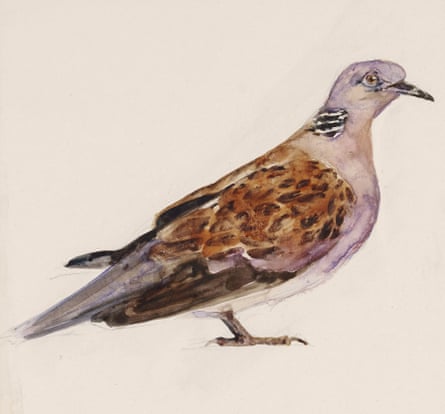
Turtle dove (Streptopelia turtur)
Heat lies heavy on the land, and high summer’s yellow stalks the meadows, leonine and patient. The river winds slow and fat through fields, cricketers move drowsy on the green, muffled bells peal from church towers, and through it all churrs the lulling, lazy plainchant of Turtle Dove – po-oorrrrrpooorrrrr-pooorrrr, po-oorrrr-pooorrrr-pooorrrr, over and over again – keeping the liturgy of hours. This is a song for daytime sleep; soft and soothing as cream; a hazy noon lullaby, a siesta dream.