

惯性聚合 高效追踪和阅读你感兴趣的博客、新闻、科技资讯
阅读原文 在惯性聚合中打开

推荐订阅源

GbyAI
GbyAI
Exploit-DB.com RSS Feed
Microsoft Security Blog
S
SegmentFault 最新的问题
Y
Y Combinator Blog
Google DeepMind News
Last Week in AI
Last Week in AI
博客园 - 聂微东
Attack and Defense Labs
T
Tailwind CSS Blog
阮一峰的网络日志
阮一峰的网络日志
月光博客
月光博客
SecWiki News
SecWiki News
Microsoft Azure Blog
小众软件
小众软件
S
Secure Thoughts
C
Check Point Blog
WordPress大学
WordPress大学
cs.CV updates on arXiv.org
Google Online Security Blog
MongoDB | Blog
MongoDB | Blog
Schneier on Security
Application and Cybersecurity Blog
Spread Privacy
Spread Privacy
IT之家
IT之家
美团技术团队
罗磊的独立博客
Google DeepMind News
博客园 - 叶小钗
Recent Announcements
云风的 BLOG
云风的 BLOG
V
Vulnerabilities – Threatpost
Security Latest
Security Latest
博客园 - 司徒正美
Cyberwarzone
Cyberwarzone
C
CERT Recently Published Vulnerability Notes
TaoSecurity Blog
TaoSecurity Blog
奇客Solidot–传递最新科技情报
奇客Solidot–传递最新科技情报
V2EX - 技术
V2EX - 技术
Vercel News
Vercel News
有赞技术团队
有赞技术团队
J
Java Code Geeks
博客园 - 【当耐特】
Project Zero
Project Zero
NISL@THU
NISL@THU
P
Privacy & Cybersecurity Law Blog
The Last Watchdog
The Last Watchdog
aimingoo的专栏
aimingoo的专栏
S
Securelist
The Cloudflare Blog

Ivan on Containers, Kubernetes, and Server-Side

A grounded take on agentic coding for production environments Server-Side Playgrounds Reimagined: Build, Boot, and Network Your Own Virtual Labs [not a] Kubernetes 101 - Pods, Deployments, and Services As an Attempt To Automate Age-Old Infra Patterns On Software Design... and Good Writing Building a Firecracker-Powered Course Platform To Learn Docker and Kubernetes How To Publish a Port of a Running Container What Actually Happens When You Publish a Container Port A Visual Guide to SSH Tunnels: Local and Remote Port Forwarding Debugging Containers Like a Pro Docker: How To Debug Distroless And Slim Containers How To Extract Container Image Filesystem Using Docker | iximiuz Labs In Pursuit of Better Container Images: Alpine, Distroless, Apko, Chisel, DockerSlim, oh my! How To Start Programming In Go: Advice For Fellow DevOps Engineers Kubernetes Ephemeral Containers and kubectl debug Command How To Develop Kubernetes CLIs Like a Pro Docker Container Commands Explained: Understand, Don't Memorize | iximiuz Labs Learning Docker with Docker - Toying With DinD For Fun And Profit How To Extend Kubernetes API - Kubernetes vs. Django The Influence of Plumbing on Programming How To Call Kubernetes API from Go - Types and Common Machinery How To Call Kubernetes API using Simple HTTP Client Kubernetes API Basics - Resources, Kinds, and Objects OpenFaaS - Run Containerized Functions On Your Own Terms Learning Containers From The Bottom Up Docker Containers vs. Kubernetes Pods - Taking a Deeper Look | iximiuz Labs Learn-by-Doing Platforms for Dev, DevOps, and SRE Folks How HTTP Keep-Alive can cause TCP race condition How to Work with Container Images Using ctr | iximiuz Labs Multiple Containers, Same Port, no Reverse Proxy... Exploring Go net/http Package - On How Not To Set Socket Options Disposable Local Development Environments with Vagrant, Docker, and Arkade DevOps, SRE, and Platform Engineering My Choice of Programming Languages Prometheus Is Not a TSDB How to learn PromQL with Prometheus Playground Prometheus Cheat Sheet - Basics (Metrics, Labels, Time Series, Scraping) Rust - Writing Parsers With nom Parser Combinator Framework pq - parse and query log files as time series Prometheus Cheat Sheet - Moving Average, Max, Min, etc (Aggregation Over Time) Prometheus Cheat Sheet - How to Join Multiple Metrics (Vector Matching) The Need For Slimmer Containers Understanding Rust Privacy and Visibility Model Bridge vs. Switch: Takeaways from a Real Data Center Tour | iximiuz Labs From LAN to VXLAN: Networking Basics for Non-Network Engineers | iximiuz Labs KiND - How I Wasted a Day Loading Local Docker Images Go, HTTP handlers, panic, and deadlocks Exploring Kubernetes Operator Pattern Making Sense Out Of Cloud Native Buzz Service Discovery in Kubernetes: Combining the Best of Two Worlds API Developers Never REST How Container Networking Works: Building a Bridge Network From Scratch | iximiuz Labs Traefik: canary deployments with weighted load balancing Service Proxy, Pod, Sidecar, oh my! You Need Containers To Build Images You Don't Need an Image To Run a Container Not Every Container Has an Operating System Inside Working with container images in Go Master Go While Learning Containers Implementing Container Runtime Shim: Interactive Containers How to use Flask with gevent (uWSGI and Gunicorn editions) My 10 Years of Programming Experience Implementing Container Runtime Shim: First Code Implementing Container Runtime Shim: runc Kubernetes Repository On Flame Dealing with process termination in Linux (with Rust examples) conman - [the] Container Manager: Inception Journey From Containerization To Orchestration And Beyond Linux PTY - How docker attach and docker exec Commands Work Inside Illustrated introduction to Linux iptables From Docker Container to Bootable Linux Disk Image Пишем свой веб-сервер на Python: протокол HTTP 9001 способ создать веб-сервер на Python Explaining async/await in 200 lines of code Explaining event loop in 100 lines of code Save the day with gevent Пишем свой веб-сервер на Python: процессы, потоки и асинхронный I/O Truly optional scalar types in protobuf3 (with Go examples) Node.js Writable streams distilled Node.js Readable streams distilled How to on starting processes (mostly in Linux) Дайджест интересных ссылок – Июль 2016 Пишем свой веб-сервер на Python: сокеты Наследование в JavaScript Мастерить!
JavaScript or TypeScript? How To Benefit From the Dichotomy
Ivan Velichko · 2023-09-09 · via Ivan on Containers, Kubernetes, and Server-Side

The recent post by DHH regarding their decision to drop TypeScript support in Turbo 8 has suddenly made everyone eager to express their opinion on the TypeScript vs. JavaScript dilemma, and I'm no exception. Hell, I don't even know what Turbo 8 is, but I feel like I have something to share too. Just a few weeks ago I migrated one of my two biggest projects to TypeScript while keeping the other one using JavaScript, and this is exactly how I like it to be, for now.
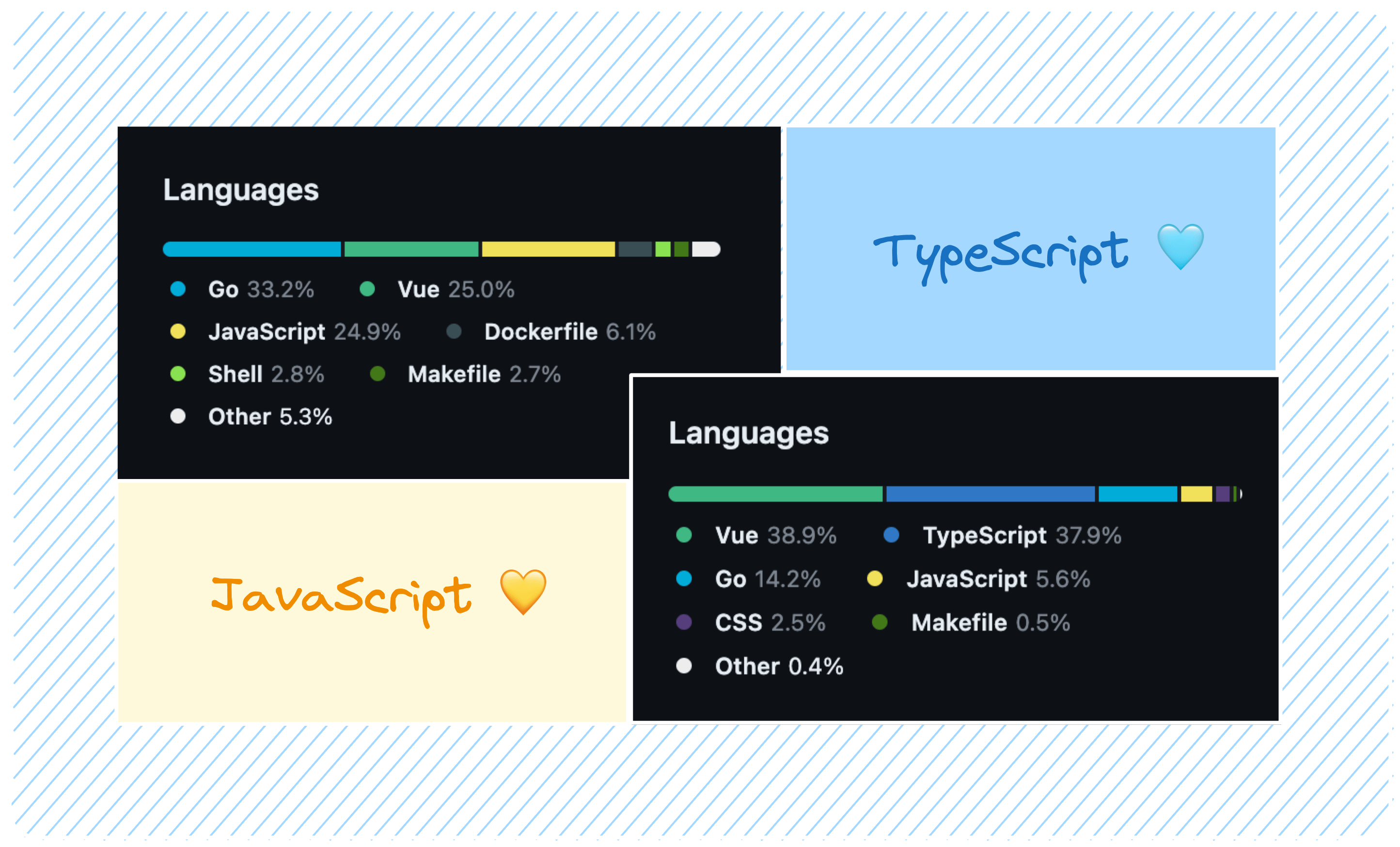
JavaScript vs. TypeScript

Level up your server-side game — join 20,000 engineers getting insightful learning materials straight to their inbox.

Before explaining my motives, let me make it clear - I love the rigor of static typing, and I also love the ease of dynamic typing. After spending years writing PHP, Python, JavaScript, TypeScript, Go, and a little bit of Java and Rust, I have learned to appreciate both paradigms. I thoroughly enjoy cracking my brain to get the types right, then reveling in the guard rails they provide, as well as fully embracing the freedom of a dynamic type system to piece things together quickly. It's simply two different kinds of joy for me.

However, what I enjoy even more is pragmatism. The main goal is to move fast at every stage of project development, and if that means a change in technology, so be it.

Now, back to my recent experience. Since last December, I've been working on two substantially sized frontend projects: a typical "website" with an API behind it, and a less typical highly dynamic Kubernetes Explorer single-page app.

I'm no professional frontend developer, and my strategy for building UIs has always been, "Keep changing the code until it somehow works, and the fewer obstacles there are along the way, the better." Despite my respect and love for statically typed languages, in the early stages of development, when the codebase can be fully rewritten multiple times in a week, types can be an obstacle. That's why I started both of these projects with JavaScript.

Nine months in, I'm still very happy with using JavaScript for the "website". The project is a combination of the UI (Vue) and the API (Nuxt) components. The UI components are plentiful but simple - most of the time, when I discover a UI regression, it's due to changes in CSS or HTML, not because I messed up with the code. The API is less trivial - the traditional backend for frontend (BFF) logic like authorization/authentication, data transformation, etc. is intertwined with custom course management and fleet orchestration logic and distributed across several dozens of API handlers. Such an architecture (or lack thereof) could have significantly slowed down development, but unlike the UI components, the API surface is a much more stable domain. Writing black-box tests for it was a no-brainer. Initially, these tests were intended to be an acceptance suite that would check the system end-to-end, including components far beyond the JavaScript API (i.e., upstream services). But over time, they also became the primary means of validating changes to the JavaScript code. I couldn't be happier with the current state of affairs in this project - achieving several goals with just one set of tests and without the need for heavy TypeScript machinery, how can it be better?
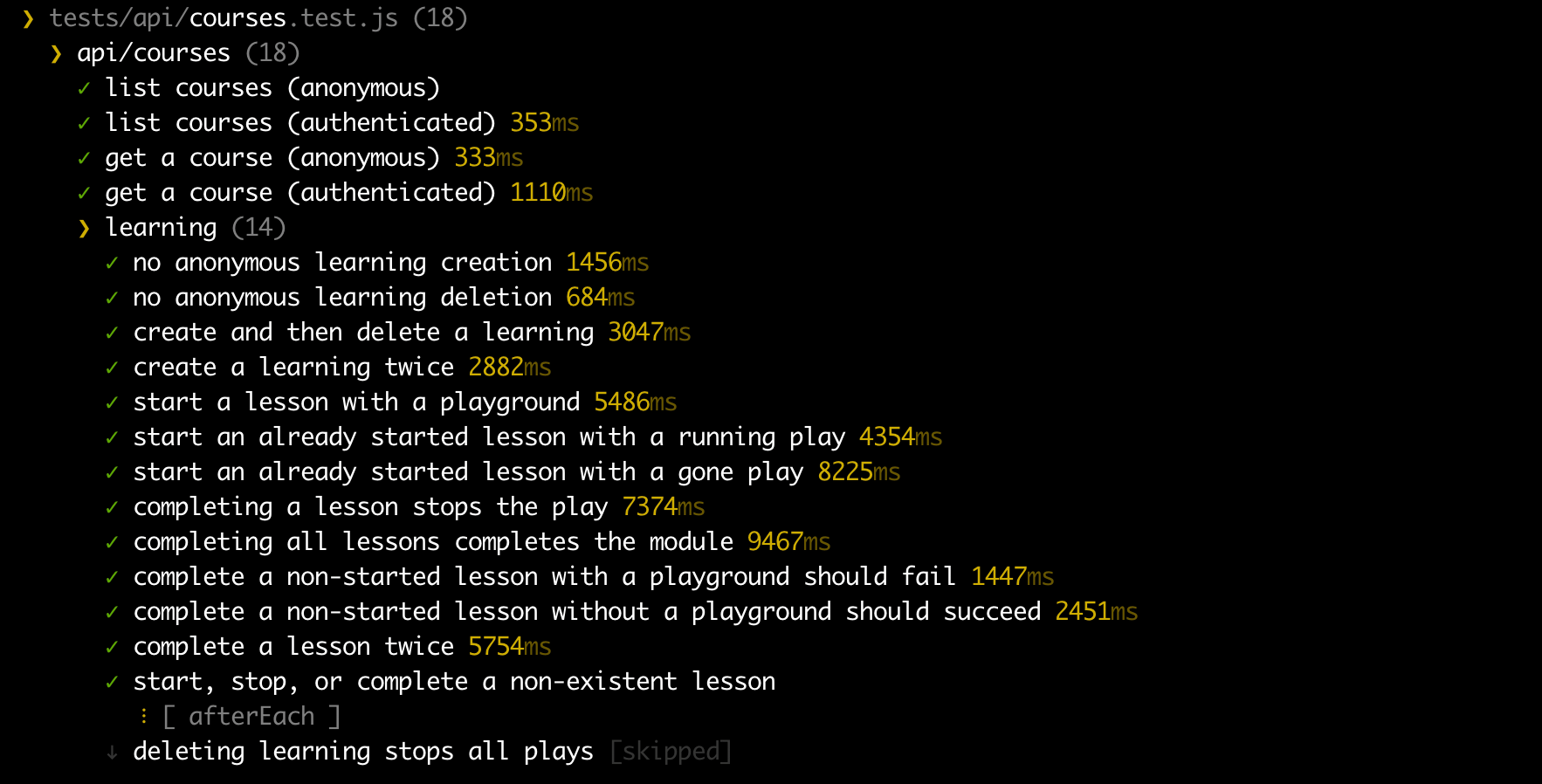
JavaScript e2e test run results.

So, why did I decide to migrate my other project, the Kubernetes Explorer SPA, to TypeScript then?

The answer lies in the different set of constraints and requirements this project presents. Unlike the iximiuz Labs website, where the main complexity is concentrated in the API layer, the Kubernetes Explorer's trickiest part is its UI components. The main logic of the Explorer resides in the browser-run code, and it's no trivial matter. Dealing with numerous attributes or constructing complex graphs of Kubernetes objects without type hints is tedious, and refactoring such a codebase without type checks or tests has proven to be extremely error-prone.
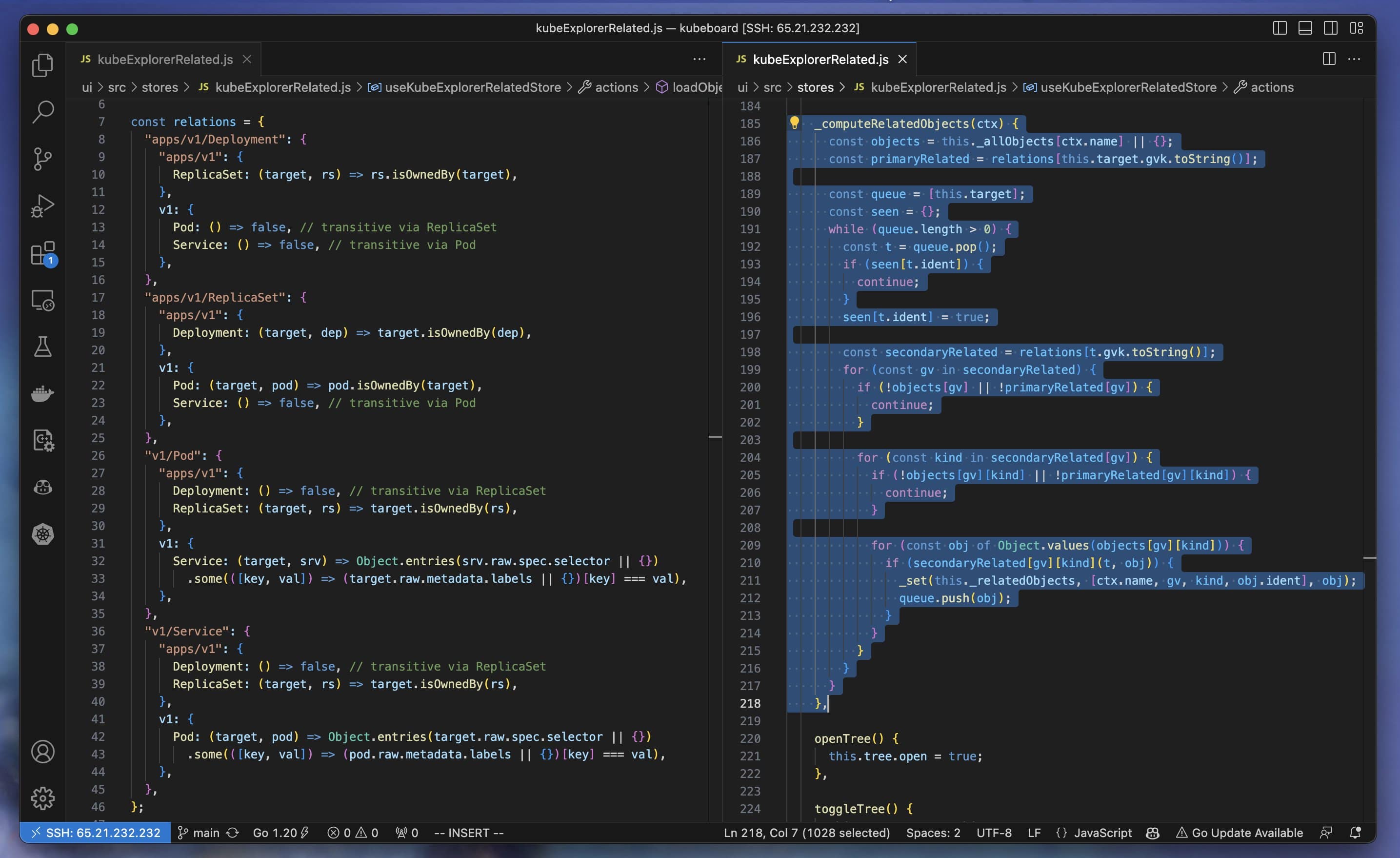
Kubernetes related objects graph computed in JavaScript.

After yet another massive change to the Explorer's UI - where regression hunting took me longer than the actual rewrite - I decided it was time to enhance the developer experience. Essentially, I had two options: start writing tests for the UI components or introduce types.

Tests are fantastic, and they worked well with my other project, but from previous experience, for a rapidly changing domain, the downsides of having tests can often outweigh the benefits. Maintaining the test suite can become a real burden, and developers tend to grow attached to highly-tested components, making them difficult to discard when they no longer fit well the UI.

At the same time, most of the regressions I've encountered in the project so far were due to missing attributes or objects of one shape being accidentally passed to a function expecting differently shaped objects – issues typically prevented with the help of a compiler. Hence, I decided to migrate the project to TypeScript and, for now, keep the number of tests minimal. Two weeks and three rewrites later, I couldn't be happier with my choice.

Will I add more UI tests to the Kubernetes Explorer in the future? Possibly. Will I migrate the website to TypeScript? Maybe. Will I revert to JavaScript for this app one day? Yes, if I find that it helps me progress faster.

Of course, your mileage may vary. The nature of projects varies greatly, and there is no one-size-fits-all language or solution. My advice? Stay pragmatic, choose your tools optimally, and avoid dogma. Ship fast and live long 🖖

Level up your server-side game — join 20,000 engineers getting insightful learning materials straight to their inbox: