




Companies spend millions of dollars in time and money trying to build internal tools. These range from lightweight automations and dashboards to fully custom systems with dedicated engineering teams.
Most businesses can’t justify focusing developers on bespoke operational tools, so non-technical teams resort to brittle and insecure workarounds: custom Salesforce formulas and fields, complex workflow automations, spreadsheets, and spiderwebs of integrations across platforms. They are trying to build software without actually building software, and most of the tools end up collecting dust.
v0’s AI agent changes this equation. Business users can build and publish real code and apps on the same platform that their developers use, safely integrate with internal and external systems, and secure everything behind existing SSO authentication.
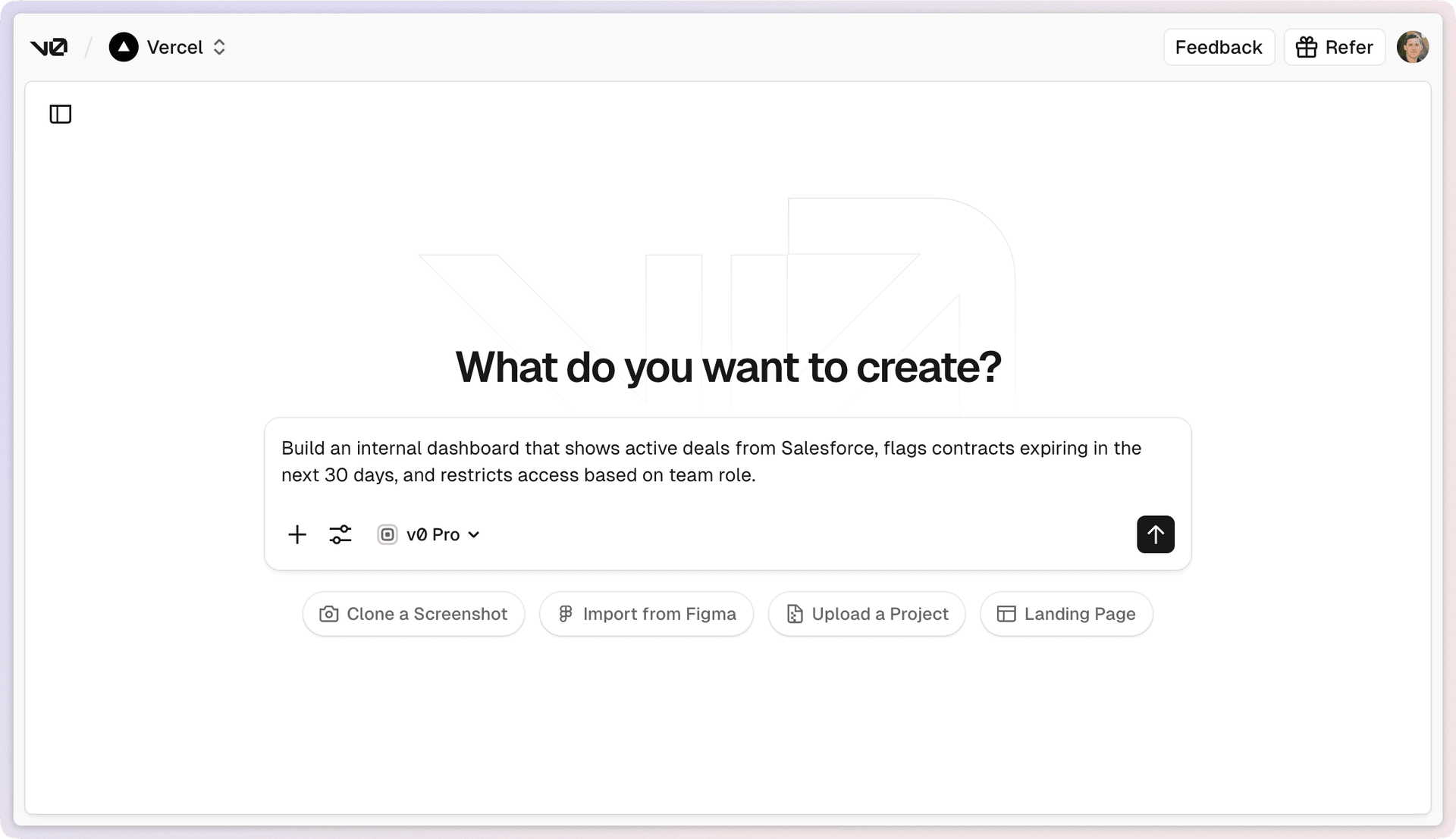
Link to headingWhy most internal tools fail
The same business process can vary significantly from company to company, so the internal systems used to support them must be highly customized. These differences can range from nuances in the stages of a sales cycle to product and pricing details, internal team structure, and data definitions. And each of these variables changes as the business grows.
When it comes to actually building, these requirements translate into technical questions about data models and types, API integrations, and custom logic as code. And this is on top of the security concerns related to user access and sensitive company data. The value is clear to the business users, but the cost is too high to justify pulling engineers off the roadmap.
When a tool does get built, maintenance is time-consuming and often requires tribal knowledge from a developer or ops expert, meaning ownership wanes, updates aren’t implemented when processes change, and the system is abandoned.
Link to headingAI agents turn requirements into apps
Modern AI agents like v0 close the gap between business user needs and custom, production-ready code.
Before AI, the problem wasn’t what to build, it was how to build and maintain it. With v0, business users can tell the agent what they want to build, and their tool will be generated with clean, auditable code. Here are several examples of internal tools we've built with v0 at Vercel:
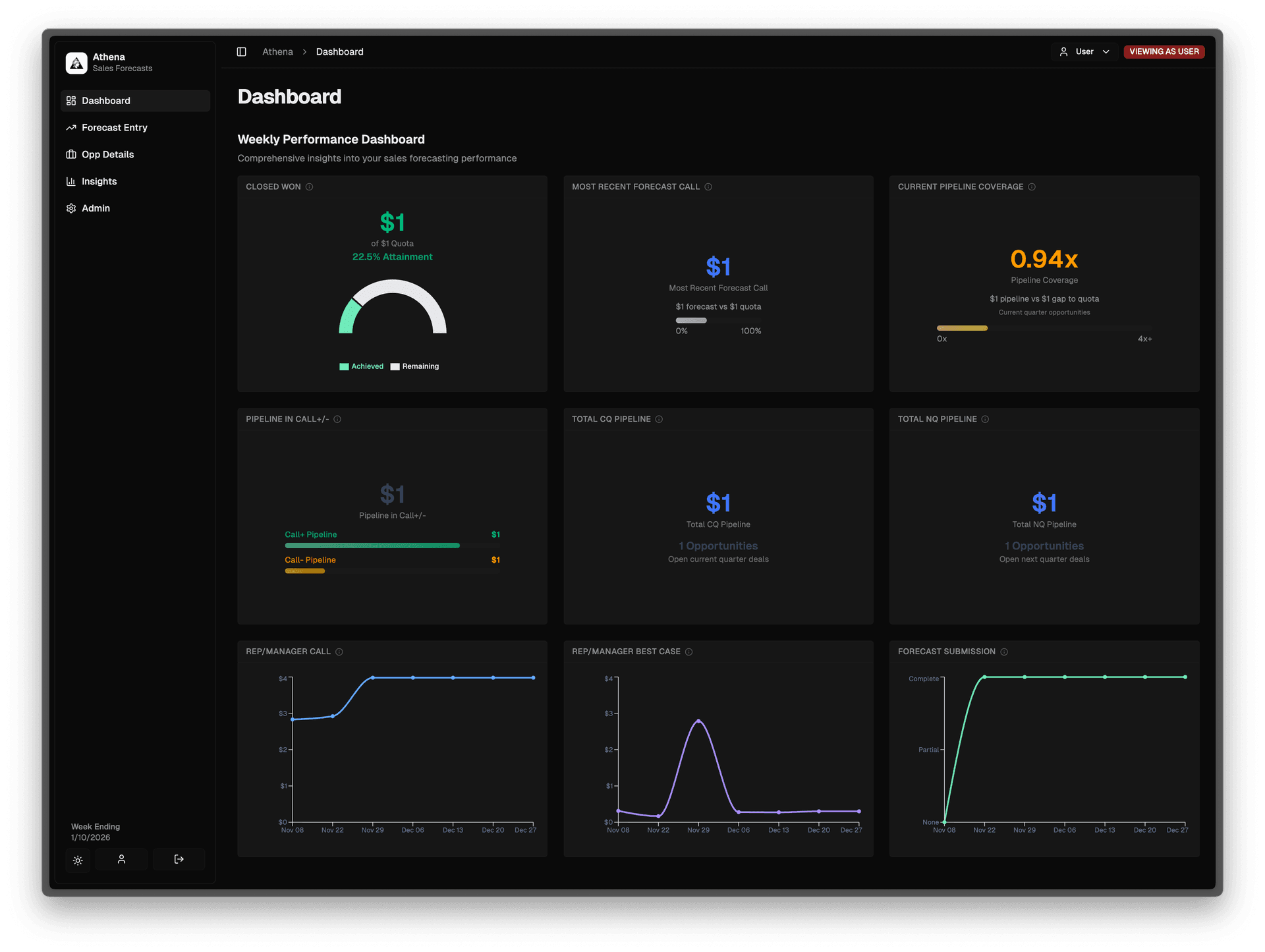
Sales forecasting: We tried multiple sales forecasting tools, but each one was limited in the data it could ingest, which meant model accuracy faced an inherent ceiling. Our team built an internal forecasting tool that utilizes data from every relevant source, significantly improving accuracy.
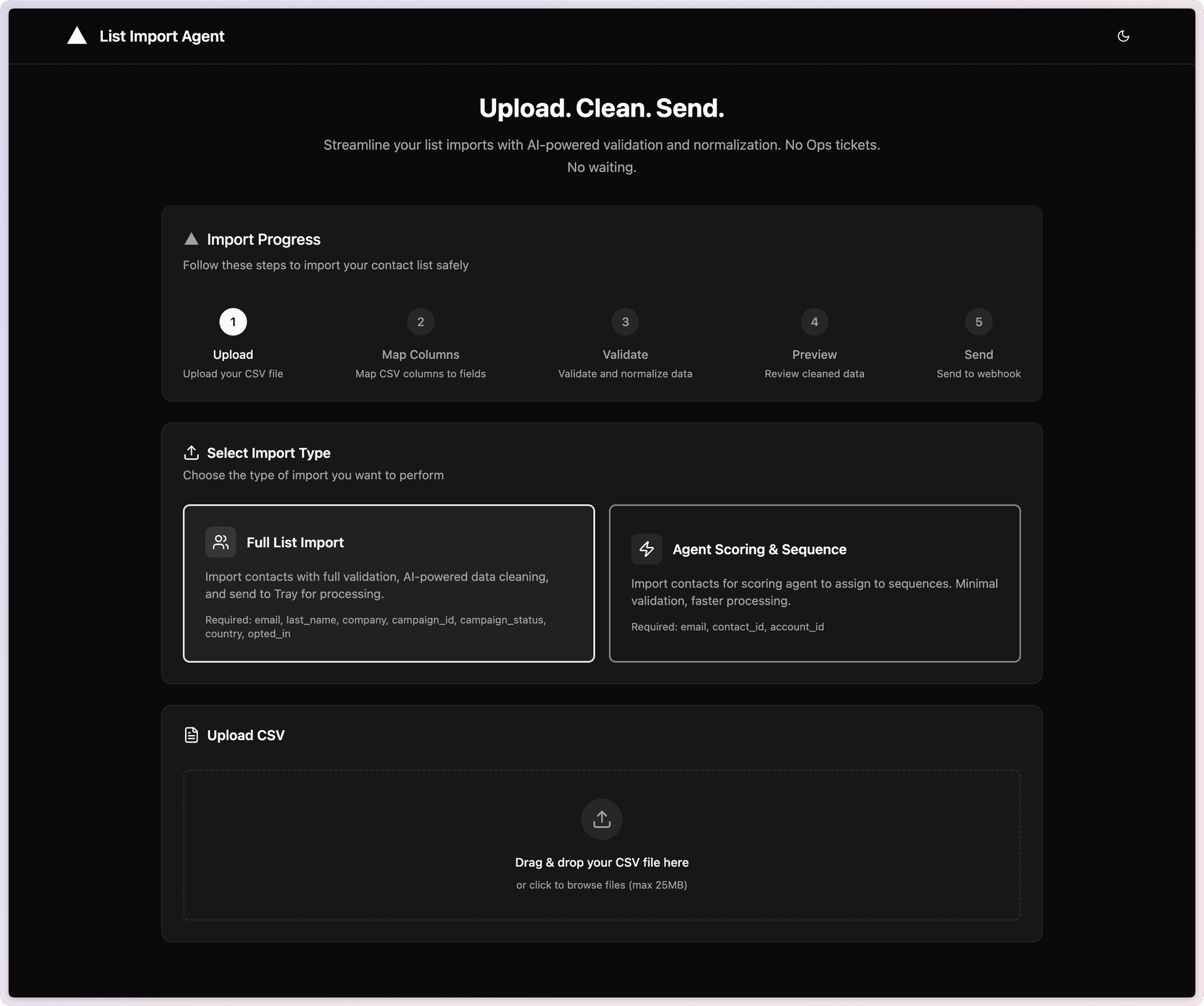
Marketing lead list import: Importing leads from events, campaigns, and other systems was traditionally a manual, spreadsheet-based process that required post-import human cleanup every time. We built a tool that uses AI to clean emails against our own data, then scores each lead so that they are segmented correctly on the first import. Now our marketing can import lists from any source quickly and safely.
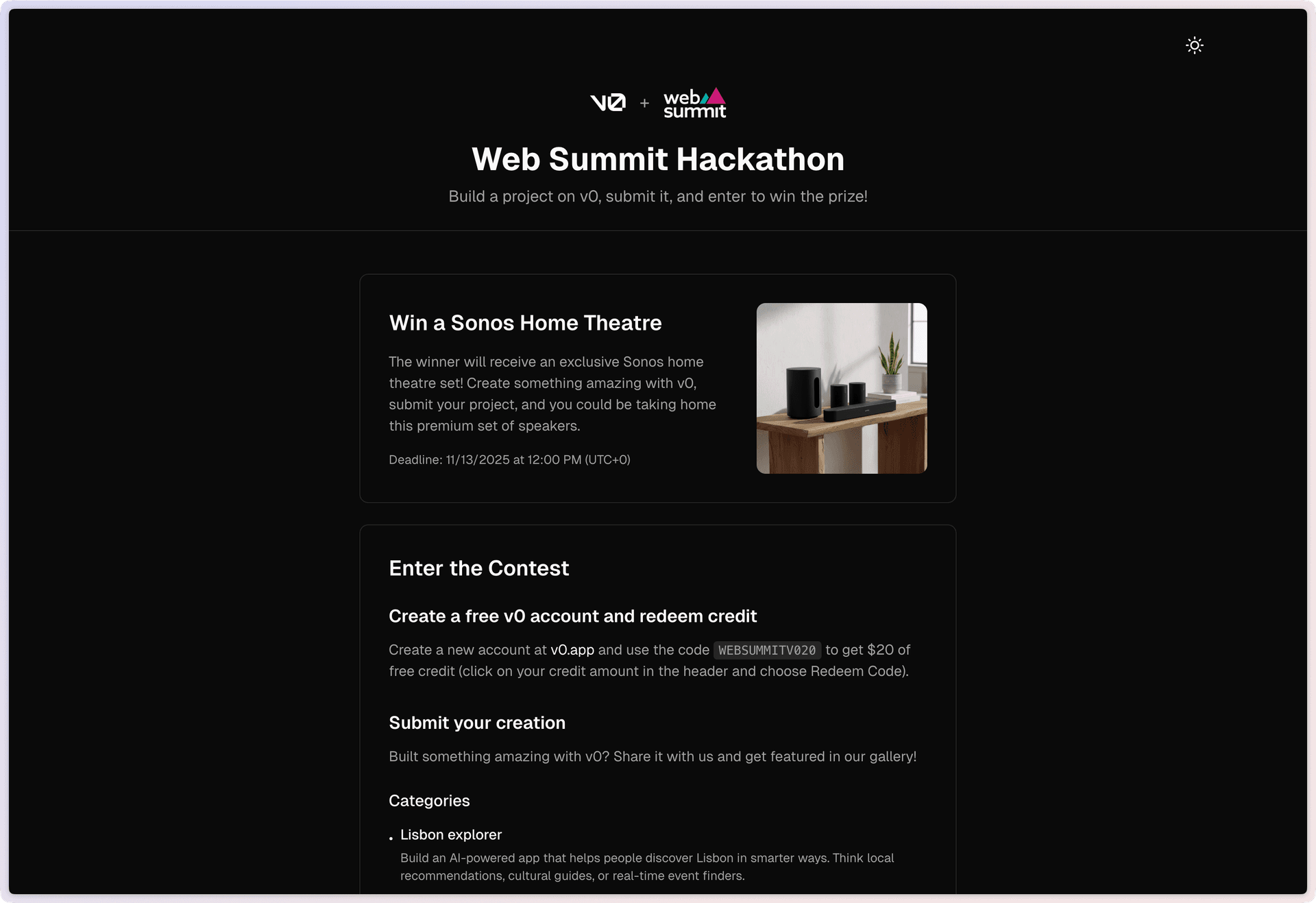
Custom event marketing pages: Our marketing team runs hackathons and other activations at events. We built a v0 template that can be replicated and customized for each event, including a backend for approving hackathon submissions. Our marketing team can replicate the template and customize it for any event without design or development help.
Link to headingFrom idea to deployment
After testing tools in a sandbox, v0 users can publish their app to a secure, enterprise-grade environment on Vercel for the rest of the company to use. Most importantly, these business users aren’t working independently of engineering. They are building and deploying on the same enterprise-grade platform as their engineering team. The code is auditable, every change is logged, and deployment is configurable.
Instead of widening the gap between non-technical users and developers, v0 enables them to work together in the way they always wished they could.
Link to headingHow v0 makes internal tools simple and secure
When internal tools are built by engineers, they rely on secure coding practices, correct auth implementation, and careful handling of secrets and data.
v0 bakes those primitives into the platform for business users, meaning their tools are safe and scalable from the start.
Link to headingAccess control is automatically enforced, not assumed
Internal tools can’t rely on every builder to correctly implement authentication, authorization, and secret management. A single mistake can expose sensitive company data.
v0 enforces security at the platform level. Applications authenticate through the company’s existing identity provider, and access controls are applied automatically, even if the application code never explicitly implements auth.
Link to headingInfrastructure is safe by default, regardless of code
If applications don’t consistently follow security best practices, the environment they run in must compensate. Otherwise, every tool becomes a potential liability.
v0 runs applications in Vercel’s secure-by-default environment. Protection from public exposure, authentication, and data flow guardrails are handled by the platform, not left up to individual implementations.
Link to headingSecure integration and data access are built in, not bolted on
Internal tools are only useful if they can access the systems teams already rely on, but custom integrations are slow to build and hard to maintain.
v0 provides built-in access to common internal and external systems, from databases and warehouses to SaaS tools and internal APIs. Builders describe what data they need and how it should be used, without having to design or maintain the integration layer themselves.
Even when integrations are simple to implement, it’s easy for the builder to accidentally overexpose data to the wrong audience.
In v0, data access is evaluated at runtime based on the viewer’s privileges. A dashboard creator can’t grant access they don’t have, and permissions always reflect the user viewing the application.
Link to headingGuardrails prevent accidental exposure
Internal tools frequently become dangerous not because of bad intent, but because of small, accidental misconfigurations that go unnoticed.
v0 makes this entire class of mistakes impossible. Applications can’t be accidentally exposed to the public internet, and sensitive data can’t be accessed outside approved identity and permission boundaries.
Link to headingMaintenance is simple and changes are reversible
Most internal tools decay over time. They depend on tribal knowledge, break when upstream systems change, and become unmaintainable as soon as the original builder moves on.
Because v0 applications are real code, built on the same platform and primitives as production systems, they can be updated, reviewed, and maintained alongside the rest of the codebase. Changes don’t require rediscovering undocumented logic or reverse-engineering fragile integrations, which keeps tools usable long after the first version ships.
If modifications are problematic, users can instantly roll back to the previous version of the application.
Link to headingBuild the internal tools of the future, today
With v0, your CTO and CISO don't have to choose between shipping fast and shipping securely, or pull engineering resources off of the core roadmap.
Your team doesn’t have to copy and paste between Sheets, Slides, and internal portals. They don’t have to download CSVs from Snowflake and upload them to Salesforce. And they don’t have to manually maintain workflows across disconnected SaaS platforms.
You can build exactly what you need in minutes and connect data across systems without waiting for engineering. The applications run inside a controlled environment, their sensitive data stays protected, and everything is logged.
Ship your first internal tool today using one of our templates:
Use the Shadcn Dashboard template to quickly build out internal reporting tools
Connect the AI Chatbot starter template to internal systems and data
Try the AI ad creator template to generate video marketing assets