
惯性聚合 高效追踪和阅读你感兴趣的博客、新闻、科技资讯
阅读原文 在惯性聚合中打开

推荐订阅源

J
Java Code Geeks
腾讯CDC
Jina AI
Jina AI
博客园 - 司徒正美
博客园 - 三生石上(FineUI控件)
Apple Machine Learning Research
GbyAI
GbyAI
WordPress大学
WordPress大学
Hugging Face - Blog
Hugging Face - Blog
T
The Blog of Author Tim Ferriss
小众软件
小众软件
M
MIT News - Artificial intelligence
MyScale Blog
MyScale Blog
D
Docker
H
Hackread – Cybersecurity News, Data Breaches, AI and More
Google DeepMind News
月光博客
月光博客
L
LangChain Blog
F
Fortinet All Blogs
Microsoft Azure Blog
博客园 - Franky
C
Check Point Blog
U
Unit 42
人人都是产品经理
人人都是产品经理

VMware Blogs

Diagnostics for VMware Cloud Foundation (VCF) 9.1 with Old Versions of VCF Components Mastering Infrastructure Policies in VMware Cloud Foundation Automation 9.1 Modernizing the Private Cloud: Why VCF 9.1 Lifecycle Management is a Game Changer Announcing the VMware Cloud Foundation 9.1 Upgrade Planning Tool VCF Breakroom Chats Episode 86 – Containers Made Easy: The New “Container-as-a-Service” in VCF 9.1 Securing Your VCF 9.1 Infrastructure with the Symantec Identity Security Platform Virtually Speaking: The AI Reality Check with Dave Linthicum Zero Touch Provisioning: Activating Edge Sites with VMware Cloud Foundation Edge 9.1 VCF Breakroom Chats Episode 85 – Cloning Success at Scale: Inside VCF 9.1’s App Stack Formation VMware Cloud on AWS の使用状況を確認できる API Unlocking the Full Potential of Programmable Infrastructure with VMware Cloud Foundation 9.1 – New Features and Capabilities Smarter Patching at Scale: Vulnerability Assessment and Remediation with VMware Tanzu Platform Encrypted vMotion Offload to Intel QAT in VMware Cloud Foundation 9.1 Deepen Your Expertise: Four Key Benefits of Attending Increase Deployment Flexibility with VCF Edge Automation 1.0.3 Avi Advantage: Automating Certificate Management of VCF Workloads More Memory, Less Effort: Configuring Memory Tiering in VCF 9.1 VCF 9.1 Licensing: Programmatic, Centralized, and Built to Scale Why APJ Networking Professionals Need Private Cloud Expertise VCF 9.1 Networking: Simpler VPC Connectivity Control VCF 9.1 Networking: Exploring Network Services for Virtual Private Clouds The Open Source Advantage: Building from Source for Ultimate Security Expand Shared VMDKs with Clustered Applications in VMware vSAN for VCF 9.1 Monetizing Zero-Trust Security with VCF 9.1 and VMware vDefend VMware vSAN Protection and Recovery Enhancements for VCF 9.1 Deliver Production SQL Server DBaaS with VMware Data Services Manager 9.1 Maximizing Profitability: VCF 9.1 Cost-Focused Approach for VMware Cloud Service Providers Modernizing Your Infrastructure: Introducing VMware Cloud Foundation 9.1 to VCSPs VCF 9.1 is Available: Explore the New Features in Hands-on Labs What’s New with vSphere in VMware Cloud Foundation 9.1?
VCF Networking 9.1: Seamless DDI Integration with Infoblox
vmwareblogs · 2026-05-16 · via VMware Blogs

VMware Cloud Foundation (VCF) provides a robust suite of self-service networking capabilities (as covered in our VCF Networking 9.1 post Network Services), including native IP Address Management (IPAM).

However, the reality for many enterprise environments is that they already rely on an established, third-party tool to manage the IP addresses and DNS records across their broader data centers. One of the most popular industry standards for this is Infoblox.

In this post, we are highlighting a highly anticipated feature introduced in VCF 9.1: Native Integration with Infoblox.

The Challenge of Disconnected IPAM

Historically, keeping a cloud environment synced with an external IPAM solution meant friction.

When application owners requested new networks or workloads, it often required manual helpdesk tickets, waiting on network teams to allocate IP blocks, and manually updating DNS entries.

This disconnected approach slowed down self-service provisioning and increased the risk of IP conflicts.

A Unified DDI Experience

With VCF 9.1, VMware bridges this gap by delivering a unified DDI (DNS, DHCP, and IPAM) experience directly integrated with Infoblox.

This integration empowers your cloud teams while keeping your network and security teams happy. Here is how it transforms the provisioning workflow:

  • A Single Source of Truth: You no longer have to manage split IPAM databases. Infoblox remains the central, synchronized authority for all IP addresses across your entire data center.
  • Autonomous Provisioning: vCenter administrators and VCF Automation (VCF-A) tenants can autonomously provision networks on demand. VCF handles the background communication with Infoblox to automatically allocate and reserve the necessary IP blocks.
  • Self-Service DNS: It is not just about IP addresses. When VCF-A tenants deploy workloads, Fully Qualified Domain Name (FQDN) entries are automatically registered and provisioned in Infoblox DNS.

Ultimately, this integration allows you to maintain the strict governance and centralized visibility of Infoblox, while fully unlocking the agile, self-service cloud consumption that VCF is designed to deliver.
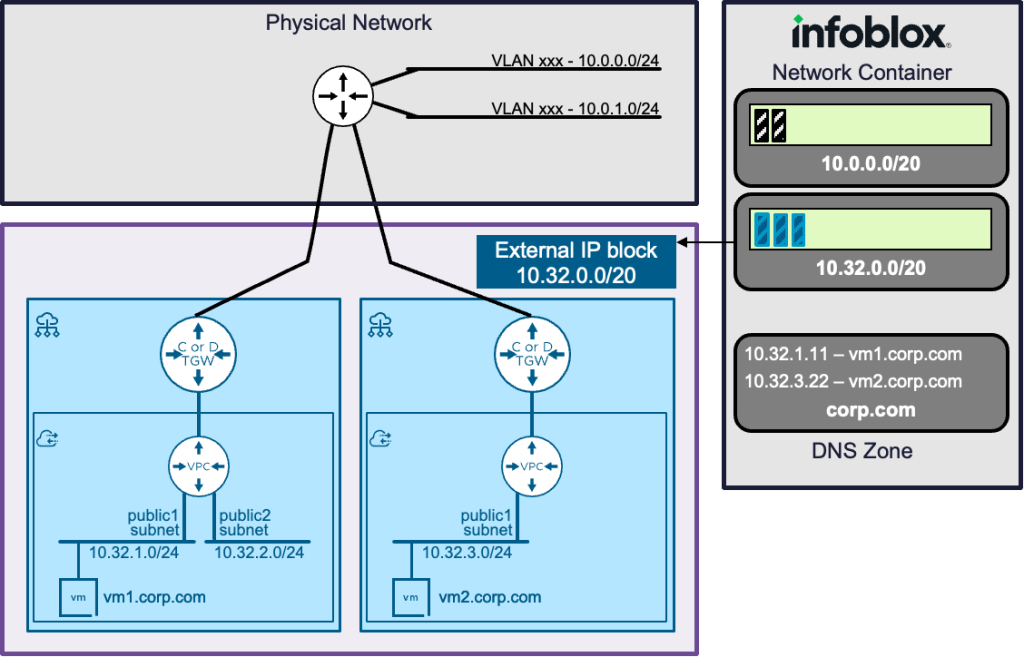
Want to see how this integration looks under the hood?
Check out our quick demo video below showing the automated provisioning process in real-time.

Discover more from VMware Cloud Foundation (VCF) Blog

Subscribe to get the latest posts sent to your email.