


惯性聚合 高效追踪和阅读你感兴趣的博客、新闻、科技资讯
阅读原文 在惯性聚合中打开

推荐订阅源

L
LINUX DO - 最新话题
cs.CV updates on arXiv.org
PCI Perspectives
PCI Perspectives
cs.AI updates on arXiv.org
K
KPMG report finds enterprise disconnect between AI and its ROI | CIO
H
Heimdal Security Blog
S
Security @ Cisco Blogs
N
News | PayPal Newsroom
J
Java Code Geeks
罗磊的独立博客
Security Archives - TechRepublic
N
News and Events Feed by Topic
V
V2EX
WordPress大学
WordPress大学
Google Online Security Blog
N
News and Events Feed by Topic
www.infosecurity-magazine.com
月光博客
月光博客
AI
AI
小众软件
小众软件
The GitHub Blog
The GitHub Blog
MongoDB | Blog
MongoDB | Blog
A
Arctic Wolf
CTFtime.org: upcoming CTF events
美团技术团队
Threat Intelligence Blog | Flashpoint
Exploit-DB.com RSS Feed
Hacker News - Newest:
Hacker News - Newest: "LLM"
T
Tailwind CSS Blog
S
Schneier on Security
博客园 - 三生石上(FineUI控件)
F
Full Disclosure
B
Blog RSS Feed
Forbes - Security
Forbes - Security
S
SegmentFault 最新的问题
钛媒体:引领未来商业与生活新知
钛媒体:引领未来商业与生活新知
人人都是产品经理
人人都是产品经理
云风的 BLOG
云风的 BLOG
Jina AI
Jina AI
Cisco Talos Blog
Cisco Talos Blog
U
Unit 42
Project Zero
Project Zero
H
Hacker News: Front Page
Y
Y Combinator Blog
Application and Cybersecurity Blog
The Cloudflare Blog
大猫的无限游戏
大猫的无限游戏
S
Secure Thoughts
The Hacker News
The Hacker News
Microsoft Azure Blog

Tenable Blog

SharePoint CVEs FAQ: CVE-2026-56164, CVE-2026-32201, CVE-2026-45659 | Tenable® Build agentic AI security at Tenable Swarm, Black Hat 2026 SonicWall CVE-2026-15409 and CVE-2026-15410 zero-day exploited | Tenable® Understanding Anthropic’s new AI agent Claude Tag’s access model in Slack 5 reasons to integrate AppSec data with your exposure management platform July 2026 Patch Tuesday: Largest Patch Tuesday 569 CVEs FedRAMP High, IL5, and zero trust: How federal agencies can secure cloud environments OMB M-26-14: Why federal agencies must fix asset visibility first CISO’s guide to CISA BOD 26-04 and risk-based security metrics for vulnerability management How much cyber risk does AI create for organizations? 457 million security issues. Here’s what you can do about it. The Developer Credential Economy: An inside look at the Miasma worm campaign Oracle Critical Security Patch Update June 2026 | Tenable® How Tenable helps federal agencies comply with CISA BOD 26-04 Get critical cyber risk context: Understanding control validation, CTEM & Tenable One CISA BOD 26-04: Frequently asked questions about the new risk-based patching directive Microsoft’s June 2026 Patch Tuesday Addresses 198 CVEs ( CVE-2026-49160, CVE-2026-50507) The June 2026 AI Executive Order: What federal agencies need to know and how Tenable can help Tenable joins Anthropic’s Project Glasswing to advance AI-era cyber defense Tenable CTO Vlad Korsunsky Q&A: Countering AI threat multipliers with AI-powered exposure management | Tenable CTO Q&A: C-suite views AI as massive threat, as cyber teams adopt exposure management to counter AI attacks Oracle May 2026 Critical Security Patch Update Addresses 35 CVEs Download pumping: New npm deception technique for supply chain attacks Inside the customer environment: Where threat actors, vulnerabilities, and exposed assets intersect EXPOSURE 2026 prepares cybersecurity professionals for the AI era Mini Shai-Hulud: Frequently asked questions about the TeamPCP npm and PyPI supply chain campaign CVE-2026-9082: Highly Critical SQL Injection Vulnerability in Drupal Core (SA-CORE-2026-004) Tenable One deepens third-party integrations with new Open Connector for unified risk visibility Implement agentic AI in cybersecurity with Tenable Hexa AI: Reduce cyber risk at machine speed Key findings from the Verizon DBIR 2026: Slower vulnerability remediation meets faster exploitation Frequently asked questions about the continued exploitation of Cisco Catalyst SD-WAN vulnerabilities (CVE-2026-20182) Bring out your dead: How agentic AI for cybersecurity helps you rid your cloud of forgotten, risky assets Fragnesia (CVE-2026-46300): Frequently asked questions about new Linux Kernel XFRM ESP-in-TCP privilege escalation Securing data centers in the agentic AI era Microsoft’s May 2026 Patch Tuesday Addresses 118 CVEs (CVE-2026-41103) Dirty Frag (CVE-2026-43284, CVE-2026-43500): Frequently asked questions about this Linux kernel privilege escalation vulnerability chain Why the approaching flood of vulnerabilities changes everything — and what to do about it The AI-vs-AI battle is already happening. Watch it live at EXPOSURE 2026. Security for AI: A strategic framework for closing the AI exposure gap Vulnerability remediation: Match CVEs to asset owners in seconds with Tenable Hexa AI Bridging the gap: How to integrate Claude Security into the Tenable One Exposure Management Platform Copy Fail (CVE-2026-31431): Frequently asked questions about Linux kernel privilege escalation vulnerability Mastering agentic AI security through exposure management As the NVD scales back CVE enrichment, here’s what Tenable customers need to know Five steps to become Mythos ready Oracle April 2026 Critical Patch Update Addresses 241 CVEs Beating the Mythos clock: Using Tenable Hexa AI custom agents for automated patching Unlocking foundational visibility for cyber-physical systems with OT vulnerability management Claude Mythos: Prepare for your board’s cybersecurity questions about the latest AI model from Anthropic Microsoft’s April 2026 Patch Tuesday Addresses 163 CVEs (CVE-2026-32201) Crushing the Axios supply chain threat with Tenable Hexa AI: Use cases for agentic AI What to Know About CyberAv3ngers: The IRGC-Linked Group Targeting Critical Infrastructure CVE-2026-35616: Fortinet FortiClientEMS improper access control vulnerability exploited in the wild The developer credential economy: Why exposure data is the new front line in the supply chain war Frequently Asked Questions About the Axios npm Supply Chain Attack by North Korea-Nexus Threat Actor UNC1069 Supply chain attack on Axios npm package: Scope, impact, and remediations What’s new in Tenable Cloud Security: Custom policies, AWS ABAC, and research-driven protection Uncover prompt injection, insider threats with the Tenable One Model Refusal Detection Security for AI: A guide to managing the risks of vibe coding and AI in software development Meet Tenable Hexa AI: Agentic AI for exposure management
Anthropic’s CEO warns the “moment of danger” is real. But most are looking in the wrong place.
Vlad Korsuns · 2026-05-06 · via Tenable Blog

When AI accelerates the speed and scale of vulnerability discovery, the pressure on security teams shifts to prioritization and identifying the exposures that are the most critical to fix first. 

Key takeaways

  1. There’s a growing narrative that AI will overwhelm cybersecurity. That attackers will simply outpace defenders. That’s too simplistic.
     
  2. AI changes both sides of the equation. It accelerates vulnerability discovery in some domains, especially where data is rich and accessible, and expands what defenders can see across their environments.
     
  3. Even when organizations can see more, they still struggle to decide which exposures matter most and act on those decisions fast enough. When AI is capable of finding more exposures, across more of your environment, the pressure shifts to what you choose to fix first.
     
  4. The pace of AI-driven vulnerability discovery doesn't just call for faster patching. It’s calls for a completely different operating model.

When Anthropic’s CEO Dario Amodei talks about a “moment of danger,” it’s worth paying attention. The headline takeaway from the Anthropic news cycle is straightforward: AI models like Mythos are discovering vulnerabilities at a speed and scale we’ve never seen before. The time between discovery and exploitation is collapsing. What used to take weeks could soon take hours.

That is a real shift.

But the industry’s instinctive reaction is to treat this as a vulnerability problem. More findings. Faster scanning. Shorter patch cycles. That framing is already outdated. This is not a vulnerability crisis. It is an exposure crisis.

Discovery just became infinite

For years, security programs have been built around a simple loop: find issues, prioritize them, fix them, repeat. It was never perfect, but it was at least bounded by human limits.

AI just removed those limits. Discovery is no longer the bottleneck. Machines can now surface weaknesses continuously, across code, cloud, identity, and infrastructure, at a pace no team can match. And more importantly, they can identify paths of attack no human has ever considered — chaining weaknesses together in ways that weren’t previously visible.

That doesn’t just increase volume. It fundamentally changes the nature of the problem.

Because when discovery becomes effectively infinite, and attack paths expand beyond human intuition, the idea that you can “keep up” starts to fall apart.

And that’s exactly what this moment is revealing.

It’s also why this isn’t just a call for faster patching. It’s a call for a different operating model entirely.

If discovery is continuous, exposure management must be continuous too.

The industry is solving the wrong problem

Most organizations already understand vulnerabilities. They have scanners. They track CVEs. They run patch cycles. If more findings alone made companies safer, we would have solved this by now.

But breaches don’t happen because a vulnerability exists in isolation. They happen because a weakness sits in the wrong place, is reachable in the wrong way, and can be combined with other exposures, like misconfigurations, over-privileged identities, or unprotected assets, to create real impact.

That combination is what actually matters. That combination is exposure.

What AI is accelerating is not just the number of flaws, but the number of meaningful attack paths that connect these exposures across an environment. It is shifting the problem from “what is broken?” to “how can this be exploited in context?”

And most security programs are not built to answer that second question.

The real bottleneck has shifted

The uncomfortable truth is that AI is not just creating pressure on defenders. It is exposing where the real bottleneck has always been.

Yes, discovery has mattered and still does. You can’t secure what you can’t see. Gaps in visibility, incomplete inventories, and blind spots across environments are still very real challenges.

But even when organizations can see, they still struggle to act. Because the true bottleneck isn’t just discovery. It is decision and action.

Even before this moment, organizations were patching only a fraction of what they found. Not because they didn’t care, but because they didn’t have the clarity to know what mattered most. Now multiply that by an order of magnitude. More findings don’t lead to more security. They lead to more indecision. And indecision, at machine speed, is risk.

This is why the conversation has to move beyond vulnerability management. The question is no longer how many issues exist. It is which ones actually matter, which ones can be exploited right now, and what will reduce risk the fastest.

That requires a different way of thinking. One that connects assets, identities, configurations, and vulnerabilities into a single, contextual picture. One that understands not just severity, but reachability and impact. One that can guide action, not just report findings.

In other words, exposure management. Not as a buzzword, but as a necessity.

The AI arms race is really about prioritization

There’s a growing narrative that AI will overwhelm cybersecurity. That attackers will simply outpace defenders. That’s too simplistic.

AI is changing both sides of the equation. It is accelerating vulnerability discovery in some domains, especially where data is rich and accessible, while also expanding what defenders can see across their environments.

But discovery is not uniform. Gaps in asset visibility still exist. Proprietary environments, incomplete inventories, and fragmented tooling mean organizations are often still working with partial pictures of their attack surface.Which makes the real challenge even clearer.

Because even when organizations can see more, they still struggle to decide what matters most and act on it fast enough. When more can be found, across more of the environment, the pressure shifts to what you choose to fix first.

The advantage will not go to the organization with the most data or the most alerts. It will go to the one that can turn what it knows into clear, confident decisions and act on them immediately.

In this environment, prioritization is no longer a supporting function. It is the strategy.

Where Tenable fits

This is the shift Tenable has been building toward.

Not another detection engine. Not another flood of findings. But a way to understand how risk actually forms across an environment and to drive the actions that reduce it. Because visibility alone creates noise. Context without action leaves you exposed. And speed without prioritization just accelerates the chaos.

What’s needed now is a system that can connect the dots, identify what matters, and help organizations move at the same speed as the threat.

That’s the real challenge of this moment.

The bottom line

The “moment of danger” is not that AI can find vulnerabilities. It’s that AI is exposing how unprepared most organizations are to act on them.

The future of cybersecurity will not be defined by who discovers the most issues. It will be defined by who can answer, in real time, where they are truly exposed and what to do about it.

That’s the problem that matters now.
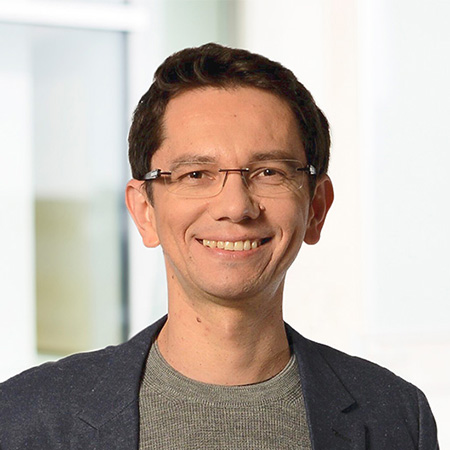
Vlad Korsunsky

Vlad Korsunsky

Chief Technology Officer, Tenable

Vlad Korsunsky, Tenable’s Chief Technology Officer and Managing Director of Tenable Israel, is responsible for driving the company’s technical vision, platform strategy, and innovation. He leads efforts to scale the Tenable One Exposure Management Platform and advance the company’s AI strategy. With over 25 years of experience, Vlad joined Tenable after more than a decade at Microsoft, where he served as Corporate Vice President of Cloud and Enterprise Security. During his tenure, he built and led global multi-cloud security, enterprise AI security, and exposure management businesses, playing a pivotal role in shaping Microsoft's AI security strategy. Vlad holds a B.S. in Computer Science and Applied Mathematics from Bar-Ilan University and an M.S. in Computer Science from Reichman University.