


| Updated:

The Bank of England is poised to probe how private markets’ respond to a theoretical financial Armageddon scenario in which stocks plummet and prices soars that industry figures have said is more severe than the global financial crisis.
Watchdog officials will scrutinise how alternative asset managers react to the scenario’s five-year downturn in financial conditions whereby inflation and the Bank’s central interest rate both jump to seven per cent and the UK economy suffers its deepest recession since the 2008 crash.
The scenario – brought about by a hypothetical fracturing of global trade – will also involve stock markets being hit by a historic bear market causing shares to sink 35 per cent and an acceleration of artificial intelligence’s disruption of software companies.
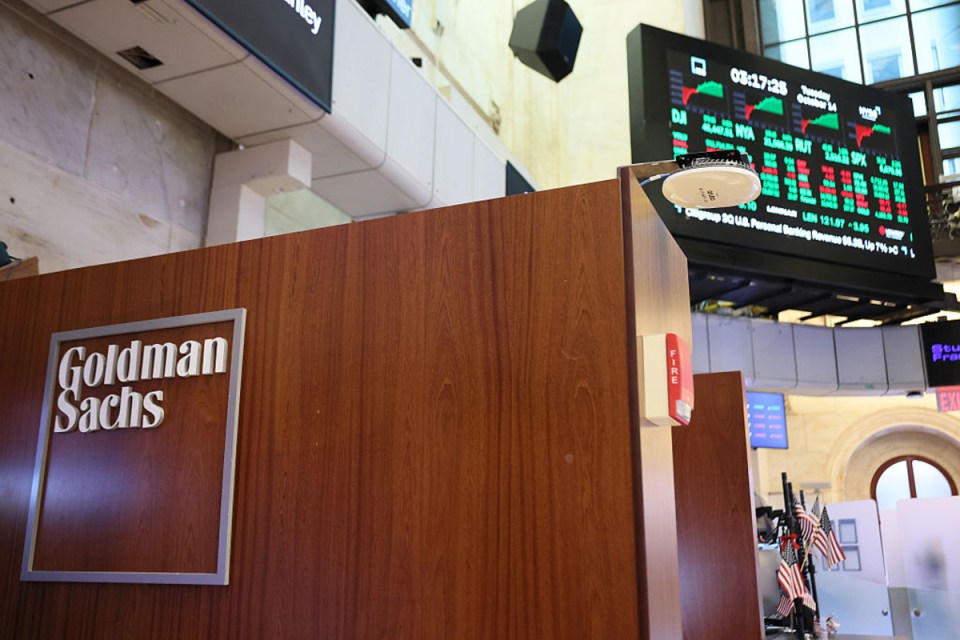
Some 46 companies with ties to private markets – including alternative asset managers like Ares and Carlyle as well as traditional banks like Goldman Sachs and Barclays – have volunteered to take part in what is the Bank’s first ever dissection of the UK’s ballooning private equity and credit industries.
The probe – called the system-wide exploratory scenario (Swes) – is the first of its kind globally and follows growing concern from regulators over the naturally opaque nature of alternative investing as the industry has evolved to become a core part of Britain’s financial ecosystem. A succession of high-profile recent corporate failures – including of Mayfair-based direct lender Market Financial Solutions – accelerated fears that lending standards were deteriorating across the sector.
Under the scenario, fund managers and bankers will demonstrate to officials how they would respond to financial and economic conditions will deteriorate faster and for longer than almost any economic shock in modern history. In some instances – including the rampant inflation and hit to asset prices – the scenario is more stark than the fallout from even the 2008 global financial crisis.
“The Bank’s hypothetical scenario is very severe,” Michael Moore, chief executive of UK Private Capital, said. “So, it is important that in time the exercise is placed in context with the Bank’s testing of other parts of the financial sector.
“It matters that everyone can see how all parts of the financial system would react in the same circumstances, and how that would impact on the real economy on a comparable basis.”
Bank of England first regulator to stress test private markets
Participants, which also include dealmaking juggernauts Blackstone, KKR and Oaktree – are now expected to log how they would respond the scenario, the results of which the Bank of England will publish later this year.
Bank officials then expect to launch a second test of the same scenario, in which probe any answers that respondents give which the regulator doesn’t deem to be realistic or which needs further explanation.
As well as a broad downturn in lending and economic conditions, the simulation devotes considerable attention to the potential for alternative investors’ bets on artificial intelligence and software to go awry.
Several private equity and direct lending investors are facing large haircuts on their investments in so-called software as a service (SaaS) firms, which until recently had been a popular destination for dealmakers’ cash. But the rapid rollout of large language models has threatened to upend many of the sector’s business models.
Under the scenario laid out in the Bank of England’s swes, SaaS companies “judged as having weaker competitive advantages or a ‘smaller moat’” will shed a disproportionately large amount of their valuation.
Simultaneously, the watchdog will explore how alternative investors will react t a slowdown in AI – another popular industry for private equity funds – were higher energy prices to weigh on demand.
Jiri Krol, deputy chief executive of Alternative Investment Management Association, said the passage of events laid out in the stress test was “deliberately very severe”.
He added that the “evidence-based” test should help the industry to rid the sector of accusations of that it is too opaque and needs tighter regulation. “Too much of that debate currently rests on generalised, anxiety-inducing speculation,” he said.