
惯性聚合 高效追踪和阅读你感兴趣的博客、新闻、科技资讯
阅读原文 在惯性聚合中打开

推荐订阅源

Google DeepMind News
I
InfoQ
Engineering at Meta
Engineering at Meta
D
DataBreaches.Net
L
LangChain Blog
Cyber Security Advisories - MS-ISAC
奇客Solidot–传递最新科技情报
奇客Solidot–传递最新科技情报
Recent Announcements
GbyAI
GbyAI
爱范儿
爱范儿
Microsoft Security Blog
腾讯CDC
美团技术团队
罗磊的独立博客
Microsoft Azure Blog
WordPress大学
WordPress大学
T
The Blog of Author Tim Ferriss
freeCodeCamp Programming Tutorials: Python, JavaScript, Git & More
雷峰网
雷峰网
M
MIT News - Artificial intelligence
D
Docker
MongoDB | Blog
MongoDB | Blog
F
Fortinet All Blogs
博客园 - 叶小钗

Knowledge Transfer - Accelerating Innovation @ CERN

CERN tech for Quantum Systems CERN tech for Quantum Systems CERN tech for Quantum Systems Radiotherapy | Knowledge Transfer Radiotherapy | Knowledge Transfer Nuclear Medicine | Knowledge Transfer Nuclear Medicine | Knowledge Transfer Medical Imaging | Knowledge Transfer Medical Imaging | Knowledge Transfer General Medical Applications | Knowledge Transfer General Medical Applications | Knowledge Transfer Dosimetry | Knowledge Transfer Dosimetry | Knowledge Transfer Computing for Medical Applications | Knowledge Transfer Computing for Medical Applications | Knowledge Transfer Computing for Medical Applications | Knowledge Transfer Radiotherapy | Knowledge Transfer Nuclear Medicine | Knowledge Transfer Medical Imaging | Knowledge Transfer General Medical Applications | Knowledge Transfer Health, Safety and Environment Management Superconducting Magnets | Knowledge Transfer Sensors | Knowledge Transfer Health, Safety and Environment Management Superconducting Magnets | Knowledge Transfer Sensors | Knowledge Transfer Superconducting Magnets | Knowledge Transfer Health, Safety and Environment Management Sensors | Knowledge Transfer
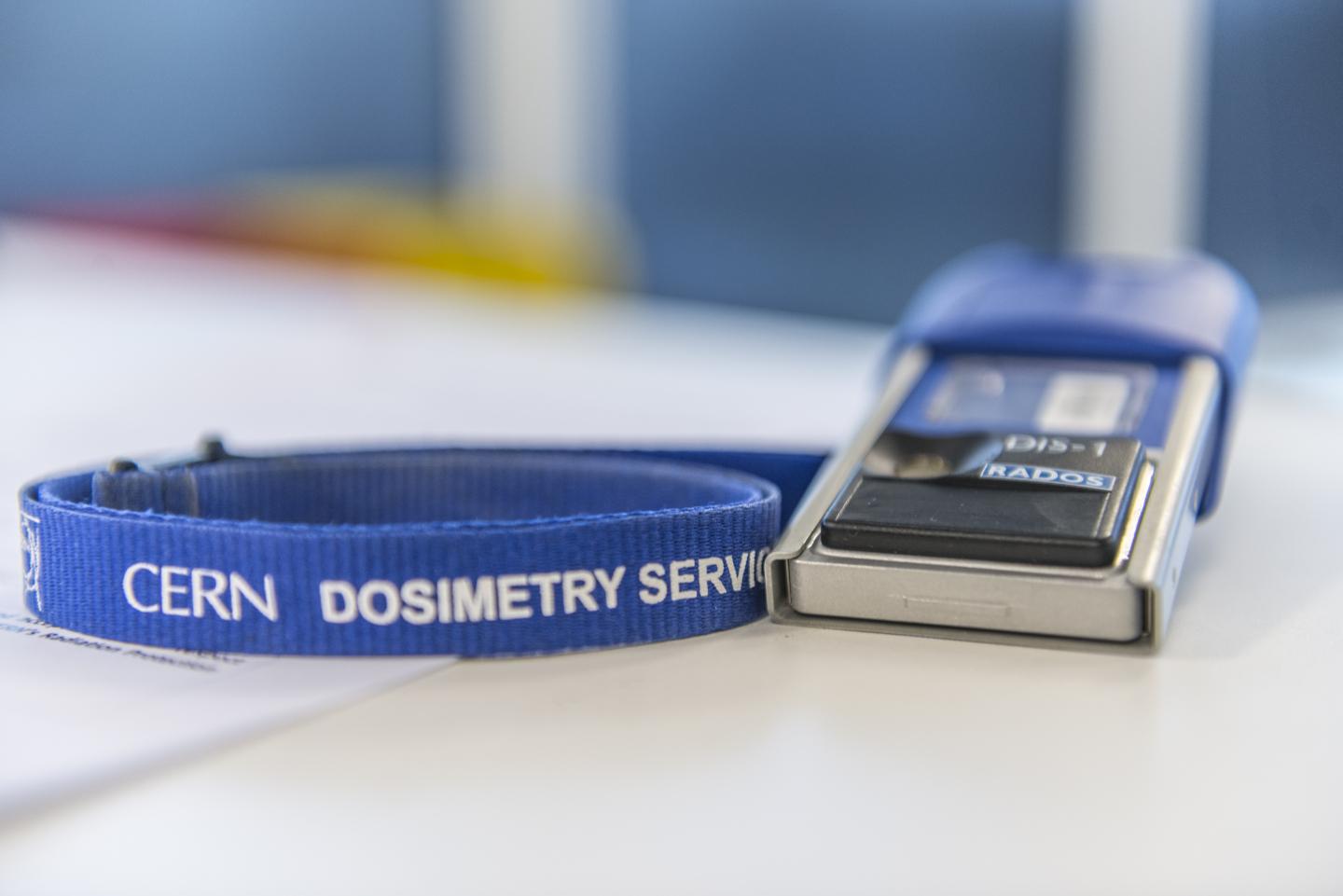
Dosimetry | Knowledge Transfer
alegall · 2020-09-15 · via Knowledge Transfer - Accelerating Innovation @ CERN

CERN’s Know-How

  • Significant experience in developing advanced radiation monitors for operational radiation protection and dosimetry in various fields.
  • Novel radiation-hard hybrid detector with high spatial resolution. Exploring clinical use in hadron therapy for dosimetry, treatment planning and quality assurance.
  • Novel development of a radon monitor for measuring radon dose to the lungs in real time.
  • Experience in radiation sensors with IoT connectivity: connected to a CERN developed platform for automatic data transfer, storage and analysis, including potential personal dosimeters.
  • Development and operation of radiation monitoring systems, designed to operate in high magnetic fields, with potential uses in PET-MRI, nuclear medicine imaging and conventional radiotherapy.

Facts & Figures

  • 45 km of monitored accelerator tunnels at CERN.
  • Around 7000 workers in radiation areas at CERN.
  • 16 Medipix used in the International Space Station for dose monitoring.
  • 55 μm: Spatial resolution of GEMPix technology for quality insurance in hadron therapy.

Value Proposition

Read more about Dosimetry here.

Key Competences

Internal and external dosimetry

Professionals working with unsealed radioactive sources or in the presence of contaminated/activated materials are at risk of incorporating radionuclides. New specific procedures are developed at CERN to reinforce the existing internal monitoring program. This will facilitate dose assessment and calculations.

CERN Calibration Laboratory

The CERN calibration laboratory (CALLAB) is a state-of-the-art calibration facility with unique radiation measurement possibilities. It houses 5 different irradiators that can produce, gamma, beta, x-rays and neutron fields and even mixed gamma neutron fields. Gamma range from the nSv/h up to kSv/h.

CERN-EU high-energy reference field (CERF)

The CERN-EU high-energy Reference Field (CERF) facility is a workplace field, unique in its kind, which reproduces the mixed radiation field encountered in the vicinity of high-energy particle accelerators and at commercial flight altitudes. CERF is served by a secondary beam from the Super Proton Synchrotron (SPS).

Key Applications

Medipix chip family

A family of pixel detector read-out chips for particle imaging and detection, developed by a consortium led by CERN. Medipix works like a camera, detecting and counting each individual particle hitting the pixels. This enables high-resolution, high-contrast, noise hit free images. The Medipix chip family aims at frame-based imaging and spectroscopic x-ray imaging.

Timepix chip family

By using ASICs that can accurately measure time, one can directly reconstruct the 3D track of passing charged particles. Timepix is a family of pixel detector read-out chips for particle imaging and detection developed by a consortium lead by CERN. The Timepix family is designed for detection with ns resolution with a data driven architecture (last version).

GEMPix

A combination of existing CERN technologies: the gas electron multiplier (GEM) andR Timepix. The resultant technology is a gaseous detector able to detect different types of radiatioan with a high spatial resolution. Purpose of the technology is to measure and visualize the energy deposition. CERN has unique know-how and facilities for R&D and production of gaseous radiation detectors.

Portable radiation survey meter

In the presence of a magnetic field, existing radiation survey meters fail to provide reliable radiation measurements. The portable B-RAD is designed to accurately measure radiation in the presence of magnetic fields.

SCADA system for measuring radiation impact

REMUS is a Supervision, Control and Data Acquisition system (SCADA), able to monitor and control organisations’ impact on their environment. REMUS took advantage of more than 30 years of experience providing safety systems to CERN.