惯性聚合 高效追踪和阅读你感兴趣的博客、新闻、科技资讯
阅读原文 在惯性聚合中打开

推荐订阅源

P
Proofpoint News Feed
C
CERT Recently Published Vulnerability Notes
O
OpenAI News
V
Vulnerabilities – Threatpost
C
Cybersecurity and Infrastructure Security Agency CISA
S
Schneier on Security
Latest news
Latest news
F
Full Disclosure
T
Tenable Blog
T
Troy Hunt's Blog
The Last Watchdog
The Last Watchdog
S
Secure Thoughts
L
LangChain Blog
有赞技术团队
有赞技术团队
Project Zero
Project Zero
Cloudbric
Cloudbric
爱范儿
爱范儿
GbyAI
GbyAI
C
CXSECURITY Database RSS Feed - CXSecurity.com
T
The Exploit Database - CXSecurity.com
S
Security @ Cisco Blogs
Hugging Face - Blog
Hugging Face - Blog
Recorded Future
Recorded Future
大猫的无限游戏
大猫的无限游戏
Last Week in AI
Last Week in AI
C
Cisco Blogs
WordPress大学
WordPress大学
Apple Machine Learning Research
小众软件
小众软件
Cyber Security Advisories - MS-ISAC
V2EX - 技术
V2EX - 技术
Engineering at Meta
Engineering at Meta
Spread Privacy
Spread Privacy
cs.CL updates on arXiv.org
Hacker News: Ask HN
Hacker News: Ask HN
Recent Commits to openclaw:main
Schneier on Security
T
Threat Research - Cisco Blogs
M
MIT News - Artificial intelligence
让小产品的独立变现更简单 - ezindie.com
K
Kaspersky official blog
The Hacker News
The Hacker News
V
V2EX
F
Fortinet All Blogs
L
LINUX DO - 最新话题
Cisco Talos Blog
Cisco Talos Blog
钛媒体:引领未来商业与生活新知
钛媒体:引领未来商业与生活新知
N
News | PayPal Newsroom
博客园 - 三生石上(FineUI控件)
cs.CV updates on arXiv.org

AWS for Industries

How Autel Transformed Charging Station Management with AI Agents on AWS | Amazon Web Services How Danone Simplified Kubernetes at Scale with Amazon EKS Auto Mode | Amazon Web Services Build a Multi-Agent Assessment Workbench with Amazon Bedrock AgentCore | Amazon Web Services Sovereign by design: How AWS helps Nigeria’s financial services industry protect data and drive innovation | Amazon Web Services Scaling ML in production: how BBVA accelerated delivery with MLOps | Amazon Web Services Inside BBVA’s MLOps transformation: from data platform to scalable ML on AWS | Amazon Web Services Blazing a Trail: How Peloton Rebuilt the SDLC for the Agentic Era with Amazon Bedrock | Amazon Web Services Accelerate RISC-V Software Development Before Silicon: Virtual Prototyping with MachineWare’s SIM-V on AWS | Amazon Web Services How retailers deliver hyper-personalization in-store with Personalisation Hub, UST, and AWS | Amazon Web Services Deploy diagnostic-quality imaging globally with MedDream and AWS HealthImaging | Amazon Web Services Coins in Motion: Building agentic blockchain payments for in-vehicle experiences | Amazon Web Services Reduce P&ID analysis time by 80% with hybrid AI maintenance planning | Amazon Web Services Deploying industrial AI on AWS: Building the autonomous factory | Amazon Web Services How Atlantic Health cut legal document search time by 42% with Amazon Bedrock metadata filtering | Amazon Web Services Edge-to-Cloud Architecture for Real-Time Surgical Intelligence with AWS and NVIDIA | Amazon Web Services Reimagining B-Pillar DFMEA: Why Ontology-Grounded AI Is the Future of Automotive Engineering | Amazon Web Services Transforming energy trading by managing complexity and driving growth with Cloud ETRM | Amazon Web Services How Multi-Agent AI Turns Supply Chain Data into Decisions and Actions | Amazon Web Services ​​​Deploy Agentic Bidding Without Sacrificing Speed: ARTF Containers with NVIDIA GPU Acceleration on AWS​​ | Amazon Web Services Next-generation programmatic advertising: How AWS RTB Fabric redefines the game | Amazon Web Services Flexible Telecom AI Workload Deployment Across AWS Hybrid Cloud | Amazon Web Services Building a HIPAA-ready generative AI architecture for healthcare on AWS | Amazon Web Services Highlights from the 2026 AWS Life Sciences Symposium: MedTech Track | Amazon Web Services Multi-Agent Systems for Financial Services on Amazon EKS and AgentCore | Amazon Web Services How AI can help developers migrate embedded codebases between Arm SoCs | Amazon Web Services From Connected to Resilient: Cloud-Native Payment Connectivity on AWS | Amazon Web Services Ultra-low-latency cross-Region crypto trading with Avelacom and AWS | Amazon Web Services Build an AI-powered 5G Signaling Trace Analyzer Using Amazon Bedrock | Amazon Web Services Medical Legal Regulatory Review Orchestration with AI Agents on AWS | Amazon Web Services AWS showcases the agentic AI future of advertising and entertainment at Cannes Lions 2026 | Amazon Web Services The Road to 180M GRefs/s: Sizing Epic on AWS with R8ib and Enhanced EBS | Amazon Web Services BridgeWise builds responsible AI in FSI with Amazon Bedrock | Amazon Web Services Rethink Everything: Highlights from the 2026 AWS Financial Services Symposium | Amazon Web Services Improving Defect Analysis and Quality Control with AI Diagnostics | Amazon Web Services Building a cloud-based EV charging monitoring platform with real-time AI analytics | Amazon Web Services Introducing the AWS guide to the ECB Guide on outsourcing cloud services to cloud service providers | Amazon Web Services How a Luxury Retailer Accelerates Customer Experience with Amazon CloudFront | Amazon Web Services The Art of the Possible: Building an Intelligent Wealth Management Platform – Part 1 | Amazon Web Services How We Built Healthcare AI You Can Trust: The Science Behind Amazon Connect Health | Amazon Web Services How Everllence Scaled P&ID Intelligence to Improve Plant Operations | Amazon Web Services Rivian accelerates production with second-generation AWS Outposts: Improving resiliency and reducing costs | Amazon Web Services AI-Driven Development Lifecycle for Financial Services | Amazon Web Services How Agentic AI and Digital Twins on AWS Drive Operational Excellence | Amazon Web Services Modernizing Core Banking Systems: A Strategic Guide for Financial Leaders | Amazon Web Services Highlights from the 2026 AWS Life Sciences Symposium: Research and Drug Discovery | Amazon Web Services Discount Tire Uses Cloud WAN and Buffer VPC to Create a Scalable Enterprise Network Centralized third-party connectivity in AWS: Architecture patterns for highly regulated environments | Amazon Web Services FHIR-powered Care Continuum on AWS HealthLake From code to chemistry: using Kiro to tackle ADME-Tox, a key drug discovery challenge | Amazon Web Services How Toyota securely deployed HiveMQ with mTLS on AWS to power Smart Manufacturing | Amazon Web Services From record to intelligence: How EMR systems on AWS become the foundation for generative AI in healthcare | Amazon Web Services How to Connect AWS HealthOmics to Public and Private Network Sources at Runtime | Amazon Web Services Accelerating Android Builds on AWS: From 3 Hours to Under 5 Minutes with SourceFS | Amazon Web Services Closing the Loop with Amazon Bio Discovery’s Integrated Lab Partners | Amazon Web Services Massive Parallel Processing of Financial Transactions with Amazon EKS and Amazon MSK | Amazon Web Services Submit up to 100,000 Bioinformatics Workflow Runs with a Single API Call in AWS HealthOmics | Amazon Web Services Energy HPC Orchestrator powers collaborative, scalable energy computing | Amazon Web Services Automate Investment Research Using Strands Agents on Bedrock AgentCore | Amazon Web Services How OCC Built a Governed Cloud Foundation and Then Stress-Tested It Executive Insights from the 2026 AWS Life Sciences Symposium How Carlsberg’s Traitomic business leveraged AWS HealthOmics to power genetic trait development | Amazon Web Services CME Group MDP multicast data access on AWS using Transit Gateway | Amazon Web Services How retailers solve the customer identity puzzle with Amperity and AWS | Amazon Web Services Exact Sciences Transforms Bioinformatics Infrastructure with AWS HealthOmics | Amazon Web Services Accelerating physical AI with AWS and NVIDIA: building production-ready applications with simulation and real-world learning | Amazon Web Services Modernizing life-saving workloads with AWS serverless | Amazon Web Services Transforming Industrial Operations: How AVEVA and AWS drive Cloud Innovation | Amazon Web Services Introducing Amazon Bio Discovery | Amazon Web Services Accelerate Project Delivery with AI-Native Execution System on Amazon Quick | Amazon Web Services Reinvent Telecom Mediation Systems with Amazon Bedrock AgentCore, Strands Agents, and the Model Context Protocol | Amazon Web Services AWS Cloud Connectivity Patterns for Financial Market Infrastructures | Amazon Web Services Event-Driven Digital Pathology: Governed Whole Slide Image Ingestion to Scalable Inference with Amazon SageMaker | Amazon Web Services How Telefonica Germany achieved a centralized tracing solution with VPC Traffic Mirroring | Amazon Web Services AWS Teams Up with Wingstop to Deliver Wings to Millions During March Hoops Tournament | Amazon Web Services How Amazon Connect Health brings agentic AI to the point of care | Amazon Web Services How Liftoff improved conversion performance and reduced infrastructure costs with Cortex using AWS Graviton | Amazon Web Services From Prompt to Pipeline: AI-Powered Bioinformatics Workflow Development with Kiro and AWS HealthOmics | Amazon Web Services Driving Intelligent Quality in the Software-Defined Vehicle Era | Amazon Web Services How Amazon Devices Eliminated Credential Risk to Scale AI across Engineering Tools | Amazon Web Services The Evolution of BMW Group’s 3D Streaming Experience | Amazon Web Services Build ChatGPT Apps with MCP Servers and AWS Infrastructure | Amazon Web Services
Building a Serverless Supply Chain Management Solution for Automotive Customers with AWS AppSync and Amazon Aurora Serverless | Amazon Web Services
Alan Oberto · 2026-04-16 · via AWS for Industries

In the automotive industry, effective supply chain management is critical for ensuring seamless operations, reducing costs, and meeting customer demands. Modern serverless technologies can help automotive companies achieve end-to-end, real-time visibility and insights across their supply networks. By using AWS AppSync and Amazon Aurora Serverless, organizations can build scalable, responsive applications that help simplify data management and help provide real-time insights into parts, orders, and shipments.

In this blog post, we demonstrate how to build a serverless supply chain management solution tailored for automotive customers using AWS AppSync (a managed GraphQL service) and Amazon Aurora Serverless (an on-demand, auto-scaling relational database). This solution addresses common challenges in managing parts inventory, orders, and shipments by using a fully serverless, GraphQL-based approach.

You will learn:

  • How to model a relational database schema for supply chain management.
  • How to use AWS AppSync to build a GraphQL API for querying and managing supply chain data.
  • How to use Amazon Aurora Serverless v2 for an on-demand, cost-efficient relational database.
  • How to implement JavaScript resolvers in AppSync to handle complex business logic in the API layer.

By the end of this post, you’ll have a working example of a supply chain management application and the knowledge to extend it to meet your business needs.

Solution Architecture

This solution uses AWS serverless technologies to create a scalable and cost-effective supply chain management system for the automotive industry where any visibility gap can trigger costly stoppages due to its just-in-time nature. Below is an overview of architecture.
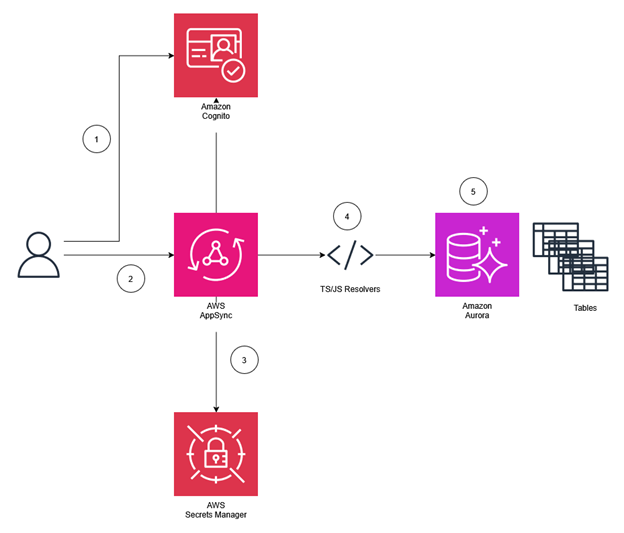
Figure 1: Architecture diagram of the solution

Figure 1: Architecture diagram of the solution

The serverless supply chain solution operates as follows, tying together the above components in the data flow as shown in Figure 1:

1. Authentication with Amazon Cognito: Amazon Cognito integrates with AppSync to secure the GraphQL API. User pools and identity pools manage authentication, ensuring that each request to AWS AppSync carries valid credentials (for example, a JSON Web Token ). Furthermore, each authenticated user can be assigned a pre-defined role which is included in JWT claims, which allows enforcement of fine-grained access control – for instance, a dealership user might only be allowed to query certain data, whereas an internal supply chain app might have broader permissions. Cognito thus provides a robust, serverless security layer for the solution.

2. GraphQL API with AppSync: Clients (such as web or mobile applications) interact with the system through AWS AppSync using the tokens provided by Amazon Cognito. Using AWS AppSync JavaScript resolvers, the GraphQL API can connect directly to Aurora Serverless to retrieve or manipulate data.

3. Secure Database secret management with AWS Secrets Manager: In order to interact with Aurora, AppSync can get the database connection secrets directly and securely from AWS Secrets Manager using the IAM credentials provided for that purpose. Resolvers can then perform calls against the Database.

4. Business Logic with AppSync Resolvers: Complex business rules are implemented at the AppSync resolver layer using JavaScript (TypeScript) code. This means you can enforce supply chain logic directly in your AWS AppSync API without requiring a downstream AWS Lambda function to handle the request. For example, resolvers can calculate lead times between an order and its corresponding shipment, forecast parts demand based on historical orders, or manage inventory levels dynamically when new orders or shipments come in. Key examples of in-API business logic include:

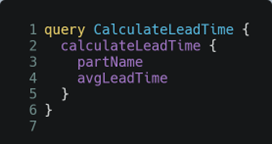
a. Calculating lead times between orders and shipments (e.g., determining the number of days between an order date and its shipment date).

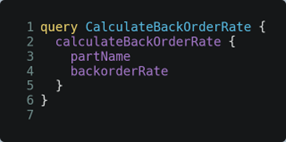
b. Calculating backorder rates to identify parts with supply issues and measure the percentage of orders that couldn’t be fulfilled immediately.

c. Inventory management rules, such as preventing orders that exceed current inventory or flagging parts for restock when inventory is low.

5. Relational Database with Aurora Serverless: All supply chain data is stored in Amazon Aurora Serverless (using PostgreSQL in our case). The database schema includes three key tables – Parts, Orders, and Shipments – which are designed to capture the relationships and dependencies in the supply chain. AWS AppSync resolvers execute SQL statements to perform queries and updates on these tables.

The combination of these services results in a fully serverless, scalable architecture. Whenever the automotive business experiences increased load (e.g. many orders placed at once), Aurora Serverless can scale capacity accordingly, and AWS AppSync will handle the surge of API calls without needing any manual intervention. Conversely, during periods of low activity, the database scales down to reduce costs, and you pay only for the storage used. This architecture can not only help simplify infrastructure management but also help accelerate development by using GraphQL to abstract and unify data access across the supply chain.

Validating the Solution

With the application deployed and data loaded, you can validate the solution by running some GraphQL queries in AWS AppSync. For detailed step-by-step instructions on how to access the AppSync Console and authenticate, please refer to the Testing Guide in the GitHub repository. Once you’ve completed the setup and authentication steps, return here to continue testing the solution.

Understanding Analytics & Calculations Operations

For automotive supply chain management, having real-time visibility into key performance indicators is crucial for maintaining operational efficiency and meeting customer demands. Our solution provides four key analytics operations that help automotive businesses make data-driven decisions:

1. Calculate Lead Time

Business Context: Lead time is the duration between placing an order and receiving the shipment. For automotive manufacturers, understanding lead times is essential for production planning and avoiding assembly line stoppages. Long or variable lead times can indicate supplier reliability issues or logistics bottlenecks.

Query:
Screenshot of Calculated Lead Time query

Expected Results:

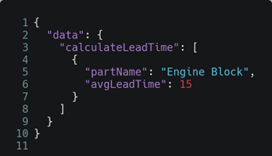
Screenshot of expected results of calculated lead time

Interpretation: For illustrative purposes only, in this example, Engine Blocks have an average lead time of 15 days, which is relatively long. This information helps procurement teams plan orders well in advance and potentially negotiate faster delivery terms or identify alternative suppliers.

2. Calculate Backorder Rate

Business Context: Backorder rate measures the percentage of orders that couldn’t be fulfilled immediately due to insufficient inventory. High backorder rates directly impact production schedules and can lead to costly assembly line shutdowns. For automotive manufacturers operating on thin margins, even a small increase in backorder rates can significantly affect profitability.

Query:
Screenshot of Calculate Backorder Rate query

Expected Results:
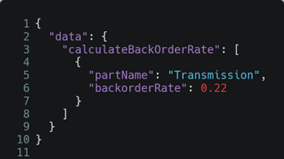
Screenshot of Calculate Backorder Rate query

Interpretation: For illustrative purposes only, A backorder rate of 0.22 (22%) for Transmissions indicates a significant supply issue. This suggests the need to increase safety stock levels, diversify suppliers, or improve demand forecasting for this critical component.

3. Calculate Order Fill Rate

Business Context: Order fill rate represents the percentage of orders successfully fulfilled on the first attempt. This metric directly correlates with customer satisfaction and operational efficiency. In automotive manufacturing, a high fill rate ensures smooth production flow and reduces the need for expedited shipping, which can be costly.

Query:
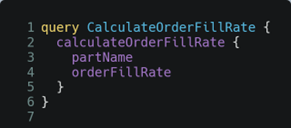
Screenshot of Calculate Order Fill Rate queryExpected Results:

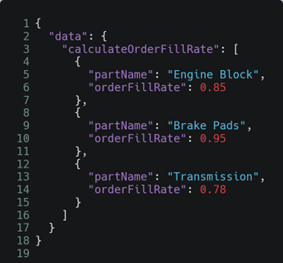
Screenshot of Calculate Order Fill Rate expected results

Interpretation: For illustrative purposes only, Brake Pads have an excellent fill rate of 95%, while Transmissions at 78% need attention. Low fill rates often indicate inadequate inventory management or unreliable suppliers.

Conclusion

In this post, we demonstrated how to build a serverless supply chain management solution for the automotive industry using AWS AppSync and Amazon Aurora Serverless. This fully managed architecture designed to provide automatic scalability to handle demand spikes, cost optimization through pay-per-use pricing, customizable business logic via JavaScript resolvers, and secure role-based access control through Amazon Cognito integration.

This serverless approach addresses real-world automotive challenges like tracking parts inventory, calculating lead times, and forecasting demand. By combining GraphQL’s unified data access with Aurora Serverless’s automatic scaling, automotive companies can build solutions that grow with their business without heavy upfront infrastructure investment or operational overhead.