


How Jabil, Siemens Mendix, and AWS transformed manufacturing diagnostics in four weeks
In manufacturing, every production defect means lost revenue, delayed shipments, and potential customer dissatisfaction. For Jabil, a global manufacturer with over 100 facilities across more than 25 countries serving customers in industries like data center infrastructure, healthcare, automotive, and energy, rapid defect diagnosis is an operational necessity and a competitive advantage.
However, Jabil’s diagnostic technicians spent up to 30% of their time searching through fragmented technical documentation, vendor specifications, and historical failure logs scattered across different systems. Without a unified operational layer to connect the right data and guidance, this manual process introduced errors, delayed production, and prevented technicians from solving the business’s most complex manufacturing problems.
Jabil needed a solution to the question: How do you give frontline technicians access to the right information when and where they need it to guide their actions?
The manufacturing challenge
How do we give frontline technicians instant access to the right information when and where they need it and guide them to the next action?
Manufacturing diagnostic delays create a cascade of business impacts. When technicians spend time hunting for information rather than resolving defects, production lines slow, rework costs accumulate, and time-to-market increases. For a company operating at Jabil’s scale, small inefficiencies can multiply across hundreds of production lines and thousands of products.
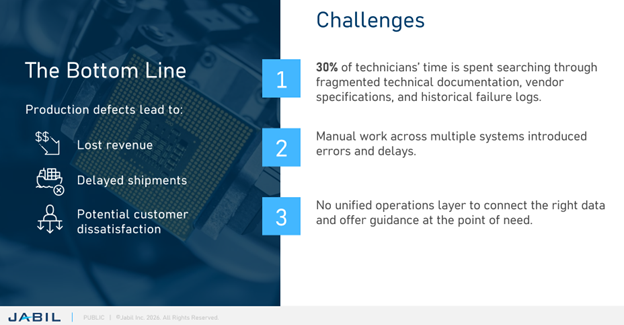
Figure 1: Jabil’s challenges
Jabil understood the root causes of the delays. Troubleshooting information existed in customer documentation, vendor specifications, company systems, and the minds of the subject matter experts, but there was no unified platform that connected them. As a result, technicians manually searched different repositories for information, increasing the risk of overlooking steps or misdiagnosing issues. Even in the best cases, manual searches increased the time-to-resolution of issues.
The team recognized the business case for change. Solving this challenge would reduce diagnostic time, minimize incorrect debug decisions, improve quality metrics, and reduce direct manufacturing costs. However, Jabil did not have the tools to develop a solution on their own.
A strategic partnership and the right tools
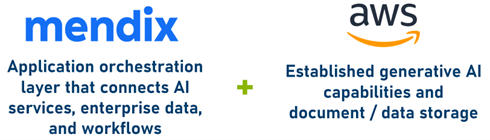
Figure 2: Strategic partnership between Mendix and AWS
Jabil partnered with Siemens Mendix and AWS to develop an AI-powered Debug Tool Assistant that integrates into existing manufacturing workflows. The solution consolidates knowledge from different sources and delivers it to technicians as context-aware guidance through a conversational interface.
The tool uses Amazon Bedrock for AI capabilities, Amazon Simple Storage Service (Amazon S3) for centralized document storage, and the Siemens Mendix platform as an application orchestration layer to connect the AI services, enterprise data, and manufacturing workflows. With the Mendix platform, you gain AI-driven insights within your existing operational processes without extensive rewrites.
This combination addressed Jabil’s three main business requirements:
- Speed to Value: By combining Mendix with Amazon Bedrock, the team moved from concept to a working solution in four weeks. Using Mendix, the team embedded AI-driven diagnostics directly into manufacturing workflows, so insights to be applied in real time rather than remaining isolated from day-to-day operations.
- No Disruption: Using Mendix’s pre-built integrations with AWS services, Jabil now has direct connectivity to existing manufacturing systems and cloud environment without requiring system replacement, gaining AI-driven diagnostics.
- Scalability: Built on AWS infrastructure with Mendix’s cloud-native architecture, the solution scales across Jabil’s global operations without additional administrative overhead. Application instances run in fully isolated containers, consuming platform services like databases and storage, with built-in high availability across multiple availability zones.
How it works
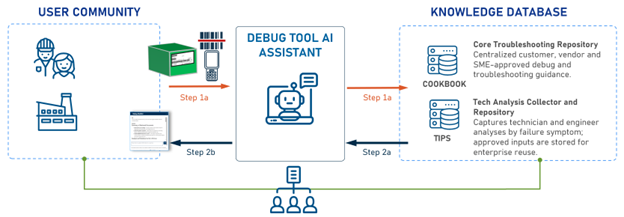
Figure 3: Flow chart for Debug Tool AI Assistant flow
When a technician scans a product serial number, the system automatically retrieves product-specific context and queries a consolidated knowledge base containing customer debug procedures, technical specifications, and insights from experienced technicians. Within seconds, technicians receive summarized, cited, language-localized troubleshooting solutions through a conversational interface, built on Mendix and Amazon Bedrock.
The system creates a continuous improvement loop that feeds approved technician insights back into its knowledge base, improving responses over time and scaling institutional knowledge across sites. With use, this design transforms individual expertise into organization-wide assets.
Measurable business impacts
The Debug Tool AI Assistant delivered quantified operational improvements that reduced Jabil’s direct and indirect manufacturing costs in four ways:
- Reduced manufacturing overhead by accelerating defect analysis 25% through AI-driven technical insights
- Reduced cost of goods sold by achieving 15% reduction in scrap and rework through optimized debug decisions
- Enhanced operational efficiency by improving support diagnostics and resolution speed by 20%
- Optimized total cost of quality by boosting decision-making expertise and proactive risk mitigation by 10%
Turning speed into a strategic advantage
The four-week implementation timeline validated the collaboration between AWS, Mendix, and Jabil. Aligning domain expertise drove success with high-velocity development tools.
Jabil provided a foundation of supply chain and manufacturing expertise. By integrating their frontline technicians directly into the development cycle, Jabil met its operational requirements from day one.
Siemens Mendix facilitated collaboration between domain experts and IT. This allowed the team to move from requirements to working solutions in weeks rather than months and without traditional handoffs. The use of pre-built components, including the Amazon Bedrock Connector, eliminated the need for custom middleware and accelerated the development of a functional prototype.
AWS provided the foundation via Amazon Bedrock, a managed service that eliminated infrastructure and model overhead. Using Amazon Bedrock’s unified API and built-in security guardrails, the team integrated foundation models and ensured proprietary manufacturing data remained isolated.
This collaboration provides a blueprint for manufacturing enterprise AI adoption. By combining the customer’s domain knowledge with high-productivity platforms and proven cloud infrastructure, the team compressed a traditional multi-month development cycle into just four weeks.
From reactive to predictive operations
Jabil’s roadmap for the AI-powered Debug Tool progresses from reactive troubleshooting to predictive operational excellence through two phases:
- Historical Defect Intelligence: Aggregating global defect data to identify systemic root causes to drive proactive corrective actions before failures manifest in production.
- Predictive Quality Analytics: Deploying machine learning and additional agentic capabilities that preempt defects at the point of origin to further reduce rework, maximize equipment uptime, and protect gross margins across the manufacturing process.
This evolution marks a strategic pivot from reactive cost mitigation to engineered margin protection.
Conclusion
By embedding generative AI directly into manufacturing workflows, Jabil’s IT team moved past the proof-of-concept phase and began delivering quantifiable value to the enterprise. The resulting faster diagnostics, improved accuracy, and reduced costs support their business objectives of operational excellence, customer satisfaction, and a sustainable competitive advantage.
The combination of Jabil’s domain expertise, Siemens Mendix’s platform, and AWS’s scalable agentic AI infrastructure accelerated an industrial-scale digital transformation. By reducing development cycles from months to weeks, Jabil achieved operational agility to identify, resolve, and deploy solutions to complex manufacturing challenges in near real time.
Ready to transform your manufacturing operations with AI? Learn more at aws.amazon.com/manufacturing.
Jabil is a global manufacturing solutions provider with 140,000+ employees across 100 facilities in more than 25 countries, delivering engineering, supply chain and manufacturing solutions across industries including healthcare, automotive, data centers, consumer electronics, industrial and more.
Siemens Mendix is an enterprise application platform that connects AI, data, and workflows to build and run AI-powered solutions. With Mendix as part of the Siemens Xcelerator portfolio, organizations can rapidly build, deploy, and evolve applications through visual development, use pre-built connectors including the Amazon Bedrock Connector available through the Mendix Marketplace, and join a community of over 250,000 certified developers.
Amazon Web Services provides the cloud infrastructure and AI services, like Amazon Bedrock, offering fully managed access to leading foundation models for building and scaling generative AI applications.
Special thanks to the Jabil’s Manufacturing Operations and Enterprise IT Teams, and Siemens Mendix solutions architects for their collaboration in bringing this solution to production.