惯性聚合 高效追踪和阅读你感兴趣的博客、新闻、科技资讯
阅读原文 在惯性聚合中打开

推荐订阅源

Forbes - Security
Forbes - Security
H
Hackread – Cybersecurity News, Data Breaches, AI and More
N
Netflix TechBlog - Medium
Engineering at Meta
Engineering at Meta
CTFtime.org: upcoming CTF events
F
Fortinet All Blogs
P
Privacy & Cybersecurity Law Blog
The Hacker News
The Hacker News
博客园 - 司徒正美
博客园 - 聂微东
T
The Blog of Author Tim Ferriss
I
Intezer
WordPress大学
WordPress大学
Security Archives - TechRepublic
Scott Helme
Scott Helme
T
Threat Research - Cisco Blogs
T
Tailwind CSS Blog
月光博客
月光博客
Recent Announcements
博客园 - 叶小钗
J
Java Code Geeks
cs.CL updates on arXiv.org
L
LINUX DO - 热门话题
Google DeepMind News
C
Cyber Attacks, Cyber Crime and Cyber Security
cs.AI updates on arXiv.org
N
News and Events Feed by Topic
A
Arctic Wolf
B
Blog RSS Feed
Recorded Future
Recorded Future
D
DataBreaches.Net
有赞技术团队
有赞技术团队
Project Zero
Project Zero
U
Unit 42
T
Tor Project blog
The GitHub Blog
The GitHub Blog
Hacker News - Newest:
Hacker News - Newest: "LLM"
C
CERT Recently Published Vulnerability Notes
博客园 - Franky
博客园 - 【当耐特】
Microsoft Security Blog
C
Cybersecurity and Infrastructure Security Agency CISA
Security Latest
Security Latest
C
Cisco Blogs
Threat Intelligence Blog | Flashpoint
Blog — PlanetScale
Blog — PlanetScale
H
Heimdal Security Blog
Vercel News
Vercel News
Stack Overflow Blog
Stack Overflow Blog
S
Securelist

Ethereum Foundation Blog

Checkpoint #9: Apr 2026 | Ethereum Foundation Blog How L1 and L2s can build the strongest possible Ethereum | Ethereum Foundation Blog The Promise of Ethereum: Introducing the EF Mandate | Ethereum Foundation Blog This Is Fine (Until the Grant Runs Out) | Ethereum Foundation Blog Treasury Staking Initiative | Ethereum Foundation Blog The Ethereum Foundation's Commitment to DeFi | Ethereum Foundation Blog Protocol Priorities Update for 2026 | Ethereum Foundation Blog Announcing the Platform Team at EF | Ethereum Foundation Blog Ethereum Protocol Studies 2026 | Ethereum Foundation Blog Executive Leadership Update | Ethereum Foundation Blog An update from Tomasz | Ethereum Foundation Blog Introducing the EF Academic Secretariat 2026 PhD Fellowship | Ethereum Foundation Blog Trillion Dollar Security Day at Devconnect | Ethereum Foundation Blog Allocation Update - Q4 2025 | Ethereum Foundation Blog Checkpoint #8: Jan 2026 | Ethereum Foundation Blog Devcon 8 is coming to Mumbai, India in November 2026 | Ethereum Foundation Blog Hegota Upgrade EIP Proposal Timelines | Ethereum Foundation Blog Shipping an L1 zkEVM #2: The Security Foundations | Ethereum Foundation Blog The Future of Ethereum’s State | Ethereum Foundation Blog Devconnect Argentina Recap | Ethereum Foundation Blog Allocation Update - Q3 2025 | Ethereum Foundation Blog Making Ethereum Feel Like One Chain Again | Ethereum Foundation Blog Checkpoint #7: Nov 2025 | Ethereum Foundation Blog Fusaka Mainnet Announcement | Ethereum Foundation Blog 2 weeks to Devconnect: Everything you need to know | Ethereum Foundation Blog Unveiling ESP's New Grants Program | Ethereum Foundation Blog Fusaka Update – Transaction Gas Limit Cap arrives with EIP-7825 | Ethereum Foundation Blog Fusaka Update - Information for Blob users | Ethereum Foundation Blog Announcing the 2026 EF Internship | Ethereum Foundation Blog Supporting privacy with new funding mechanisms | Ethereum Foundation Blog The Ethereum Foundation’s Commitment to Privacy | Ethereum Foundation Blog Checkpoint #6: Oct 2025 | Ethereum Foundation Blog Privacy Cluster Leadership Announcement | Ethereum Foundation Blog Fusaka Testnet Announcement | Ethereum Foundation Blog Announcing the districts of the Ethereum World’s Fair | Ethereum Foundation Blog Fusaka $2,000,000 Audit Contest! | Ethereum Foundation Blog Holešky Testnet Shutdown Announcement | Ethereum Foundation Blog The Ecosystem Support Program's Next Chapter | Ethereum Foundation Blog Protocol Update 003 — Improve UX | Ethereum Foundation Blog Protocol Update 002 - Scale Blobs | Ethereum Foundation Blog Trillion Dollar Security - Phase 2 | Ethereum Foundation Blog Join Us: EF Protocol Reddit AMA - August 29th, 2025 | Ethereum Foundation Blog Protocol Update 001 – Scale L1 | Ethereum Foundation Blog lean Ethereum | Ethereum Foundation Blog Celebrating 10 Years of Ethereum | Ethereum Foundation Blog Checkpoint #5: July 2025 | Ethereum Foundation Blog Allocation Update - Q2 2025 | Ethereum Foundation Blog The Future of Ecosystem Development at the EF | Ethereum Foundation Blog Shipping an L1 zkEVM #1: Realtime Proving | Ethereum Foundation Blog Partial history expiry announcement | Ethereum Foundation Blog Checkpoint #4: Berlinterop | Ethereum Foundation Blog World Experience: Updates from the Next Billion Fellowship | Ethereum Foundation Blog Now accepting interns - Join the Ethereum Season of Internships | Ethereum Foundation Blog Tickets are live for the Ethereum World’s Fair! And we're launching the Supporter Program | Ethereum Foundation Blog Ethereum Foundation Treasury Policy | Ethereum Foundation Blog Checkpoint #3: June 2025 | Ethereum Foundation Blog Announcing the Devconnect ARG Scholars Program | Ethereum Foundation Blog Announcing Protocol | Ethereum Foundation Blog Nyota Interop Recap ✨ | Ethereum Foundation Blog Allocation Update - Q1 2024 | Ethereum Foundation Blog Announcing the Ethereum Protocol Fellowship Cohort 5 | Ethereum Foundation Blog Ethereum Protocol Fellowship Cohort 4 Recap | Ethereum Foundation Blog Sepolia Incident | Ethereum Foundation Blog Announcing the Devcon SEA venue! | Ethereum Foundation Blog Devconnect Scholars Program - Ethereum Stories from Istanbul and Beyond | Ethereum Foundation Blog Dencun Mainnet Announcement | Ethereum Foundation Blog ZK Grants Round | Ethereum Foundation Blog Eth2 at ETHWaterloo: Prizes for Eth2 education, tooling, and research | Ethereum Foundation Blog eth2 quick update no. 2 | Ethereum Foundation Blog Devcon4 Ticket Sales | Ethereum Foundation Blog Announcing Swarm Proof-of-Concept Release 3 | Ethereum Foundation Blog Devcon4 Announcement | Ethereum Foundation Blog Announcing May 2018 Cohort of EF Grants | Ethereum Foundation Blog Announcing World Trade Francs: The Official Ethereum Stablecoin | Ethereum Foundation Blog Announcing Beneficiaries of the Ethereum Foundation Grants | Ethereum Foundation Blog Geth 1.8 - Iceberg¹ | Ethereum Foundation Blog Farewell and Welcome | Ethereum Foundation Blog Security Alert - Solidity - Variables can be overwritten in storage | Ethereum Foundation Blog Uncle Rate and Transaction Fee Analysis | Ethereum Foundation Blog Announcement of imminent hard fork for EIP150 gas cost changes | Ethereum Foundation Blog Dev Update: Formal Methods | Ethereum Foundation Blog On Inflation, Transaction Fees and Cryptocurrency Monetary Policy | Ethereum Foundation Blog Onward from the Hard Fork | Ethereum Foundation Blog C++ DEV Update - July edition | Ethereum Foundation Blog The Devcon2 site is now live! | Ethereum Foundation Blog Security Alert - DoS Vulnerability in the Soft Fork | Ethereum Foundation Blog DAO Wars: Your voice on the soft-fork dilemma | Ethereum Foundation Blog Smart Contract Security | Ethereum Foundation Blog Security Alert – Geth suffers from a very low probable DoS attack vector - Update immediately | Ethereum Foundation Blog On Settlement Finality | Ethereum Foundation Blog Ethereum Foundation and Wanxiang Blockchain Labs announce a blockbuster event combining Devcon2 and the 2nd Global Blockchain Summit in Shanghai, September 19–24, 2016 | Ethereum Foundation Blog Ethereum Partners with R3CEV on Lizardcoin, Bringing Together the Best of Centralized Finance and Blockchain Technology | Ethereum Foundation Blog From Smart Contracts to Courts with not so Smart Judges | Ethereum Foundation Blog BTC Relay included in Ethereum Bounty Program | Ethereum Foundation Blog Ethereum DEV Update: C++ Roadmap | Ethereum Foundation Blog Cut and try: building a dream | Ethereum Foundation Blog Ambients Applied to Ethereum | Ethereum Foundation Blog Mihai’s Ethereum Project Update. The First Year. | Ethereum Foundation Blog Getting to the Frontier | Ethereum Foundation Blog The Ethereum Development Process | Ethereum Foundation Blog
building the decentralized web 3.0 | Ethereum Foundation Blog
2014-08-18 · via Ethereum Foundation Blog

how ethereum could shard the web

Given the state of our 25-year old web and all the problems inherited from legacy 1970's systems design, we should pause and take inventory of those components which are fundamentally broken and would offer a substantial return on development investment. Intersecting this concern with security, privacy, and censorship resistance, it should be painfully obvious that an all-out attack on Internet infrastructure is already underway. As netizens, a shared duty falls on us to explore, exploit, and implement new technologies that benefits creators, not oppressors.

And while cryptography first allowed us to secure our messages from prying eyes, it is increasingly being used in more abstract ways like the secure movement of digital value via cryptocurrencies. If PGP was the first major iteration of applied crypto and Bitcoin the second, then I anticipate that the interaction and integration of crypto into the very fabric of a decentralized web will be the refined third implementation, taking root and blossoming in popularity.

the explosion of web services

Taking a look back at the brief history of the web, most would agree that Web 1.0 was epitomized by CGI scripts generating templated content on a server and delivering it to the client in a final form. This was a clear model of monolithic centralization, however, this basic form of interactivity was a huge improvement over the basic post-and-read format that comprised much of internet content at that time. Imagine having to reload the entire front page of Digg every time you wanted to click something:
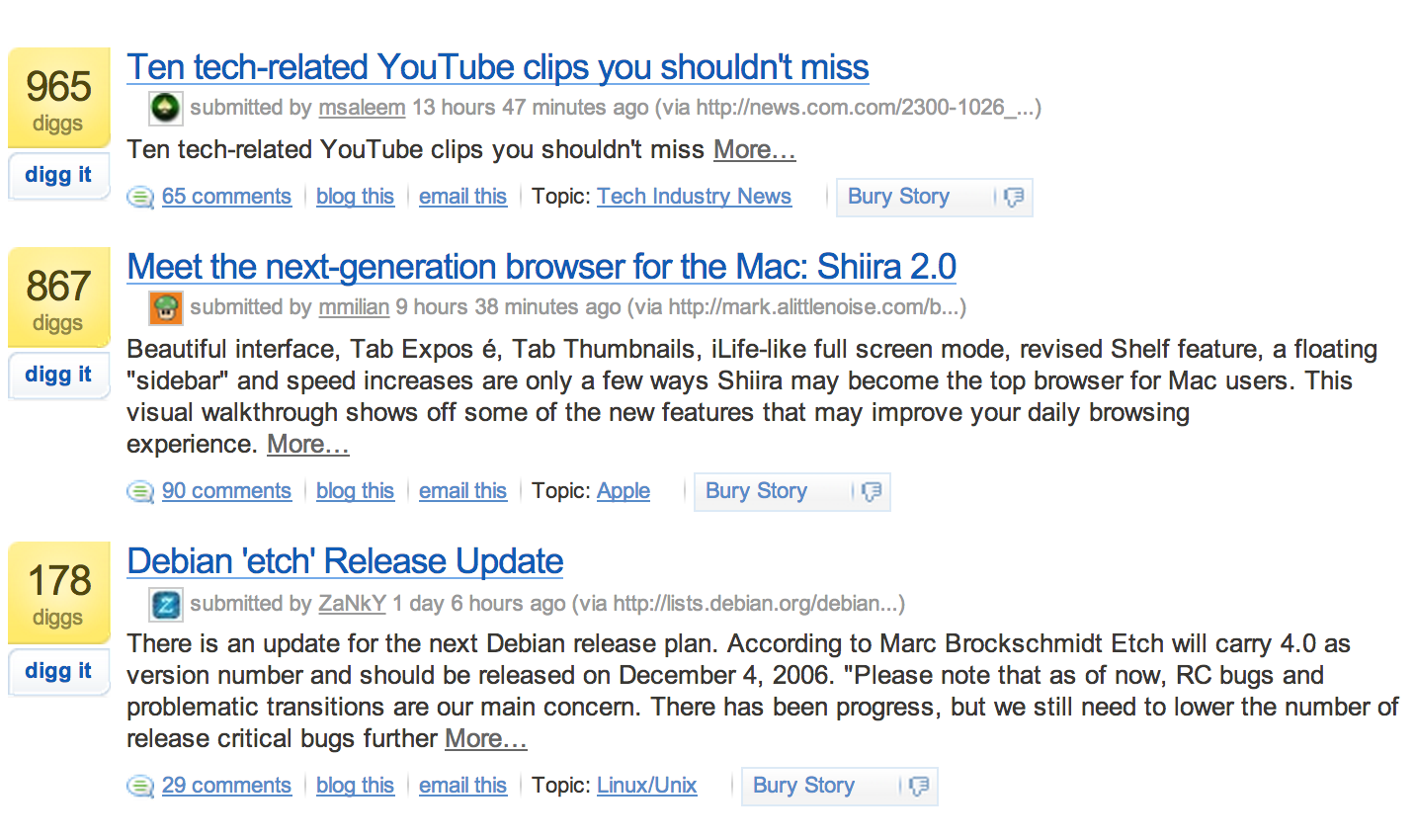
Digg homepage 2006 Digg in 2006, a prolific example of “Web 2.0” interactivity not afforded by traditional CGI scripts

As browser technology advanced, experimentation with AJAX calls began, allowing us to asynchronously perform actions without having to reload the whole page. Finally, you could upvote without submitting an HTML form and reloading everything. This movement to separate content from presentation—aided by CSS—pushed the web forward.

Today we have technologies like AngularJS and EmberJS which ask the designer to generate a client template with specific data holes to be filled in by some backend. Although these frameworks facilitate some of the programming glue for seamless and live updates, they also nudge the developer to work in a specific way. But this is only a moderate step towards Web 2.5.

amuse-bouche

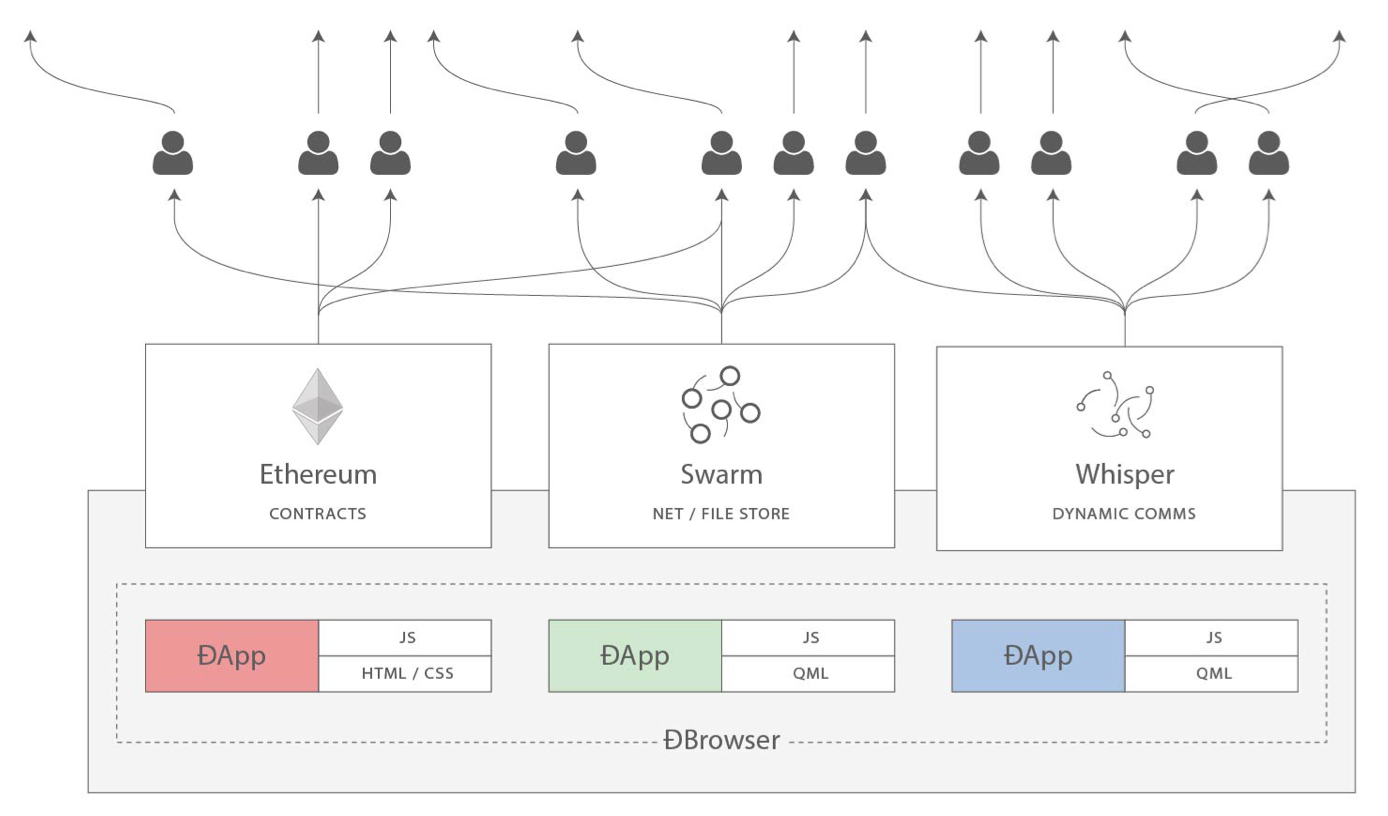
The real Web 3.0 has yet to begin, but it could obliterate the notion of separating content from presentation by removing the need to have servers at all. Let's take a look at some of the underlying technologies the Ethereum Project aims to deliver:
  • Contracts: decentralized logic
  • Swarm: decentralized storage
  • Whisper: decentralized messaging
Ethereum protocols - decentralized web Interaction including Ethereum contracts, Swarm storage, Whisper comms

Technologies like Swarm could serve as the underlying static hosting infrastructure, removing the need to highly distribute and cache specific content. Because “decentralized dropbox” has been discussed with such frequency, expect HTTP-like bindings or services to be built atop this type of blob storage, making integration with the decentralized web 3.0 even simpler. This effort will also allow replacement of typical content delivery networks (CDN) with a distributed hash table (DHT) pointing to file blobs, much how BitTorrent works. Because of the flexibility offered by ethereum contracts, the model of content access could be creator pays, reader pays, or some hybrid system.

So we've just replaced the need to have caches, reverse proxies, CDNs, load balancers, and the like to serve static content to users. Another way in which Etheruem could impact this traditional infrastructure is by replacing business logic application tiers with on-blockchain contracts. Traditionally developed in a variety of web-friendly languages like Perl, PHP, Python, ASP, C#, and Ruby, ethereum contracts run in a fully-inspectable virtual machine that encourage simplicity and reuse. Business analysts and project managers might find this code transparency refreshing, especially since the same code can be written in Serpent (a Python-like language), LLL (a Lisp-like language), XML (a nightmare), or even in visual block form!
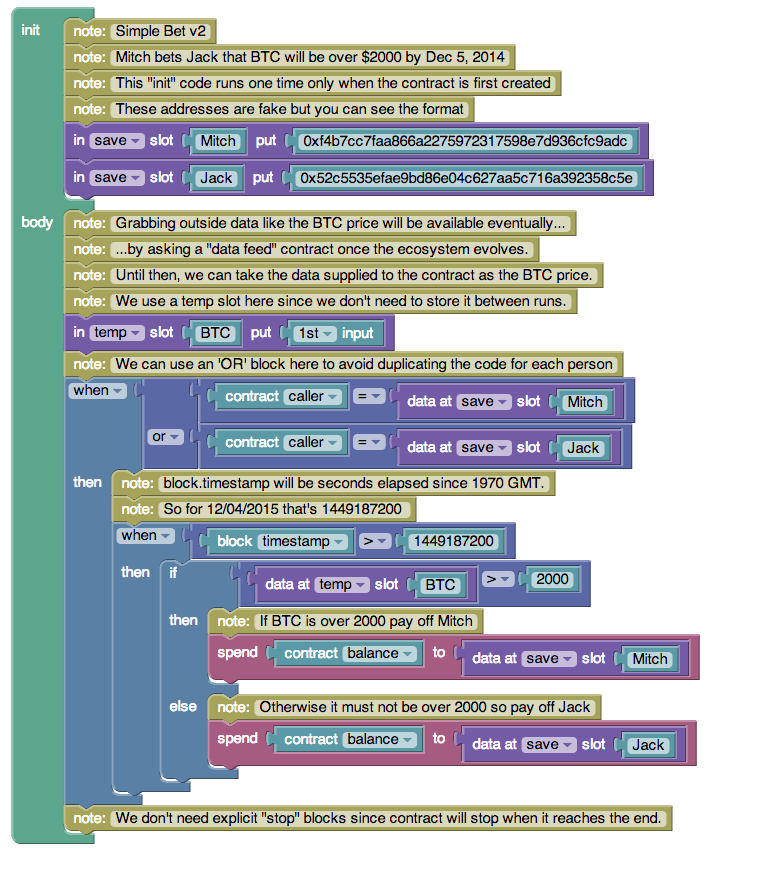
Ethereum blocks editor Ethereum contract code visual editor

How could all this be possible? Taking a look at the latest ethereum proof-of-concept 6 JavaScript bindings, we see that a sprinkling of JavaScript is all that’s required to monitor an account balance on the decentralized web:

<div>You have <span id="ether">?</span>.</div>
<script>
eth.watch({altered: eth.secretToAddress(eth.key)}).changed(function() {
document.getElementById("ether").innerText = eth.toDecimal(eth.balanceAt(eth.secretToAddress(eth.key)))
});
</script>

Because the ethereum protocol also acts as a large distributed key-store (a happy note for fans of NoSQL), eventually user accounts, credentials, and reputation can be migrated on-blockchain with the help of the Whisper communication protocol. In this way, ethereum sets the stage for an total sharding of traditional infrastructure as we know it. No more complex high-availability infrastructure diagrams. In the ethereum ecosystem, even decentralized DNS is free.

Evaluating this context in a larger diagram of any systems infrastructure, it’s obvious that our current web isn't as privacy secure or censorship resistant as we desire. Economies of scale have allowed single institutions to offer a vast amount of processing power and storage on the internet for very low prices, thereby increasing their market share to a point where they individually control large segments of internet activity, often under the supervision of less-than-savvy governments. In a post-borders era where the Internet knows no bounds, such jurisdiction has little or no meaning.

As economics of the ethereum ecosystem mature such that open contracts for lowest-rate storage develop, a free market of content hosting could evolve. Given the nature and dynamics of P2P applications, popular content will readily scale as the swarm shares, rather than suffering from the buckling load of siloed servers. The net result is that popular content is delivered faster, not slower.

We’ve spent decades optimizing the protocols that the internet was first founded on, but it’s time to recognize opportunities lost by continually patching the old system instead of curating a new, optimized one. The future will likely bring with it a transition period between traditional and decentralized technologies, where applications live in a hybrid universe and users are unaware of the turbulent undercurrent. But they should be.

This metamorphosis will offer developers an opportunity to build the next-generation of decentralized, private, secure, censorship-resistant platforms that return control to creators and consumers of the next best idea. Anyone with a dream is free to build on this new class of next-generation decentralized web services without owning a credit card or signing up for any accounts.

Although we are not told to or expected to, we have an imperative to cherish and improve the very shared resources that some wish to disturb, manipulate, and control. Just as no single person fully understands the emerging internet collective intelligence, we should not expect any single entity to fully understand or maintain perfectly aligned motives. Rather, we should rely on the internet to solve the problems of the internet.

Because of this, blockchain technologies like Ethereum will allow for simplification and lowering of cost not seen since the introduction of infrastructure-as-a-service (IaaS). Extending the idea to beyond a simple web project, Ethereum hopes to demonstrate how fully decentralized autonomous organizations (DAOs) can live wholly within cyberspace, negating not only the need for centralized servers, but also trusted third-parties, realizing the dreams of early internet pioneers that envisioned an independent new home of the mind.